

Sustainable Wood for Shutters: A Homeowner’s Guide to Eco-Friendly Choices
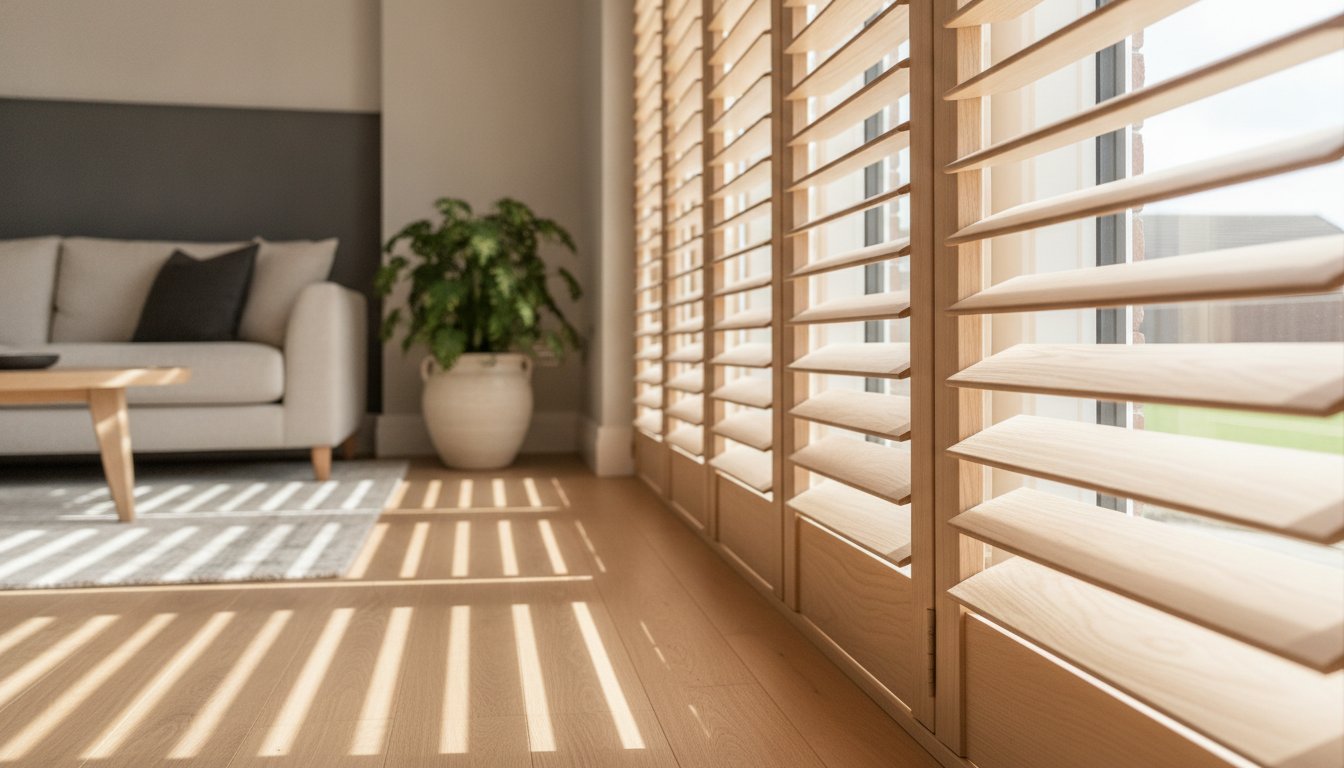
What if the “eco-friendly” label on your window dressing is actually hiding a trail of unsustainable forestry? It’s a valid concern for any homeowner trying to balance a love for luxury with a commitment to the planet. You might feel overwhelmed by “greenwashed” marketing or worry that choosing sustainable wood for shutters means sacrificing durability in our damp UK climate.
We understand that you want to feel secure in your decision, knowing your materials are as ethical as they are elegant. In this guide, we’ll demystify the world of timber by identifying specific species that offer incredible stability without environmental guilt. You’ll learn how to spot genuine FSC and PEFC certifications so you can avoid the hidden chemicals often found in cheaper, mass-produced alternatives.
By the end of this article, you’ll know exactly how to choose materials that respect the environment while providing a perfect, bespoke fit for your home. We’ll also explain why working with a local West Midlands specialist ensures a low-stress experience and a finished product that stands the test of time.
Key Takeaways
- Understand how timber shutters act as a natural carbon sink, locking away CO2 for decades while providing superior insulation for your windows.
- Identify the most resilient species of sustainable wood for shutters that are specifically chosen for their ability to withstand the UK climate without warping.
- Learn the truth about the environmental lifecycle of hardwood versus MDF and how to ensure your window coverings are free from harmful VOCs.
- Equip yourself with five expert questions to ask during a home visit to spot greenwashing and verify genuine ethical certifications.
- See how choosing a local, heritage-led specialist in the West Midlands ensures your custom shutters are responsibly sourced and professionally fitted.
What Makes Wood Sustainable for Window Shutters?
Sustainability in timber refers to wood harvested from forests where the rate of harvest doesn’t exceed the rate of regrowth. These managed forests are designed to replicate natural cycles, ensuring that biodiversity, soil quality, and water resources are protected for future generations. When you choose sustainable wood for shutters, you aren’t just buying a window covering; you’re supporting a system that keeps forests standing rather than clearing them for agricultural use. Unlike some mass-market providers who focus solely on growth speed, true ethical sourcing considers the health of the entire ecosystem, ensuring that the timber is harvested without damaging the surrounding habitat.
A significant benefit of timber is its ability to act as a “carbon vault” through sequestration. As trees grow, they absorb CO2 from the atmosphere. When that wood is crafted into high-quality shutters, that carbon remains locked away within the louvres for decades. By 2026, many UK homeowners have shifted their focus toward these renewable materials, moving away from plastic-heavy alternatives that rely on energy-intensive manufacturing and fossil fuels. This shift aligns with the UK’s national commitment to net-zero, where the materials we choose for our home joinery play a quiet but vital role in reducing overall household emissions and supporting a circular economy.
The FSC and PEFC Standards in the UK
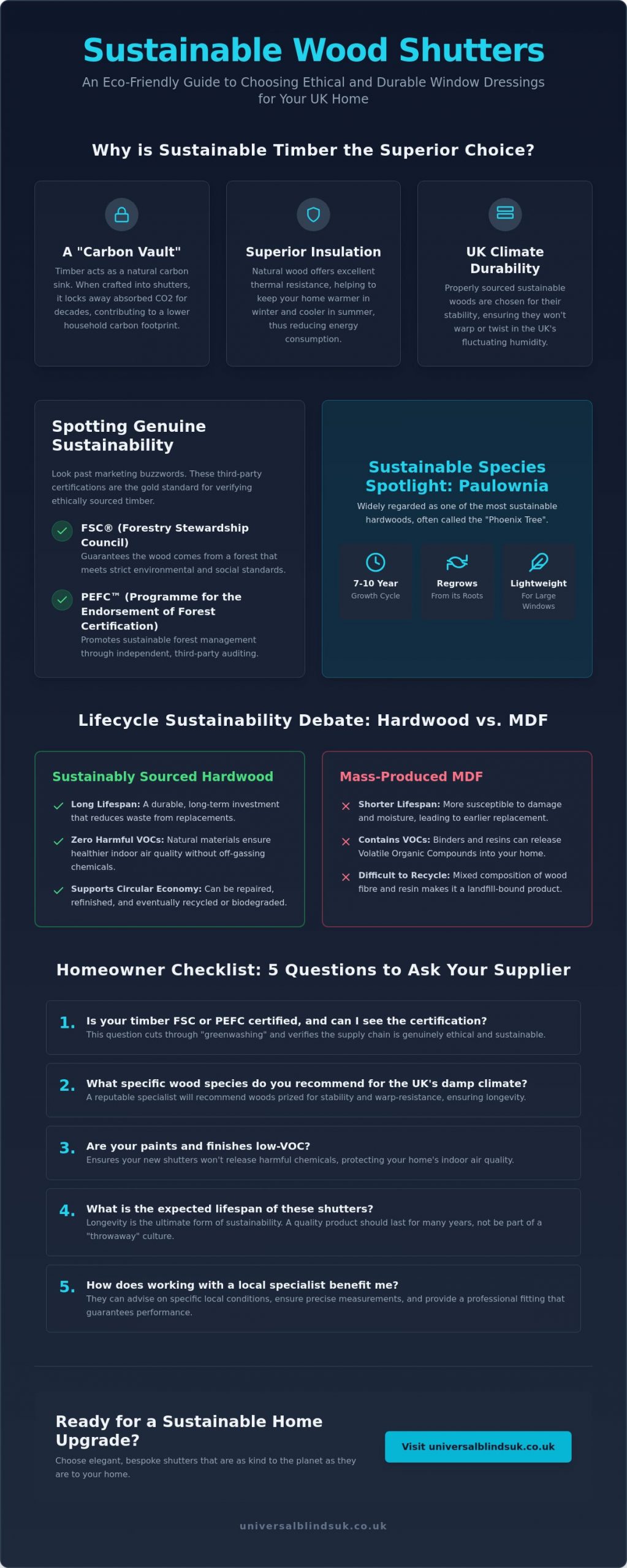
Identifying truly ethical timber requires looking past marketing buzzwords and checking for third-party verification. The Forestry Stewardship Council (FSC) logo is a gold standard in the UK; it guarantees that the wood was sourced from a forest that meets strict environmental and social criteria. Similarly, the Programme for the Endorsement of Forest Certification (PEFC) works to promote sustainable forest management through independent auditing. When discussing options with a local specialist, always ask to see their certification chain. Investing in certified sustainable wood ensures that your purchase doesn’t contribute to deforestation or unethical labour practices abroad, providing peace of mind that your home improvements are globally responsible.
Growth Rates vs. Durability
There’s a common misconception that only slow-growth hardwoods like Oak are durable enough for shutters. In reality, many fast-growing tree species are far more renewable because they reach maturity in a fraction of the time. These species are often lighter, which puts less strain on window frames, yet they still offer the structural density needed for crisp, functional louvres. The key is finding a balance between rapid regrowth and long-term performance. Timber stability is the primary factor in reducing long-term waste. A stable wood won’t warp or twist in the face of the UK’s fluctuating humidity, meaning your shutters will last for many years without needing replacement. This longevity is the ultimate form of sustainability, as it prevents the “throwaway” culture associated with lower-quality window dressings.
The Best Sustainable Wood Species for Shutters
Selecting the right material for your home involves more than just picking a colour. When you invest in sustainable wood for shutters, you’re choosing a material that balances structural integrity with environmental responsibility. While “recycled” wood is a popular concept, it often lacks the straight, consistent grain required for high-end joinery. Instead, we focus on “sustainably sourced” timber from managed forests. This approach ensures your shutters remain stable for decades, which is a key component of the Lifecycle Sustainability Debate. Long-lasting products reduce the need for replacements, ultimately lowering the total carbon footprint of your home improvements.
The aesthetic appeal of these species is just as important as their ethical credentials. Each sustainable timber offers a distinct grain pattern and texture, allowing you to customise the look of your room while knowing your choice supports healthy forest ecosystems. By 2026, three specific species have emerged as the leaders in eco-friendly window furniture.
Paulownia: The “Phoenix Tree” of Sustainable Shutters
Paulownia is widely regarded as one of the most sustainable hardwoods available today. It reaches maturity in a remarkably short seven to ten year growth cycle. Once harvested, the tree regrows from its existing root system, which is why it’s often called the “Phoenix Tree.” Because it’s incredibly lightweight, Paulownia helps reduce shipping emissions during transit. This lightness makes it the perfect choice for very large windows or tier-on-tier styles, as it places minimal stress on the hinges and window frames.
Basswood: The Versatile Sustainable Standard
Basswood is a staple in the UK shutter industry for good reason. It’s sourced from temperate northern forests where strict regulations ensure that growth consistently exceeds harvest rates. It features a tight, uniform grain that provides an exceptionally smooth surface for painted finishes. This makes it the “gold standard” for homeowners who want custom-shaped shutters or specific colour matches. If you’re looking for more design ideas, our Homeowner’s Guide to Elegant Window Shutters explores how this versatile wood can be styled to suit any interior.
Western Red Cedar: Natural Durability
Western Red Cedar is prized for its organic resilience. Sourced from managed forests, it contains natural tannins that act as a built-in preservative. These oils protect the wood from decay and insects, meaning there’s no need for the chemical treatments often found in cheaper products. Cedar is particularly well-suited for moisture-prone areas or exterior-facing shutters. Its rich, warm tones and varying grain patterns offer a sense of luxury that only natural, high-quality timber can provide.
Choosing between these species depends on your specific window requirements and your personal style. If you’d like to see these materials up close, our specialists can visit your home for a free measuring service to help you find the perfect match for your space.
Hardwood vs. MDF: A Lifecycle Sustainability Debate
When you’re choosing window coverings, you’ll likely encounter Medium-Density Fibreboard (MDF) marketed as an “eco-friendly” choice because it’s made from recycled wood fibres and sawdust. While it’s true that MDF uses waste products, this is only one part of the story. To understand the true impact, we have to look at the resins and glues used to bond those fibres together. Many MDF products rely on formaldehyde-based binders that complicate the recycling process and raise questions about indoor air quality. In contrast, choosing sustainable wood for shutters means investing in a natural material that follows the core principles of What Makes Wood Sustainable: ecological balance and long-term conservation.
The “buy once, buy well” philosophy is a powerful tool for environmental protection. Solid wood shutters are a premium investment, but their ability to last for decades makes them far more sustainable than cheaper alternatives. While MDF might seem lighter on your budget initially, it’s often more expensive for the planet in the long run. If your goal is to find a balance between luxury and ethics, the durability of natural timber is hard to beat. This longevity reduces the pressure on global timber supplies and ensures your home remains energy-efficient without constant waste.
Longevity as a Sustainability Factor
Real wood is remarkably resilient. If a solid timber shutter gets scratched or you decide to change your interior decor, it can be sanded down and repainted. This repairability extends the product lifecycle to 20 years or more. MDF shutters, however, are prone to “blown” edges if moisture gets under the plastic coating, a common issue in our damp UK climate. Once the internal fibres swell, the shutter usually can’t be repaired and must be replaced. Natural timber is fully biodegradable at the end of its life, whereas resin-bonded composites often persist in landfill for decades due to their synthetic components. Replacing warped shutters every five to seven years creates a cycle of waste that far outweighs any initial savings.
Chemicals and Indoor Air Quality
Your home should be a sanctuary, and the materials you choose for your windows affect the air you breathe. Sustainable shutter production prioritises water-based paints and stains that have low or zero Volatile Organic Compounds (VOCs). These finishes provide a beautiful, deep colour without releasing harmful gases into your living spaces. By opting for natural sustainable wood for shutters, you significantly reduce formaldehyde exposure compared to many mass-produced engineered options. If you’re still weighing up different window treatments, our A Complete Guide to Choosing the Perfect Blinds for Your Home offers further insights into selecting materials that enhance both your home’s style and its health.
Homeowner Checklist: How to Buy Sustainable Shutters
Identifying genuine sustainable wood for shutters requires a bit of detective work. Many companies use vague marketing terms like “earth-friendly” or “natural” without providing the evidence to back them up. To ensure your investment truly supports ethical forestry, you need a clear framework for your decision-making process. During a home visit, a transparent consultant should be happy to answer specific questions about their products and processes.
Use these five essential questions to cut through the noise and spot potential greenwashing:
- Can you provide the specific FSC or PEFC certification for this timber range?
- Where exactly is the wood grown, and how far does it travel to reach the manufacturing facility?
- Are the paints and stains water-based, and what is their VOC (Volatile Organic Compound) rating?
- What specific waste-reduction policies does your factory have in place for timber offcuts?
- How does your professional fitting service ensure that no materials are wasted during the final installation?
The “Made-to-Measure” approach is a cornerstone of sustainability that many homeowners overlook. Unlike ready-made alternatives that may require trimming or adjustments, bespoke shutters are built to the millimetre of your window frame. This precision significantly reduces raw material waste during production. Choosing a professional fitting service further enhances this eco-friendly cycle; expert installers prevent the costly errors and material disposal often associated with DIY attempts.
Verifying the Supply Chain
A reputable provider should be able to trace their timber back to the forest floor. When you ask about the origin of the wood, you’re looking for more than just a country name. You want to know that the manufacturer monitors their supply chain to prevent illegal logging and protect local biodiversity. Understanding a company’s waste-reduction policy is equally vital. High-quality operations often repurpose smaller wood scraps for other components or use them as carbon-neutral biomass fuel for their facilities, ensuring that every part of the tree is utilised.
The Value of Local Expertise
Choosing a specialist based in the West Midlands is a simple but effective way to reduce the carbon footprint of your project. Local businesses naturally require less travel for consultations and installations, which lowers transport emissions. Our approach focuses on a zero-waste philosophy, starting with a free home consultation to ensure every measurement is perfect before a single piece of wood is cut. If you’re looking for a team that understands the local architecture and shares your commitment to quality, you can learn more about Your Local Blinds Experts and how we support our community.
Ready to see our range of ethical timber options for yourself? You can book your free measuring service today and speak with a specialist who prioritises your home’s style and the planet’s health.
Sustainable Shutters in the West Midlands: The Universal Blinds UK Commitment
As a family-run business with deep roots in the West Midlands, we don’t view sustainability as a temporary trend. It’s a fundamental part of our heritage and our promise to the local community. We choose high-quality, ethical materials because we want the products we install in your home to reflect our commitment to excellence and transparency. When we discuss sustainable wood for shutters, we’re referring to timber that we’d be proud to have in our own homes, sourced from forests that are managed with the utmost care for the environment.
Our process is designed to be as seamless and reassuring as possible. It begins with a free home consultation, where we visit your property in Walsall or the surrounding areas to provide expert guidance. We believe in a low-stress sales environment, which means you’ll never feel pressured to make a quick decision. Instead, we focus on helping you understand the technical benefits of different wood species and how they contribute to a greener home. This transparent approach ensures you feel secure in your choice, knowing you’re being guided by industry specialists who value honesty above all else.
The bespoke shutters we provide are built to last a lifetime, not just a season. By using stable, responsibly sourced timber and precision manufacturing, we ensure that your window coverings won’t warp or degrade in the face of the UK’s unpredictable weather. This durability is the ultimate expression of sustainability; by investing in quality joinery now, you reduce the need for future replacements and minimise your environmental footprint.
Expert Fitting for Maximum Longevity
A high-quality product is only half the story. Our professional fitting service is what ensures your shutters remain functional and beautiful for decades. Our installers are local West Midlands craftsmen who take immense pride in their work, carrying on a heritage of skilled joinery. We frequently receive feedback from clients who appreciate this personal, human touch. Many customers have specifically highlighted the approachability and character of our representatives, such as Steve, who ensures that every technical assessment is handled with precision and care. This local expertise is vital for ensuring a perfect fit that prevents drafts and maximises the energy efficiency of your home.
Start Your Sustainable Home Journey
Transforming your windows with ethical materials is a straightforward and rewarding process. When you book a no-obligation measuring appointment, our experts bring a wide selection of sustainable wood samples directly to your door. This allows you to see the grain patterns and feel the quality of the timber in the actual light of your room. We’ll walk you through the options, from lightweight Paulownia to versatile Basswood, ensuring the final design matches your vision perfectly. Book your free home consultation with Universal Blinds UK today and take the first step toward a more elegant and environmentally conscious home.
Transform Your Home with Ethical Elegance
Choosing the right window furniture is an opportunity to align your interior design with your values. By prioritising sustainable wood for shutters, you’ve taken a significant step toward a more environmentally conscious home. You now understand the importance of looking for genuine certifications and why the longevity of natural timber far outweighs the short-term savings of synthetic alternatives. These choices ensure your home remains beautiful, healthy, and efficient for decades.
As a family-run business with a proud West Midlands heritage, we’re here to guide you through every stage of this journey. Our bespoke, made-to-measure shutters are designed for 20 years of use or more, providing a level of quality that mass-market products simply can’t match. We handle everything from the initial measurement to the final professional fitting, ensuring a seamless and low-stress experience for your household.
Ready to explore our range of ethical timber options? Book your free sustainable shutter consultation in the West Midlands today. We’re excited to help you find the perfect, planet-friendly solution for your windows.
Frequently Asked Questions
Is Paulownia wood really as strong as traditional oak for shutters?
Paulownia is not as hard as oak on the Janka scale, but it offers superior dimensional stability for window treatments. While oak is prized for furniture, its weight can cause shutter panels to sag over time. Paulownia is incredibly lightweight and resistant to warping, making it a more practical and reliable choice for the functional requirements of adjustable louvres.
Do sustainable wood shutters require more maintenance than MDF?
Maintenance requirements for natural timber and MDF are very similar, involving regular dusting and an occasional wipe with a damp cloth. However, real wood is easier to maintain over a lifetime. If a timber shutter is scratched or dented, it can be sanded and touched up. MDF is encased in a plastic coating that, once breached, is almost impossible to repair invisibly.
How can I tell if a shutter company is actually using FSC-certified wood?
You should ask your provider for their specific Chain of Custody (CoC) certification number rather than accepting general claims. A transparent company will be happy to provide this documentation. You can then verify the number on the FSC public search database to ensure the certificate is valid and covers the specific timber species used in your home installation.
Is sustainable wood for shutters more expensive than standard options?
Natural timber is a premium material that typically carries a higher initial cost than mass-produced MDF. However, the investment in sustainable wood for shutters reflects its 20 year plus lifespan and the ethical sourcing of the raw materials. When you consider the cost over the decades of use, the durability and repairability of real wood often make it the more economical choice for your home.
Can sustainable wood shutters be fitted in bathrooms or kitchens?
Yes, certain timber species like Western Red Cedar are naturally suited to humid environments due to their organic oils. While we often recommend polyvinyl for windows in direct splash zones, high-quality wood finished with water-based sealants performs exceptionally well in well-ventilated kitchens and bathrooms. Our specialists can assess your room’s moisture levels during a home visit to recommend the best material.
How long do sustainable wood shutters typically last compared to faux wood?
High-quality timber shutters are designed to last between 20 and 30 years when professionally fitted and maintained. Faux wood is also durable, but it can sometimes become brittle or suffer from discolouration after prolonged exposure to intense UV light. Real wood maintains its structural integrity and offers the unique advantage of being repainted if you decide to change your interior colour scheme in the future.
Does the carbon footprint of shipping wood from abroad negate its sustainability?
Sea freight has a relatively low carbon impact per unit, and this is usually offset by the carbon sequestered within the timber itself. Because trees absorb CO2 as they grow, the wood acts as a carbon store for its entire life. This often results in a lower total environmental impact than manufacturing plastic-based or composite shutters in a high-energy industrial facility closer to home.
What is the most eco-friendly finish for wooden shutters?
Water-based paints and stains with low VOC (Volatile Organic Compound) ratings are the gold standard for eco-friendly finishes. These coatings provide a deep, rich colour without releasing harmful formaldehyde or chemical vapours into your living space. Choosing these finishes ensures that your sustainable wood for shutters remains a healthy addition to your home environment while protecting the air quality for your family.