

Benefits of a central tilt rod compared with concealed tilt
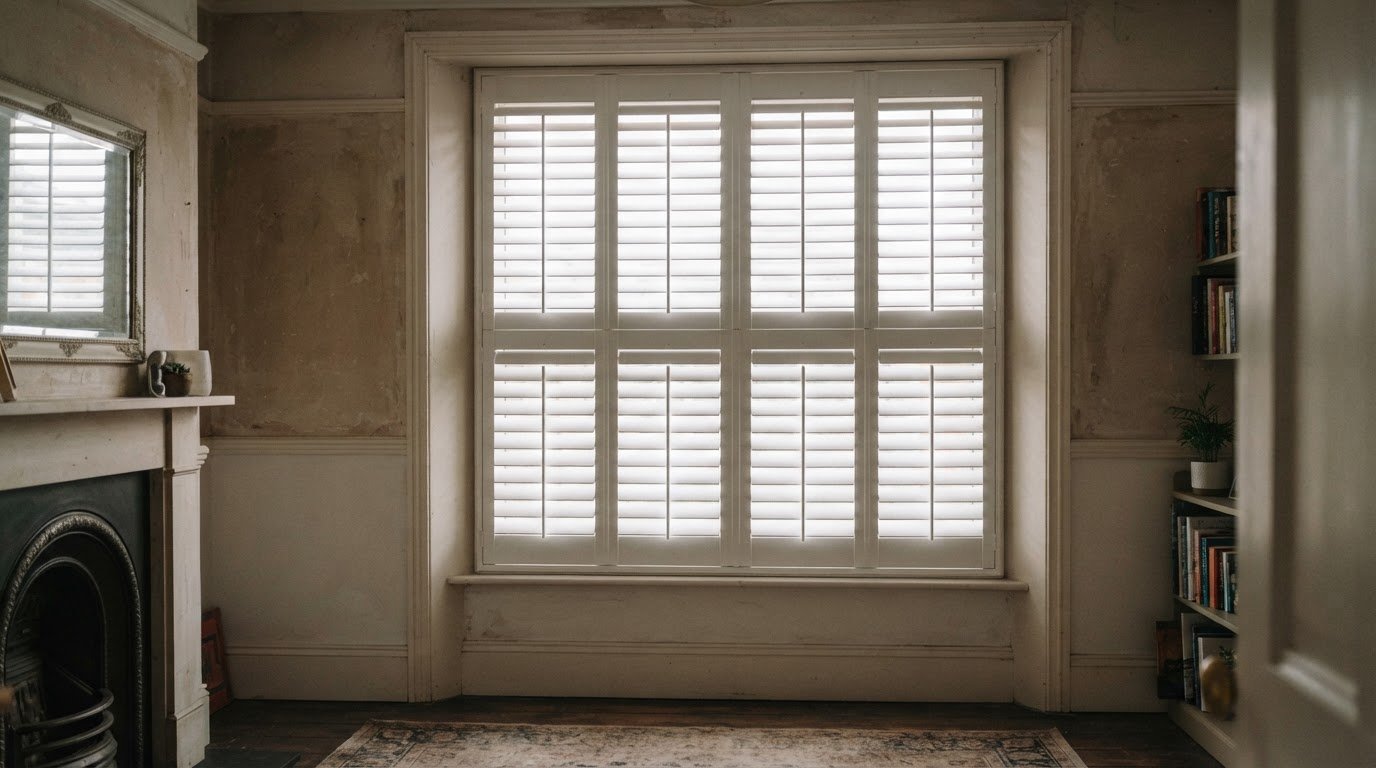
A visible central tilt rod isn’t necessarily old-fashioned: it gives shutters a classic look and lets you adjust connected louvres together by moving the rod. The benefits of a central tilt rod on shutters include straightforward operation and a traditional appearance, while concealed tilt creates a cleaner front with no rod across the view.
It’s understandable to favour hidden controls for an uncluttered finish, or to wonder whether a visible rod will suit your room. The right choice depends on the look you prefer and how you want to adjust and clean your shutters. This guide explains how central rods work, how they compare with concealed tilt, and when an offset position may be worth considering, so you can choose with confidence.
Key Takeaways
- A central rod is easy to operate, but its position can make cleaning around it trickier and interrupt the view when the louvres are open.
- Concealed tilt keeps the shutter face clear and is easier to wipe across, though its internal mechanism can be more involved to repair.
- An offset rod places the control nearer the panel’s hinge side, while split control can let you adjust upper and lower louvres separately.
- Choose by weighing the look you want against cleaning, sightlines and control needs; accurate measuring and professional fitting help bring the choice together.
Are tilt rods old-fashioned?
A central tilt rod isn’t inherently old-fashioned: its visible bar gives shutters a classic finish. It can suit period interiors, although the bar may interrupt the view through an open window and collect dust.
Visible and Hidden Rods
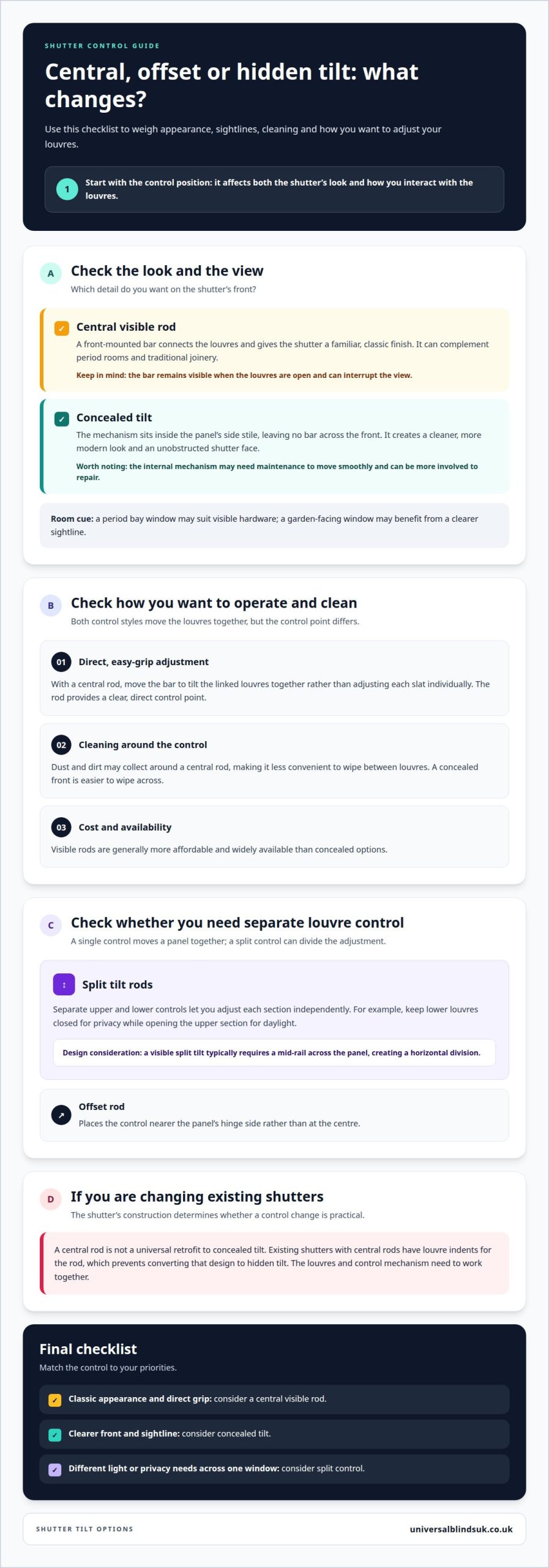
A visible tilt rod can run down the front of a shutter panel and connect its louvres. This familiar plantation-shutter detail suits classic interiors, including period rooms where traditional finishes complement existing features. A hidden tilt rod removes the front bar for a cleaner, more modern look. Visible rods are generally more affordable and widely available than concealed options. Hidden mechanisms keep the front uncluttered, though they may need maintenance to move smoothly.
Sturdy, Easy-Grip Controls
With central control, you move the rod rather than touching each louvre individually. The bar provides a direct, easy-to-grip point for adjusting linked slats together. Central rods are regarded as robust and reliable, helping reduce the risk of louvres shifting or becoming misaligned over time. In a classic bedroom or sitting room, this visible control can feel more intuitive than adjusting the mechanism through a slat.
Central Rod Disadvantages
The central bar remains visible when the louvres are open, so it can interrupt the view through a window. Dust and dirt may gather around the rod, making it less convenient to wipe between louvres than a concealed front. For example, a garden-facing window may benefit from a less obstructed sightline, while a period bay window may suit visible hardware. These practical trade-offs matter alongside the traditional appearance.
| Option | Appearance | Practical consideration |
|---|---|---|
| Central visible rod | Classic, traditional | Easy to grip; dust can collect |
| Hidden tilt | Clean, modern | Clear front; mechanism may need maintenance |
Choose a central rod for classic styling and direct control; choose hidden tilt for a clearer front and view.
Centre rod appearance compared with concealed tilt
A front-mounted central rod makes the control part of the plantation shutter’s appearance. Concealed tilt keeps the front clear by placing the mechanism inside the panel’s side stile.
Traditional plantation shutters use a visible bar attached to the panel’s front and louvres. This detail creates a familiar, structured appearance that can complement a classic interior, such as a period sitting room with traditional joinery. The rod runs down the centre and remains visible as you adjust the slats. If you prefer the control to blend into the shutter, hidden tilt offers a different visual effect.
With concealed tilt, there’s no front bar crossing the louvres. A rack-and-pinion mechanism housed inside the side stile moves them together when you adjust one louvre. The result is an uncluttered face and a clearer view when the slats are fully open. Hidden tilt can suit contemporary rooms or spaces where uninterrupted glazing matters more than visible plantation styling.
Can a central tilt rod be added to existing plantation shutters? It isn’t a universal retrofit because the louvres and control mechanism must work together. Existing shutters with central rods have louvre indents for the rod, which prevents converting that design to hidden tilt. The construction of the existing shutter determines whether changing its control is practical.
Are central tilt rod shutters suitable for children and window safety? A tilt rod operates the louvres; it isn’t, by itself, a child-safety feature. Its presence alone doesn’t establish whether the complete window arrangement is safe for children.
Think about the room’s style and the view you want to preserve. A central bar makes the traditional control visible; concealed tilt hides the mechanism and leaves the louvres unobstructed. For example, a period room may suit the classic front detail, while a modern room with a garden view may favour a clear shutter face. Both options let the louvres move together, but their appearance and control position differ.
How a centre tilt rod operates shutter louvres
A central rod links the louvres across a shutter panel, so they move together. Moving it changes their angle, adjusting incoming light and the view outside.
Rod-Driven Louvre Movement
The vertical rod connects to each louvre, transferring movement along the shutter panel. Move the rod and the linked slats tilt together, rather than requiring individual adjustment. This shared mechanism helps the louvres sit at a consistent angle. Without a tilt rod, adjusting the louvres can involve more individual handling.
Light and Privacy Control
Changing the louvre angle controls how much daylight enters and how much of the outside view remains visible. For example, angle the slats to admit light while limiting a direct view into a ground-floor room. Open them further for a broader outlook, or close them for greater privacy. The rod makes these adjustments together, rather than setting each slat to a different position.
For separate upper and lower control, split tilt rods let you adjust each section independently. This can be useful when daylight needs differ across one window, such as keeping lower louvres closed for privacy while opening the upper section. A visible split tilt typically requires a mid-rail across the panel, creating a horizontal division as well as separate movement.
Central rods are described as robust and reliable, helping reduce the risk of louvres shifting or becoming misaligned over time. Both central-rod and concealed-tilt systems are designed to be durable and long-lasting when properly installed. The rod provides a direct control point, while the connected louvres share the adjustment. That consistent operation is a practical advantage if you prefer one movement to change the whole panel.
Central, offset and hidden tilt rod options
Central, offset and hidden controls change the look and operation of plantation shutters. Choose by weighing the rod’s position against your preferred style, window view and cleaning routine.
A central rod runs down the panel’s middle, giving the shutter a traditional, defined appearance. It can suit classic rooms, but the visible bar may interrupt the view when the louvres are open. An offset rod works in the same way but sits closer to the hinge side. For a panel hinged on the left, the usual practice is to place its offset rod on the left, keeping the control near the opening edge.
Hidden tilt puts the mechanism inside the vertical side rail, leaving the front cleaner and more streamlined. A concealed rack-and-pinion system connects the louvres, allowing them to move together when you adjust one. With no rod crossing the slats, wiping across them is easier. The trade-off is access: concealed mechanisms can be harder to repair than visible rods and may need a specialist.
Control needs matter too. A visible centre rod with split tilt typically requires a mid-rail, creating a horizontal break in the shutter. Concealed tilt can provide separate upper and lower louvre control without a visible mid-rail where the window has no natural division. Shutters higher than 130 cm require a hidden split tilt rod. Some ranges, including certain UK-built and waterproof options, are available only with concealed tilt.
For a minimal look and easier surface cleaning, hidden tilt may suit your windows. Choose central or offset positioning if the visible control complements your interior or hinge layout. Both systems are designed to last when properly installed, but their appearance, cleaning and repair access differ. Explore custom shutter options to consider which control style best fits your room.
Universal Blinds UK: Custom Shutters
Universal Blinds UK supplies and fits made-to-measure shutters, helping you choose a control style that works for your windows. A free home consultation lets you review samples and discuss whether a visible central rod or a cleaner concealed style better suits your home.
The free measuring service establishes your window dimensions for a made-to-measure fit, and professional fitting completes the installation. This can be useful when choosing between central, offset or hidden controls, with the shutter design and fitting considered as part of the same project.
Contact Universal Blinds UK to discuss made-to-measure shutters for your windows.
Choose the control that fits your room
Before settling on a shutter style, picture how you use the room throughout the day. Consider the view you want from the window, the privacy you need, and whether a visible control complements your décor. These practical priorities can make the choice clearer than appearance alone.
The benefits of a central tilt rod on shutters matter most when its traditional look and direct control suit your space. If a cleaner finish is more important, concealed tilt may feel like a better match. There’s no single control style that works best for every interior; the right choice is the one that feels natural in your home and supports how you want to use the shutters.
If you’re ready to explore a tailored option, contact Universal Blinds UK about your shutter plans. A conversation can help you move from comparing styles to deciding what belongs at your windows. Take the next step with confidence and choose a finish that feels right for your home.
Frequently Asked Questions
Should I have a hidden tilt rod or not?
Choose hidden tilt if you want a clear shutter face and easier wiping across the louvres. A visible central rod may suit you better if you like traditional hardware as part of the room’s design. For a kitchen window, cleaning convenience might carry more weight; in a period sitting room, visible detailing may feel more in keeping.
What is the difference between centre tilt rod and concealed tilt?
A central tilt rod is fixed to the shutter’s front and connects the louvres for joint adjustment. Concealed tilt hides its mechanism inside the panel’s side stile, leaving no front bar. Both operate linked louvres, but the visible control affects the shutter’s appearance and cleaning routine. Concealed mechanisms can be less straightforward to access for repairs.
Which Tilt Mechanism Is Best?
There isn’t one best mechanism for every room. Base your choice on whether you prioritise traditional detailing, an unobstructed view, straightforward surface cleaning or repair access. A central rod offers an obvious control point; concealed tilt leaves the shutter front clear. Also consider whether you need separate upper and lower louvre adjustment, as split control can affect the design.
What is a central tilt rod on shutters and how does it work?
A central tilt rod is the vertical bar fitted to the front of a shutter panel. It connects the louvres, so moving the bar changes their angle together. For example, you can adjust the panel’s slats as a group instead of handling them individually. Their angle then affects the daylight entering the room and the view through the window.
What are the benefits of central tilt rod shutters?
The benefits include a classic appearance, a direct grip for adjustment and shared movement across the louvres. This can make routine changes simple, such as tilting the slats to reduce a direct view into a room. The rod is also considered robust and reliable, helping reduce the risk of louvres shifting or becoming misaligned over time.
How do central tilt rod shutters compare with hidden tilt rod shutters?
Central rods keep the control visible, which can complement traditional décor but may interrupt the view and collect dust. Hidden tilt gives the shutter a cleaner front and makes wiping across the louvres easier. Its internal mechanism can be harder to repair, while visible rods are generally simpler to maintain. Consider the room’s style and your cleaning priorities together.