

Vinyl Shutters Pros and Cons: Compare Vinyl, Wood and Composite
The most practical shutter isn’t always the one that lasts longest. Vinyl shutters are plastic window coverings, often made from PVC. Their main advantages are easy cleaning and moisture resistance; their drawbacks include limited colour and size choices, and fewer options for repair or refinishing than wood. The pros and cons of vinyl shutters depend on your room, window size and priorities.
If you’re comparing vinyl with wood or composite, look beyond the initial appearance. Upkeep, durability and how well the material suits the space all matter.
This guide explains what vinyl shutters are, how they compare with wood, PVC faux wood and composite, and which trade-offs to consider before choosing. You’ll see where each material may work well and where another option could better suit your home.
Key Takeaways
- Match the shutter material to the room: moisture-resistant options are more suitable for damp spaces, while wood needs more care around moisture.
- Choose a finish with upkeep in mind: vinyl is easy to wipe clean, while wood can be painted or stained if you want to refresh its appearance.
- Consider window size and panel weight as well as appearance, since these can affect how well a shutter suits the opening.
- Compare how each material balances durability, style and practical use before deciding which trade-offs matter most in your home.
Cleaning and maintenance
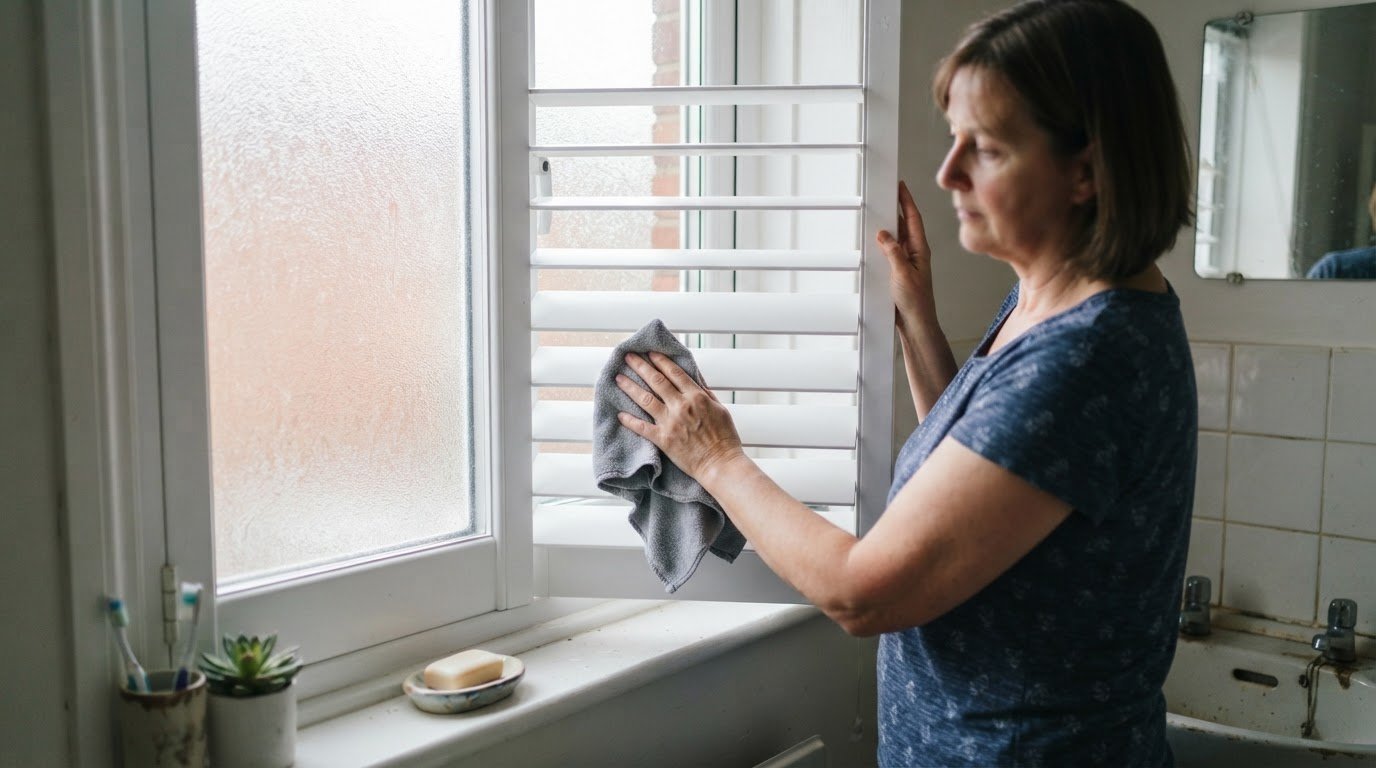
For straightforward upkeep, vinyl is a practical choice. Wipe the surface with a damp cloth or mild cleaning solution, then dry it to remove residue. Vinyl shutters don’t need repainting or refinishing, and their moisture resistance makes them less prone to mould or decay than real wood. They can suit a busy kitchen window where cooking splashes need regular cleaning.
Can vinyl shutters be repaired or repainted if damaged? They can’t be painted, stained or refinished. Whether a damaged section can be repaired depends on its construction and the type of damage; a deep crack may mean replacing the affected component.
Wood shutters need more care around dampness. Avoid water and cleaning chemicals, as wood isn’t waterproof and may warp when exposed to moisture. Regularly inspect the finish and clean away dust, since moisture, mould and pests can cause problems if left unchecked. In wetter parts of the UK, ongoing care matters because wood can rot. High-quality wooden shutters can still provide years of use with minimal maintenance when kept in suitable conditions.
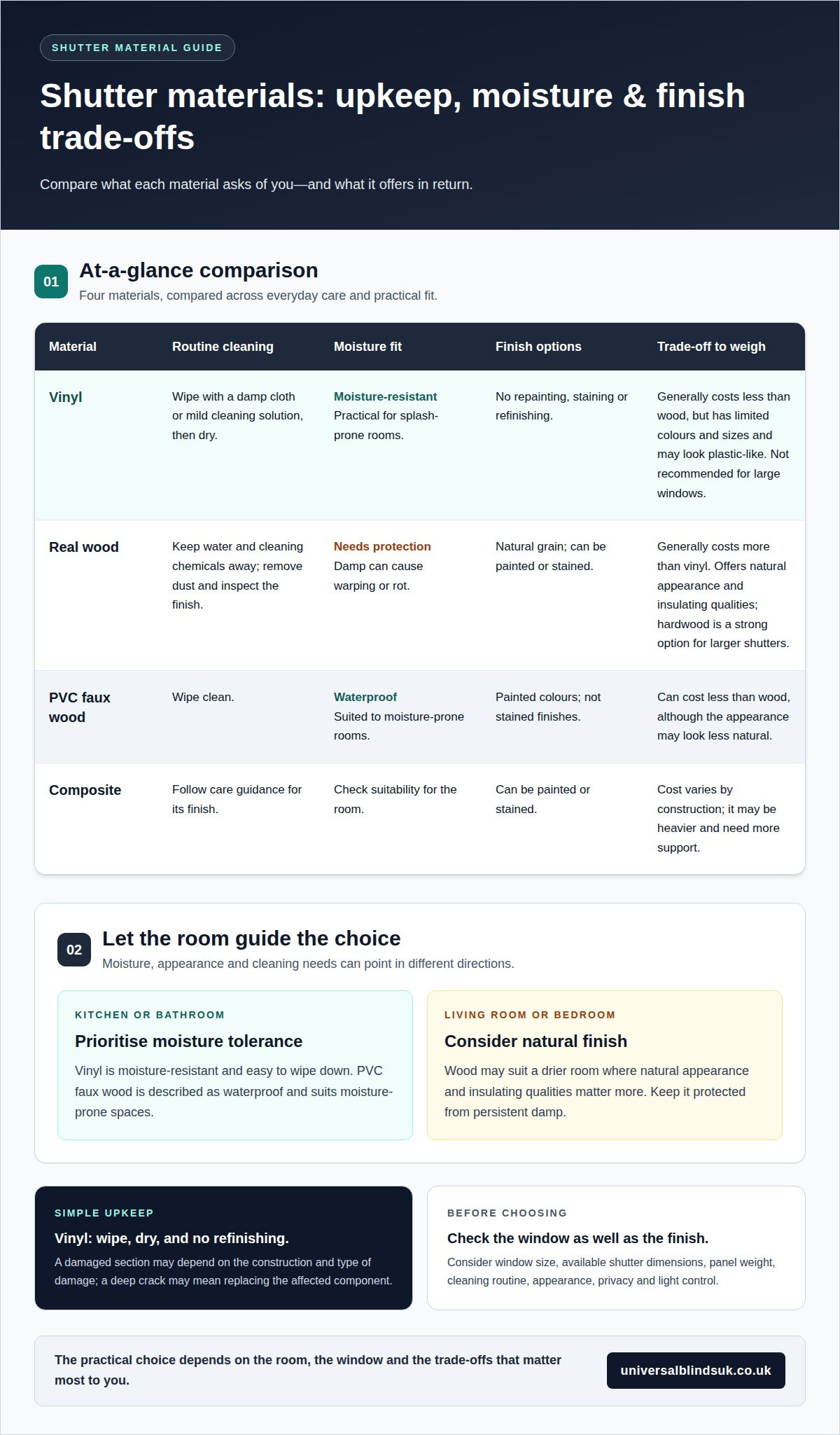
Cost is another consideration: vinyl generally costs less than wood, and its upkeep is simple. Each shutter material has different maintenance trade-offs, so consider the room, finish and window before deciding. A consultation about your space can help you weigh practical needs alongside appearance. The table compares common materials.
| Material | Routine cleaning | Moisture consideration | Finish upkeep |
|---|---|---|---|
| Vinyl | Damp cloth or mild solution | Resists moisture | No repainting or refinishing |
| Real wood | Keep water and chemicals away | Can warp or rot when damp | Inspect and maintain regularly |
| PVC faux wood | Wipe clean | Suited to moisture-prone rooms | Painted colours, not stained finishes |
| Composite | Follow care guidance for its finish | Check suitability for the room | Can be painted or stained |
Choose vinyl for easy cleaning and moisture resistance; choose wood if you value its natural finish and can protect it from damp. Composite offers a versatile finish choice, while PVC faux wood suits moisture-prone rooms. Consider how shutters provide privacy and light control alongside the cleaning routine each material requires.
Wood vs PVC Faux Wood Shutters: What is The Best Choice?
Moisture is often the deciding factor when choosing window shutters for kitchens and bathrooms. Vinyl and PVC faux wood resist moisture, making them practical where humidity and splashes are part of everyday use. Wood has a different advantage: its natural insulating qualities can help a room feel warmer, but damp conditions may cause it to warp or deteriorate.
PVC faux wood is described as waterproof, so it suits moisture-prone spaces such as a steamy bathroom or busy kitchen. Vinyl is moisture-resistant and easy to clean, which helps with fingerprints and cooking marks around a window. Wipe it with a damp cloth or mild cleaning solution, then dry the surface. These options can cost less than wood, although their appearance may look less natural.
Real wood may suit a living room or bedroom where its finish and insulating qualities matter more than water resistance. Keep it away from persistent dampness and avoid wet cleaning. For a kitchen window beside a sink, a moisture-resistant material is usually more practical. In a bedroom, where splashes are unlikely, appearance and warmth may matter more.
Consider how each material will work throughout the year, not just how it looks in a sample. A bathroom with frequent humidity calls for a surface that tolerates moisture and is easy to clean. In a drier room, wood may offer the natural finish you prefer, while still needing protection from damp. Neither material replaces suitable window glazing or insulation, but both can help control light and privacy.
Choose PVC faux wood or vinyl for damp rooms and easier wipe-downs; favour wood where natural appearance and insulation matter more. For a tailored fit across different rooms, explore custom shutter options and consider each window’s conditions before choosing.
What Are Vinyl Shutters?
Vinyl shutters are plastic window coverings, commonly made from PVC. Compared with hardwood, they’re generally more affordable, but their appearance may feel less natural. Their appeal is practical: they’re lightweight, moisture-resistant and easy to clean. For a bathroom window, those qualities may matter more than a natural wood finish.
Initial cost is only one part of value. Vinyl may cost less than wood, which is among the more expensive shutter materials, but it has limited colour choices and can’t be painted or refinished later. Wood can be painted or stained, giving you more scope to update its appearance. Composite shutters can also be painted or stained, while PVC faux wood offers painted rather than stained finishes.
What should UK buyers check when choosing vinyl shutters? Check your window’s size, the available shutter dimensions and whether the limited colour range suits the room. Also compare the material’s appearance, cleaning needs and light-control function with those of your other window treatments.
| Material | Relative cost | Appearance | Practical function |
|---|---|---|---|
| Vinyl | Generally lower than wood | Limited colours; may look plastic-like | Moisture-resistant and simple to clean |
| Hardwood | Generally higher | Natural grain; paintable or stainable | Strong option for larger shutters |
| PVC faux wood | Alternative to real wood | Painted colours, not stained finishes | Suited to moisture-prone rooms |
| Composite | Varies by construction | Can be painted or stained | May be heavier and need more support |
Function matters as much as finish. Vinyl shutters come in limited sizes and aren’t recommended for large windows; wood is stronger for wider panels. Vinyl may also offer less thermal and soundproofing performance than hardwood. These differences affect long-term value: weigh the initial saving against the window size, the finish you want and how long you expect the shutters to last. Vinyl may suit a small bathroom opening, while wood or composite may better suit a broad living-room window.
Vinyl shutter durability compared with wood and composite
Vinyl, wood and composite differ in how they handle wear, sunlight and larger panels. Both construction and careful installation influence durability.
Vinyl Shutter Lifespan
Vinyl shutters are lightweight and moisture-resistant, but they don’t generally last as long as wood shutters, even with careful maintenance. Their hollow louvres can be less durable than solid materials, and vinyl may crack on impact. Wood is stronger for wider panels and can remain sturdy when maintained. Composite combines materials, but its heavier construction may need extra support once installed.
Sunlight Fading, Warping, and Cracking
Vinyl shutters are often described as resisting warping, fading and peeling, but prolonged weather exposure can still cause yellowing or stains. Direct sunlight can also expose weaknesses in low-quality louvres: some may bow after two summers in sunny conditions. Vinyl shutters can be vulnerable to damage. Quality, construction and exposure all affect how an interior shutter performs.
Vinyl shutters come in limited sizes and aren’t recommended for large windows, so they may not suit every bay window. A bay’s angles and separate sections make accurate sizing important; a made-to-measure design can better accommodate those individual dimensions.
Composite shutters offer a different balance. Some PVC faux wood panels have aluminium reinforcement, making them less likely to chip or dent easily. Composite shutters may offer more options for adapting their finish to your décor than vinyl. Its extra weight may require more support. Wood remains a strong choice for wider slats, while vinyl’s lighter construction may suit smaller openings. For any material, a well-fitted panel helps it operate smoothly.
Compare materials against your window size and preferred finish, then explore tailored shutter options for your home.
Universal Blinds UK: Custom Shutters
Universal Blinds UK helps you put your material choice into practice with custom shutters made to suit your windows. If you’re weighing vinyl against wood or composite, our free measuring service establishes the dimensions, and professional fitting completes the installation. This is especially useful for unusual openings, where a precise fit matters to how the panels operate. You can also consider made-to-measure blinds if shutters aren’t right for a particular room. The aim is to find a window treatment that suits your space and priorities, while accounting for practical details such as opening size and fit. Contact Universal Blinds UK to arrange a free consultation and quote.
Make a confident choice for your home
Let the pros and cons of vinyl shutters guide a decision that suits each room, rather than forcing one material throughout your home. Before settling on a style, note what you want the window treatment to do, how you use the room and whether you want the same look in adjoining spaces. This turns a broad comparison into a practical brief for your windows.
It can also help to think beyond the immediate update. Consider whether your décor is likely to change, how much visual consistency matters and which details you’re unwilling to compromise on. Clear priorities make it easier to discuss suitable options and keep the finished look cohesive. You don’t need to have every detail decided before taking the next step.
Discuss your shutter plans with Universal Blinds UK and take the next step towards a window design that feels right for your home.
Frequently Asked Questions
So what material is best for window shutters?
The best material depends on the room, window size and finish you want. For a small bathroom window, moisture-resistant vinyl or PVC faux wood can be practical. A wide living-room opening may favour wood’s strength and natural appearance, while composite offers painted or stained finishes. Decide what matters most: easier upkeep, moisture resistance, a natural look or suitability for a larger opening.
What are the main pros and cons of vinyl shutters?
Vinyl shutters are easy to clean, resist moisture and generally cost less than wood. Their limitations include restricted colours and sizes, a more plastic-like appearance, and no option to repaint or refinish them. For example, vinyl may suit a compact utility-room window where simple cleaning matters. If you want a natural grain or expect to change the finish later, another material may be a better fit.
How durable are vinyl shutters, and how long do they last?
Vinyl can be durable in suitable conditions, but it generally doesn’t last as long as well-maintained wood. No single lifespan applies to every installation: construction quality, panel size, sunlight exposure and care all affect wear. Hollow louvres may be less robust, and vinyl can crack or discolour. Compare the construction and intended window size rather than judging durability by material name alone.
Are vinyl shutters suitable for kitchens, bathrooms and humid rooms?
Yes, vinyl shutters are moisture-resistant and can suit humid rooms such as kitchens and bathrooms. They’re useful where condensation or everyday splashes make wood less suitable. PVC faux wood is described as waterproof, so it’s another option for moisture-prone spaces. In either room, consider how close the shutters will be to sinks, cooking areas or other sources of regular splashing, then choose a surface that’s easy to clean.
How do vinyl shutters compare with wooden shutters?
Vinyl is lighter, easier to wipe clean and typically more affordable, while wood offers natural grain, strength for larger panels and the option to repaint or stain. Wood can also help insulate a room, but moisture needs careful management. For example, you might choose vinyl for a compact, damp-prone room and wood for a dry living space where appearance and the option to refinish matter more.
How much do vinyl shutters cost in the UK, including installation?
The price depends on the project and is provided after a quote request; the main factors are window dimensions, shape, material and fitting requirements. A small, standard opening differs from a wide or angled window because it affects product sizing and installation work. Universal Blinds UK provides a free measuring service and quotes for its made-to-measure window coverings, helping establish your project’s requirements without relying on a generic estimate.