

The Ultimate Guide to Coordinating Blinds Throughout the Home
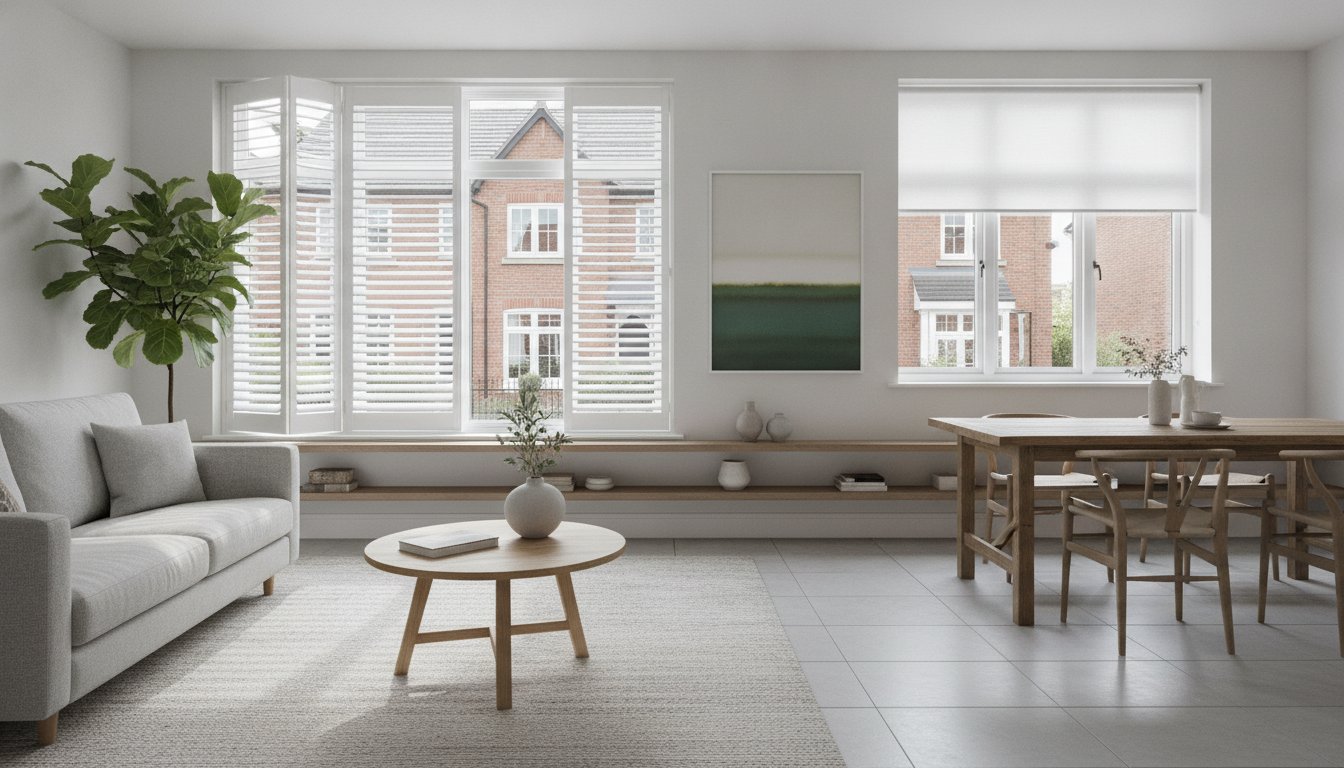
What if the secret to achieving a high-end designer look isn’t about buying the most expensive furniture, but rather about the ‘invisible thread’ that connects your windows? Mastering the art of coordinating blinds throughout the home is often the difference between a house that feels professionally styled and one that feels disjointed. It’s a common concern for many homeowners who fear that choosing different blind types for different rooms will lead to a clashing, cluttered appearance.
We understand that every space has its own specific needs. You might require a moisture-resistant finish for a humid kitchen while seeking soft, thermal textures for a cosy bedroom. It’s easy to feel overwhelmed by the choice, especially when off-the-shelf options rarely offer the consistency you need. By the time you’ve finished reading this guide, you’ll have the confidence to create a cohesive interior that flows naturally from room to room. We’ll show you how to balance beauty with functionality using bespoke window coverings that reflect your personal style while meeting the latest UK safety standards.
Key Takeaways
- Learn how to balance visual consistency with room-specific functionality to enhance the overall aesthetic and value of your property.
- Discover the “common thread” technique for coordinating blinds throughout the home to ensure a professional, designer finish in every room.
- Understand how to mix different styles, such as moisture-resistant rollers and elegant shutters, while keeping your home’s design language unified.
- Find out why made-to-measure precision is essential for achieving consistent colour matching and a perfect fit that off-the-shelf products lack.
- Explore the advantages of viewing fabric and material samples in your own home’s unique lighting during a professional consultation.
The Philosophy of Cohesion: Why Coordinating Blinds Matters
Mastering the art of coordinating blinds throughout the home is a sophisticated balancing act. It requires you to weigh visual consistency against the specific functional needs of each space. A kitchen needs moisture resistance, while a bedroom requires light control. While there are many different kinds of window blinds available, the goal is to find a shared characteristic that ties them together without sacrificing utility. This approach ensures your home feels intentional rather than accidental.
To help you visualise this approach, watch this guide on selecting styles that complement your home’s architecture from a leading UK specialist:
Achieving this balance does more than just please the eye; it actually increases the perceived value of your property. In the UK housing market, buyers look for a sense of deliberate design. A home where window treatments feel like an afterthought can seem disjointed. Conversely, a cohesive approach suggests a high-standard, bespoke finish. It distinguishes a professional look from an identical one. You don’t want your home to look like a showroom where every room is a carbon copy. You want it to feel like a curated collection that flows naturally, especially in open-plan living spaces where multiple windows are visible at once.
The Internal Flow: Creating a Seamless Transition
Think of your blinds as the connective tissue of your interior design. They bridge the gap between different wall colours and furniture styles. By maintaining a consistent design thread, you reduce visual clutter and prevent jarring transitions as you move from one room to the next. The “flow effect” in interior design is the seamless visual progression where the eye moves comfortably through a space without being interrupted by clashing elements. Using bespoke window coverings allows you to maintain this flow even when the blind type changes to suit the room’s environment.
The Exterior View: Boosting Kerb Appeal
Many homeowners focus entirely on the inside, but the view from the street is just as vital for your West Midlands home. A patchwork look, where every window displays a different colour or style, can detract from your property’s kerb appeal. By choosing blinds with consistent neutral linings or matching base tones, you create a uniform facade. This professional touch ensures your home looks as elegant from the pavement as it does from the sofa. It provides a clean, polished appearance that signals quality and care to the outside world.
Defining Your Design Thread: Colour, Texture, and Material
The secret to professional coordination lies in the “Common Thread” concept. It’s not about matching every detail; it’s about choosing one consistent element that anchors your design across every room. This could be a specific colour, a tactile texture, or a shared material. When you are coordinating blinds throughout the home, this primary element acts as a visual shorthand that tells the story of your home’s style. It provides a sense of calm and order, ensuring that even when room functions change, the design remains unified.
Neutral palettes, such as stone, oat, and soft clay, are currently leading UK interior trends for 2026. They offer the most effective coordinating tool because they adapt to changing decor without requiring a complete overhaul of your window treatments. However, relying on off-the-shelf products can be risky. Bespoke samples are essential here. They allow you to ensure a perfect match across different batches, avoiding the slight colour shifts often found in mass-produced items. Beyond aesthetics, choosing the right materials is a key part of improving thermal efficiency by regulating your home’s temperature throughout the seasons.
The Power of a Unified Colour Palette
You don’t have to stick to one “hero” colour for every window. Instead, consider a tonal family of shades. For instance, you might choose a deep charcoal for the lounge and a soft dove grey for the hallway. These contrasting colours still share the same cool undertone, creating a sophisticated, integrated look. Matching your blind fabrics directly to your wall paint is another expert technique that makes a room feel larger and more cohesive. If you’re unsure which “thread” best suits your space, our team at Universal Blinds UK can help you explore options during a free measuring service in your own home.
Texture and Material Consistency
Consistency doesn’t have to be limited to colour. Using natural wood across Venetian blinds and shutters can bring a sense of warmth and heritage to your property. You can also coordinate linen-look fabrics across different styles, such as Rollers in the kitchen and Romans in the dining room. For more inspiration on choosing the right materials for your space, take a look at our Complete Guide to Blind Styles.
Hardware and Finishing Touches
It’s the small details that often separate a DIY job from a professional installation. Matching your headrails, bottom bars, and control chains creates a polished, high-end finish. Even the slat widths in Venetian or Vertical blinds should remain consistent to avoid a disjointed look. Metallic hardware, such as brushed chrome or matte black chains, can tie modern blinds together with a subtle, luxurious touch that feels intentional.
Matching Different Blind Styles to Specific Room Needs
While the concept of a design thread provides a visual anchor, your window treatments must also perform under pressure. A single blind type is rarely suitable for every room environment. For instance, the delicate fabric of a Roman blind may thrive in a lounge but quickly succumb to the humidity of a bathroom. Effectively coordinating blinds throughout the home involves selecting the right mechanism for the task while ensuring the aesthetic remains unbroken. It’s about being practical without losing that high-end, tailored feel.
The Bedroom vs. The Living Room
Living rooms are often the heart of the home, where you want to showcase elegance. Pairing Roman blinds in a soft, textured fabric with matching blackout rollers in the bedroom is a classic way to stay on-thread. Many of our fabrics can be used across these different mechanisms. This ensures that while the bedroom provides total darkness for a better night’s sleep, the lounge maintains a softer, more decorative presence. If you’re debating between different types of window dressings, our article on Blinds vs Curtains offers more insight into creating a layered, dimensional look.
Kitchens, Bathrooms, and High-Moisture Areas
Moisture resistance is non-negotiable in certain spaces. Faux wood Venetian blinds are an excellent tool for coordination because they perfectly mimic the appearance of real wood used in drier rooms. This allows you to have a consistent look across the ground floor, even if your kitchen blinds need to be waterproof. When coordinating kitchen blinds with adjacent dining areas, try to match the slat width or the base colour. This subtle repetition creates a sense of order in open-plan spaces, making the transition from cooking to dining feel intentional and seamless.
Coordinating Blinds with Elegant Shutters
A growing trend in the West Midlands is to install custom shutters on the front-facing windows for maximum kerb appeal, while using blinds for the rear. To make this work, match the shutter slat colours to your blind hardware or fabric tones. This creates a premium, unified aesthetic that doesn’t feel like two separate projects. Whether you have large patio doors requiring vertical blinds or small, awkwardly shaped windows, bespoke manufacturing ensures every treatment fits perfectly. This precision is what allows different styles to exist side-by-side without clashing.
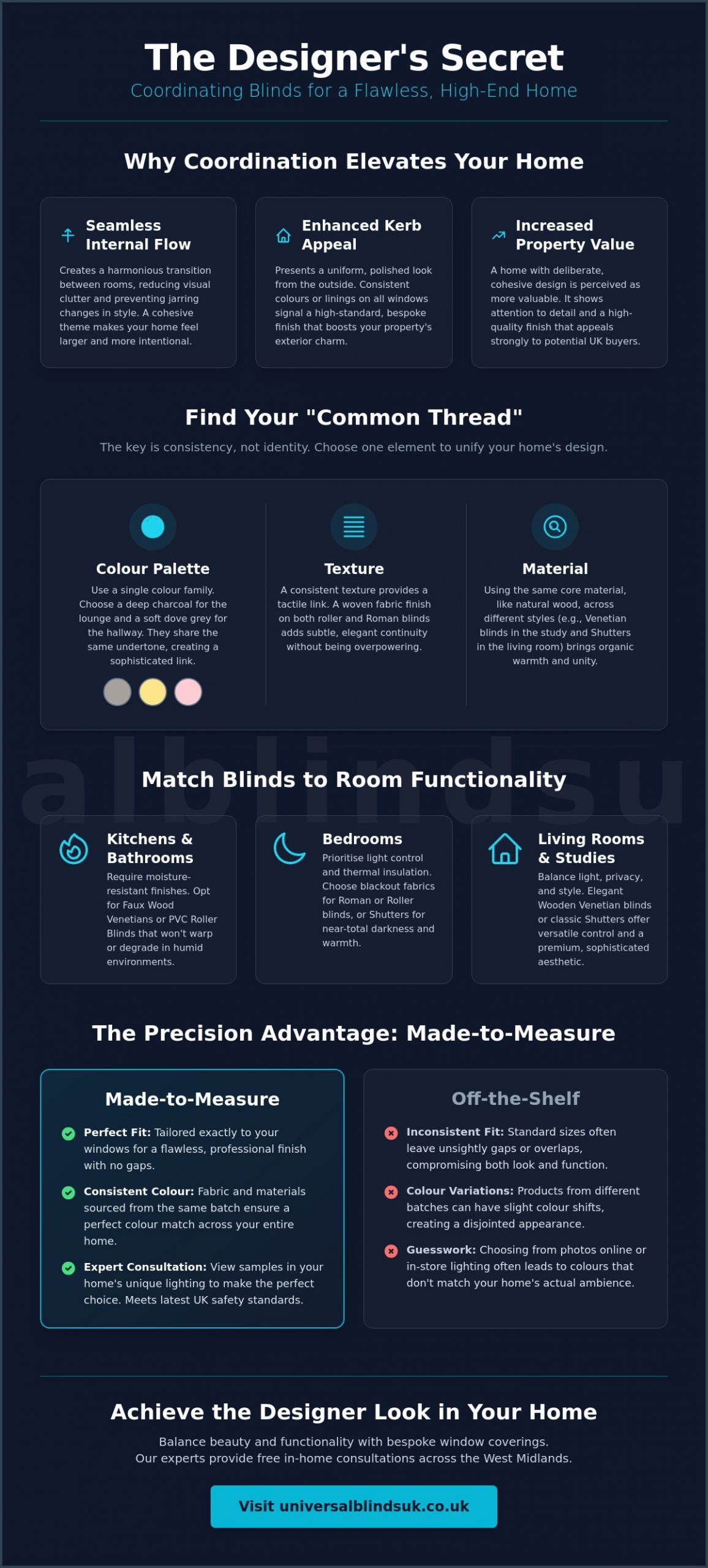
Overcoming the Coordination Challenge with Made-to-Measure Precision
Off-the-shelf blinds might seem like a convenient choice, but they often fail the “coordination test” the moment they’re installed. When you’re coordinating blinds throughout the home, even a few millimetres of gap or a slightly sagging headrail can disrupt the visual flow you’ve worked hard to create. Bespoke manufacturing eliminates these inconsistencies. One of the biggest advantages of a professional service is the guarantee of consistent fabric dye lots. If you buy “white” roller blinds from three different retail batches, you’ll likely find that one looks slightly blue while another appears cream. Custom orders ensure every blind is cut from the same roll, providing a flawless match across every room.
Modern UK homes often feature uPVC frames where “Perfect Fit” blinds are the ideal solution. These coordinate effortlessly with standard frames, providing a sleek, integrated appearance that doesn’t require drilling. Meanwhile, older West Midlands properties, particularly Victorian or Edwardian terraces, frequently present the “awkward window” problem. These windows are rarely perfectly square, meaning a standard blind will never sit quite right. Custom-made solutions are the only way to ensure these architectural quirks don’t break your design thread, allowing your window treatments to look intentional rather than ill-fitting.
The Importance of Consistent Recess Fitting
Deciding between an inside or outside recess fitting is a technical choice that has a massive impact on your home’s visual line. Keeping this choice uniform throughout your property creates a sense of order and reduces visual noise. Bay windows are particularly challenging for DIY enthusiasts; they require incredibly precise angles to ensure the blinds sit flush without clashing or leaving unsightly light gaps. You can explore why this level of precision is so vital in our guide to the benefits of professional blind fitting.
Eliminating the DIY Mismatch
Ordering from multiple suppliers is a significant risk for anyone seeking a cohesive look. You might find that a “dove grey” from one shop is significantly warmer than a “dove grey” from another, which becomes painfully obvious in open-plan spaces. A single professional survey treats your entire house as one project, ensuring every measurement is accurate and every material is perfectly matched. Made-to-measure window treatments are the essential foundation for a home where design flows naturally from the front door to the back garden. To ensure your home achieves this professional standard, book your free measuring service with our local specialists today.
Achieving the Designer Look with a Professional West Midlands Consultation
Bringing all these design elements together requires more than just a keen eye; it needs a methodical approach backed by years of industry experience. At Universal Blinds UK, our heritage-led approach is built on the belief that coordinating blinds throughout the home should be a rewarding, stress-free experience. We don’t believe in high-pressure sales. Instead, we focus on providing the transparent advice you need to make an informed decision for your property. By treating your home as a single, unified project, we help you weave that essential “Common Thread” through every room, from the initial measurement to the final professional fitting.
Our process is designed to build your confidence at every stage. We understand that choosing window treatments is a significant investment in your home’s comfort and value. That’s why our specialists guide you through the technical assessments, ensuring that the moisture-resistant materials discussed earlier are perfectly matched with the blackout fabrics needed for your bedrooms. This logical flow manages expectations and ensures the final implementation is exactly what you envisioned.
The In-Home Sample Experience
One of the most frequent mistakes homeowners make is choosing fabrics based on online photos or showroom lighting. A grey that looks perfect under fluorescent shop lights might appear cold and blue in a North-facing bedroom. Seeing physical samples in your own home’s unique lighting is the only way to ensure true coordination with your existing furniture and wall colours. Our experts understand how light direction affects colour perception. We’ll help you navigate these subtle shifts, ensuring your chosen palette remains consistent whether your windows face the morning sun or the evening shadows.
Local Expertise You Can Trust
As a family-run business with deep roots in the West Midlands, we take immense pride in our reputation for reliability and personal service. We aren’t a faceless national corporation; we’re local specialists who are invested in the community. Whether you’re based in Walsall, Birmingham, or Solihull, you can expect the same high standards of professional expertise and personable care that our customers frequently praise. We handle everything, including the technical precision of our professional fitting service, so you don’t have to worry about the complexities of installation. Book your free home consultation with Universal Blinds UK today and take the first step toward a beautifully coordinated home.
Transform Your Home with Cohesive Window Styling
Creating a professionally styled interior is within your reach when you focus on the details that connect your spaces. By identifying a “common thread” through colour or texture and ensuring each treatment meets the specific functional needs of the room, you can achieve a look that is both beautiful and practical. Mastering the art of coordinating blinds throughout the home doesn’t just improve your daily living environment; it adds lasting value and kerb appeal to your property.
As a family-run West Midlands business, we’re here to help you navigate these choices without any pressure or stress. Our heritage-led service provides the expertise you need to ensure every window is treated with precision. When you choose our bespoke window coverings, you benefit from free no-obligation measuring and quotes, followed by professional installation included with every order. This ensures a flawless finish that off-the-shelf alternatives simply can’t match.
Ready to see how cohesive styling can elevate your space? Book Your Free Home Consultation & Measure in the West Midlands today. We look forward to helping you create a home that feels perfectly unified and uniquely yours.
Frequently Asked Questions
Should all the blinds in my house be the same colour?
No, you don’t need every blind to be identical, but they should share a common undertone. Using a tonal palette allows you to adapt to different room decors while maintaining a sense of order. For example, you might use a warm mushroom in the lounge and a lighter sand tone in the hallway. This strategy is highly effective for coordinating blinds throughout the home without making your interior feel repetitive or stagnant.
Can I mix different types of blinds in the same room?
You can certainly mix different blind types in a single room, provided they share a unified material or colour. It’s common to see a vertical blind on a large patio door paired with a roller blind on a smaller side window. By selecting the same fabric or a matching headrail finish, you ensure the different mechanisms look like a deliberate design choice rather than a mismatch.
How do I coordinate blinds with my existing curtains?
What is the best neutral colour for whole-home blind coordination?
Warmer neutrals like oat, stone, and soft clay are the most versatile choices for 2026. These shades have replaced cool greys because they provide a softer, more inviting atmosphere that works well with both modern and traditional UK interiors. These tones act as a perfect canvas, allowing you to change your soft furnishings or wall colours in the future without needing to replace your bespoke window treatments.
Do I need to match the blinds on the front and back of my house?
Matching the blinds on the front of your house is essential for kerb appeal, but you have more flexibility at the rear. A uniform look from the street, perhaps using consistent white or ivory linings, gives your property a polished facade. For the back of the house, you can prioritise room-specific needs, such as moisture-resistant finishes in the kitchen, while still staying within your chosen tonal family.
How can I coordinate blinds if my windows are different sizes?
Made-to-measure precision is the secret to coordinating blinds throughout the home when your windows vary in size. Whether you have a wide bay window or a small cloakroom opening, bespoke manufacturing ensures the proportions of the slats or fabric remain consistent. This creates a visual balance that off-the-shelf products can’t achieve, as it eliminates the awkward gaps and ill-fitting overlaps that disrupt your home’s flow.
Are motorised blinds available in coordinating styles?
Yes, motorised and smart blinds are available in a wide range of coordinating styles and fabrics. This technology is a major trend for 2026, offering a cordless aesthetic that is both sleek and safe. You can easily match motorised rollers in your hard-to-reach windows with manual versions in the same fabric elsewhere, ensuring your home benefits from modern convenience without sacrificing your unified design thread.
Why should I choose a professional fitter for whole-home blinds?
A professional fitter ensures your blinds comply with UK safety standards, specifically the BS EN 13120 regulations regarding child safety. Beyond safety, an expert installer can handle the technical challenges of awkward recesses or non-square windows found in many heritage properties. This precision guarantees that your investment in bespoke window coverings looks flawless and operates smoothly for years to come, providing peace of mind that DIY kits simply can’t offer.