

Blinds and shutters for UK sash windows
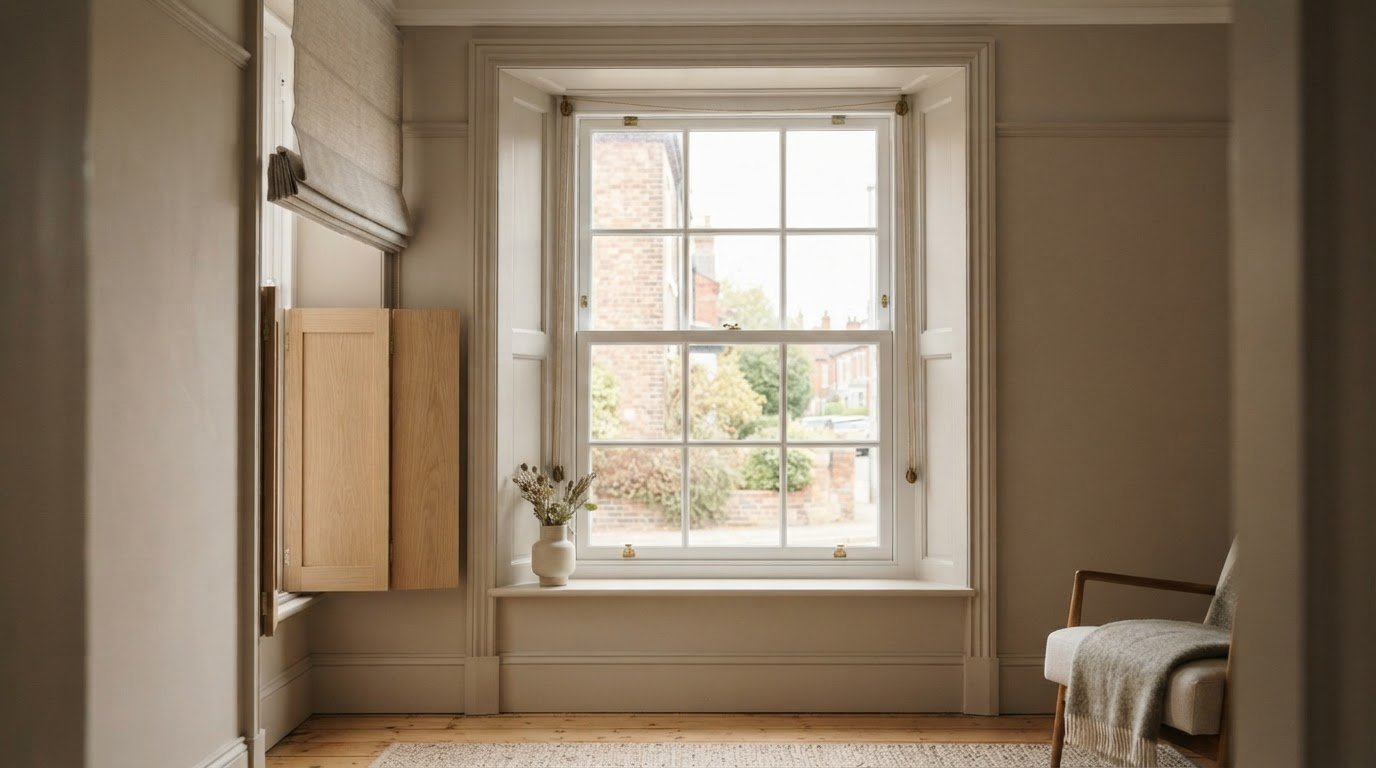
Shutters can suit sash windows, and so can blinds, provided their placement and hardware allow the window to move freely. Blinds for sash windows in the UK can be fitted inside the recess or above it. Made-to-measure shutters can also sit within the recess without obstructing the sashes.
Look beyond the style of the window covering: recess depth, handles, cords and pulleys all affect fit and operation. A neat-looking option must still leave the sashes free to slide.
This guide explains how shutters and different blind styles work with sash windows, including what to consider when space is limited. You’ll learn how mounting position, window hardware and frame measurements affect the fit, helping you compare options and choose one that suits both your room and your window.
Key Takeaways
- Shutters can work with sash windows when fitted to suit the recess and leave the sashes free to slide.
- Compare inside-recess and above-frame blind placement based on available depth, window movement and the look you want.
- Allow for sash cords, pulleys, hooks and handles when assessing clearance, especially on box sash windows.
- Choose a blind style according to your priorities, such as adjustable light control, privacy or reducing draughts.
- Made-to-measure options can accommodate uneven frames and non-standard dimensions more precisely than standard sizes.
Fitting blinds inside or above sash frames
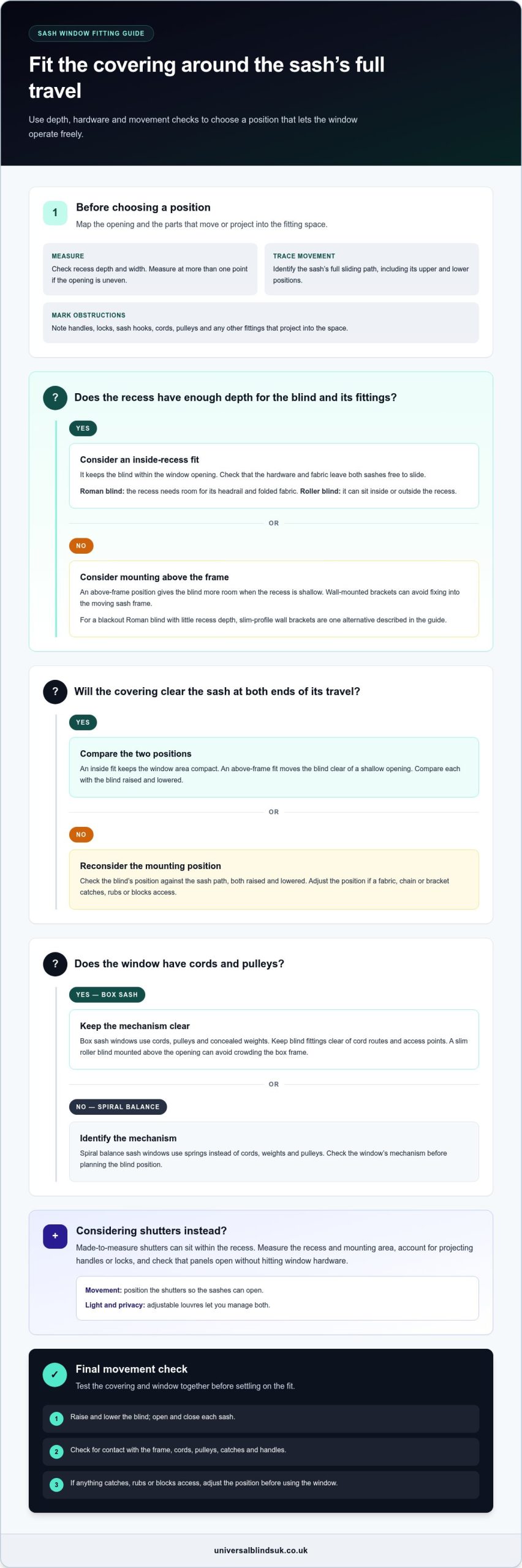
Blinds can sit inside a sash-window recess or above the frame, while shutters can be fitted within the recess. The right position depends on available depth, window movement and any fittings that could obstruct the covering.
Recess and Wall-Mounted Fitting
An inside-recess fitting keeps the blind within the window opening and can preserve clear space around the frame. First measure the recess depth and check that the blind won’t interfere with either sash as it slides. A Roman blind, for example, can fit inside the recess when there’s enough room for its headrail and folded fabric.
Mounting above the frame gives the blind more room when the recess is shallow. A Roman blind can be wall-mounted above the window, while roller blinds can also sit inside or outside the recess. For a blackout Roman blind with little recess depth, slim-profile wall brackets can provide a practical alternative to an inside fit.
Compare both positions with the blind raised and lowered. An inside fit keeps the window area compact, while an above-frame fit moves the blind clear of a shallow opening. In a Victorian room, consider whether the position suits the sash proportions and how much of the surrounding frame you want to cover.
Fitting Without Drilling the Frame
To avoid drilling into the sash frame, mount the blind above the window and attach its brackets to the wall, not the moving timber. Measure the proposed position against the blind width and check that the raised blind clears the top sash before installation.
A no-drill fit to the frame is a different requirement: the mounting method must support the blind without obstructing sash movement. Don’t assume every bracket or blind can be fixed this way. Wall mounting can avoid frame fixings in a shallow recess; for an inside fit, the frame depth and blind hardware determine what will work.
Shutters can also be fitted within the sash-window recess for a built-in appearance. Measure the recess and mounting area, and account for handles or locks that project into the space. Made-to-measure shutters can be positioned to allow the sashes to open, while adjustable louvres let you manage daylight and privacy. Check that the panels can open without hitting window hardware.
Use this simple fitting check before choosing a position:
- Measure the recess depth and width at more than one point if the opening is uneven.
- Identify the sash’s full sliding path, including its upper and lower positions.
- Mark handles, locks and other projections that could catch a blind or shutter.
- Compare inside-recess and wall-mounted positions with the covering both open and closed.
These checks help distinguish a tidy fit from one that restricts the window. A blind inside a small recess may save space, but an above-frame position can work better when shallow depth or sash hardware leaves little clearance.
Compatibility with box sash windows, cords and pulleys
Box sash windows use cords, pulleys and concealed weights, so a blind must leave this mechanism clear. Vertical sliding windows need coverings that stay out of the sash’s path; inward-opening windows need clearance for the moving frame.
Blinds can obstruct sash movement if their position or fittings overlap the opening path. Poorly placed fixings may also catch cords or hardware, so check how the window moves before choosing a style.
Compatibility With Box Sash Windows
A box sash contains steel weights connected to sash cords that run over pulleys. These cords balance the moving sashes, so keep blind fittings clear of their routes and access points. A slim roller blind mounted above the opening, for example, can avoid crowding the box frame and leave the cords free to move.
Spiral balance sash windows use springs instead of cords, weights and pulleys. Identify your window’s mechanism before planning the blind position. In period properties, neat fittings and complementary finishes can preserve the character of the timber frame without disguising its traditional details.
Clearance for Window Movement
For vertically sliding sash windows, choose a blind that stays clear of the sash’s path. Roller and Roman blinds can be positioned inside or outside the recess, depending on available space. Vertical blinds may feel awkward because their movement can conflict with the sash’s vertical slide.
If a window opens inward, leave room for the frame to swing without striking the blind or its brackets. Operate the window and measure its opening path, then compare that clearance with the blind’s position when raised and lowered. This practical test can reveal clashes before fitting.
Avoiding Damage or Obstruction
A blind doesn’t automatically damage a sash window, but incorrect placement can obstruct its movement. Check the cords, pulleys, catches and handles, then operate both sashes through their full travel. If fabric, a chain or a bracket catches, adjust the position before using the window.
Use this fitting check for a box sash or spiral balance window:
- Identify the moving parts and the route each sash follows.
- Check for contact between the blind, frame, cords and pulley area.
- Raise and lower the blind, then open and close each sash.
- Adjust the position if any part catches, rubs or blocks access.
This movement check matters in Victorian homes, where original window hardware may sit close to the frame. A tailored fit can account for uneven openings while keeping operating parts accessible. Explore made-to-measure blinds for a solution sized around the window and its working hardware.
Blind placement and clearance for sash hooks and handles
Sash hooks and handles project from the frame, affecting where a blind sits and how it moves. Map each fitting before choosing a mounting point: even a small projection can catch fabric or block access to a latch.
Start by checking the fittings on both sashes. Note where each hook sits when the window is closed, then move the sashes and observe how the fittings travel. A hook that seems clear at rest may pass behind the blind as the lower sash rises. Check the upper sash too, especially if its handle is close to the meeting rail.
Next, assess the proposed blind position. For an inside-recess fit, compare the recess depth with the projection of handles and hooks. The blind must clear them when lowered, and its operating chain or control must remain reachable. If fittings occupy the same space, an above-frame position may move the blind clear of their path.
The headrail needs clearance, but so does the fabric. A Roman blind gathers into folds when raised, so check that the fabric won’t press against a hook or handle. A roller blind winds around its top bar, but its fabric still needs to clear projecting hardware as it lowers. Consider both positions, not just how the blind looks when fully raised.
- Record where hooks and handles sit on the closed window.
- Move each sash and note the fittings’ full travel.
- Compare the blind’s raised and lowered positions with those paths.
- Check that you can reach each latch without pulling fabric aside.
For example, if a sash hook sits near the side of a narrow recess, an inside-mounted blind may leave little clearance. An above-frame installation can keep the fabric away from the hook while still covering the glass when lowered. The frame’s proportions and the coverage you want help determine the best position.
In a heritage room, preserving visible ironmongery may matter as much as controlling daylight. Keep hooks and handles accessible instead of hiding them behind the blind or its fabric. If a fitting overlaps the proposed mounting area, reconsider the position before installation rather than forcing the blind into a restricted space.
Finish by operating the window with the blind both raised and lowered. Check that no hook snags the fabric, no handle presses against the blind, and each sash slides freely. This final movement test confirms that your measurements allow practical clearance and keep the window hardware usable.
What types of blinds are suitable for UK sash windows?
Roman, roller and Venetian blinds can all suit sash windows, but each offers different practical benefits and ways to manage light. The best blinds for sash windows in the UK depend on the room, available recess depth and the coverage you want.
Roman blinds use fabric that lies flat when lowered and gathers into folds when raised. Thicker fabrics can help reduce draughts or retain heat, which may suit a living room in a period property. In a bay sash window, each Roman blind can be raised or lowered independently within its own frame. This gives you individual control across the bay rather than treating the whole window as one opening.
Roller blinds use fabric wound around a top bar. They can be fitted inside or outside the recess and suit rooms where you prefer a simple, compact covering. Roller fabrics include thermal, waterproof and blackout options. Correctly fitted blackout fabric can block out light, making it a useful choice for a bedroom or home cinema. In a shallow recess, a roller blind can sit close to the frame.
Venetian blinds have hard slats that tilt to manage sunlight and privacy, and move up or down to cover the glass. Adjustable slats let you change the light without raising the whole blind. Venetian blinds can be made from metal, plastic, softwood or hardwood. Wipe-clean slats can be practical in kitchens or bathrooms, where steam or condensation may be present.
Double roller blinds combine a sheer layer with a blackout layer. Switching between the layers gives you different levels of light and privacy, such as filtered daylight during the day and a darker room in the evening. Check that both layers clear the sash hardware and don’t obstruct the window’s movement.
Some styles are less suitable. Some blind styles may be less suitable for sash windows if their fitting requirements interfere with the window’s movement. Vertical blinds may also feel awkward because their horizontal movement conflicts with a sash’s vertical slide.
To compare blinds for sash windows in the UK, start with how you use the room:
- Choose Roman fabric for soft folds or thicker fabric that can help retain heat.
- Consider roller fabric for thermal, waterproof or blackout coverage.
- Select Venetian slats when adjustable light and privacy matter.
- Look at double rollers when you want sheer and blackout layers.
A Georgian or Victorian sash may call for a style that balances appearance with daily use. In a living room, light-filtering fabric can soften daylight without glare. For a bedroom, correctly fitted blackout fabric may suit your needs, while a kitchen may benefit from wipe-clean Venetian slats. Whichever style you choose, consider its operation and placement alongside the sash before making your final decision.
Are made-to-measure blinds or standard blinds better for sash windows?
Made-to-measure blinds are often the better fit for sash windows with uneven frames or non-standard dimensions. A standard blind may suit a regular opening, but its width and drop still need to match the window and leave room for it to operate.
Sash openings can vary in width or height, particularly in older homes. Measuring the top, middle and bottom helps show whether the frame is square. If the measurements differ, a made-to-measure blind can be sized for the actual opening rather than an assumed standard size.
For an inside-recess blind, record the recess width and depth, then consider how the sash moves. The blind must sit within the available space without catching on the frame or obstructing the window. For an outside fit, measure the coverage area and note nearby handles, locks or trim that could affect installation.
Use this comparison before choosing:
- Made-to-measure: suited to uneven frames, non-standard dimensions and a specific intended mounting position.
- Standard size: may work where the opening matches the blind dimensions and the planned position allows clear window movement.
- Either option: needs accurate width, height and clearance checks before fitting.
For example, a Victorian sash may have a wider recess at the top than at the sill. A standard-width blind could leave an uneven gap or fail to sit neatly. A made-to-measure size can account for that variation, but the mounting position must still suit the sash’s movement.
Standard sizing is not automatically unsuitable. It can be a straightforward choice when the opening is regular and the blind’s dimensions match the area you want covered. Compare the blind’s actual measurements with the window rather than relying on broad labels such as “small” or “wide”. Also consider the headrail and fabric when checking whether the blind will fit comfortably in the chosen position.
Before deciding, check the frame at several points, identify any unevenness and measure the intended fitting area. Compare those measurements with the blind size, then consider the window’s full movement. This clarifies the trade-off: standard sizing can suit a matching opening, while made-to-measure sizing addresses unusual dimensions more precisely.
If your sash frames have uneven or non-standard dimensions, arrange made-to-measure blinds sized for your window.
Universal Blinds UK: Made-to-Measure Blinds
Universal Blinds UK helps you choose coverings that suit sash windows and their working hardware. Its made-to-measure blinds are tailored to each window, while custom shutters offer another option for a fitted finish.
If you’re unsure how the recess, handles or sash movement affect the fit, Universal Blinds UK’s free measuring service can establish the measurements you need. A professional fitting service completes the process, positioning your chosen covering with the window’s operation in mind.
Consider this next step if your frames are uneven, non-standard or difficult to measure accurately. Contact Universal Blinds UK to discuss your sash windows, or visit universalblindsuk.co.uk.
Make the next choice with confidence
The right window covering should feel at home in your room and suit how you use it each day. Before deciding on blinds for sash windows in the UK, consider the atmosphere you want: a softer finish for a calm living space, or a defined look that complements period details. Your preference can help narrow the choice while keeping practical fit in mind.
Universal Blinds UK offers made-to-measure blinds, custom shutters and a free measuring service. To move from ideas to a considered choice, arrange a free home consultation and discuss your windows with the team.
Contact Universal Blinds UK today to explore an option that suits your home. A thoughtful fit can bring the whole room together.
Frequently Asked Questions
Can blinds be fitted inside the recess of a sash window?
Yes, blinds can be fitted inside a sash-window recess if there’s enough depth for the blind and its operating parts. Consider the headrail as well as the fabric, since both need space within the opening. A compact roller blind, for example, may suit a recess where a folded Roman blind would feel crowded. The window should still slide freely with the blind raised and lowered.
How do you measure a sash window for blinds?
Measure the intended fitting area, then record the recess width at the top, middle and bottom. Measure the height at both sides and the centre. Note the smallest measurements, along with any handles, locks or trim that project into the space. Decide whether the blind will sit inside the recess or cover the window from outside it, as this changes which area to measure.
Are there child-safety rules for blind cords in the UK?
Yes, blind-cord safety is an important consideration in UK homes, particularly where children may use or play near a window. Where possible, choose a design that avoids accessible looped cords, and keep operating cords secured and out of reach. Check the product’s safety instructions and ensure the installed cord arrangement follows them. A tidy appearance alone doesn’t mean a cord is safely positioned.
Which UK retailers offer blinds made for sash windows?
Universal Blinds UK supplies and fits made-to-measure blinds and custom shutters for customers in and around the West Midlands. Made-to-measure sizing can help accommodate sash windows with uneven frames or non-standard dimensions. The free measuring service helps establish the window measurements, and professional fitting provides an installed solution. If you’re in the West Midlands and comparing suitable coverings, arrange a free home consultation with Universal Blinds UK.