

4 practical tips for choosing blinds that fit your needs
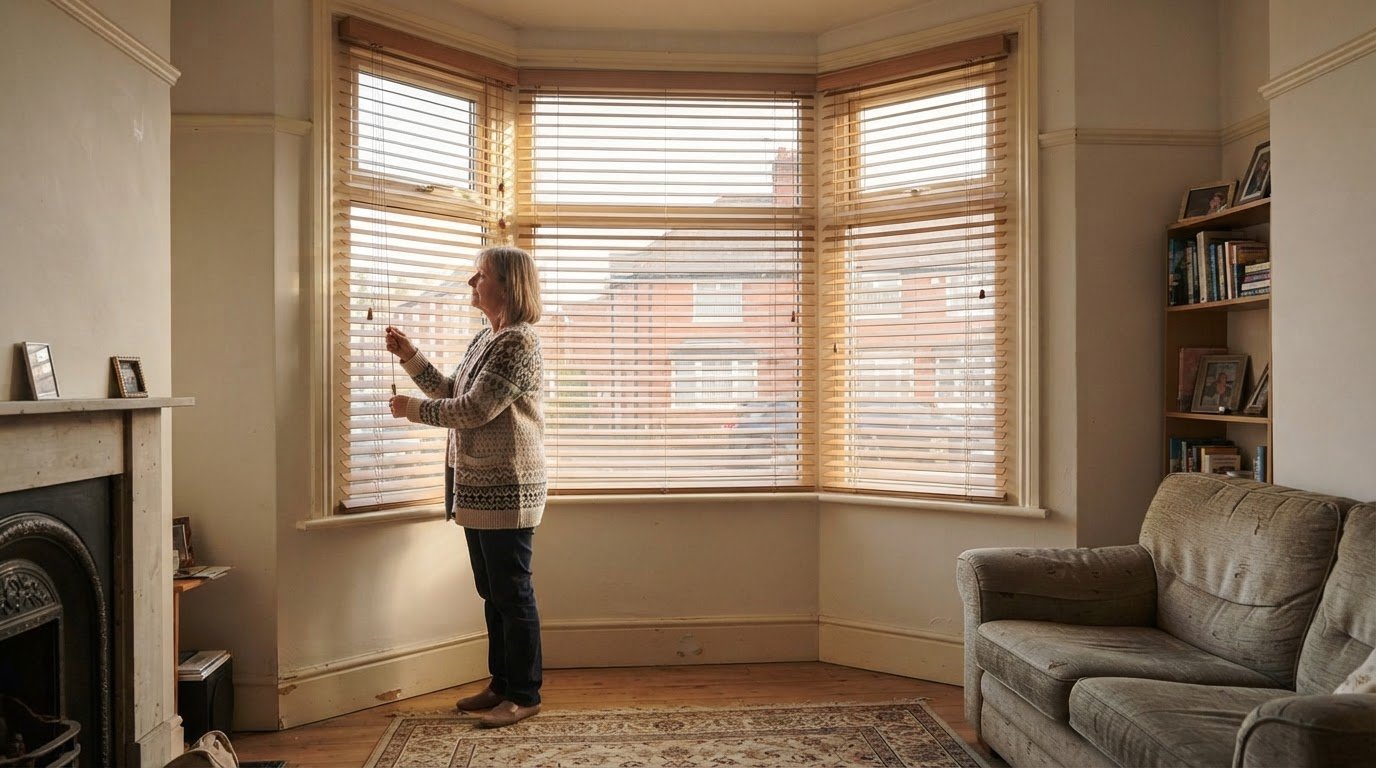
The best blind for a humid room may differ from the one that works beautifully in your bedroom. For expert advice on choosing blinds, start with the room’s moisture levels: bathrooms and kitchens need materials suited to damp conditions, while regular moisture can damage some fabrics.
It’s also natural to want a blind that looks right and gives you the light control you need. The material, fit and window shape all affect how well it works, so choosing by appearance alone can leave you with a frustrating mismatch.
This guide offers practical advice for matching blinds to your priorities, from blackout options for bedrooms to coverings for wide and bay windows. You’ll also learn what to consider in different rooms, including humid spaces, to make a confident choice for your home.
Key Takeaways
- Match the blind’s fabric and fit to how much light, privacy and sunlight you want to control.
- For large windows, balance the look you want with the blind’s function and practical suitability for the window.
- Bay windows call for careful consideration of the recess and whether an inside- or outside-recess fit is appropriate.
- Choose materials with the room in mind, especially where moisture could affect how a blind performs.
1. How can a professional help me choose blinds if I want to block the light entirely rather than just dim it?
Start by identifying what each window needs to do. In a bedroom, you may want blackout fabric; in a living room, adjustable light control can reduce glare while keeping the space bright. Sunlight direction, privacy needs and how you use the room help narrow the options. Fabric colours and finishes also shape the overall look.
Which blinds are best for privacy and light control? Roller blinds are a straightforward choice when you want blackout fabric, while vertical and day and night blinds can combine blackout options with adjustable light filtering. For privacy, wooden, faux-wood and Venetian blinds close to block external light, though some may enter around cords or the sides.
Blackout and dim-out are not the same. Blackout fabric is designed to block light, while dim-out reduces it without making the room fully dark. Even blackout fabric needs a close fit to work properly, so a professional considers the window and how the blind will sit. A small gap can let daylight through and affect the result.
Shutters offer another approach to light control and privacy, and can also help with insulation. The Energy Saving Trust says good window coverings can help reduce heat loss through windows, making insulation another factor to consider alongside daylight and comfort.
Room conditions matter too. Faux-wood blinds are waterproof and recommended for wet or humid rooms, while real wood is unsuitable where it may get wet regularly. Roman blinds are also not recommended for damp spaces. Most polyester roller and vertical blinds are unsuitable for humidity, so fabric choice matters. A professional weighs these needs together, helping you choose a covering that suits the window, the room and your preferred balance of light, privacy and warmth.
2. How can a professional help me choose blinds for a wide, tall, or generally large window?
A professional considers the window’s width and height alongside its purpose, style and maintenance needs. Expert advice on choosing blinds starts with the opening’s dimensions and how you use the room. For a UK window under around 2.8–3 metres wide, most blind options remain available. A living room may need adjustable filtering, while a large window near a seating area may benefit from glare control.
Compare styles by how they’ll look and work across the window. Roller blinds create a simple, clean finish and can suit a contemporary interior. Vertical blinds offer adjustable slats across broad windows. Shutters bring a structured look, while Venetian blinds let you adjust the slats for light and privacy. Fabric, colour and finish help each option sit comfortably with your existing décor.
Window design can narrow the choice. John Lewis recommends vertical blinds for larger French windows and sliding doors, where wide coverage and access are practical considerations. A professional can weigh this against the room’s layout, the direction the panels need to move and whether you want the blind to cover the whole opening.
Installation style also affects the result. A professional measures the opening and considers how the blind will sit in relation to the frame, handles and surrounding walls. A “perfect fit” look depends on choosing a suitable style and accurate dimensions; it isn’t a separate solution for every large window. Expert advice on choosing blinds can bring these details together, while made-to-measure blinds can be tailored to the opening rather than relying on standard sizing.
Should you choose a professional fitter to install your blinds? Yes, particularly for a large window, where accurate measuring and fitting help the blind sit neatly and operate as intended. A Professional Fitting Service can also help the finished blind look its best. For a tailored option, explore made-to-measure blinds suited to your window and room.
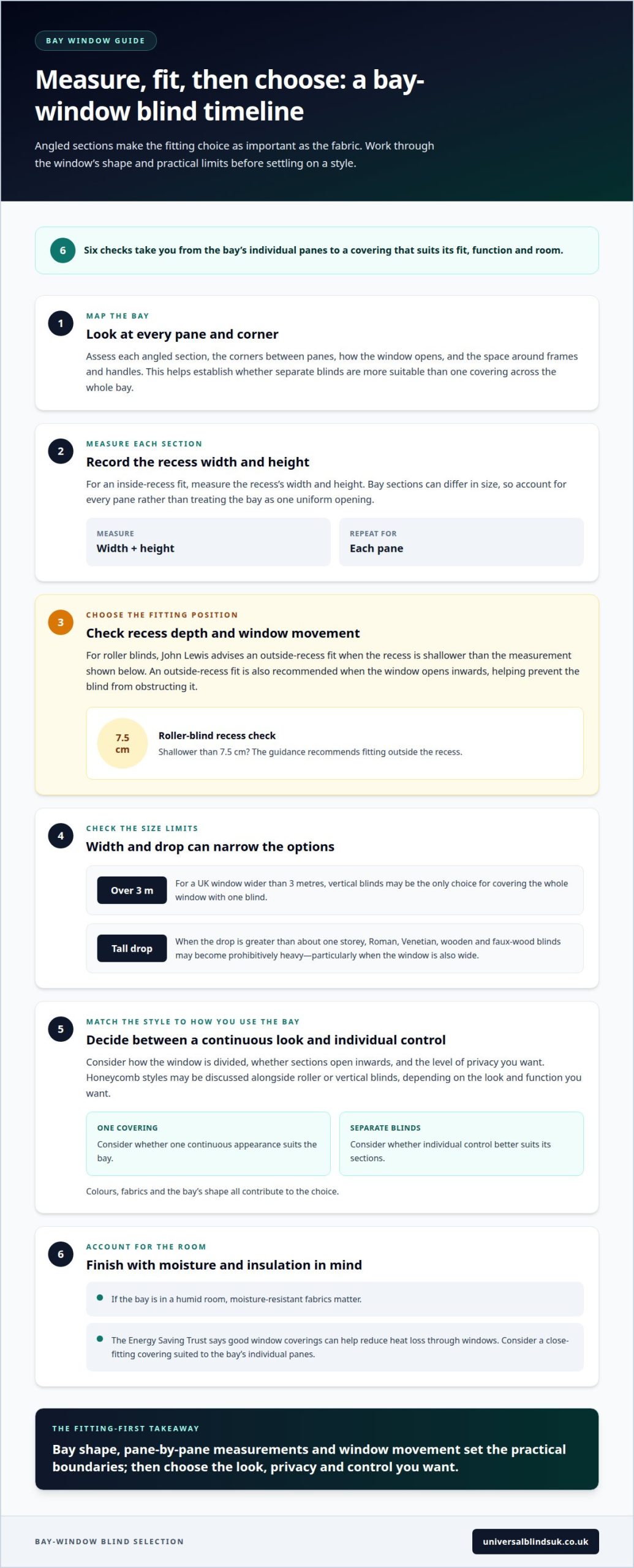
3. How can a professional help me choose blinds for a room with bay windows?
A bay window’s angled sections make the fitting choice as important as the fabric. A professional assesses each pane, the corners between them and how the window opens. This helps determine whether separate blinds are more suitable than one covering across the whole bay. The frame, handles and available space also affect how each blind can sit and move.
For a blind fitted inside a recess, the recess’s width and height need measuring. With a bay, each section may have different dimensions, so measurements must account for every pane. For roller blinds, John Lewis advises an outside-recess fit when the recess is shallower than 7.5 cm. It also recommends fitting outside the recess when a window opens inwards, helping prevent the blind from obstructing it.
Size affects the options. For a UK window over 3 metres wide, vertical blinds may be the only choice for covering the whole window with one blind. On a tall window with a drop greater than about one storey, Roman, Venetian, wooden and faux-wood blinds may become prohibitively heavy, particularly when the window is also wide. A professional considers these limits alongside the bay’s shape and your preferred colours, fabrics and level of privacy.
Which blinds provide the best insulation and help reduce energy bills? The Energy Saving Trust says good window coverings can help reduce heat loss through windows. Consider a close-fitting covering, with material and fit suited to the bay’s individual panes.
Honeycomb styles may be one design to discuss alongside roller or vertical blinds, based on the look and function you want. The right choice depends on how the window is divided, whether its sections open inwards and whether you prioritise one continuous appearance or individual control. Moisture-resistant fabrics matter if the bay is in a humid room, but the window’s shape remains central to a neat fit.
4. Choosing blinds for different rooms
Start with what each room asks of its window covering. Bedrooms often benefit from blackout options, while a living room may need flexible light control. In kitchens and bathrooms, moisture is a key factor. Choosing by room helps narrow the styles and fabrics instead of treating every window alike.
For bathrooms, choose materials suited to damp air and occasional splashes. Faux-wood blinds are waterproof and recommended for wet or humid rooms. Moisture-resistant roller blinds are another option, and roller blinds can be made in PVC waterproof fabrics for humid spaces. Most polyester roller and vertical blinds aren’t suitable for damp rooms, so a professional considers the fabric before recommending a style.
Real wooden blinds aren’t a good choice where they’re likely to get wet or face regular moisture. Roman blinds are also unsuitable for damp or humid rooms. Venetian blinds may suit spaces with moderate humidity or occasional contact with water. Day and night blinds use non-water-resistant polyester, making them unsuitable for humid rooms. These distinctions matter in kitchens, where cooking can create moisture, as well as bathrooms.
Bedrooms and children’s rooms bring different priorities. Blackout fabric can help create a darker bedroom, while a child’s bedroom needs attention to loose cords. Cordless, wand-operated, motorised or Perfect Fit blinds are recommended options for nurseries and children’s bedrooms. Choose based on how the room is used, the desired light control and how the blind will be operated.
For a coordinated home, select styles and colours that complement adjoining rooms, but keep each window’s conditions in view. A stylish fabric that suits a dry living room may not suit a humid bathroom. A professional can match materials to the room and ensure each blind is measured and fitted for its window. For help choosing and fitting blinds room by room, arrange professional blind fitting.
Universal Blinds UK
Universal Blinds UK supplies and fits made-to-measure blinds and custom shutters. If you’re balancing light control, privacy, window shape or room conditions, the free measuring service helps establish the right fit for your windows.
Professional fitting completes the process, particularly for large or awkward windows where accurate placement matters. Discuss the needs of different rooms and consider suitable options across your home, rather than choosing every blind on appearance alone.
For tailored help selecting blinds or shutters for your home, contact Universal Blinds UK.
Choose blinds that work for everyday life
The best choice should feel right beyond the moment you select it. Consider how you use each room throughout the day, what you want to see from the window and how easily you want to adjust the light. These everyday details help shape a considered decision, rather than one based on appearance alone.
It can also help to think about how individual windows relate to the rest of your home. A consistent colour palette can create a calm flow, while different blind styles can respond to each room’s needs. Start with your preferences, then use tailored advice to turn them into a practical choice.
Good expert advice on choosing blinds connects the look you want with the way you live. If you’re ready to discuss what could suit your windows, contact Universal Blinds UK today. Take the next step towards a home that feels comfortable, polished and distinctly yours.
Frequently Asked Questions
How can a professional help me choose blinds for humid rooms or wet environments?
A professional matches the blind material to the room’s exposure to moisture. Faux-wood blinds are waterproof, while moisture-resistant roller blinds and PVC waterproof roller fabrics are options for humid spaces. Day and night blinds use non-water-resistant polyester, so they’re unsuitable for damp rooms. In a kitchen, discuss whether cooking moisture reaches the window; in a bathroom, consider regular condensation and splashes.
Blinds inside or outside the recess?
An inside-recess fit sits within the window opening, while an outside-recess fit covers the opening from beyond it. For roller blinds, John Lewis recommends an outside-recess fit if the recess is shallower than 7.5 cm, or if the window opens inwards. A professional can assess the recess depth, handles and opening movement, then measure the width and height for an inside fit.
How can a professional help me choose blinds if I want to block the light entirely rather than just dim it?
Ask about blackout fabric and how closely the blind can fit the window. Roller, vertical, Roman and day and night blinds can be made with blackout options, but small gaps at the sides can still admit light. A professional can consider the window’s shape and fitting position, helping you decide whether the priority is a darker bedroom or adjustable light for daytime use.
How can a professional help me choose blinds for a wide, tall, or generally large window?
A professional weighs the window’s width and drop against the blind’s style and practical operation. For a UK window over 3 metres wide, vertical blinds may be the only option for covering the whole opening with one blind. On a tall window with a drop greater than about one storey, the weight of some Roman, Venetian, wooden and faux-wood blinds may become prohibitive, especially if it’s also wide.
How can a professional help me choose blinds if I want to filter but not necessarily block the light?
Vertical and day and night blinds can combine blackout options with light filtering, giving you choices beyond fully open or fully closed. Venetian blinds also let you adjust the slats to change how much daylight enters. A professional can help relate the desired effect to the room, such as reducing glare at a living-room window while retaining a bright feel.
How can a professional help me choose blinds for a room with bay windows?
A professional assesses the individual panes, angles and corners to determine how blinds can cover the bay without obstructing opening windows. For a recess fit, both its width and height need measuring; separate measurements for each section help account for differences across the bay. The chosen arrangement can then reflect whether you prefer each window controlled separately or a more continuous appearance.