

Electric Blinds Cost vs Benefit Compared with Chain Blinds
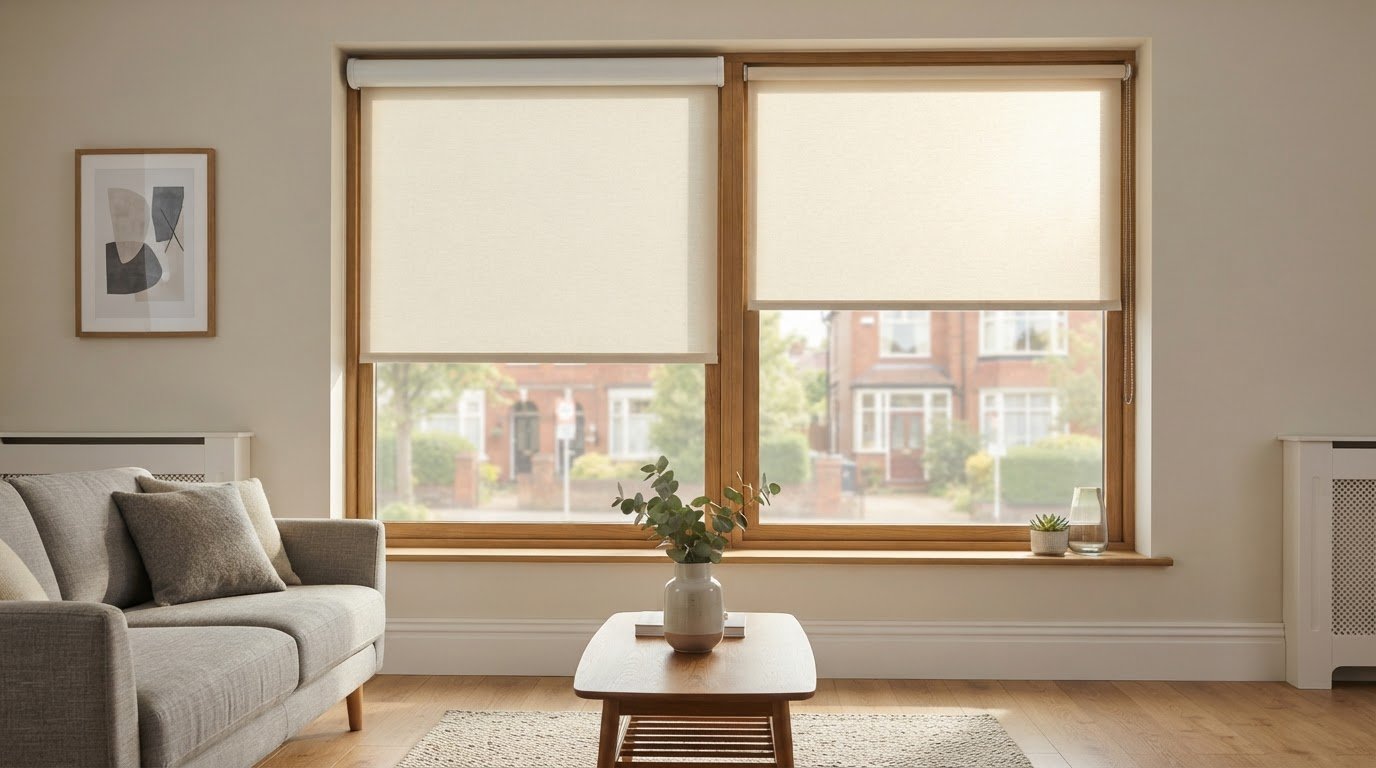
Electric blinds usually cost more upfront than chain-operated blinds, but their motors run for only a few seconds each time they move. Their annual power use can be modest, so the cost vs benefit of electric blinds is shaped more by the initial outlay and the convenience they offer than by electricity use.
Weigh the additional cost against whether powered operation would make daily life easier. It can be especially useful for high, hard-to-reach or large windows, while chain blinds provide straightforward manual control without electrical components.
This guide compares upfront and running costs, explains how electric blinds may help manage indoor temperatures, and outlines the practical differences between motorised and chain-operated options. Use it to judge which best suits your windows, routines and priorities.
Key Takeaways
- Compare the higher initial outlay for powered blinds with their small amount of running power and the convenience they add.
- See how timed adjustments can help manage sunlight and indoor temperatures, while treating potential energy savings as one factor in the decision.
- Use the comparison criteria to decide whether chain operation or motorised control better suits your windows and daily routine.
- Learn how made-to-measure blinds, measuring and professional fitting can help you plan a solution around your windows.
Can Motorised Blinds Improve Energy Efficiency?
Motorised blinds can improve energy efficiency by changing how much sunlight enters through your windows. Schedule them to close during the hottest part of a summer day, then open on sunny winter days to admit warmth. This can help regulate indoor temperatures and may reduce heating and cooling costs. A sun-sensor setup can also adjust blinds while homeowners are away, including for a three-hour absence.
Timing matters: sunlight can add warmth in winter but increase heat and glare in summer. Automated movement helps match window coverings to changing conditions without relying on someone to adjust them manually. A remote gives you direct control, while a programmed schedule can handle routine changes. The blind’s material and fit also affect how much light and warmth pass through the window.
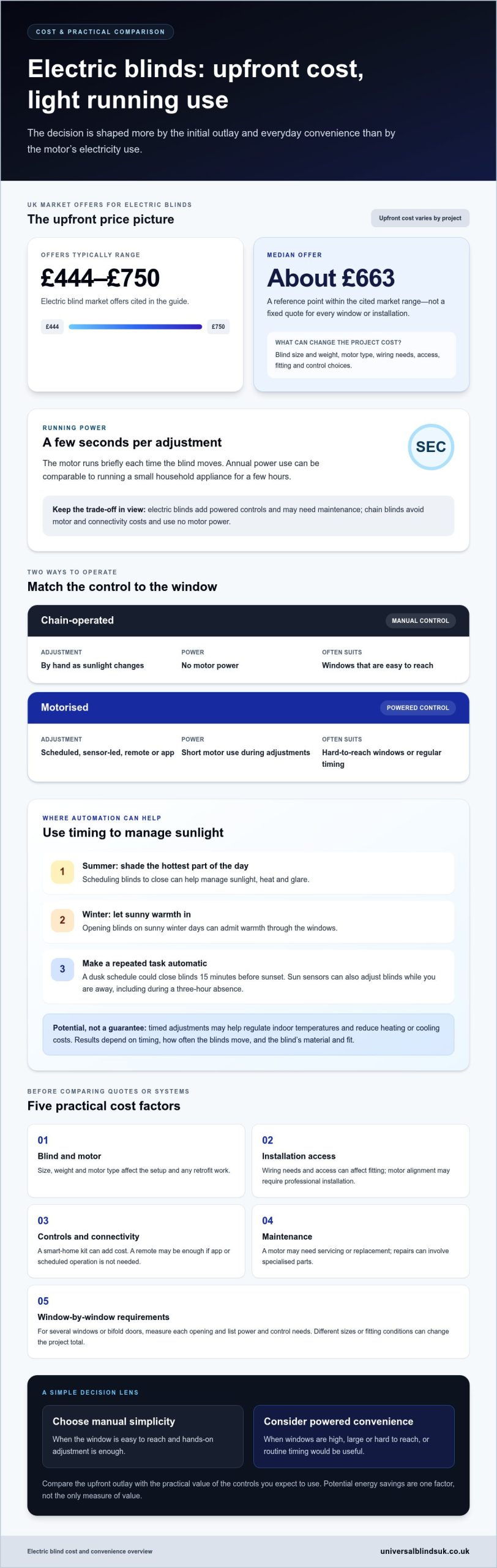
Consider these factors when comparing potential savings with electricity use. The motor runs for only a few seconds per adjustment, and annual power use can be comparable to running a small household appliance for a few hours. That limited consumption is relevant when considering the environmental impact, but it does not by itself establish a reduction in a home’s overall energy use. The result also depends on how often the blinds move and whether their timing suits the room.
| Option | Energy control | Power use | Best suited to |
|---|---|---|---|
| Chain-operated | Manual adjustment as sunlight changes | No motor power | Windows you can reach easily |
| Motorised | Scheduled or sensor-led movement | Short motor use during adjustments | Regular timing or hard-to-reach windows |
For a practical comparison, identify rooms with strong afternoon sun or useful winter warmth, then consider when those windows need shading. Include installation and control choices in your assessment. Motorised blinds may suit windows where timed adjustments support comfort; chain operation may be better where simple, hands-on control is enough.
Automated scenarios for comfort and convenience
There’s no single UK electric blind brand that offers the best value, warranty and smart-home compatibility for every household. Compare warranty terms and compatibility with your existing devices, then weigh them against the price and features.
Automation is most useful when it removes a repeated task. Programme blinds to open or close at set times, or respond to sunlight or indoor temperature. For example, a dusk schedule could close blinds 15 minutes before sunset, reducing the need to adjust them manually each evening. You can also operate many electric blinds using a remote control or smartphone app.
Smart-home integration can make blind control part of your routine. Electric blinds may work with platforms such as Amazon Alexa and Google Home, while some systems respond to weather or time of day. Before choosing a setup, consider which control method you’re most likely to use: voice command, app, remote or automatic schedule.
- For a consistent daily routine: programme opening and closing times, then adjust them when seasonal daylight changes.
- For changing sunlight: choose controls that respond to the sun’s position or indoor temperature.
- For remote operation: use a smartphone app or remote to adjust blinds without reaching each window.
High ceilings, skylights and other hard-to-reach windows can make powered control especially convenient. A battery-powered system can avoid the need for a nearby socket, and rechargeable batteries may last for months between charges. Factor charging into your decision, along with how you’ll operate the blinds if your preferred smart control is unavailable.
To compare brands, match the system to your devices, read what its warranty covers, and consider how you’ll operate it every day. For a tailored fit across different window sizes, explore made-to-measure blinds as part of your planning.
There’s no single brand that offers the best value, warranty and smart-home compatibility for every household. Compare each system’s price, warranty coverage and compatibility with your existing devices, including platforms such as Amazon Alexa or Google Home.
Electric blind costs compared with chain-operated blinds
Chain-operated blinds avoid motor and connectivity costs, while electric models add powered controls. The cost vs benefit of electric blinds depends on whether those controls solve a practical need in your home. UK market offers for electric blinds typically range from £444 to £750, with a median of about £663.
Retrofit and Installation Costs
Retrofitting means adding a motor to an existing manual blind, provided its construction and mechanism suit conversion. There’s no standard retrofit cost: the motor type, blind size and weight, wiring needs and access all affect the work. Fitting a motor yourself may reduce labour costs for a straightforward setup, but wiring and motor alignment can require professional installation.
For bifold doors, consider how many blinds you need and whether their sizes or fitting conditions differ. Measure each opening and list the power and control requirements before comparing quotes. The total price depends on the project and is provided after a quote request. These details make the cost vs benefit of electric blinds easier to assess against chain-operated alternatives.
Maintenance and Connectivity Costs
Manual blinds have no electrical components and fewer parts that could go wrong. Electric blinds add a motor that may need servicing or replacement, and repairs can involve specialised parts. Factor possible maintenance into long-term ownership costs rather than considering only the initial purchase and fitting.
A smart-home connectivity kit can add to the cost, depending on the controller needed to integrate the blinds with your existing setup. It may be worthwhile if you’ll use app-based or scheduled operation. Otherwise, a remote may meet your needs without connected features.
Compare equivalent window coverings by size, material, fitting needs and controls. Choose manual operation for straightforward, accessible windows; consider motorised blinds where powered control would address a recurring difficulty.
Electric blinds’ upfront cost and power requirements
The power source affects installation and everyday use. Mains-powered blinds draw power as needed, battery models avoid the need for a nearby socket, and solar-powered options may be less effective where sunlight is limited. Each suits different window positions and access to power.
Size, material, motor and control options all affect the final specification. Compare like-for-like blinds rather than looking at motor cost alone.
Battery operation can simplify installation where running a cable would be difficult. A battery-powered blind typically needs charging about twice per year. Mains power may suit particularly large or heavy blinds, while solar power depends on receiving enough sunlight. Consider each blind’s position before choosing its power source.
For UK electrical safety, hardwired blinds require a 5 amp fused spur close to the blind. A qualified electrician may need to fit it. This wiring requirement is the key practical point to include when planning a hardwired installation; the power supply and fitting work should be considered together.
- Roller blind: compare the chosen fabric and size with the motor and control system.
- Smart-home automation: check whether the system can integrate with your setup or needs a separate controller.
- Button control: consider whether you want a remote or app to open and close blinds individually or together.
For a made-to-measure solution, plan your blind installation around each window’s size, position and power access. That makes it easier to compare the full upfront requirements before selecting motorised controls.
Universal Blinds UK: Made-to-Measure Blinds
Universal Blinds UK helps you move from comparing options to choosing made-to-measure blinds for your windows. Its free measuring service establishes the dimensions, and professional fitting supports a well-aligned installation.
This can be a practical next step if window sizes, access or fitting requirements make the choice between chain and electric blinds difficult. Discuss made-to-measure blinds or custom shutters for the rooms and windows you’re planning, then consider how each option suits your priorities for operation, appearance and fit.
Contact Universal Blinds UK to discuss your windows and the options that may suit your home.
Choose the right fit for your next step
The best choice is the one that works for your rooms and routines. Before deciding, consider which windows need easier operation, where a made-to-measure fit matters most, and whether custom shutters may suit another space. This gives you a clear starting point for weighing the cost vs benefit of electric blinds without treating every window as the same project.
Universal Blinds UK can help you plan with made-to-measure blinds, custom shutters and a free measuring service. Accurate measurements help shape a solution around your windows, while considering each room individually can make the decision more manageable.
Talk through your requirements and explore the options at Contact Universal Blinds UK. A thoughtful choice can bring lasting comfort and a finish that feels right for your home.
Frequently Asked Questions
Do Electric Blinds Use a Lot of Electricity?
No. Electric blinds use power while their motors move, not continuously throughout the day. Actual use depends on the blind, motor and frequency of operation. If several blinds are scheduled to move together, their motors still run only during those adjustments. For household budgeting, consider electricity alongside battery charging, installation and the initial purchase rather than treating power consumption as the only running cost.
Motorised Blinds Explained: Costs, Benefits And Are They Worth It?
Motorised blinds use a motor to adjust the blind through a control, such as a remote or compatible smart-home system. The cost vs benefit of electric blinds depends on how often powered operation would help. For example, a skylight used daily may be difficult to reach manually. Consider control preferences, access and the number of windows before deciding whether the added functionality suits your home.
Summary: Should You Invest in Motorised Blinds?
Motorised blinds may be worthwhile when manual operation is inconvenient or difficult for a particular window. Start by identifying where access is awkward, then consider whether remote or scheduled operation would improve your routine. You may not need the same control in every room. Matching motorised blinds to specific needs keeps the decision grounded in everyday use.
How much do electric blinds cost in the UK, including fitting?
UK market offers for electric blinds typically range from £444 to £750, with a median of about £663. Fitting and setup can affect the project total, depending on window measurements, access, wiring and the number of blinds. Treat the market range as a guide rather than a tailored fitted price. A quote for your windows should reflect the actual specification and installation work.
What is the cost of electric blinds by type, size and brand in the UK?
The cost vs benefit of electric blinds varies with blind style, dimensions, material, motor and control requirements. A roller blind and a larger bespoke installation are different specifications, so compare equivalent sizes and inclusions rather than brand names alone. For a useful comparison, note whether each quote covers measuring, fitting, wiring, controls and any smart-home equipment.
How much do electric blinds cost to run, and how long do rechargeable batteries last?
Electricity use depends on the motor and how often the blinds move; each adjustment runs the motor for only a few seconds. Rechargeable batteries may last for months between charges, while battery-powered blinds typically need charging about twice per year. Keep charging access in mind when planning placement, especially for high windows, and consider whether your control routine involves frequent daily adjustments.