

Sliding panel blinds for large windows, patio doors and bi-fold doors
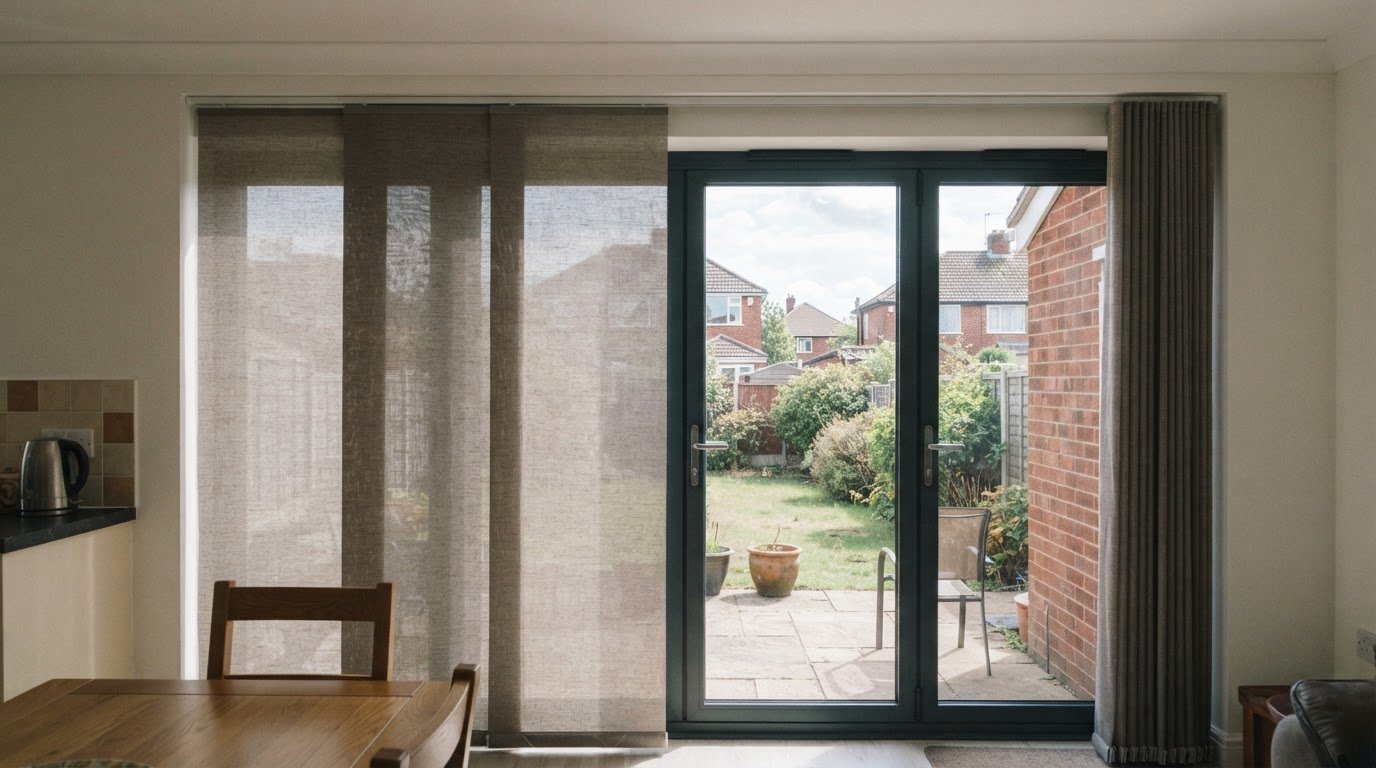
A panel blind covers a wide expanse of glass by moving sideways, not by tilting. Sliding panel blinds for large windows use fabric panels attached to gliders on a track. Slide them across to cover the glazing or stack them behind one another to open it. Light-filtering and blockout fabrics offer different ways to manage daylight and privacy.
When choosing blinds for patio or bi-fold doors, how they move and where they stack matter as much as their appearance. Panel blinds are designed for wide openings, but their broad fabric panels don’t tilt, so they control light differently from vertical blinds.
This guide explains how the track, panels and controls work, how the blinds stack when open, and what to consider for large windows, patio doors and bi-fold doors. You’ll learn whether this style suits your space, how fabric choice affects light, and what to consider when planning a made-to-measure fit.
Key Takeaways
- Learn how a control wand moves the panels and how a ceiling-mounted track can also create a sliding room divider.
- Find out how combining fabric types can help you balance daylight, privacy and the look of a wide window.
- Consider where the panels will stack when open, especially around patio and bi-fold doors.
- See how made-to-measure panels can suit wide glazed openings, and why fabric care instructions can vary.
How do Panel Blinds work?
Each panel blind uses broad fabric sections suspended from a track. The panels can be made to fit a particular space, including a wide glazed opening. Fabric choice affects how much daylight enters and the finished look. Light-filtering fabrics soften incoming daylight, while blockout fabrics are designed to block it. Choose according to the room and your routine: softer light may suit a living area, while stronger light reduction may work better in a bedroom.
Mixed-fabric styling lets you combine different panels across one window. Alternate a plain fabric with a textured or patterned option to create contrast without changing the track. Or repeat one colour in different textures for a more coordinated look. On a large window, consider how each panel looks beside the next when closed. A bold pattern draws attention, while complementary colours can create a calmer effect.
Colour also affects how the blind relates to the room. Neutral shades can sit quietly alongside patterned furnishings, while a stronger colour can make the window a focal point. Texture adds interest without relying on a print. Before choosing, consider the wall colour, nearby furniture and view through the glass. These details help you decide whether the panels should blend in or provide contrast.
Light control comes from the fabric, not a tilting mechanism. Light-filtering panels soften daylight; blockout panels are designed to block it. Neither option changes the panels’ sideways movement. If you combine fabrics, plan which sections should cover the brightest part of the window and which should provide more privacy. Cleaning instructions vary by fabric, so follow the care guidance for the selected material. A made-to-measure design brings your chosen colours, textures and light control together across the opening.
Panel sliding, stacking and light control
Panel blinds slide sideways along a track, letting you uncover part or all of a glazed opening. Their operation, fabric and track layout determine how they manage light and privacy.
Sliding Panels, Stacking and Tracks
Fabric panels attach to gliders that travel left or right along the track. A control wand moves them, bringing panels across the glass or stacking them behind one another when open. Check where the stack will sit: it affects how much of the window remains clear and whether it overlaps a doorway. A ceiling-mounted track can also support panels used as a sliding room divider.
Unlike vertical blinds, panel blinds don’t tilt, so they offer less precise light adjustment. Curtains hang in folds, while roller blinds raise or lower as one piece. Panel blinds slide across the opening in sections.
Light Control and Privacy
Light-filtering fabric softens daylight, while blockout fabric is designed to block it. Choose according to the room’s use and your privacy needs, such as filtered light in a living space or stronger light reduction in a bedroom. Fabric choice alone doesn’t establish insulation performance, so consider warmth separately from light and privacy.
Care instructions vary by fabric. Follow the selected fabric manufacturer’s guidance rather than using the same cleaning method for every panel.
Panel Widths and Track Sizes
Panel widths and track lengths are chosen to suit the opening; there’s no universal size for every UK window. The opening’s width, number of panels and desired stack position all affect the layout. Made-to-measure sizing helps align the panels with the space and how you plan to use them.
Tracks can be ceiling-mounted, including for use as a room divider. The mounting position should suit the opening, available clearance and fixing surface. A measuring service and professional fitting can help establish the dimensions and placement. Explore made-to-measure blinds for a tailored fit.
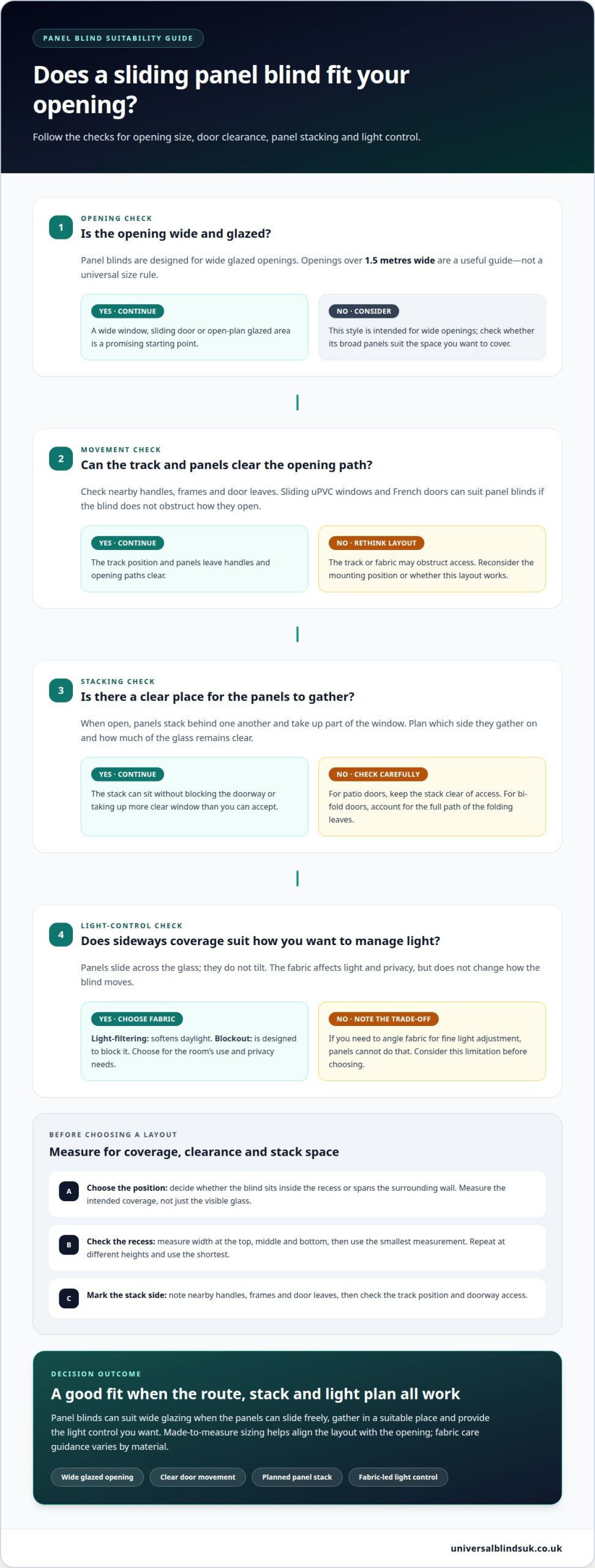
Suitability for large windows, patio doors and bi-fold doors
Panel blinds suit wide glazed openings, but the layout must work with the doors and the room. Suitability depends on the opening, access needs and space available for the panels.
Large Windows and Sliding Doors
Designed for wide openings and open-plan spaces, sliding panel blinds for large windows can cover broad glazing and sliding doors. Openings over 1.5 metres wide are a useful guide to where this style works well. For patio doors, plan where the panels gather when open. Bi-fold doors need particular attention because their leaves fold back across the opening. Keep the blind stack clear of their movement and the access route.
Sliding uPVC windows and French doors can also suit this style, provided the track and panels don’t obstruct handles or opening paths. One drawback is that the stack takes up part of the window even when the blind is open. Panels don’t tilt, either, so they can’t angle fabric for fine light adjustment. Weigh these trade-offs against how you use the room.
Measuring a Large Window
First decide whether the blind will sit inside the recess or span the surrounding wall. Measure the intended coverage, not just the visible glass. For a recess, measure the width at the top, middle and bottom, then use the smallest measurement. Repeat at different heights and use the shortest. This accounts for uneven walls and helps prevent rubbing.
Planning sliding panel blinds for large windows also means allowing for the stack. Mark which side the panels should gather on, then note nearby handles, frames and door leaves. Check that the track position clears them and keeps the doorway usable. For bi-fold doors, consider their full folding path. A measuring service can assess the opening, clearance and track position together before fitting.
How sliding panel blinds work
Think of the system as a track carrying fabric panels across a glazed opening. Each panel connects to a glider that travels along the track as you move the control wand. This changes which parts of the glass are covered. Unlike a blind that raises vertically, a panel blind changes the view by shifting its fabric sideways.
To open the blind, guide the wand to move panels towards their chosen stack. They gather behind one another, leaving the rest of the window clear. Draw them back across the glass to close the blind, or stop partway for partial coverage. You can uncover a doorway while keeping another section screened. The stack’s position determines which side stays most open.
The key difference is how you adjust the light. Panel fabrics don’t tilt, so you can’t angle them to redirect sunlight. Instead, move the fabric across more or less of the glazing. For example, shift panels away from a bright seating area or cover the section where privacy matters. Fabric choice affects the light passing through; panel position changes the area covered.
For a wide window, the track and panel arrangement work together: the track spans the intended coverage, and the panels slide along it. Consider the direction of travel before choosing a layout. A stack at one end may keep a doorway clear; another arrangement may preserve the main view. A ceiling-mounted track can also let panels serve as a sliding room divider, separating areas without changing the floor plan.
The practical takeaway is to plan movement as carefully as appearance. Decide which area should stay clear, where the panels should gather, and how much glazing you want covered during the day. For a tailored fit across a wide opening, explore made-to-measure blinds.
Universal Blinds UK
Universal Blinds UK helps you plan a made-to-measure window solution for wide glazing, patio doors and bi-fold doors. Its free measuring service establishes the opening dimensions and considers practical details, such as where panels need to stack and whether doors can open freely. Professional fitting completes the process. Custom shutters are another option if you’re considering different treatments for your windows.
If you’re balancing light, privacy and access, measuring and fitting support can help you assess the space as a whole. Share which windows or doors you’re planning for and how you use the room. Contact Universal Blinds UK to discuss your requirements.
Plan the view you want
Before settling on a design, picture how you use the room throughout the day. Do you want the glazing clear for an open view, more covered for privacy, or arranged to keep a doorway easy to use? These priorities help narrow down the options. For sliding panel blinds for large windows, think beyond the fabric: the finished layout should work with your furniture, access routes and preferred amount of daylight.
It can help to note which door leaves move, where panels could stack and which parts of the room need screening. You’ll then have a clearer starting point for discussing a tailored window treatment, including whether shutters might suit another window in the same space. There’s no need to decide every detail alone. Contact Universal Blinds UK to talk through your window plans and take the next step with confidence.
Frequently Asked Questions
How do blinds on a track operate?
Track blinds move along a fixed rail using a control designed for that blind. Before choosing a track position, consider the window recess, nearby handles and any door frames that could obstruct movement. For example, a track above patio doors needs enough clearance to move without restricting access. The mounting position also affects how the blind sits against the window.
What are sliding panel blinds and how do they work?
Sliding panel blinds use separate fabric sections arranged across a track. Move the sections sideways to change which parts of a window or doorway are covered. This lets you screen one area while keeping another more open. For example, cover a broad window while leaving the section beside a frequently used doorway clear.
Are sliding panel blinds suitable for large windows and patio doors?
Yes, panel blinds are designed for wide openings and can suit large windows and sliding doors. Consider how you use the space: a living room may benefit from adjustable coverage, while a busy patio entrance needs a clear route through. The opening’s layout, available space for the panels and preferred level of privacy all help determine whether this style fits your daily routine.
Where can you buy sliding panel blinds in the UK, and what warranties are offered?
Universal Blinds UK supplies and fits made-to-measure blinds for customers in and around the West Midlands, and offers a free measuring service. Warranty duration and coverage can depend on the product and order, so review the specific warranty terms provided for your purchase. This helps you understand what is covered and any conditions that apply before proceeding.
Which fabrics and materials are best for light control, privacy and insulation?
Light-filtering fabric softens daylight, while blockout fabric is designed to block it and provide stronger light reduction. The material alone doesn’t establish insulation performance, so consider warmth separately from light and privacy.