

Privacy solutions for overlooked windows with curtains and shutters
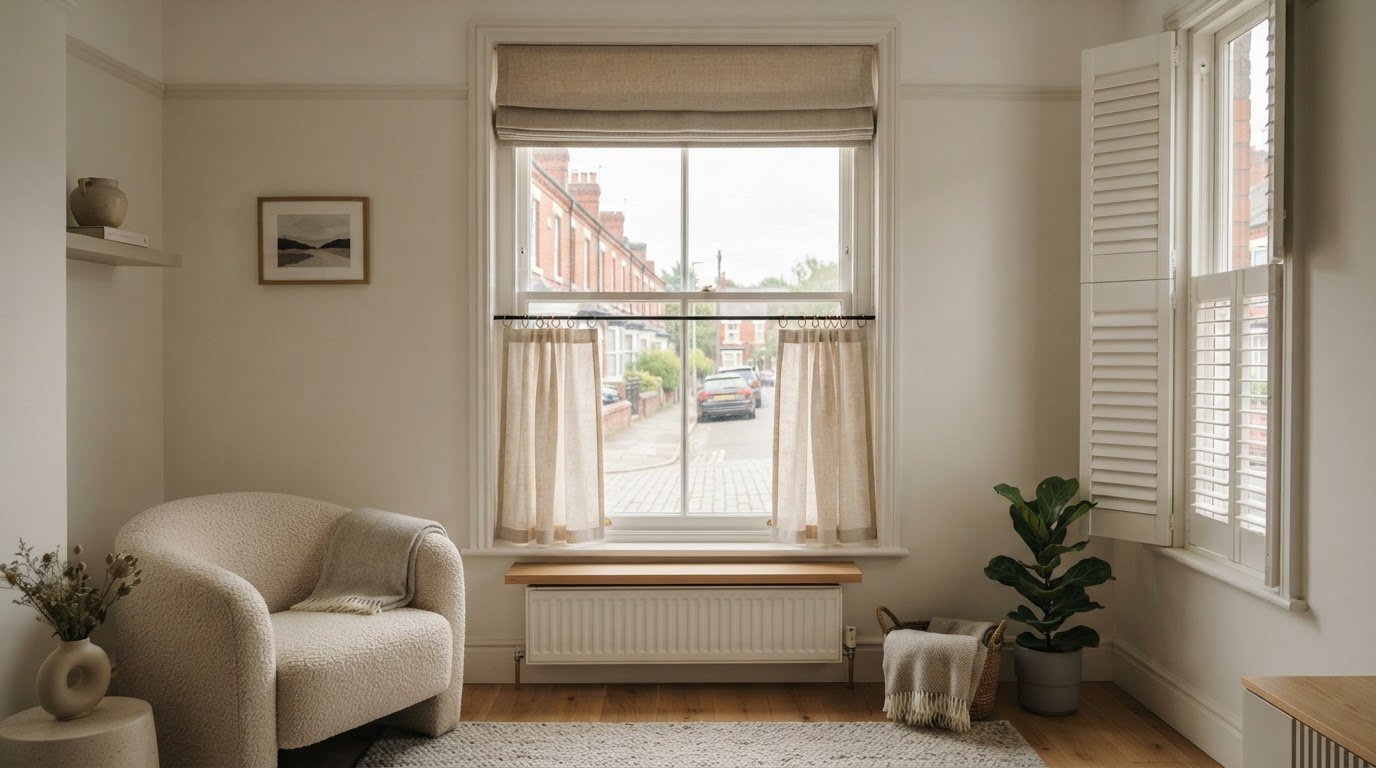
You don’t have to choose between privacy and natural light. Café curtains screen the lower part of a window while leaving the upper pane clear; Roman blinds give you adjustable coverage, and shutters let you control the view with their panels or louvres. Closed blinds or curtains can provide privacy around the clock, while opening or adjusting them brings daylight back in.
It’s frustrating when passers-by or nearby homes can see inside, especially if covering a window makes the room feel darker. The right privacy solutions for overlooked windows depend on where the sightline comes from and how much of the glass you want to cover.
This guide explains how café curtains, Roman blinds and shutters can help balance privacy with daylight. It also compares their coverage and adjustability, so you can choose an option for a room facing the street, a shared path or neighbouring windows.
Key Takeaways
- Use café curtains to screen the lower part of a street-facing window while keeping the upper pane open to daylight.
- Pair café curtains with a Roman blind for flexible coverage that can adapt as light and privacy needs change.
- Consider shutters when you want to adjust the view and daylight using their panels or louvres.
- Compare film, blinds, curtains and shutters by how much of the window they cover and how easily you can adjust them.
1. Café curtains for street-level privacy
Café curtains cover the lower part of a window while leaving the top clear for daylight. They can suit a ground-floor sitting room where pedestrians pass close to the glass. Fit the curtain across the middle of the pane and adjust its height to screen views at seated eye level. This provides privacy below without covering the whole window.
For outdoor screening, UK Government guidance says fences and screens up to 2 metres high do not need planning permission in most cases. Walls over 1 metre high on boundaries next to highways need planning permission, according to UK Government. UK Government also says walls over 2 metres high elsewhere need planning permission. These rules concern outdoor structures, not café curtains fitted inside.
Privacy window film installation costs vary according to pane size, film type and the preparation required. The price depends on the individual window and is provided after a quote request.
Frosted film obscures views during daylight and after dark while still admitting light. Reflective film relies on brighter light outside than inside, so indoor lighting can reverse the effect after dark. In a bedroom or street-facing lounge, pair daytime screening with a blind or curtain for evening privacy.
In a rented home, consider a tension-fit blind or removable static-cling film. These options avoid drilling into the frame, but removal depends on the product and surface. A café curtain on a tension rod is another option if the window recess accommodates it.
For a bathroom, use frosted film on the lower pane or a café curtain to screen the view while preserving daylight above. For an overlooked ground-floor window, add an adjustable blind if you also need privacy after dark.
Film can affect heat absorption, so check compatibility with double glazing. Glass type, coatings and installation position can influence thermal stress and warranty terms. Follow the film maker’s guidance for the glazing and review the window warranty before applying film.
2. Combining café curtains with Roman blinds
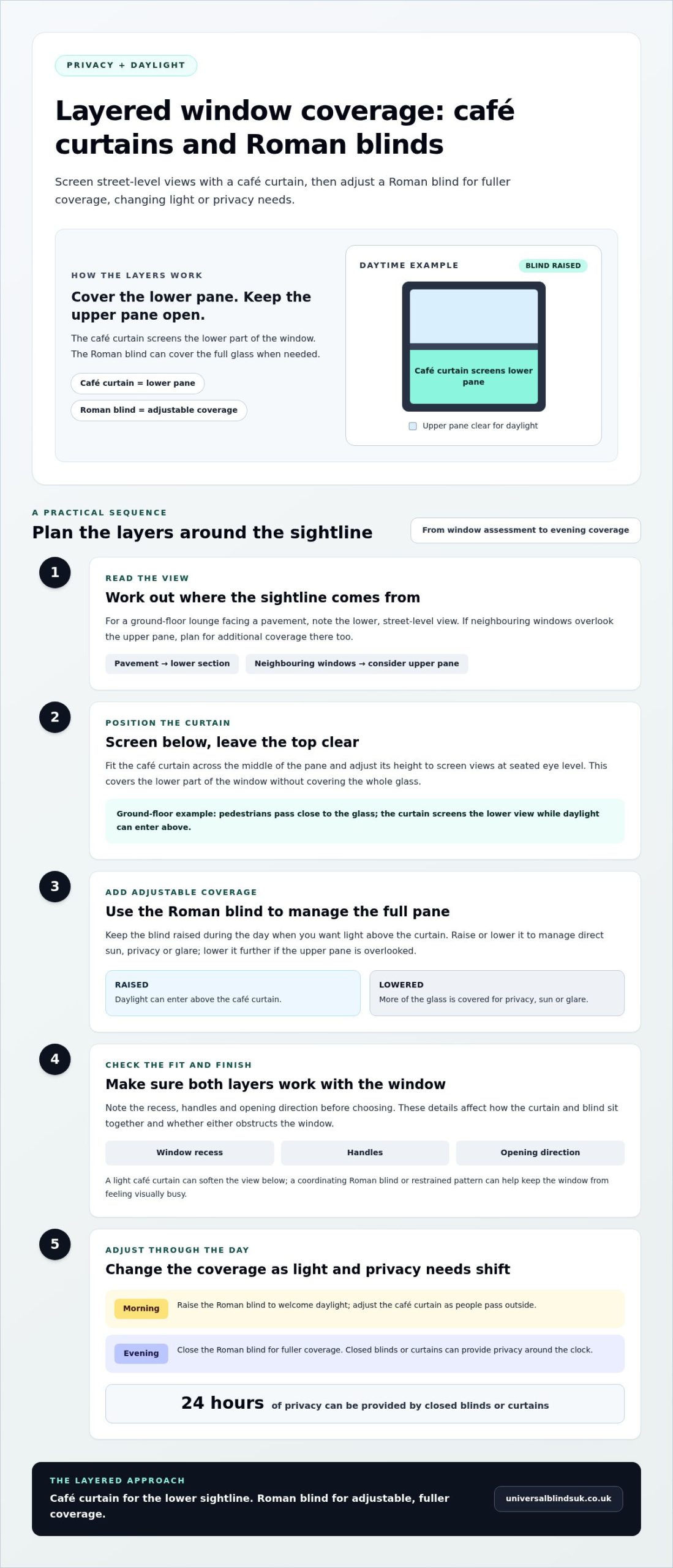
A café curtain and Roman blind cover different parts of the same window. The curtain screens the lower pane, while the blind can cover the full glass when needed. For example, keep the blind raised during the day and draw the curtain across street-level sightlines. This layered setup lets daylight enter above the curtain without exposing the whole window.
Plan the layers around the window’s main sightline. In a ground-floor lounge facing a pavement, position the café curtain across the lower section. Raise or lower the Roman blind to manage direct sun, privacy or glare. If neighbouring windows overlook the upper pane, lower the blind further. This offers more control than relying on a fixed curtain position alone.
Fabric and colour also shape the room’s feel. A light café curtain can soften the view below, while a Roman blind in a coordinating shade creates a calm, finished look. Choose fabrics that work together rather than compete for attention. In a compact kitchen, a simple curtain and a Roman blind with a restrained pattern help keep the window from feeling visually busy.
Consider how you’ll use each layer throughout the day. Open the Roman blind to welcome morning light, then adjust the café curtain as people pass outside. In the evening, close the blind for fuller coverage. Closed blinds or curtains can provide privacy for 24 hours, so the combination can suit rooms used at different times.
Before choosing, note the window’s recess, handles and opening direction. These details affect how the curtain and blind sit together and whether either obstructs the window. A tailored Roman blind can be made to suit the opening and the intended coverage. Explore made-to-measure blinds for a window-specific fit.
3. Shutters for privacy and light control
Shutters provide a solid, adjustable covering within the window opening. Tilt the louvres to limit direct views while allowing some daylight through. In a street-facing lounge, angle them downwards to screen passers-by. Adjust them as sunlight shifts or when you want a clearer view outside.
Privacy film can reduce natural light, depending on its finish and how much glass it covers. Its effect on energy efficiency depends on the film’s properties and the glazing. Shutters offer another way to manage privacy and incoming light.
Unlike a fixed frosted finish, adjustable shutter louvres let you change the view throughout the day. Closed louvres obscure the window, while tilted louvres balance screening with daylight. Open the panels for an unobstructed outlook, then close them for more coverage. This flexibility can suit a room where privacy needs change between daytime and evening.
Consider the window’s position before choosing a shutter layout. A ground-floor window facing a pavement may need screening across its lower area, while a neighbouring upper window could overlook the full pane. Note the direction views come from, where daylight falls and whether the window opens inwards. These details help determine how the panels will sit and operate.
In a bathroom, louvres can screen a direct view while allowing daylight in. In a bedroom, closing the shutters provides more privacy when the room is in use. A kitchen window beside a shared path may benefit from adjustable coverage, especially if you regularly open it for ventilation. Each situation calls for a different balance of view and screening.
Shutters also create a defined frame around a window, so consider how their finish relates to the room. A pale finish can help a small space feel bright, while a contrasting finish can make the window a feature. Check that handles and nearby fittings won’t obstruct panel movement. Match the shutter arrangement to the window’s shape, position and everyday use for a practical choice.
If planting outside is part of the privacy plan, Leylandii hedges require trimming 2-3 times each year to keep them under control, alongside choosing shutters for adjustable indoor screening. When overlooked by upper-storey neighbours, the same principle can extend outdoors; specialists like Elite L.A. Patios demonstrate how adjustable louvered covers can shield exterior living spaces from overhead sightlines while still admitting daylight.
4. How do frosted window film, blinds, curtains and shutters compare for privacy?
Each option balances privacy, daylight and flexibility differently. Frosted film provides a consistent screen across treated glass. Blinds, curtains and shutters can be adjusted or opened, making them suitable for rooms where needs change. Consider whether you’re choosing for a street-facing kitchen, an overlooked bedroom or a bathroom.
Use these differences to narrow your choice:
- Frosted film: obscures the view through treated glass while allowing light through. It creates a fixed effect, so you can’t raise it for a clear outlook. Consider it for a bathroom pane where privacy matters throughout the day.
- Blinds: offer adjustable coverage. Raise them for a clear view, or lower them to screen the window. A Roman blind can cover more of the glass when you want stronger privacy.
- Curtains: provide fabric coverage that you can draw aside or close. Café curtains screen the lower window, while fuller curtains can cover more glass. Choose based on where sightlines enter.
- Shutters: let you adjust louvres to manage views and daylight. Open the panels for an unobstructed outlook, or close them for greater coverage.
In a ground-floor lounge, adjustable blinds or shutters let you respond to changing light and passing pedestrians. Frosted film suits a bathroom where a clear view outside isn’t essential. Curtains can soften a bedroom and provide flexible coverage, while café curtains preserve the view through the upper pane.
Before deciding, identify the source of overlooking and mark the part of the glass that needs covering. Then consider whether you want a fixed screen or adjustable control. A combination can work too: use film on a bathroom pane and a blind for additional evening coverage.
If adjustable coverage is your priority, explore made-to-measure blinds and custom shutters for a solution tailored to your window.
Window film has at least ten years of serviceable use, making its fixed level of screening a longer-term consideration rather than an adjustable one. For privacy beyond the glass, instant hedging can save 3-5 years of growing time compared with bare-root planting. These options address different boundaries: film covers treated panes, while hedging provides an outdoor screen. Keep the choice tied to whether privacy is needed at the glass or beyond it.
Universal Blinds UK: Made-to-Measure Blinds
Universal Blinds UK can help with tailored coverage for overlooked windows, balancing privacy with daylight. Made-to-measure blinds are suited to windows where standard sizing may not provide the fit or finish you want. Custom shutters offer an adjustable way to control views and light.
If you’re unsure which option suits the room, the free measuring service establishes the window’s dimensions before you decide. The professional fitting service completes the process, with your chosen blinds or shutters fitted to the opening. This can help with unusual window shapes or rooms where placement matters for privacy.
Contact Universal Blinds UK to discuss made-to-measure blinds or custom shutters for your window.
Choose a solution that fits your daily routine
Before choosing privacy solutions for overlooked windows, consider how you use the room throughout the day. Notice when you want more seclusion, when you value an open view and how much daylight feels comfortable. These everyday preferences can guide you towards a solution that feels natural, rather than making privacy a constant adjustment.
Consider the window as part of the room, not in isolation. Think about furniture placement, the direction you face while sitting and whether the window is a focal point. A solution that suits the room’s layout can feel more considered and make the space easier to enjoy. For homeowners coordinating window treatments as part of a complete property revamp, teams like ft2.com.sg illustrate how intentional space planning and design choices balance privacy with overall aesthetics.
When you’re ready to explore a tailored approach, speak with Universal Blinds UK about your window and what you want it to do. Contact Universal Blinds UK today and take the next step towards a room that feels comfortable and private.
Frequently Asked Questions
What are the best privacy solutions for overlooked windows in the UK?
The best privacy solutions for overlooked windows depend on the sightline and how you use the room. Sit where you normally relax and note whether views come from the pavement, a nearby garden or an upper-floor window. Consider the same view after dark with the lights on. This simple check helps you decide whether you need fixed screening or coverage you can adjust.