

Floor to ceiling window blind solutions for privacy and light control
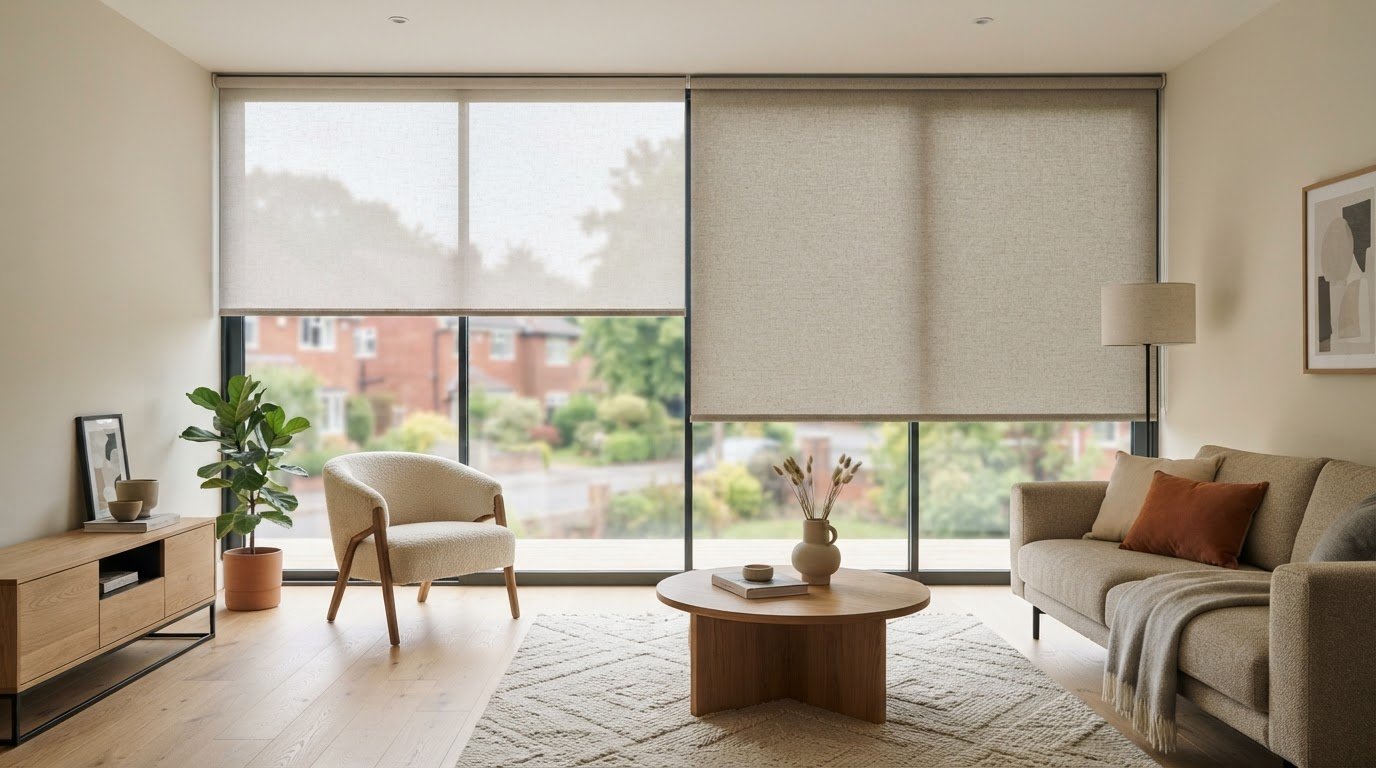
The right floor-to-ceiling window blind solutions balance privacy, light control and ease of use across the full height and width of your glazing. For a bedroom, consider whether you need blackout coverage; in a bright living space, a sheer or semi-sheer blind can soften sunlight while keeping the room light. The best choice depends on how you use the room and how easily you can reach and operate the blind.
Large windows bring in natural light and offer wide views, but uncovered glass can also leave you feeling overlooked or exposed to glare. Choosing a blind involves more than finding the right width: fabric, coverage and operation all matter. This guide explains how to assess your privacy and light needs, compare options for tall windows and account for your glazing, so you can choose with confidence.
Key Takeaways
- Match the blind’s opacity to the room: consider privacy and blackout coverage where darkness matters, or a lighter fabric to soften sunlight and preserve brightness.
- Choose an operating method that suits the window’s height and how easily you can reach the blind.
- Account for the glazing’s full width and height so the blind fits neatly and works with the room’s layout.
- Accurate measurements are key to a made-to-measure fit; a free measuring service can help with tall or wide windows.
Assessing privacy, light control and blackout needs
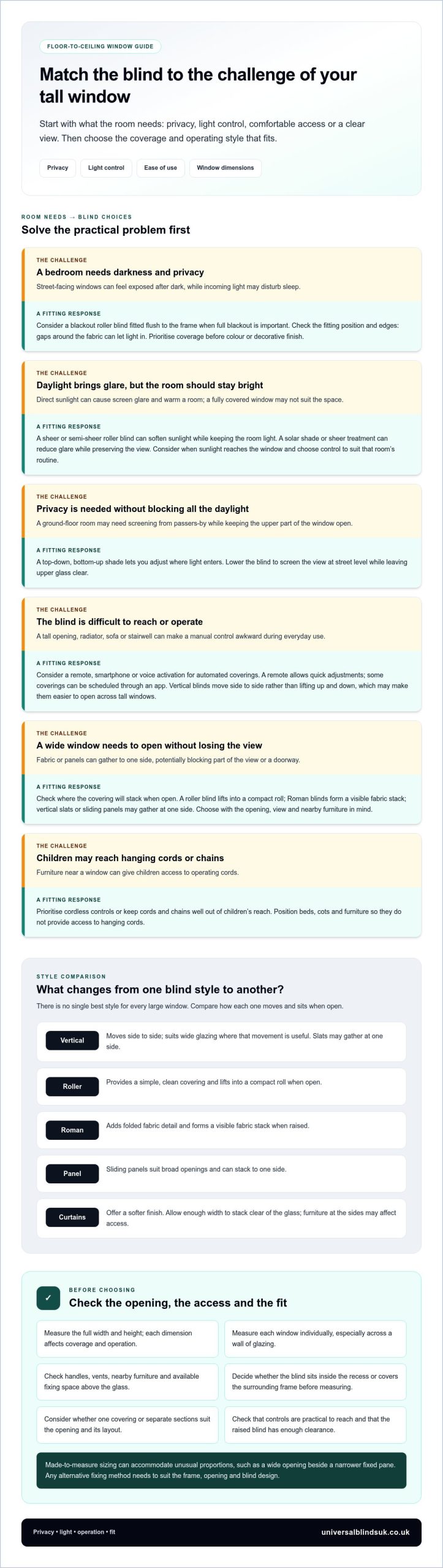
Start by deciding what the window needs to do in each room. A bedroom facing a street may need privacy after dark and strong light control at bedtime. A living room overlooking a garden may benefit more from softened sunlight and an open view. These priorities help narrow down suitable floor to ceiling window blind solutions before you choose a fabric or finish.
Consider privacy at different times of day. At night, interior lighting can make a large window feel exposed, especially if it faces neighbouring homes or a pavement. During daylight, a sheer or semi-sheer roller blind can soften harsh sunlight while keeping the room bright. If privacy matters throughout the day, choose coverage that suits both the view and the room’s use.
Next, think about sunlight and comfort. Direct sun can create glare on screens and warm a room, while uncovered glass may contribute to uncomfortable temperatures. Note when sunlight reaches the window: morning glare in a home office calls for different control from strong afternoon sun in a lounge. A solar shade or sheer treatment can reduce glare while preserving the view.
For bedrooms, decide whether you need darkness for sleeping or simply less incoming light. A blackout roller blind fitted flush to the frame is an option where full blackout is important. Check the edges and fitting position, because gaps can let light enter around the fabric. In a nursery, for example, prioritise coverage before choosing a colour or decorative finish.
Finally, match the level of control to the room’s daily routine. A top-down, bottom-up shade lets you adjust where light enters, helping balance daylight with privacy. In a ground-floor sitting room, you could lower the blind to screen passers-by while leaving the upper glass clear. This room-by-room check helps you weigh privacy, sunlight, glare and comfort together.
2. Ease of operating blinds on tall windows
On tall glazing, consider how you’ll reach and adjust the blind during an ordinary day. A manual control that feels simple beside a standard window may be awkward above a radiator, sofa or stairwell. Vertical blinds move from side to side rather than lifting up and down, which may make them easier to open across tall windows.
Before choosing a control, consider how you’ll actually use it. A remote, smartphone or voice activation can operate automated coverings, and some can be scheduled through an app. These options may help when a high window is difficult to reach. A remote suits quick adjustments, while a schedule can manage regular changes without reaching for a cord.
For child safety in UK homes, prioritise cordless controls or keep operating cords and chains well out of children’s reach. Position beds, cots and furniture so they don’t give children access to hanging cords. These are practical precautions; this section doesn’t set out a specific legal rule or regulation.
Blinds offer adjustable coverage and can sit neatly within a window opening, while curtains draw across the glass for a softer finish. On floor-to-ceiling windows, curtains need enough width to stack away from the view, and may be less convenient if furniture blocks the sides. Blinds may suit a tighter layout, but the right fit depends on access and how you use the room.
Can blinds be fitted without drilling or damaging window frames? Some systems use alternative fixing methods, but suitability depends on the frame, opening and blind design. Don’t assume an adhesive or non-drill fixing will support a large blind. The fitting method needs to suit the window and its dimensions.
Before choosing, consider who will operate the blind, where the controls will sit and whether furniture affects access. For a tall opening where reach and fit are key, made-to-measure blinds can be tailored to the window’s dimensions.
3. Window size considerations
Measure the full opening before comparing styles. Floor-to-ceiling glazing can be tall, wide or both, and each dimension affects coverage, operation and how much glass remains visible. A narrow, tall window has different needs from broad patio doors, even if both reach the floor.
Are vertical, roller, Roman or panel blinds best for large windows? There’s no single best style. Vertical blinds suit wide glazing where side-to-side movement is useful, while roller blinds provide a simple, clean covering. Roman blinds add folded fabric detail, and panel blinds suit broad openings where sliding panels can stack to one side.
For a clear view when coverings are open, consider where the fabric or panels will stack. On a wide opening, vertical slats or sliding panels may gather at one side, so check whether they’ll block a doorway or part of the view. A roller blind lifts into a compact roll, while a Roman blind forms a visible fabric stack.
Height matters too. A tall blind needs enough clearance above the glass for its headrail or rolled fabric, and its control needs to be practical to reach. In a living room with glazing close to the ceiling, compare the available fixing space with the blind’s raised position before choosing a style.
Curtains can also cover floor-to-ceiling windows, but standard drops may not suit their height. Place the pole close to the ceiling and allow enough width for the curtains to stack clear of the glass when open. This leaves more of the view unobstructed and makes the proportions feel deliberate.
Measure each window individually, especially across a wall of glazing. Check the width and height at several points, note handles, vents and nearby furniture, then consider whether one covering or separate sections will work best. Made-to-measure sizing can accommodate unusual proportions, such as a wide opening beside a narrower fixed pane.
4. Measuring Floor-to-Ceiling Windows for Custom Blinds
First, decide whether the blind will sit inside the window recess or cover the surrounding frame. An inside fit follows the recess; an outside fit covers the opening and may overlap the wall. This choice affects where you measure, so make the decision before recording dimensions. Check whether handles, vents or nearby trim could obstruct the blind.
For an inside fit, measure the recess width at the top, middle and bottom. Record each result rather than assuming the sides are perfectly parallel. Measure the height at the left, centre and right, from the top of the recess to the required bottom position. Use the smallest width and height as a reference, then follow the fitting instructions for the chosen blind.
For an outside fit, measure the area you want the fabric to cover, not just the glass. Include the intended overlap beyond the frame and the full drop to the desired lower edge. If a radiator sits beneath the window, for example, decide where the blind should finish before measuring. Keep the control position and any wall fittings in mind.
Use a metal tape measure and keep it level across each span. Measure in millimetres, write down width and height separately, and label each window if the room has several openings. Don’t rely on a single reading: a floor-to-ceiling opening can vary slightly from top to bottom. Note the fitting type alongside each set of measurements.
Blind designs can require different measuring details, so use the instructions for the specific style rather than applying deductions yourself. Accurate measurements help a made-to-measure blind align with the opening and operate as intended. For help with unusually tall or uneven windows, arrange a free measuring service before finalising the dimensions.
Universal Blinds UK: Made-to-Measure Blinds
Universal Blinds UK offers made-to-measure blinds for floor-to-ceiling windows where standard dimensions may not suit the opening. If you’re weighing up a tall or unusually wide window, its free measuring service can help establish the dimensions before you choose a covering. Professional fitting is available to complete the process, while custom shutters provide another option for your window.
This next step is useful once you’ve identified your priorities for privacy, light control and operation, but would like support with measuring or fitting. Explain how you use the room to help guide the choice of coverage and style for the space.
For help choosing a covering for your window, contact Universal Blinds UK or visit universalblindsuk.co.uk.
Plan for the way you use the room
Before settling on floor to ceiling window blind solutions, picture the window in everyday use, not just how it looks in a showroom. Consider what you want to see when the covering is open, how much glass should be covered when it’s closed, and whether its position will work with furniture and walkways. For broader interior renovations, fit-out specialists like Right Solution Contracting routinely align large architectural glazing with bespoke furniture and functional layouts. These details help turn a broad design choice into one that feels right for your home.
It can also help to decide which compromise matters least. A treatment that maximises privacy may reduce the view; one that keeps the glazing visually open may offer less screening. Knowing your priority makes it easier to choose a suitable approach for each room, rather than expecting one style to meet every need.
If you’re ready to discuss the windows in your home, contact Universal Blinds UK today. A thoughtful choice can make your glazing feel more comfortable and better suited to the way you live.
Frequently Asked Questions
What to Do with Floor-to-Ceiling Windows?
Choose a window treatment to suit the room’s main purpose and the way the glazing is divided. For a set of doors beside fixed glass, for example, consider separate coverings so you can use the doorway without adjusting every section. In a home office, make sure the arrangement leaves room for handles and doesn’t interfere with desks or screens. When planning complete residential or commercial fit-outs, teams like JM & SONS General Contractor Pte Ltd advise treating each window section as an integral part of the overall interior layout.
What types of blinds work best for floor-to-ceiling windows?
Vertical, roller, Roman and Venetian blinds are all options, with the right type depending on the window and room. Venetian blinds may suit a space where you want to adjust the angle of the slats; roller blinds offer a simple fabric finish. Consider the frame, nearby furniture and the look you want across adjoining panes before choosing.
How much do made-to-measure blinds for floor-to-ceiling windows cost in the UK?
The price depends on the project and is provided in a quote. Factors include the window’s dimensions, blind style and fabric, number of sections, and fitting requirements. Universal Blinds UK provides free quotes, with the price given before you place an order. A quote based on the actual windows is more useful than a general estimate for large glazing.
Which blinds provide the best privacy and light control for floor-to-ceiling windows?
For strong privacy, choose fabric and coverage that screen the window when needed; for more daylight, consider a lighter treatment. The right balance can vary within one home. A front-facing living room, for example, may need more screening than a garden-facing room. Consider sightlines from outside and how you use the window before choosing a blind.
How to install blinds on floor-to-ceiling windows with limited access?
For a hard-to-reach window, consider automated coverings operated by remote, smartphone or voice, or scheduled through an app. Universal Blinds UK provides made-to-measure blinds and professional fitting, with a free measuring service to establish the dimensions.