

Faux Wood Shutters for High-Moisture Areas: What to Know Before Choosing
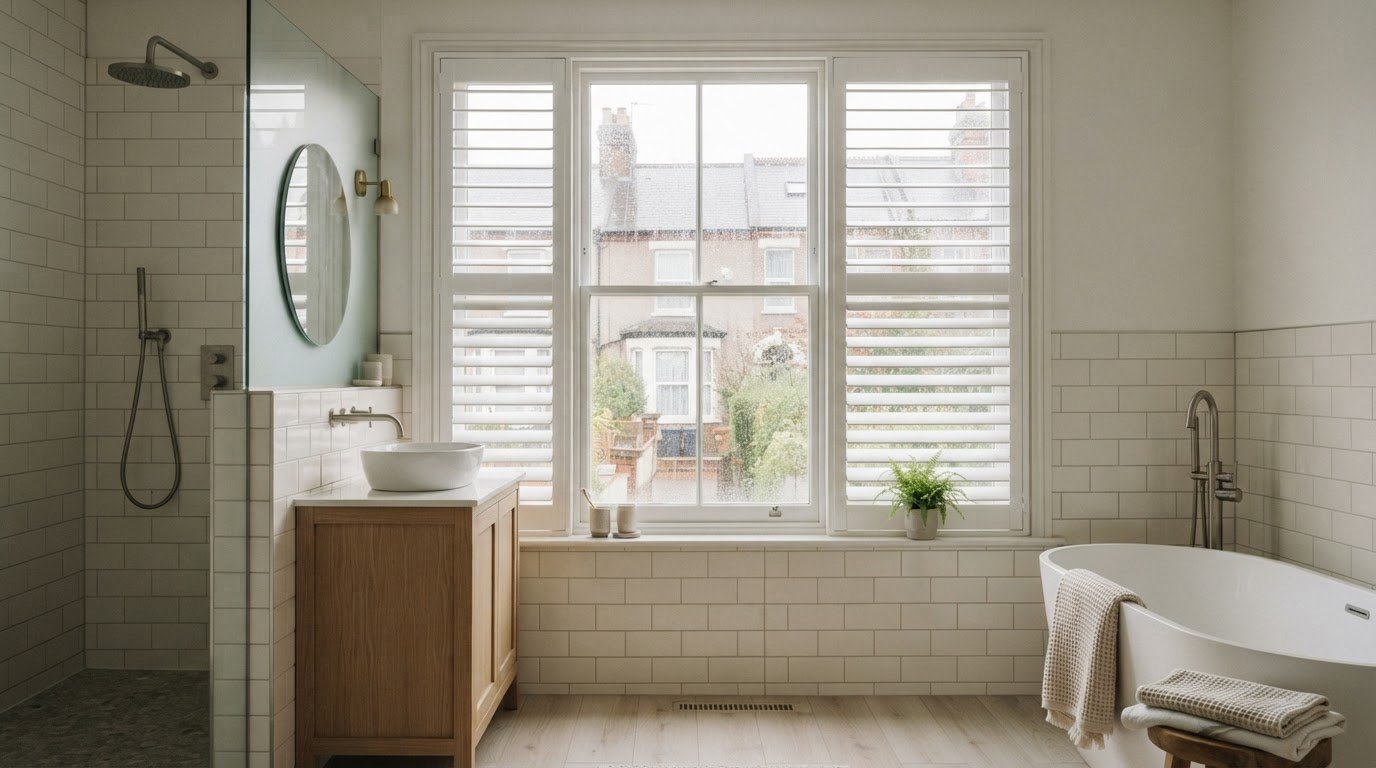
Could shutters with a wood-effect finish suit a humid room, or does the label “faux wood” leave too much unsaid? If you’re considering faux wood shutters for high moisture areas, think about condensation and everyday exposure to water, not just how the finish looks.
“Faux wood” can describe different constructions, so suitability depends on the material and how the shutter is made. A considered choice balances the conditions around your window with the look you want, rather than assuming every faux wood option will perform in the same way. Natural wood has its own appeal, but it’s worth comparing its characteristics with those of the specific faux wood construction.
This guide explains what to assess before choosing shutters for a bathroom, kitchen or other humid space, and how faux wood compares with natural wood in practical terms. You’ll also learn how a made-to-measure consultation can bring together room conditions, window measurements and your preferred finish, helping you choose an option that suits your home.
Key Takeaways
- “Faux wood” can refer to different constructions, so assess the material and finish rather than relying on appearance alone.
- When comparing faux wood shutters for high moisture areas with natural wood, consider each material’s room suitability, care needs and finish options.
- Note ventilation, condensation patterns and splash zones around your window, then weigh privacy and light control alongside moisture exposure.
- Review product care guidance and plan the fit around your room’s conditions for a more considered choice.
- A complimentary home consultation brings together room conditions, measurements and style preferences, with a no-obligation quote and professional fitting.
Are faux wood shutters suitable for high-moisture areas?
Humidity, condensation and occasional splashes can make choosing window coverings for a bathroom or kitchen feel like a balancing act. You want a finish that complements the room, but you also need to consider the conditions around the window. Faux wood shutters for high moisture areas may be worth considering, but the description alone doesn’t tell you how a particular shutter will respond to moisture.
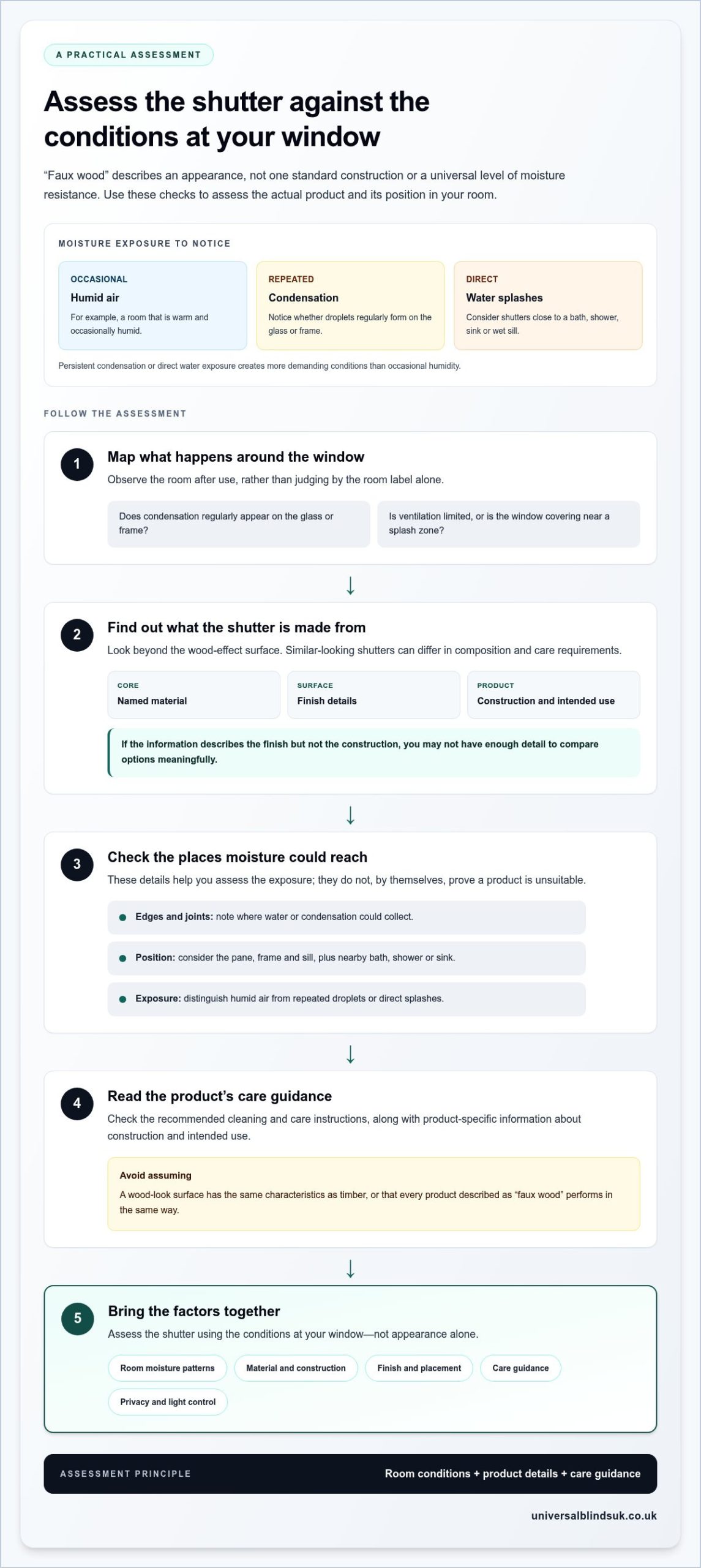
Faux wood shutters are shutters made with materials or finishes designed to create the appearance of wood. The term describes a look, not one standard construction or a universal level of moisture resistance. Suitability depends on what the shutter is made from, how it is finished, where it sits in relation to water and condensation, and how it should be cared for.
What does faux wood mean in shutter descriptions?
“Faux wood” may refer to a wood-look surface on a non-wood material, or another construction designed to resemble timber. The visual effect and the material beneath it are separate considerations. Two shutters can look similar while differing in composition and care requirements, so don’t treat the label as a performance guarantee.
Look for clear information about the material, finish and recommended cleaning or care. This helps you judge whether a shutter is suited to your room, rather than making a decision based on colour or grain alone. If the information describes the finish but not the construction, you may not have enough detail to compare options meaningfully.
How do humidity and condensation affect window coverings?
Moisture levels vary within a room. Humid air after a bath or shower differs from droplets repeatedly forming on a cold pane, and both differ from water splashing directly onto a shutter beside a sink or bath. Persistent condensation or direct exposure creates more demanding conditions than a room that is simply warm and occasionally humid.
Pay attention to what happens at the window after the room is used. Does condensation regularly appear on the glass or frame? Is ventilation limited, or is the shutter close to a splash zone? These observations give you a more useful picture than the room label alone. Managing moisture in the room is separate from choosing a shutter material and following its care guidance.
For a considered choice, bring together the room’s moisture patterns, the shutter’s construction and its care guidance. Don’t assume a product suited to occasional humidity will also suit repeated condensation or direct water exposure. Equally, a wood-effect finish doesn’t have to be ruled out without examining the details. Focus on the conditions at your window and choose a construction intended for those conditions, with a finish and care routine that suit the way you use the room.
How faux wood shutter construction affects moisture suitability
A wood-like appearance tells you little about how a shutter is assembled or how it may respond to moisture. The core material, surface finish, joints and installation position all affect how suitable a particular option may be for your room. A material label alone cannot establish moisture performance, because products with similar descriptions can differ in construction and care requirements.
That’s why choosing faux wood shutters for high moisture areas calls for a closer look at product information and the conditions around your window. Ordinary humid air, persistent condensation and direct splashes create different demands. A shutter beside a bath or sink, for example, may face different exposure from one elsewhere in the same room.
Which material details should you look for?
Start with the product information. Look for the stated core material and surface finish, as well as cleaning and care guidance. If it describes a wood-effect appearance but leaves the construction unclear, you don’t yet have a complete picture for comparing options. Similar-sounding faux wood products can use different materials, so avoid assuming that one description applies uniformly across the category.
Use material information as a starting point, then look for product-specific details about construction, intended use and care. General descriptions of a material don’t confirm how a particular shutter is made or how it should be used in a humid room. Clear information helps you assess the actual product rather than relying on a broad label.
What do finish, joints, and placement change?
Look at the parts where moisture might reach the shutter: exposed edges, joins between components and areas close to the window frame. These details don’t prove a product is unsuitable, but they help you identify what to consider alongside the material and care instructions. A shutter beside a frequently wet sill, for instance, may encounter different conditions from one set away from splash zones.
Keep the distinction clear: humid air is not the same as droplets repeatedly forming on a surface or water landing directly on it. Whether a finish or construction is appropriate depends on its design and the exposure in your room. Follow the product’s care guidance, and don’t assume a wood-look surface has the same characteristics as timber or any particular non-wood material.
- Core: Find the named material in the product information.
- Surface: Check what is stated about the finish and cleaning.
- Joints and edges: Note where water or condensation could collect.
- Position: Consider proximity to the pane, sill, bath, shower or sink.
These checks turn a broad style description into a practical comparison. If you’re weighing up made-to-measure shutters, a made-to-measure shutter consultation can bring the room, window position and preferred finish into the same conversation.
Faux wood vs natural wood shutters for humid rooms
Choosing between faux wood and natural wood isn’t simply a question of which looks better. They’re different materials, with different finishes and care considerations. For faux wood shutters for high moisture areas, weigh the construction and moisture exposure at your window against the natural character and finish you want from timber. Neither option is automatically right for every room.
Use this comparison as a starting point, then refer to product-specific material and care information. The term “faux wood” covers different constructions, so details can vary between products.
| Consideration | Faux wood | Natural wood |
|---|---|---|
| Appearance | Designed to create a wood-like look; the grain and finish depend on the product. | Offers the distinctive appearance of natural timber, with variation in grain and finish. |
| Material information | Check the stated core material, surface finish and product-specific care instructions. | Check the timber and finish details, along with any care guidance for the chosen product. |
| Room conditions | Assess the construction against humidity, recurring condensation and any nearby splash zone. | Consider the same room conditions and follow the product’s guidance for its intended use. |
| Care | Use the cleaning method recommended for that finish and construction. | Follow the care guidance for the specific timber and finish. |
| Selection priority | May be worth investigating if moisture exposure is a key concern and the product information suits the room. | May appeal if natural material character and finish are central to your decision. |
When might faux wood be worth considering?
If moisture is a major factor in your decision, faux wood may be an option to investigate. Compare the actual construction, finish and care guidance with the conditions around your window, especially if condensation is frequent or the shutter could be splashed. Don’t rely on a broad material label or assume all faux wood products have the same properties. The product details should support your choice.
When might natural wood suit your priorities?
Natural wood may appeal if you value the individuality of timber and its particular finish. That preference still needs to be weighed against the room: consider the pattern of condensation, proximity to water and the product’s care guidance before deciding. Natural wood and faux wood aren’t interchangeable, so compare the specific options rather than treating one as a direct substitute for the other. A guide to wooden shutters can offer a deeper overview of timber’s appearance and selection considerations.
A practical way to decide is to rank your priorities: the amount of moisture near the window, the look you prefer, and the maintenance guidance you’re comfortable following. This keeps appearance in the conversation without letting it stand in for information about construction or room suitability. For homeowners planning a broader room update, consulting a residential interior design studio like Appreciation Project can help ensure your window finishes harmonize beautifully with the rest of the space.
How to assess faux wood shutters for your room
A useful assessment starts with the room, not a product label. Note where moisture comes from, what happens around the window, and how you want the shutters to work day to day. These details give you practical points to compare with product information and discuss during a home consultation.
- Identify the moisture source. Is it routine humidity after bathing or cooking, occasional splashes near a sink or bath, or condensation that regularly forms on the glass and frame? These exposures aren’t the same, and the distinction helps you describe the room accurately.
- Observe the window. Look for recurring condensation, damp-looking areas and places where water might reach the shutter, such as a narrow sill beside a basin. Consider whether ventilation is limited and whether the window opens easily. Persistent condensation may need attention beyond choosing a window covering: consider the room’s ventilation and moisture source, as shutters won’t resolve the underlying cause.
- Set your priorities. Think about privacy, how much daylight you want, and whether you need to open the window without obstruction. Note the window’s shape, sill depth and nearby fittings. A bathroom window overlooked by neighbours may call for a different balance of privacy and light than a kitchen window above a worktop.
- Review product care. Read the care instructions for the specific shutter construction and finish. Consider whether the recommended routine suits how the room is used, and don’t assume advice for one faux wood product applies to another.
- Plan the fit. A made-to-measure approach takes the window’s dimensions and shape into account. Accurate measuring and professional fitting help plan the finished shutter around the actual opening, including the sill and window operation.
What should you assess before choosing?
Before a consultation, note when condensation appears, whether the window is regularly splashed, and how the room is ventilated. Add your preferred finish, privacy needs and light-control priorities. These notes make the discussion specific to your window, rather than relying on the fact that the room is simply a bathroom or kitchen.
What care and fitting questions matter?
Use the product’s own care guidance and consider whether the shutter’s dimensions and position suit the window’s shape and opening access. Measuring and professional fitting bring those practical details into the planning. For a fuller discussion of the room, window measurements and desired finish, West Midlands homeowners can arrange a complimentary home consultation, with a no-obligation quote and professional fitting as part of the service.
Choose made-to-measure shutters with help from Universal Blinds UK
Once you’ve considered the window, moisture exposure and the look you’d like, a home consultation can bring those details together. Universal Blinds UK’s complimentary consultation gives you the chance to discuss the room and window in person, including condensation patterns, nearby splash zones and how you use the space. You can also talk through your preferred finish, privacy needs and light control.
These details matter because a bathroom window above a bath may have different considerations from a kitchen window beside a sink, even if both rooms experience humidity. If you’re considering faux wood shutters for high moisture areas, focus on the actual conditions at your window and the information available about the shutter’s construction. The aim is to make a considered choice, not assume one material description suits every room.
It can help to have a few notes ready: when condensation tends to appear, whether the window is often opened, what sits close to the sill, and whether privacy or daylight is your main priority. You might also bring a photo of the window or note any unusual shape or fittings. This gives the discussion a practical starting point and connects your preferred appearance with the way the room functions.
What happens during a home consultation?
The consultation is an opportunity to talk through your room, window, style preferences and requirements for privacy and light. Measuring is complimentary, and you’ll receive a no-obligation quote, so you can consider the proposed made-to-measure shutters without pressure to proceed. The discussion can include the window’s shape and position, helping you weigh the desired finish against everyday use and the conditions around the opening.
How does professional fitting complete the process?
After the made-to-measure planning and quote, professional fitting completes the service. A tailored approach takes the individual window into account, rather than treating every opening as identical, and helps bring the chosen shutters into the room as planned. For additional inspiration, a homeowner’s guide to elegant window shutters can help you explore how shutter styles contribute to a room’s overall appearance.
If you’re in or around the West Midlands and would like help considering custom shutters for your home, arrange a complimentary consultation with Universal Blinds UK. You can discuss your room, measurements and preferred finish, receive a no-obligation quote, and make your decision at your own pace.
Take the next step towards a considered choice
The right shutter should feel at home in your room and suit the way you use it. Before settling on a finish, keep your priorities in view: a look you’ll enjoy, practical care, and a choice informed by the conditions at your window. That gives you a clear starting point for discussing made-to-measure options, without assuming every faux wood construction will behave alike.
Universal Blinds UK is a family-run business serving homes and businesses across the West Midlands. A home visit brings your preferences and window details into one conversation, so you can consider the next step with confidence.
Arrange your complimentary home consultation to discuss your plans for faux wood shutters for high moisture areas. Bring your questions about the room, measurements and preferred finish, then decide at your own pace.
Frequently Asked Questions
Are faux wood shutters waterproof?
Not necessarily. “Faux wood” describes an appearance or broad product category, not a single material with guaranteed properties. The actual construction and product guidance determine how a shutter should be used and cared for. If you’re considering faux wood shutters for high moisture areas, look for product-specific information about water exposure rather than relying on a general label. Direct splashes and frequent wetting may present different conditions from humid air alone.
Can faux wood shutters be used in a bathroom?
They may be an option for a bathroom, but suitability depends on the specific shutter and where it will sit. A window away from a shower or bath has different exposure from one that receives regular splashes. Consider how often the room is used, whether the window is ventilated and whether condensation collects around the frame. Then compare those conditions with the product’s material details and care guidance.
Do faux wood shutters warp in humid conditions?
There isn’t one answer for every faux wood shutter, because products described this way can have different constructions. Humidity alone also differs from repeated condensation or water reaching the shutter. Check the product’s material information and instructions for the room you have in mind. If a shutter is exposed to regular moisture, note where it appears and how often, then use those details to assess whether that particular product is appropriate.
What is the difference between faux wood and real wood shutters?
Faux wood shutters use a wood-effect appearance, while real wood shutters are made from natural timber. Their look, material properties and care needs shouldn’t be assumed to match. Timber may appeal if you value natural grain and character; faux wood may interest you if you prefer a wood-like finish made from another construction. Compare the exact product details and room guidance, especially for windows exposed to humidity or condensation.
How do you clean faux wood shutters?
Follow the cleaning instructions supplied for the specific shutter, since finishes and constructions can differ. Before cleaning, check whether the guidance addresses routine dust, marks or moisture, and use only the recommended method. For example, a shutter above a kitchen sink may need attention to cooking residue as well as dust. Avoid applying a cleaner or using a wet cloth unless the product instructions say that approach is suitable.
Are shutters suitable for kitchens with condensation?
They may be suitable, but first consider why condensation forms and how regularly it appears. A brief build-up after cooking differs from moisture that repeatedly gathers on the pane or frame. Note whether the window opens and whether condensation is concentrated in a particular area. Persistent condensation may need attention beyond a window-covering choice, so consider the room’s ventilation and moisture sources as well as the shutter’s product guidance.
Can made-to-measure shutters fit an unusual window?
Made-to-measure shutters can be planned around the dimensions and shape of an individual window, making them worth considering for non-standard openings. Features such as an angled top, deep sill or nearby handle are useful to point out during measuring, as they may affect the design and fit. A professional assessment brings these details into the planning and helps you understand how the proposed shutters will relate to the window.