

Blinds for a Minimalist Interior Design: A Calm, Clutter-Free Look
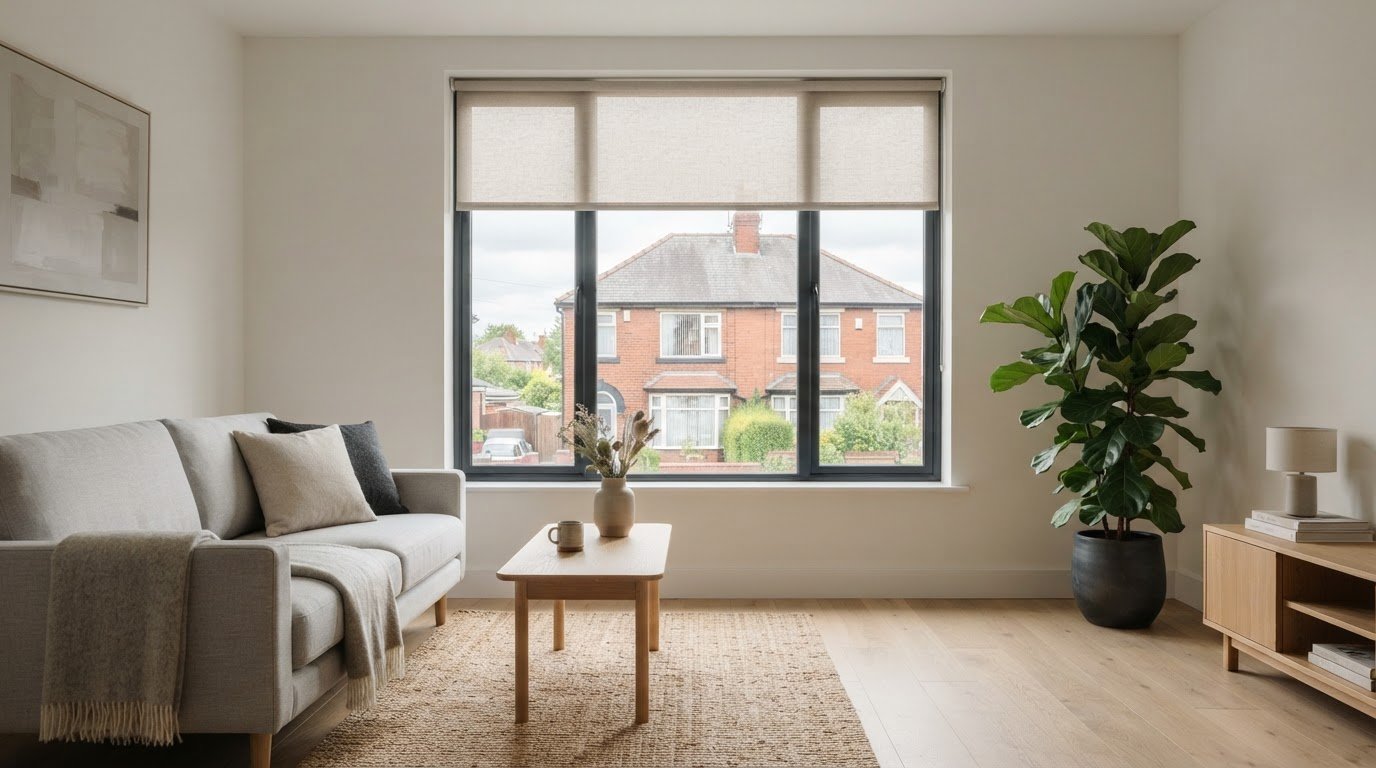
What if the simplest-looking blind isn’t the right one for your room? The best blinds for a minimalist interior design look considered while giving you the privacy and light control you need. A calm finish doesn’t have to mean bare windows or a space that feels cold.
A busy pattern, bulky-looking finish or unsuitable colour can interrupt a clean, uncluttered look. The best place to start is with how you use the room: how much daylight you want, when you need privacy, and which colours and textures already bring warmth to the space.
This guide will help you weigh up those practical needs and choose a blind style that suits your interior. We’ll look at how colour, texture and a neat made-to-measure fit can support a considered finish, and how to avoid details that compete with the room. You’ll also learn how a home consultation with fabric samples can help you picture your options in your own space, with no pressure to order.
Key Takeaways
- Choose blinds for a minimalist interior design by weighing daylight, privacy, room use and existing finishes together.
- Compare Venetian, roller, vertical, Roman and wooden blinds by their visual character and how they suit your room, rather than looking for one universal choice.
- Use a simple styling process: consider how you use the room, set your privacy needs, compare samples and review the overall scheme.
- Made-to-measure blinds can help create a neat, considered finish for homes and commercial premises across the West Midlands.
- A home consultation lets you view fabric samples in your own space as you explore options with Universal Blinds UK.
Blinds for a Minimalist Interior Design: What Makes a Window Feel Calm?
A calm room still needs to work for the people who live in it. You may want daylight to reach the seating area during the day, for example, while preferring more privacy in the evening. The aim isn’t to remove every object around the window. It’s to choose a covering that suits the room’s use and sits comfortably alongside its furniture, finishes and proportions.
Minimalist window design is about making deliberate choices, not following a strict rulebook. Clean lines and a sense of order are common principles in Minimalism in architecture and design, but a home can still feel warm and personal. A blind can add texture or subtle contrast when it connects with the wider scheme instead of feeling like an afterthought.
A minimalist window is one where every visible detail has a purpose; it doesn’t have to be a bare window. Leaving the glass uncovered may suit a room with little need for privacy, but it won’t automatically create a more considered look if glare, overlooked windows or a sense of exposure make the space less comfortable.
Does a minimalist room have to feel plain?
No. Minimalism can reflect your taste, whether you prefer soft neutrals, natural-looking finishes or a stronger accent elsewhere in the room. Ask whether each element contributes to the atmosphere you want. A considered blind might echo a tone in the flooring, sit quietly beside patterned furniture or add restrained texture to a room with smooth surfaces. The choice should support the scheme, not dictate it.
Think about the whole room rather than selecting a blind in isolation. If the furniture has visible grain or the soft furnishings already bring texture, a simpler finish may help maintain balance. If the scheme feels stark, a softer material or warmer shade may add character without making the window feel busy. There’s no single palette or style that defines a minimalist home, and looking at high-end spaces on donnalivingstondesign.com shows how bespoke textures and thoughtful detailing can elevate a refined living space.
Why do blinds matter to the overall look?
Windows draw the eye, so their coverings can reinforce visual order or compete with it. A strong contrast, pronounced pattern or prominent detail may become a focal point; a quieter choice can blend with the surrounding finishes. Neither approach is automatically right. Consider how much privacy you need, how you want daylight to enter and whether you’d like the window to feel open or more framed.
Your needs can vary from room to room. A street-facing window may call for a different balance from one looking onto a private garden. First decide what the covering needs to do, then consider how its appearance will fit the room. For a broader overview of factors that shape your choice, see A Complete Guide to Choosing the Perfect Blinds for Your Home.
How to Choose Minimalist Blinds Around Light, Privacy and Texture
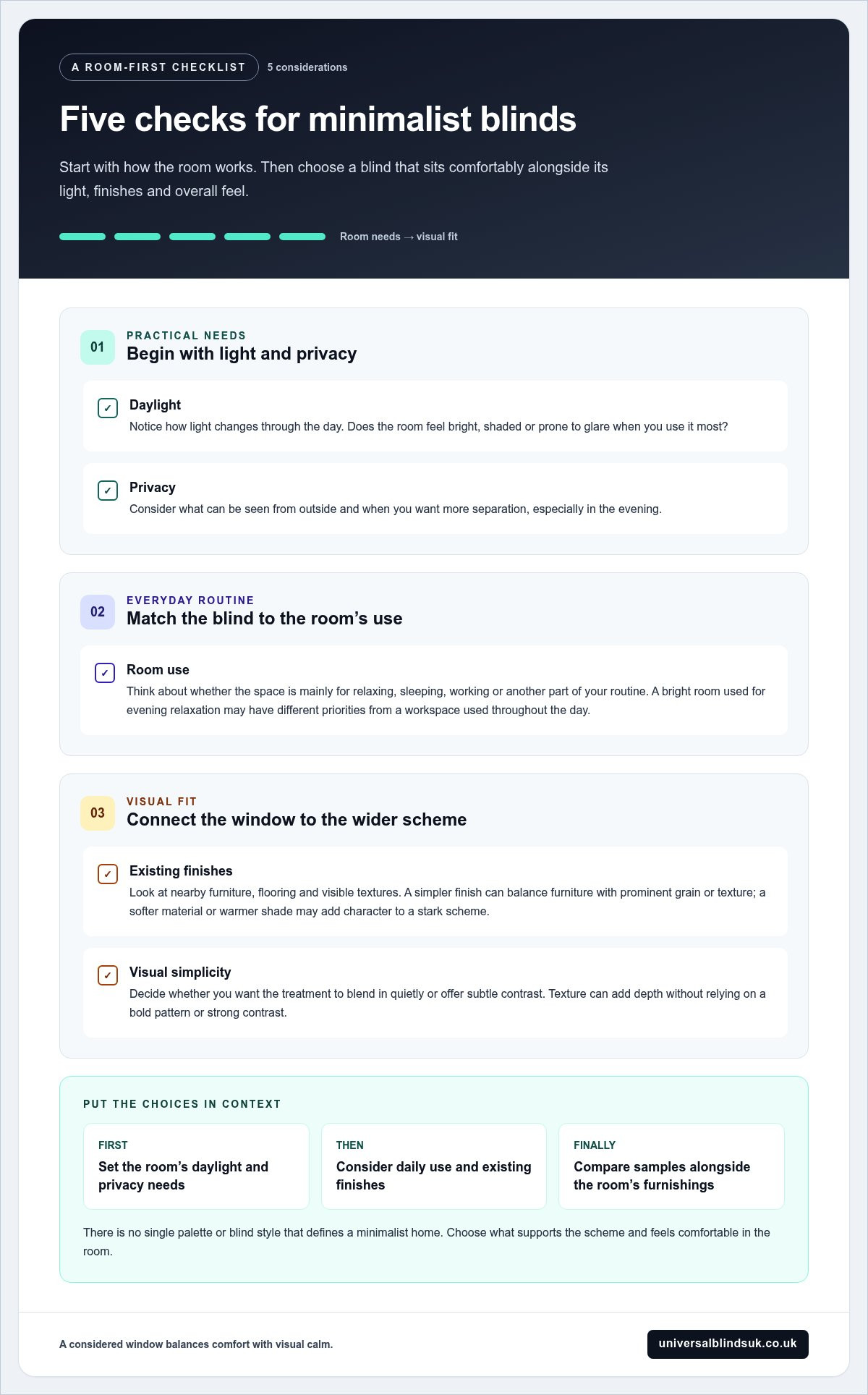
A useful choice starts with the room, not a trend or a single idea of what minimalist blinds should look like. Before comparing styles, work through five considerations: the daylight you want, the privacy you need, how you use the room, the finishes already in place and how visually simple you want the window to feel. These priorities help narrow the options without losing sight of everyday comfort.
- Daylight: Notice how the light changes through the day and whether the room feels bright, shaded or prone to glare when you use it most.
- Privacy: Consider what can be seen from outside and when you’d like more separation, especially in the evening.
- Room use: Think about whether the space is mainly for relaxing, sleeping, working or another part of your routine.
- Existing finishes: Look at nearby furniture, flooring and visible textures so the blind feels connected to the room.
- Visual simplicity: Decide whether you want the window treatment to blend in quietly or provide a subtle point of contrast.
Before comparing styles, consider the room’s daylight, privacy needs, daily use, existing finishes and the level of visual simplicity you prefer. The right balance depends on the window and household. A bright room used for evening relaxation may have different priorities from a workspace used throughout the day.
How much daylight and privacy does the room need?
Consider the direction your window faces and how the room feels at different times, rather than judging it from one glance. A space that gets strong afternoon sun may call for a different approach from one that feels dim in the morning. Think separately about brightness and privacy: wanting a light, open feel doesn’t necessarily mean you’re comfortable with an uncovered view from outside. Your routine matters too. Note when the room is occupied and when you’d prefer more seclusion.
How can texture add interest without visual clutter?
Texture can give a restrained scheme depth without relying on a bold pattern or strong contrast. A subtle surface detail may soften a room with smooth finishes, while a plainer-looking choice may sit more comfortably beside furniture that already has prominent grain or texture. View fabric samples alongside nearby furnishings and finishes in the actual room to judge the effect. A home consultation makes it easier to compare them in context. For a closer look at how different options vary, explore A Complete Guide to Blind Styles: Find the Perfect Match for Your Home.
If you’re considering made-to-measure blinds, explore options tailored to your home and how they could fit with your room’s existing scheme.
Which Blind Styles Suit Minimalist Interiors? Compare the Options
Minimalist style isn’t tied to one type of blind. The right option depends on the window, how you use the room and how much visual detail you want to see. Compare each style’s character with the rest of your scheme rather than treating any one as the automatic choice.
| Blind style | Visual character | Considerations for your room |
|---|---|---|
| Venetian | Defined horizontal lines create a structured, ordered appearance. | Consider whether the repeated lines complement other shapes and details in the room. |
| Roller | A simple, broad surface can give the window a pared-back feel. | Look at the fabric’s appearance and how its colour sits with the surrounding finishes. |
| Vertical | Long vertical lines draw the eye up and down the window. | Think about the window’s scale and whether this directional detail suits the room. |
| Roman | Fabric creates a softer, more layered impression at the window. | Consider whether this sense of softness fits the room’s existing textures and character. |
| Wooden | A visible natural-looking finish can add warmth and texture. | Compare its grain and tone with nearby furniture and other finishes. |
Do Venetian or roller blinds create a simpler look?
Both can look considered, but they create different impressions. Venetian blinds bring visible horizontal lines, while roller blinds present a broader, more continuous surface. To judge which feels calmer in your room, look at the window alongside nearby furniture, flooring and other strong lines. With rollers, notice how the fabric looks against those finishes. With Venetians, consider whether the repeated lines add pleasing structure or more detail than you want.
When might Roman, vertical or wooden blinds fit the scheme?
Roman blinds can suit a room where a softer fabric presence feels more at home than a crisp, defined line. Vertical blinds offer a distinct direction that may complement the proportions of a larger window. Wooden blinds can bring visible grain and warmth, so consider how much texture the rest of the scheme already contains. These are design considerations, not fixed rules. For more detail on the differences between styles, consult A Complete Guide to Blind Styles: Find the Perfect Match for Your Home.
For blinds for a minimalist interior design, compare the complete effect at the window, not just the product in isolation. A made-to-measure finish is planned for the window, while fabric samples viewed beside the room’s furnishings make it easier to assess colour and texture in context. Exploring options from bespoke suppliers such as 702 Interiors can make it easier to balance the window’s proportions and everyday use with the visual detail you want.
How to Style Minimalist Blinds in Different Rooms
Begin with how each room feels and functions, then make the window treatment part of that plan. A considered choice can relate to the room’s furniture, wall finishes and window proportions without making every space look identical. Let the room’s function guide blind styling before you focus on decorative detail.
Use this four-step process to shape your decision:
- Identify the room’s use. Consider what you do there and when, from relaxing in the living room to concentrating in a home office.
- Set your privacy priorities. Think about sightlines from outside and when you’d like a greater sense of privacy.
- Compare samples. View samples beside furnishings and wall finishes, and consider how they look at the window.
- Review the whole scheme. Step back and check that the blind feels in proportion and sits comfortably with the rest of the room.
What should you consider in shared living spaces?
In a living room, consider how daylight, privacy and visual continuity work together. If the space opens into a dining area, for example, a finish that relates to both sides can help the scheme feel cohesive. That doesn’t mean every window needs the same treatment. Compare samples with nearby furniture and wall finishes, and consider the proportions of each window before deciding whether you want the blind to blend in or add a quiet contrast.
Conservatories may have a different character from adjoining rooms, so weigh their window proportions and existing finishes as part of the wider scheme. If you’re considering options for this space, The Best Blinds for Your Conservatory explores conservatory styling.
How can bedrooms and workspaces stay calm and practical?
For a bedroom, first decide how much privacy and daylight you want at different points in your routine. In a home office, consider how you use the room throughout the day and the visual feel you want around your workspace. Neither room needs a prescribed style. A consistent, considered approach to colour, texture and proportions can create a sense of cohesion while allowing each blind to suit its setting.
The same process works in any room: assess its purpose, set priorities, view samples in context and review the complete effect. This keeps blinds for a minimalist interior design grounded in how you live, rather than decoration alone. For made-to-measure blinds, arrange a free measuring service and consider your windows as part of the room’s overall scheme.
Find Made-to-Measure Blinds for a Minimalist Home in the West Midlands
A considered window finish depends on more than the style of blind. Accurate measurements, samples viewed in the room and professional fitting can help bring your design choices together neatly. Universal Blinds UK is a family-run business serving homes and commercial premises across the West Midlands, supplying and fitting made-to-measure blinds and shutters.
There’s no need to settle on an option from a small image or guess how a finish will look beside your existing décor. Home consultations let you consider samples in the space where the blind will be fitted. The service includes a free measuring service and free quotes, with a Next Day Appointment available.
What happens during a home consultation?
During a home consultation, “We will bring the fabrics out for you” so you can consider samples at home or in your office. Seeing them beside your furniture and finishes can help you judge how they work with the room’s character and the calm, uncluttered look you’re aiming for.
“We will visit on a day or night time that is convenient to you”. Measuring is free, and quotes are free. You can take time to consider the options: you’re under no obligation to order, and there’s no pressure. That gives you space to decide whether a particular made-to-measure finish feels right for your windows and interior.
How does made-to-measure fitting complete the look?
Once you’ve considered the samples and the measurements have been taken, the order is sent to the manufacturer. When it’s ready, the team calls to arrange a convenient fitting time. Professional fitting is carried out by trade experts, completing the process from choosing a suitable style to fitting it in place.
Made-to-measure blinds are planned for your particular windows, rather than chosen without regard to their dimensions. That can be especially useful when you want the window treatment to sit comfortably within a pared-back scheme, where details and proportions contribute to the overall effect. The aim is to support the room’s design as well as its everyday use.
Universal Blinds UK is committed to providing “only the highest standard of service”. The team says, “We pride ourselves…” and “No job is too big or small”. If you’re exploring blinds for a minimalist interior design in the West Midlands, you can arrange a free measuring service and consider made-to-measure options at your own pace, under no obligation to order and with no pressure.
Make Your Window Choice Feel Like Part of the Room
A minimalist interior doesn’t need to be stripped back to feel calm. The right finishing touch supports how you use the space and feels naturally connected to it. Keep that in mind as you make your shortlist: the most effective blinds for a minimalist interior design are not simply the least noticeable, but the ones that bring together your practical needs and the character of your home.
You don’t have to picture the final effect from a sample alone. Universal Blinds UK is a family-run business serving the West Midlands, and a home consultation brings samples to your home or office so you can consider them in their intended setting. Free measuring and quotes are available, with no obligation to order and no pressure.
Ready to take the next step? Arrange a home consultation and request a free quote to explore a made-to-measure finish for your windows. A thoughtful choice can make your room feel more complete while keeping it unmistakably yours.
Frequently Asked Questions
What blinds look best in a minimalist interior?
There isn’t one style that suits every minimalist room. Roller blinds can give a window a simple, broad appearance, while Venetian blinds introduce defined horizontal lines. Roman blinds bring a softer fabric look, and wooden blinds add visible texture. Consider the window’s proportions and the character of the room, then compare how each style sits alongside furniture and finishes before deciding.
Can blinds make a minimalist room feel less plain?
Yes. A blind can add interest through its surface, shape or relationship to other finishes without making the room feel cluttered. For example, subtle texture could complement smooth walls, while restrained contrast might give a quiet scheme definition. Look at the window from different parts of the room, too. This helps you judge whether the blind adds balance or draws more attention than you’d like.
Are Venetian blinds suitable for minimalist interiors?
Yes, Venetian blinds can suit minimalist interiors if their clear horizontal lines work with the room’s other details. Consider whether those lines echo furniture or window proportions, or compete with existing patterns and shapes. Their appearance can feel structured and deliberate, but minimalism doesn’t require that effect. Compare the blind with the complete room scheme to decide whether it supports the atmosphere you want.
How do I choose blinds for a minimalist living room?
Start by considering when you use the living room and what you want from its windows at those times. For a room used throughout the day and evening, think about both your preferred daylight and the privacy you want after dark. Also consider adjoining spaces, prominent furniture and wall finishes. Viewing samples in the living room can help you judge how a blind relates to the wider scheme.
Can made-to-measure blinds suit minimalist design?
Yes. Made-to-measure blinds are planned for the specific window, rather than chosen without reference to its proportions. This is useful when the window’s dimensions or position near furniture make the overall arrangement important. Think about the finish as part of the room, and choose a style that feels coherent with its existing details.
Do Universal Blinds UK offer free measuring and quotes?
Yes, Universal Blinds UK provides a free measuring service and free quotes for its made-to-measure blinds and shutters. Measuring gives you a practical starting point for considering window proportions and suitable options. A quote lets you review the proposed work before deciding how to proceed. There’s no obligation to order and no pressure to make a decision, so you can take time to consider what suits your home or office.
How quickly can I arrange a blinds consultation in the West Midlands?
Universal Blinds UK offers a Next Day Appointment in the West Midlands. Home consultations can be arranged for a day or night time that’s convenient to you, and fabric samples are brought to your home or office. This lets you view options in the space where they’ll be used.