

Blinds for Care Homes in the West Midlands with Fitting Support
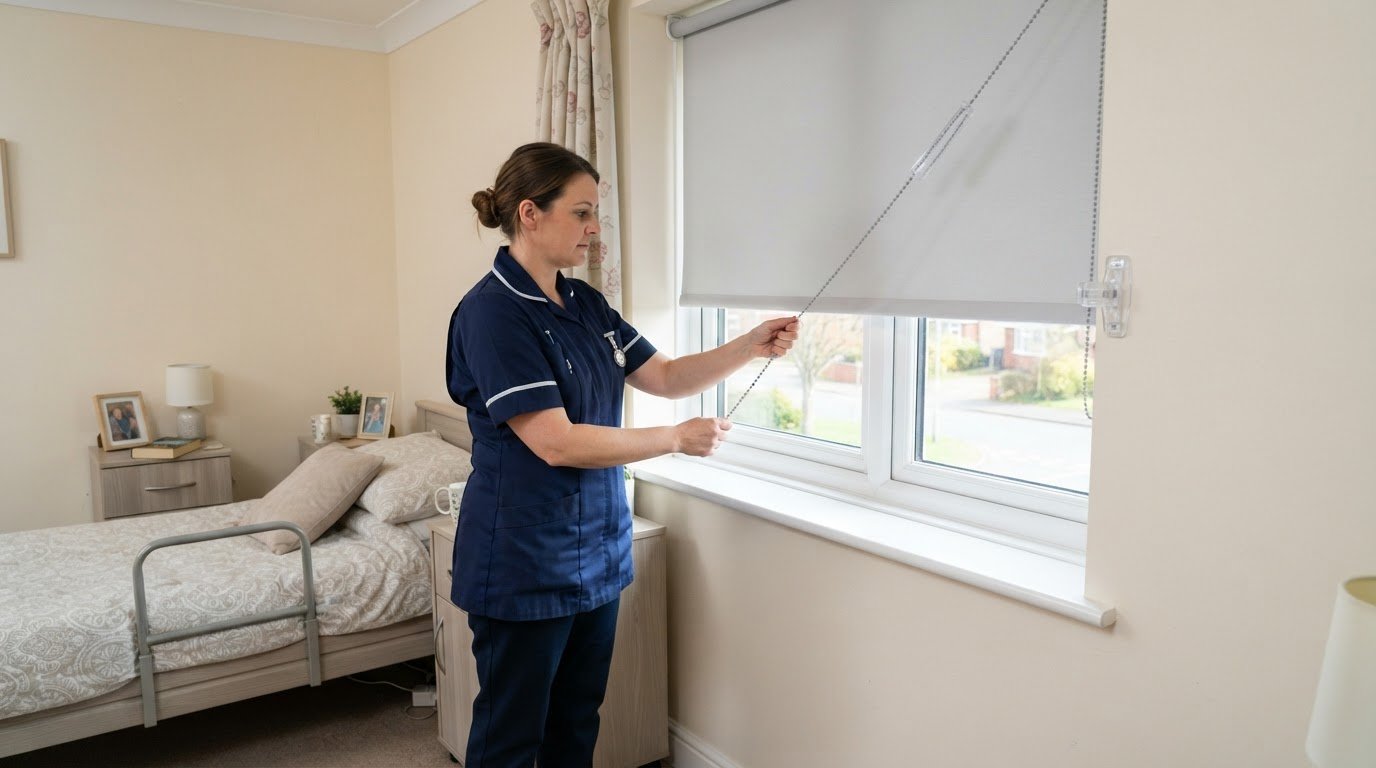
Could the right blinds make a care home easier to maintain without overlooking safety? Blinds for care homes in the West Midlands need to balance practical cleaning, suitable operation and safety. Care homes must ensure blinds meet BS EN 13120 safety regulations.
Choosing blinds for care homes in the West Midlands means balancing the needs of each room with how residents and staff will use the window coverings. Cords and chains can pose a strangulation hazard, so operating methods need careful consideration.
This guide explains what to consider when choosing care-home blinds, how professional measuring and fitting support a suitable installation, and which details can affect the result. It also covers how made-to-measure options accommodate different window sizes and layouts, and what to expect from a fitting service in the West Midlands.
Key Takeaways
- Consider how each room is used, who will operate the blinds and which operating method best suits its needs.
- Professional measuring can help account for uneven walls, deep window recesses and decorative details that affect fitting.
- Made-to-measure blinds can suit different window sizes, while precise fitting helps reduce gaps around the edges.
- Compare cleaning needs, safety considerations and installation requirements to identify a practical option for your care home.
Customer support and fitting assistance
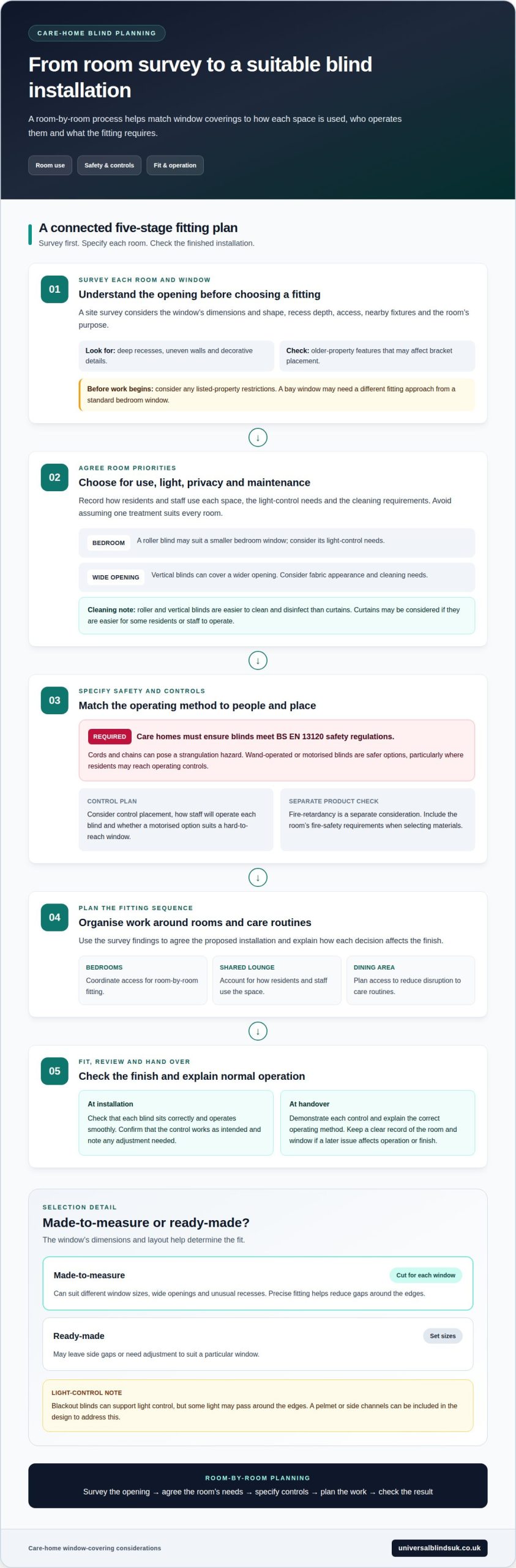
Good fitting support starts with understanding each window and room. A survey can account for deep recesses, uneven walls and decorative details in West Midlands properties. A bay window, for instance, may need a different fitting approach from a standard bedroom window. Clear advice should explain the proposed installation and how each decision affects the finish.
A site survey assesses access, window shape and nearby fixtures before settling on a fitting approach. Features in older properties may affect bracket placement, and listed-property restrictions should be considered before work begins. This helps the fitting team plan for each opening rather than assuming every window is alike.
- Assess each room: note the window layout, existing fittings and how staff or residents use the space.
- Agree priorities: identify rooms needing a roller blind, a motorised option for a hard-to-reach window, or another suitable treatment.
- Plan the sequence: arrange room-by-room fitting to coordinate access and reduce disruption to care routines.
- Review the finish: check that each blind sits correctly and operates smoothly after installation.
A room-by-room plan gives the care team a clear picture of the work. Fitting can be organised by bedroom, shared lounge or dining area, with access needs considered in each space. The choice should reflect the people using the room, not appearance alone. If curtains may be easier for some residents or staff to operate, include that in the decision.
Professional aftercare begins with a handover that explains normal operation and identifies the correct operating method. The installer can demonstrate each control, confirm that the blind moves as intended and note any adjustment needed before leaving. If a later issue affects operation or the finish, a clear record of the room and window helps describe the problem accurately.
Made-to-measure window treatments in the West Midlands
Different window shapes and room uses call for thoughtful product selection. Accurate measurements help achieve a suitable fit and a neat finish.
Made-to-Measure Blind Options
Made-to-measure blinds are cut for each window, making them practical for varied styles, including wide openings or unusual recesses. Ready-made blinds come in set sizes, so they may leave side gaps or need adjustment to suit a particular window. Precise fitting helps reduce light gaps. In care homes, roller and vertical blinds are easier to clean and disinfect than curtains.
Measuring Visits and Product Advice
A measuring visit considers window dimensions, recess depth, nearby fixtures and the room’s purpose. A bedroom, for example, may have different light-control needs from a shared lounge. Product advice can weigh these requirements alongside fabric and operating choices. A clear record of measurements helps prevent mismatches, and any replacement arrangements should be set out in the order terms.
For a quote in Birmingham, Coventry, Wolverhampton or nearby areas, provide the property location, room list and window types. The quote can then reflect the required blinds and fitting work after the measurements and room needs are assessed. Professional measuring and fitting can help establish the right dimensions and suitable options.
Blind Safety and Fire-Retardancy
Care homes must ensure blinds meet BS EN 13120 safety regulations. Fire-retardancy is a separate product consideration, so include the room’s fire-safety requirements when selecting materials rather than judging suitability by appearance alone.
Cords and chains can pose a strangulation hazard. Wand-operated or motorised blinds are safer options; consider these where residents may reach operating controls. The fitting plan should also account for control placement and how staff will operate each blind. These details help match the window treatment to the people and activities in each space.
Commercial blinds for nursing homes and other settings
Commercial window coverings should suit a room’s purpose, daily routines and maintenance needs. Planning blinds for care homes in the West Midlands means considering these factors room by room, rather than applying one specification throughout.
Blackout and Privacy Blind Options
Roller and vertical blinds can suit different window layouts. A roller blind may work well on a smaller bedroom window, while vertical blinds can cover a wider opening. Consider how residents and staff use each room, along with the appearance and cleaning needs of the chosen fabric.
Blackout blinds can support light control, but some light may pass around their edges. A pelmet or side channels can be included in a design to address this. A room-by-room plan for blinds for care homes in the West Midlands can record where privacy or closer light control matters, helping each selection reflect its intended use.
Healthcare-Grade and Anti-Ligature Blinds
Labels such as “healthcare-grade” need to be considered alongside the product’s actual construction and intended use. Care homes must ensure blinds meet BS EN 13120 safety regulations. Cords and chains can pose a strangulation hazard; wand-operated or motorised controls are safer options. Documenting control preferences for each room can help make product decisions more consistent.
Anti-ligature tracks or breakaway components can be used with curtains in dementia units or other high-risk areas. These are curtain options, so they shouldn’t be assumed to describe a blind. For a room where operating controls or ligature risks are a concern, record the setting’s requirements and assess suitable window-covering options with those needs in mind.
In shared rooms, consider how staff access windows for cleaning and routine tasks. A product’s operating method, installation position and fabric all affect its suitability. Matching these details to the room helps create a practical specification without expecting one treatment to meet every need.
West Midlands blind manufacturer and supplier
Care homes in the West Midlands can arrange measuring, made-to-measure blinds and professional fitting through one supplier. This connected process helps translate each room’s requirements into blinds sized and fitted for its windows. For a refurbishment, bedrooms and shared spaces can have their own specifications.
“Manufacturer” does not necessarily mean blinds are made locally. When comparing services, understand who measures, how the specifications reach the manufacturer, and who completes the fitting. A clear process helps prevent mismatches between the surveyed window and the finished blind. Project timing should allow for manufacture before professional fitting.
Samples help staff compare fabrics and colours in the rooms themselves, where lighting and existing finishes affect their appearance. They can also help assess practical choices, such as a roller blind for a bedroom or a coordinated look in a corridor. Match each selection to the intended room rather than assuming one sample suits every space.
For care homes in Coventry, Wolverhampton or nearby areas, ask for a survey-led quote that identifies the windows, selected systems and fitting requirements. A useful proposal makes clear which rooms are included and how installation will be organised. The installer should then work to the agreed specification and leave each blind correctly fitted, with its operation demonstrated to staff.
- Survey: Record window dimensions, recesses and room use.
- Specify: Match samples and blind systems to each space.
- Schedule: Align production and fitting with the refurbishment plan.
- Handover: Review the fitted finish and demonstrate operation.
This approach helps care-home teams understand the products and how the work will progress. Focus on how the supplier coordinates measuring, manufacture and fitting, rather than assuming local manufacturing is essential.
Universal Blinds UK
Universal Blinds UK supplies and fits made-to-measure blinds for care homes, with a free measuring service to help plan for different windows and room requirements. Professional fitting completes the installation after manufacture. Custom shutters are also available where they better suit the property or room.
This support is useful when windows differ between bedrooms, shared spaces or older parts of a building. Measurements and room requirements can guide product choices and help shape a practical fitting plan, without treating every window alike.
Contact Universal Blinds UK to discuss made-to-measure window coverings and fitting support for your care home.
Plan the next step for your care home
Choosing blinds for care homes in the West Midlands is an opportunity to plan window coverings alongside the wider interior. Consider how the selected style will work with existing finishes and refurbishment plans. A consistent approach can create a considered look across the building while allowing individual rooms to meet their own needs.
Universal Blinds UK supplies made-to-measure blinds and custom shutters, with free measuring to help care homes explore options for their windows. Whether you are updating one area or planning coverings for several spaces, a free home or office consultation can help you discuss what may suit the property.
Take the next step at a pace that works for your team. Contact Universal Blinds UK today to discuss your care-home window requirements and explore suitable options.
Frequently Asked Questions
Looking for a Blinds Specialist?
Choose window coverings by considering the practical needs of each space. A bedroom, lounge or corridor may call for a different style or approach to light control. Universal Blinds UK supplies made-to-measure blinds and provides professional fitting, helping you plan for the building rather than choosing one option for every room.
Curtains vs Blinds in Care Homes: What’s Best for Residents and Staff?
The right choice depends on the room and the people using it. Curtains may be easier for residents who find blind controls difficult, while blinds may suit areas where staff prioritise straightforward cleaning. Compare how a resident would operate the covering in a bedroom with how staff would maintain window treatments in a busy shared dining space.
Do West Midlands blind suppliers offer site surveys, measuring and installation for care homes?
Some suppliers offer measuring and installation as part of one service. Universal Blinds UK provides free measuring and professional fitting for made-to-measure blinds. During the consultation, share which windows are in bedrooms or shared areas so product choices and the fitting plan reflect the care home’s layout.
Do local suppliers provide repairs, replacement parts and ongoing maintenance?
Repair and maintenance arrangements vary between suppliers, so these shouldn’t be assumed as part of a fitting project. Universal Blinds UK’s stated services include made-to-measure blinds, custom shutters, measuring and professional fitting. For ongoing care, facilities staff can keep a room-by-room record of blind types and operational issues, helping organise maintenance needs alongside the home’s routine facilities planning.