

Best Safest Blinds: How to Choose Safer Blinds for Your Home
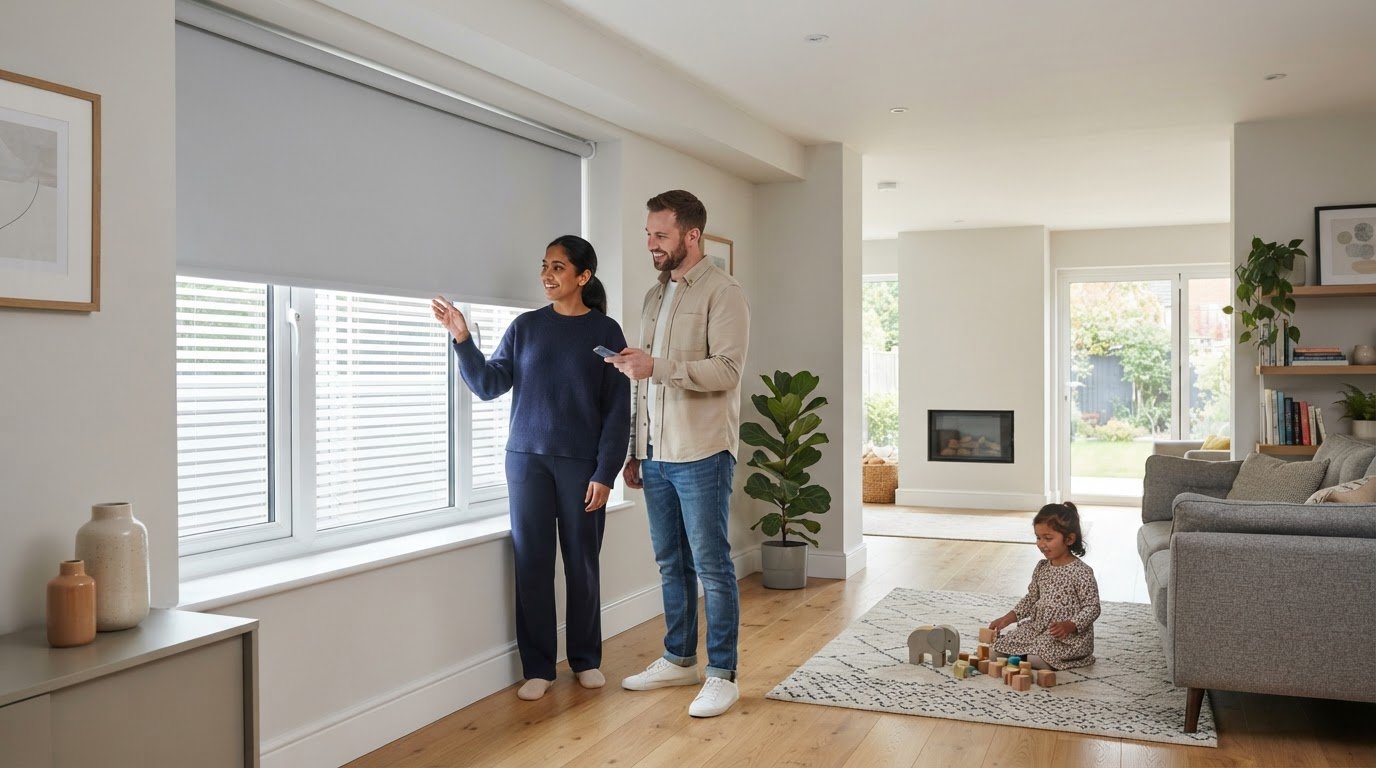
The safest choice isn’t always the blind with the fewest visible controls. Finding the best safest blinds for your home means looking at how the blind operates, how it’s fitted and what’s around the window, as well as how it looks. If existing cords or chains could be within reach, review the setup before choosing a replacement or making changes.
Cordless, handle-operated, motorised and corded controls with safety devices all work differently. The right option depends on who uses the room, how often the blind is adjusted and whether the control is easy to operate. A considered design can still complement your décor and fit your daily routine.
This guide compares control types and practical safety features, then explains what to check when choosing or reviewing a blind. Measuring and fitting matter too: the position of a control and the space around the window affect how the blind works in everyday use. Universal Blinds UK offers a complimentary home consultation and measuring service, followed by professional fitting of made-to-measure blinds and shutters.
Key Takeaways
- Assess how a blind operates, where its controls sit and what furniture or other features are nearby to identify potential risks.
- Compare corded, cordless and motorised controls for accessibility and everyday ease before choosing the best safest blinds for your household.
- Choose a blind style for the room’s appearance and light-control needs, then consider the control design separately.
- Follow the manufacturer’s instructions and current UK guidance when checking an existing blind or planning a safer setup.
- A home consultation, measuring and professional fitting can help you choose made-to-measure blinds or shutters that suit your space.
What makes blinds safer for children and vulnerable people?
A safer blind choice involves more than fabric or style. Consider how the blind operates, whether its controls can be reached, how it’s fitted and what sits around the window. These checks are also useful if someone in the household may have difficulty noticing, reaching or operating a control.
Reducing access to cords is an important part of the decision, but no blind should be described as completely risk-free. In practical terms, safer-by-design controls are intended to reduce access to hazardous operating cords through the way the blind is operated. This differs from a corded blind that uses a separate safety device. For UK-specific information, consult the British Blind and Shutter Association’s Make it Safe campaign and follow the blind manufacturer’s instructions.
What does “safe by design” mean for a blind?
A handle-operated or cordless control avoids the need to pull an operating cord. Motorised controls use a powered method, while a safety device on a corded blind is intended to manage the cord or reduce access to it. These approaches aren’t interchangeable. Check how the specific blind is designed to operate and what its instructions say about any safety measures. Correct fitting and use as directed are important to the intended setup.
Why the area around the window matters
Assess the whole window area, not just the blind. A cot, bed, chair or play furniture nearby may give a child a step up or bring a control within reach. If someone has limited mobility or dexterity, consider whether they can reach and operate the control comfortably without stretching.
Moving furniture can help reduce access, but it doesn’t replace choosing an appropriate control and fitting the blind correctly. Consider the control design alongside who uses the room, its layout and everyday routines. Follow the manufacturer’s instructions for the blind and any safety device, and use current UK guidance when reviewing an existing setup.
How do blind cords, chains and cordless controls differ?
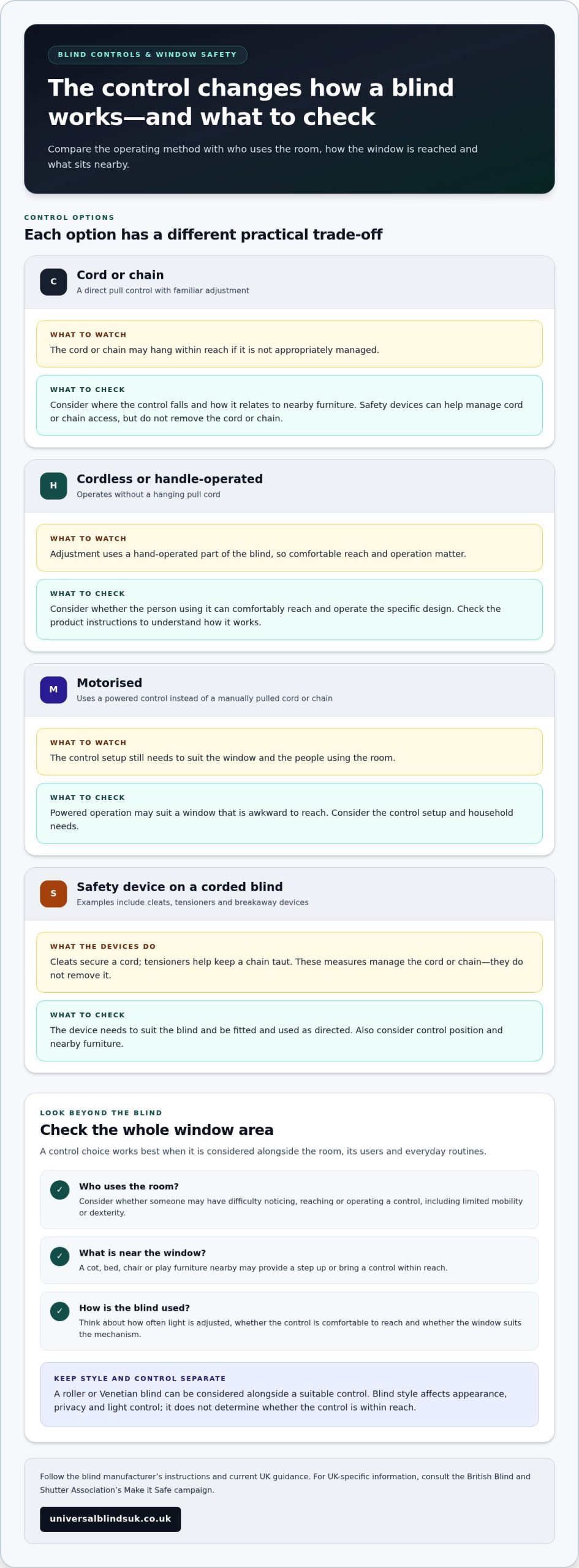
The control affects how a blind operates and whether a cord or chain may be within reach. It’s a separate decision from style: a roller or Venetian blind, for example, can be considered alongside a control that suits the room. To compare options, think about who uses the space, how often you adjust the light and whether the window suits the mechanism.
| Control type | Access and operation | Light adjustment and room fit |
|---|---|---|
| Accessible cord or chain | Provides a direct pull control, but may hang within reach if not appropriately managed. | Offers familiar adjustment. Consider where the control falls and how it sits in relation to nearby furniture. |
| Cordless or handle-operated | Operates without a hanging pull cord, using a hand-operated part of the blind instead. | Ease of adjustment depends on the design and whether the user can comfortably reach and operate it. |
| Motorised | Uses a powered control rather than a manually pulled cord or chain. | May suit a window that is awkward to reach. Consider the control setup and the needs of the household. |
| Safety device on a corded blind | Devices such as cleats, tensioners or breakaway fittings are intended to manage cord or chain access. | The device needs to suit the blind and be fitted and used as directed. |
Are cordless or handle-operated blinds a better fit?
Households looking to reduce the number of reachable operating cords may prefer a cordless or handle-operated design. A handle can make adjustment straightforward for someone who can comfortably reach the blind. Motorised operation may help when manual access is difficult. Neither option suits every window: consider reach, ease of use and the window’s configuration, then check the product instructions to understand the control.
Can corded blinds be made safer?
UK blind safety guidance describes devices such as cleats, which secure a cord, and tensioners, which help keep a chain taut. Breakaway devices are another type. These measures don’t remove the cord or chain, so also consider where the control is positioned and what’s nearby. Follow the blind and device instructions, since correct fitting and ongoing use are part of the intended setup.
Choosing the best safest blinds means weighing these practical differences against how the room is used, rather than relying on a label alone. During a home consultation, samples and tailored advice can help you consider control operation alongside the window dimensions and room layout. Explore made-to-measure blind advice.
Which blind styles are practical safer choices for different rooms?
Blind style affects privacy, light control and the look of a room, but it doesn’t determine whether a control is within reach. Consider style and operating mechanism separately. A roller or Venetian blind still needs a control arrangement that suits the window, the people using it and the room layout.
| Style | Room considerations |
|---|---|
| Roller blinds | A simple-looking option for bedrooms and living spaces. Consider the desired light level and whether the chosen control is accessible. |
| Venetian blinds | Adjustable slats offer control over light and privacy. Think about how often they’ll be adjusted and who can reach the operating controls. |
| Vertical blinds | May suit wider windows or glazed doors. Consider movement through the space, furniture positions and how the blind will be used day to day. |
| Shutters | Can suit a room where a structured window finish and adjustable light are priorities. Check how the panels or louvres operate and whether that feels comfortable for the household. |
What should you consider for a nursery or child’s bedroom?
Start with the control and whether a child could reach it, then assess the full room layout. A cot, bed, chair or toy storage near the window may change what a child can reach. Consider who will adjust the blind, your family’s routines and how much light you want to manage. Blackout fabric may suit your light-control preferences, but it isn’t a safety feature. Keep that choice separate from the control design and fitting.
How should you choose for living rooms and shared spaces?
In a living room or play area, consider whether children can reach the window during everyday activities. For example, a chair beside the window may provide access even if the blind control can’t be reached from the floor. Then compare privacy and light-control needs with the window type, furniture layout and how people move through the room. For more style comparisons, explore our guide to choosing the right blinds for your home.
The best safest blinds aren’t a single style. They combine a suitable blind, an appropriate control and a setup that works for the room and household. For UK-specific advice, consult current guidance from an authoritative UK source and follow the blind manufacturer’s instructions.
How can you assess an existing blind and plan a safer setup?
A visual check can help you spot issues that need attention. It can’t confirm that a blind is risk-free, but it gives you a practical starting point for reviewing the controls, the room and whether the current setup suits your household.
- Identify the operating control. Look for cords, chains, handles or other controls. Note whether any cord or chain hangs within reach, particularly near a cot, bed or play area.
- Check what can be reached. Consider who uses the room and whether the control can be reached from the floor or from nearby furniture. Assess the full area around the window.
- Inspect any safety devices. If a cleat, tensioner or other device is present, look for visible damage or looseness. Its presence alone doesn’t show that it’s positioned correctly.
- Review furniture placement. Where practical, move chairs, beds, cots and play furniture away from the window if they could make the control easier to reach.
- Read the instructions. Follow the manufacturer’s guidance for operating the blind and using any safety device. Refer to current authoritative UK guidance when deciding what to do next.
If a device appears damaged, a control is difficult to manage or you’re unsure how the blind should be set up, don’t guess at a repair or adjustment. Follow the manufacturer’s instructions and arrange a tailored assessment when measuring, placement or fitting needs professional attention.
How do measuring and fitting support the intended setup?
Window dimensions and frame details help determine how a made-to-measure blind is planned for a particular opening. An assessment can take the window, surrounding space and room use into account, so the choice is based on more than appearance. Professional measuring and fitting support a tailored installation, but fitting alone can’t guarantee safety or regulatory compliance. Use the finished blind as directed and continue to consider it in the context of the room.
For a new blind or shutter, Universal Blinds UK’s complimentary home consultation includes samples, advice and measuring, followed by professional fitting. Arrange a home consultation and measuring.
How can Universal Blinds UK help you choose and fit suitable blinds?
Choosing the best safest blinds for your home involves more than comparing styles. Look for an option that suits the room, window and people who use it, while fitting your décor and daily routine. A home consultation lets you consider the options in the space itself and compare samples with your furnishings and natural light.
What happens during a home consultation?
Universal Blinds UK’s complimentary, no-obligation home consultation gives you time to discuss how each room is used, the window layout and the look you want. You can raise practical considerations, such as who will operate the blind and where furniture sits in relation to the window. Comparing samples in the room makes it easier to judge colours and finishes in its actual light.
The consultation includes measuring and a no-obligation quote. With the window assessed in context, you can consider made-to-measure blinds or custom shutters alongside practical details such as how they’ll operate and where they’ll sit. This helps you weigh the options without treating any style or control as a guaranteed safety solution.
What are the next steps for West Midlands homeowners?
The process is designed to be clear and considered:
- Discuss the room. Share how you use the space, the appearance you prefer and any household priorities.
- Assess the window. Review its layout and frame so options can be considered for that setting.
- Measure and quote. Measurements inform a tailored proposal for your chosen blinds or shutters.
- Arrange professional fitting. Once you’re ready to proceed, your made-to-measure choice is professionally fitted.
Universal Blinds UK is a family-run business serving homeowners around Walsall and across the wider West Midlands. Advice, measuring and fitting help you move from comparing options to making a considered choice for your home. The finished setup still needs to be used according to the manufacturer’s instructions and assessed alongside the room around it.
Arrange your complimentary home consultation.
Make a considered choice for your home
The best safest blinds for your household depend on more than style. Consider how the control works, whether it’s within reach and how the window area is used. Cordless, handle-operated and motorised designs offer different practical approaches. Corded blinds use safety devices that need to be fitted and used as instructed.
Keep appearance and light control in the decision, but assess them separately from control access. Reviewing furniture, room routines and the window itself can help you identify what to change, whether you’re choosing new blinds or checking an existing setup.
Universal Blinds UK is a family-run business serving domestic and commercial customers around the West Midlands. A complimentary home consultation brings samples, advice and measuring to your space, followed by a no-obligation quote and professional fitting of made-to-measure blinds or shutters. Arrange your complimentary home consultation to discuss a tailored option for your home.
Frequently Asked Questions
What are the safest blinds for a home with young children?
Blinds designed to operate without accessible cords can reduce children’s access to looped or dangling controls. Cordless, handle-operated and motorised designs are options to consider, but no type should be treated as completely risk-free. The best safest blinds for your home also depend on fitting, the window area and nearby furniture. Check the product instructions and consider how your household uses the room each day.
Are cordless blinds safer than blinds with cords?
Cordless blinds operate without a pull cord, which may suit households looking to reduce reachable cords. A corded blind uses a different setup and may rely on an appropriate safety device. The label alone doesn’t tell you whether a specific installation suits your home. Consider access to the control, how the blind will be operated and whether it’s fitted and used according to the manufacturer’s instructions.
Can existing blinds be made safer for children?
Some existing corded blinds may be used with safety devices such as cleats or tensioners, but the right approach depends on the blind and its instructions. Check whether cords or chains are within reach, whether any device appears damaged and whether nearby furniture provides a way to reach the control. Follow the manufacturer’s instructions and current UK guidance rather than improvising a modification.
Are motorised blinds a safe choice for a child’s bedroom?
Motorised blinds use a powered control instead of a manually pulled operating cord, which may reduce accessible cords at the window. Their suitability still depends on the control arrangement, window and household needs. Consider how the blind operates, whether the control is manageable for the people using the room and how the installation fits the space. Follow the product instructions and keep the surrounding area in mind.
Do blind safety devices need to be fitted correctly?
Yes. A device serves its intended purpose only when it’s fitted and used as directed for that blind. Check the manufacturer’s instructions for the positioning and use of any supplied cleat, tensioner or other safety device. Inspect it periodically for visible damage or looseness. A device doesn’t remove the need to consider whether a cord or chain is reachable and how the room is arranged.
What should I check before choosing blinds for a nursery?
Check how the blind operates and whether its control could be reached from the cot, bed or nearby furniture. Think about who will adjust it, the nursery layout and the light level you prefer. Blackout fabric is a light-control choice, not a safety feature. Compare these practical needs with the window, then read the product instructions to understand how the blind and its controls should be used.
Can made-to-measure blinds help with window safety?
Made-to-measure blinds are selected and measured for a particular window, helping you consider the frame, room layout and preferred control together. Measuring and professional fitting support a tailored installation, but don’t guarantee safety by themselves. Universal Blinds UK offers a complimentary home consultation, measuring and a no-obligation quote, followed by professional fitting of made-to-measure blinds and custom shutters.