

Blinds that comply with workplace safety: UK rules and advice
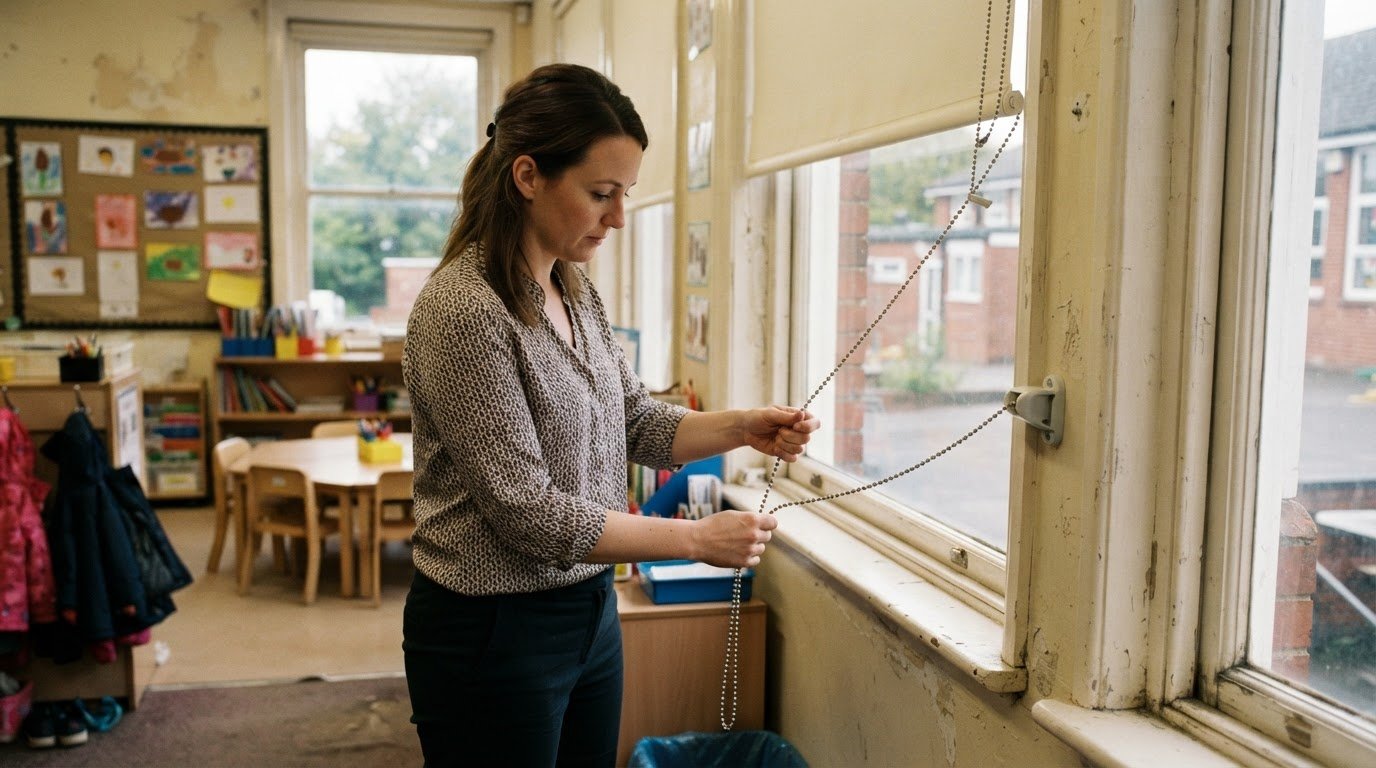
Are corded blinds illegal in the UK? No, not automatically. Corded blinds can be used, but an internal blind must meet the child-safety requirements of BS EN 13120:2009+A1:2014; supplying or professionally installing one that doesn’t comply is illegal. Choosing blinds that comply with workplace safety means considering how cords are controlled, as well as the needs of people using the space.
It’s understandable to be cautious: loose or looped cords can pose a risk, while unsuitable light control or hard-to-reach controls can make a workplace less comfortable to use. The right choice depends on the setting and the people who use it.
This article explains how UK rules address blind cords, fire performance and accessibility, and what to consider when assessing blinds for a workplace. You’ll learn when corded blinds are permitted, how safety devices help manage cord risks, and why fire requirements can vary between buildings. This gives you a clearer basis for choosing blinds that support a safer, more usable workplace.
Key Takeaways
- Corded blinds aren’t automatically illegal, but their design and safety devices matter.
- Fire-performance needs can depend on a building’s use and classification, so consider the workplace setting when choosing blinds.
- Manual controls can create access barriers; think about how different people will operate them.
- Reduce cord risks by keeping loops and loose cords out of children’s reach, and consider cordless designs where appropriate.
Do commercial blinds need specific fire safety standards?
Fire performance depends on the building’s classification, occupancy and local fire authority requirements. BS 5867-2 is a standard for fire performance in textiles used for blinds, and commercial blinds tested to it or an equivalent standard are recommended. Consider the room’s use as well as its fabric: a hospital, office and public meeting area may have different fire-safety needs. The Health and Safety (Display Screen Equipment (DSE)) Regulations 1992 address reflections and glare on computer screens, according to UK Government.
Blind operation also affects workplace safety. Cordless blinds avoid operating cords, while motorised blinds replace manual pulling with controls. Corded blinds aren’t automatically illegal, but their cords or chains must meet child-safety requirements and be managed to prevent hazardous loops. Motorised blinds still require consideration of control placement and the needs of people using the room.
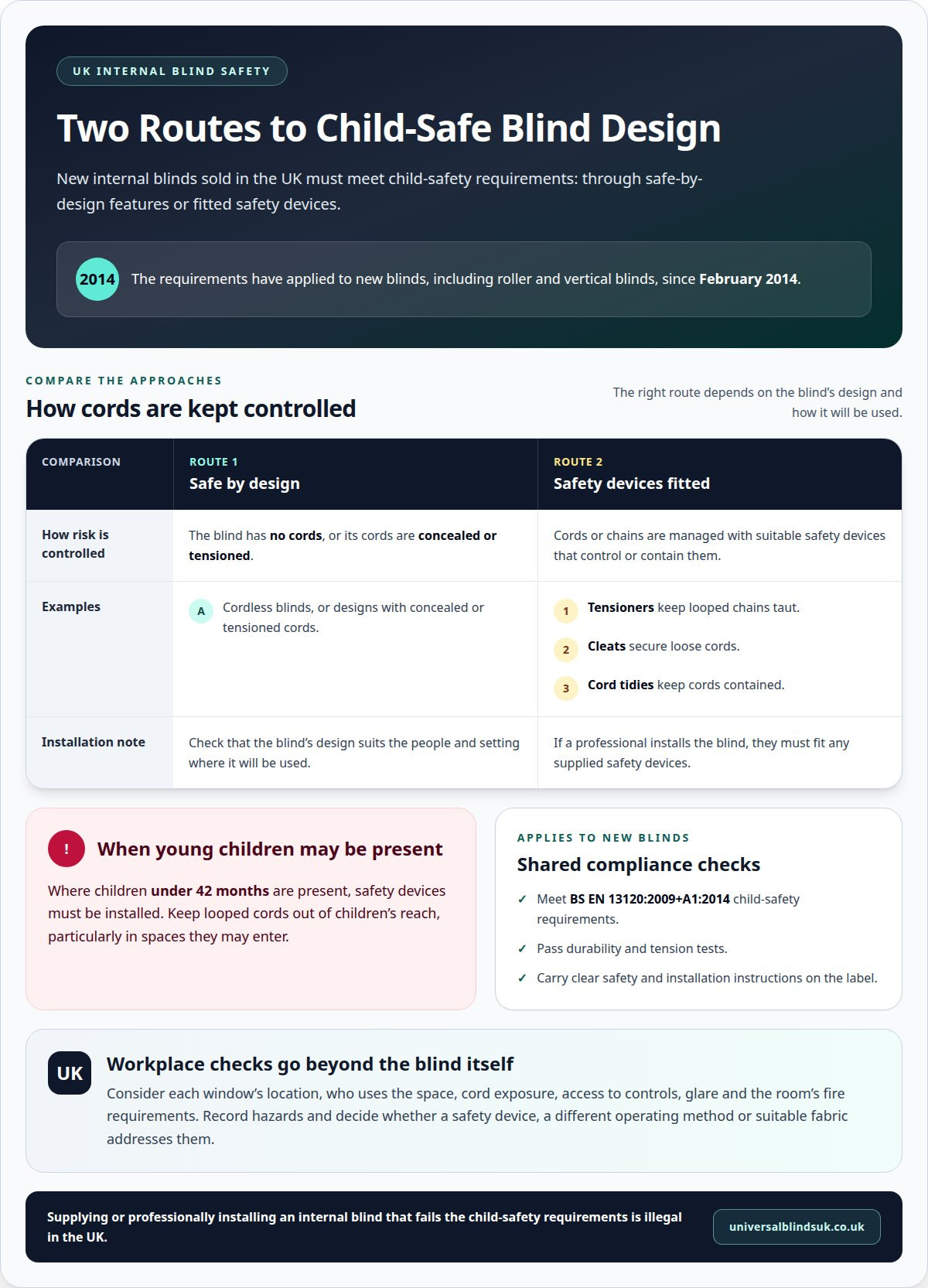
There isn’t one cord safety device required for every commercial building. Where children under 42 months are present, safety devices must be installed; examples include tensioners that keep looped chains taut and cleats that secure loose cords. Cord tidies can also keep cords contained. When a professional installs a blind, they must fit any supplied safety devices. Existing blinds can be retrofitted with appropriate devices.
In public buildings and accessible commercial areas, consider who could encounter each window covering. Loose or looped chains can create entanglement and strangulation hazards for young children, while hanging cords may snag mobility aids or equipment. Cordless designs remove the hanging-cord hazard; built-in tensioned or concealed cords can also reduce exposure. Keep looped cords out of children’s reach, particularly in spaces they may enter.
Employers can assess blind risks by considering each window’s location, the people who use the space, cord exposure, access to controls, glare and the room’s fire requirements. Record hazards and decide whether a safety device, different operating method or suitable fabric addresses them. There is no single UK price for safety-compliant commercial blinds: costs depend on dimensions, materials, operating system and fitting, and are provided in a quote.
Safety requirements for new blinds in the UK
New internal window blinds sold in the UK must meet child-safety standards, either through safe-by-design features or fitted safety devices. Since February 2014, this has applied to new blinds, including roller blinds and vertical blinds. A blind is safe by design if it has no cords or uses concealed or tensioned cords. For blinds that comply with workplace safety, the cord design and any supplied devices should suit the way the product operates.
Do workplace blinds need to comply with BS EN 13120? Yes. Supplying or professionally installing an internal blind that fails the child-safety requirements of BS EN 13120:2009+A1:2014 is illegal in the UK. The standard relates to safety in use, so the product’s cords, chains and devices matter, not simply whether the blind is a roller or vertical design.
New blinds must also pass durability and tension tests, and labels must provide clear safety and installation instructions. These requirements help ensure cords and chains remain controlled during ordinary use. When a professional fits a blind, they must install any supplied safety devices. In schools or other spaces where young children may be present, the blind’s design and fitted devices should suit the setting.
Who is responsible for blind safety in UK workplaces? Employers have a duty under the Health and Safety at Work etc. Act 1974 to protect employees’ health and safety so far as reasonably practicable. UK-based importers must also meet internal blind child-safety requirements, even when products are made abroad. Trading Standards inspect products for compliance with standards such as BS EN 13120.
Rental properties need attention too. Landlords are responsible for ensuring window blinds comply with safety regulations, particularly where young children may be present. This applies both when blinds are newly fitted and when existing coverings remain in use. Made-to-measure blinds can suit the window and its use, while correct installation keeps supplied devices in place.
Choosing blinds that comply with workplace safety starts with considering each room’s users, controls and window dimensions. Made-to-measure blinds can be sized for the window rather than adapted from a standard fit.
Accessibility barriers created by manual blinds
A manual blind can require several actions before someone can adjust the light. The user may need to reach a control, grip and pull it, then judge the blind’s position. They may also need to stand steadily or respond if the blind jams or drops. For someone with limited reach, grip, balance or vision, a vertical blind’s chain can turn a routine adjustment into a barrier. The issue is not simply appearance: the controls and their location affect everyday use.
Motorised blinds can reduce the need to pull a cord or chain. Depending on the system, users may operate them with a handheld remote, a phone or tablet, or voice control. Wall-mounted controls at an appropriate height can make operation easier for people who cannot reach a high window. Timed schedules can adjust blinds at set times, which may help in rooms where staff need consistent light without repeated manual operation.
The Equality Act 2010 forms part of the UK framework for accessibility in buildings. It does not mean one blind type suits every workplace. Consider the people using each room, including staff, visitors and anyone using mobility equipment. A control that works for a standing employee may be difficult for a wheelchair user. In a meeting room, accessible control placement can help different users adjust daylight and privacy themselves.
Assess each window in context. Note the control’s height, the force and grip needed, whether the blind’s position is easy to see, and whether furniture blocks access. Consider whether a manual chain could snag mobility equipment. Safety requirements still matter: motorised operation does not remove the need to consider the blind’s manufacture, installation and any supplied safety devices. Commercial blinds should support safe operation and practical access throughout the working day.
Match the operating method to the room’s users and daily routines. A high window may suit motorised control, while a reachable window may work with a manual system if users can operate it comfortably. Review the arrangement when room use changes, such as converting an office into a shared meeting space. This helps keep access needs in view alongside light control and safety.
ROSPA advice on blind cords
RoSPA recommends cordless blinds, particularly in a child’s bedroom. This removes the operating cord or chain that could form a hazardous loop. For a nursery or children’s room, avoid chain-style controls where possible. In workplaces used by families, consider whether children might enter offices, waiting areas or meeting rooms, not only spaces designed for them.
Keep children away from window coverings with cords. RoSPA advises against placing a child’s cot, bed, playpen or highchair near a window. This applies even when the blind is usually raised. A child could reach a hanging cord from nearby furniture, so moving furniture away from the window reduces access to the hazard.
Existing blinds can be made safer with appropriate devices. Tensioners secure looped cords or chains taut, while cleats let users wind loose cords away after operation. Cord tidies, clips and ties can also contain loose lengths. Position cord cleats at least 1.5 metres above the ground, and keep cords short and out of children’s reach. A safety device should be fitted and used as instructed.
Check each window’s operating system. A cord-operated Venetian blind needs its cord stored on a cleat after every use. Some chain connectors are designed to separate under force, while breakaways can part under a light load. Tension devices hold cords or chains taut; they are not the same as a cleat, which stores a loose cord. These features can help manage existing blinds, but damaged or missing devices need attention.
Include the whole room in a child-safe review. A screen, desk or chair near a window can create a climbing route, even if the blind itself sits high. Remove nearby furniture, secure cords and check that devices remain in place during normal operation. If a blind’s design makes a cord difficult to control, replacing it with a cordless option may be the clearer solution.
For a window that needs a tailored covering, explore made-to-measure blinds suited to the room and its users.
Universal Blinds UK
Universal Blinds UK helps you plan window coverings around your workplace’s practical needs. Whether you’re replacing existing blinds or fitting out a room, made-to-measure blinds and custom shutters are tailored to the window. A free measuring service establishes the dimensions, and professional fitting ensures the coverings are properly installed.
Share how the room is used, who needs to operate the blinds and what matters most, such as light control or accessible operation. These details can guide the choice of covering and controls. For workplaces with specific fire or safety requirements, consider them alongside the room’s use when selecting suitable materials and designs.
If you’re planning a workplace update, contact Universal Blinds UK to discuss your window-covering needs.
Make workplace blind choices part of your next review
Turn your findings into a short planning brief before choosing new window coverings. Note which rooms need attention, how each space is used, and who will operate the blinds during a typical day. Include practical priorities such as privacy, daylight control and ease of operation. This gives decision-makers a shared starting point and helps keep different workplace users’ needs in view.
Choosing blinds that comply with workplace safety is not a one-off decision when rooms change purpose or staff needs evolve. Include window coverings in future refurbishment discussions, so choices continue to suit the space rather than becoming an afterthought. A clear brief can also focus conversations about suitable options.
For support with planning window coverings for your workplace, contact Universal Blinds UK. Take the next step with a considered plan that puts your workplace and its users first.
Frequently Asked Questions
Are blinds with cords illegal in the UK?
No. Corded blinds aren’t automatically illegal, but internal blinds must meet child-safety requirements. It’s illegal to supply or professionally install a blind that doesn’t comply with BS EN 13120:2009+A1:2014. For example, a cord-operated blind may be suitable when its design and safety devices control cord risks. The product’s compliance matters, not simply whether it has a cord.
How do I make old blinds safe?
Start by identifying whether each cord hangs loose or forms a loop, then use a suitable safety device to control it. A tensioner can secure a loop, while a cleat stores a cord after operation. Keep cords away from children and nearby furniture they could climb. If fitting devices yourself, follow the manufacturer’s instructions for each device and check that it remains securely fitted.
What type of blinds are best for a commercial office space?
There isn’t one best style for every office. Choose according to window position, daylight, privacy and how staff will operate the covering. For a desk near a bright window, adjustable blinds can help manage incoming daylight and screen glare. Consider the room’s fire requirements when selecting fabric, too. A meeting room may have different privacy and control needs from an open-plan workspace.
What UK workplace safety regulations apply to window blinds?
Relevant requirements include internal blind child-safety rules and workplace duties. The Health and Safety at Work etc. Act 1974 places a duty on employers to protect employees’ health and safety so far as reasonably practicable. The Health and Safety (Display Screen Equipment) Regulations 1992 address reflections and glare on computer screens, according to UK Government. The Workplace (Health, Safety and Welfare) Regulations 1992 concern suitable and sufficient lighting from natural daylight.
Are there UK rules on looped blind cords in workplaces?
Yes. Internal blinds must meet child-safety requirements, and safety devices must be fitted where children under 42 months are present. A looped cord or chain needs to be kept out of babies’ and young children’s reach. This matters in workplaces that children may visit, such as reception areas, clinics or family facilities, as well as rooms used by employees.
Which blinds are safest for offices, schools and healthcare settings?
The safest choice depends on the people using the room and its risks. Cordless designs remove operating cords, while motorised controls can reduce the need to reach and pull. In schools or healthcare spaces where young children may be present, consider cord exposure carefully. For settings with fire-performance requirements, assess suitable fabric alongside operation, access and the building’s use.