

Reasons to get your boss on board with new office blinds
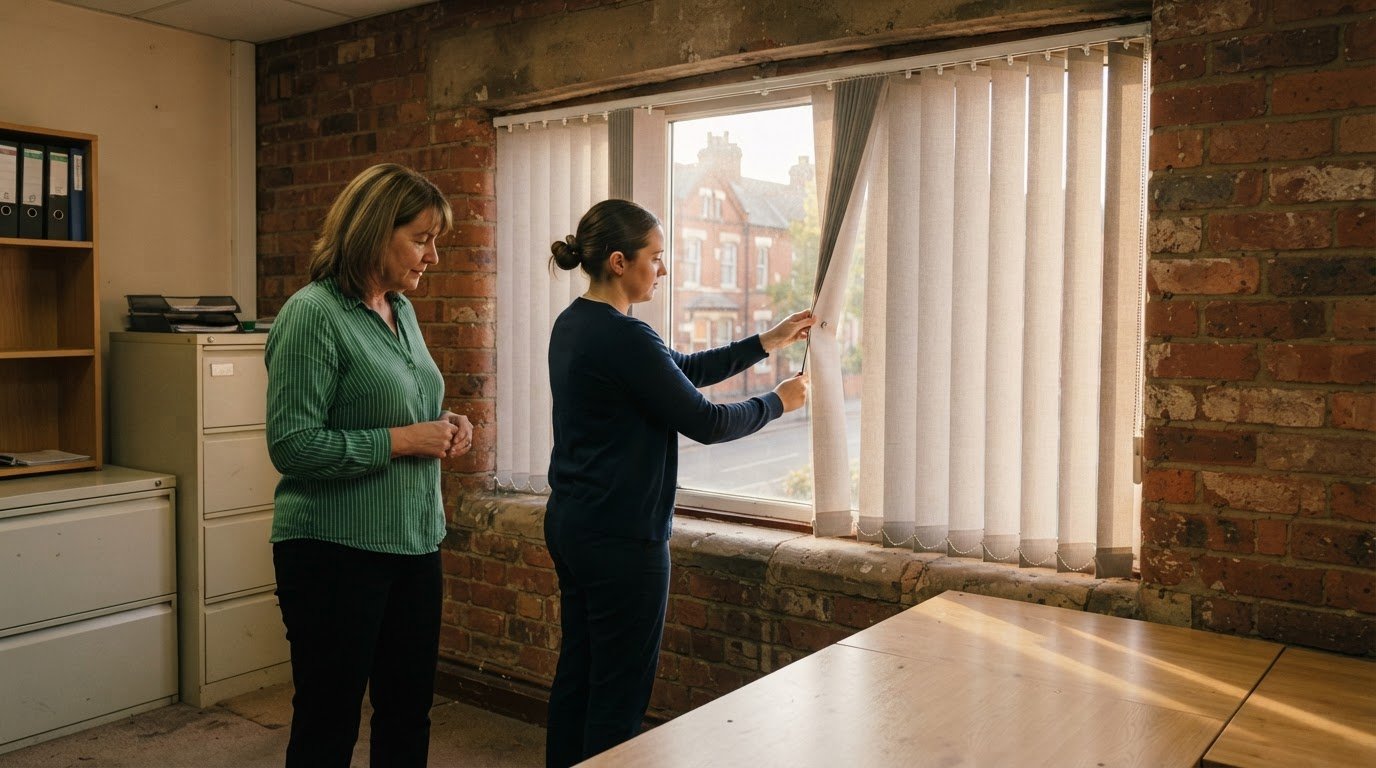
New office blinds can be more than a finishing touch. Getting buy-in from your boss for new office blinds is easier when you connect a smart, cohesive appearance with practical benefits: blinds can help manage sunlight, heat and glare, and properly managed window treatments can save up to 25% on heating and cooling costs.
Your boss will want a clear business case, not just a design preference. Link the right blinds to how the office is used, from creating a polished impression for visitors to making screens easier to see and helping rooms feel more comfortable.
This article explores how to explain those benefits, what to consider when choosing blinds for different office windows, and how to think about potential energy savings. You’ll have a practical starting point for presenting the idea clearly and helping your team decide what would work best.
Key Takeaways
- Match blind colours and finishes to the office’s existing design, while considering how darker shades may affect the feel of a smaller room.
- Factor in window direction, shading and insulation when assessing how blinds could help manage heat and cooling needs.
- Choose light control with daily work in mind, especially where screen glare, privacy or changing daylight affects staff comfort.
- Build a practical replacement case by weighing the windows’ needs, suitable blind options and fitting requirements alongside potential savings.
1. Aesthetic improvements to office spaces
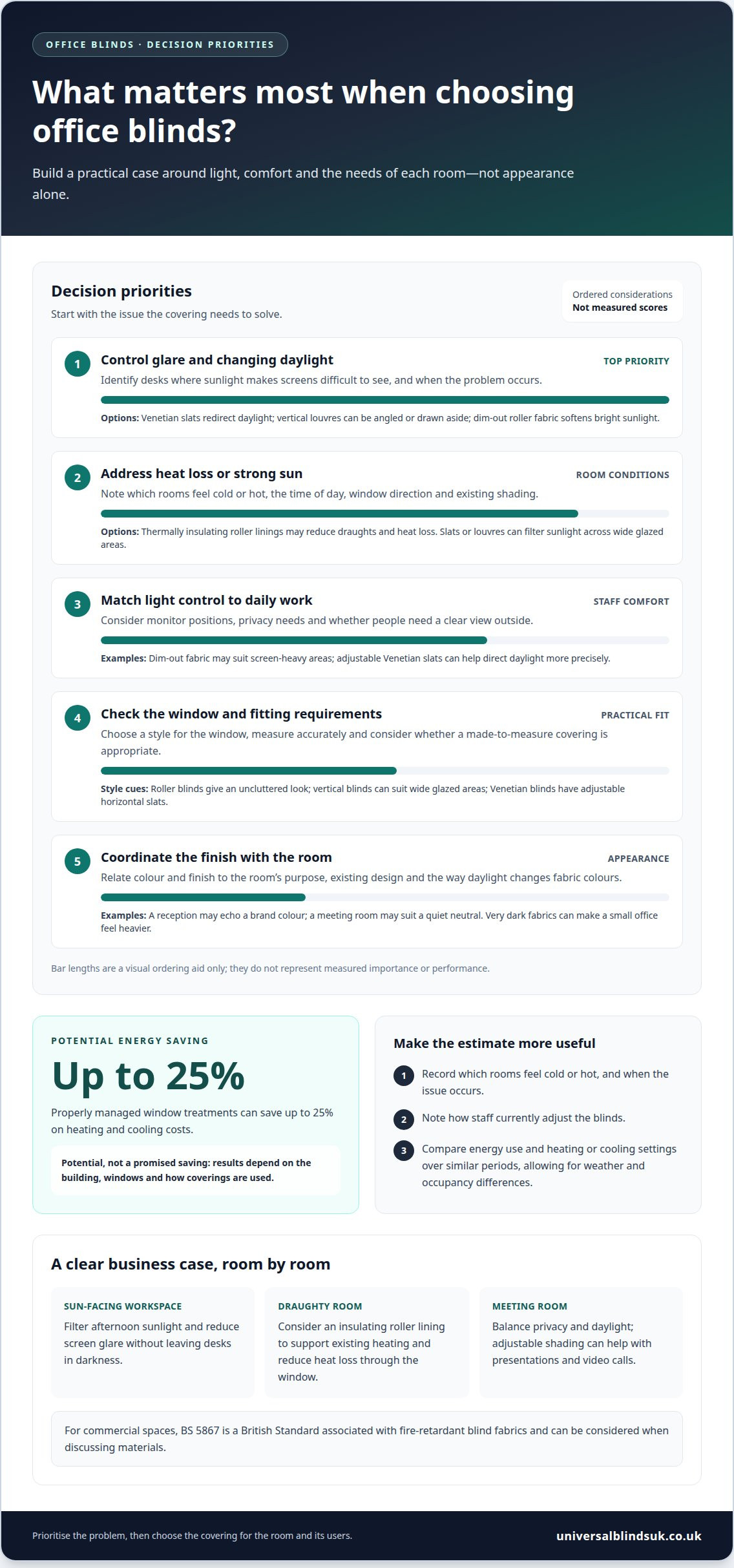
Start with the room’s purpose and existing colour scheme. In reception, blinds that echo a brand colour can create a coordinated first impression; a meeting room may suit a quieter neutral. In a small office, very dark fabrics can make the space feel heavier. Compare samples beside the window and nearby walls, since daylight can change how colours appear.
Choose a style that suits the window and the effect you want. Roller blinds create a simple, uncluttered look, while Venetian blinds add horizontal lines and adjustable slats. Vertical blinds can suit wide glazed areas, including patio doors, and their louvres can be angled or drawn aside. In a bright open-plan workspace, for example, a fabric that softens daylight can help the room feel bright without seeming closed in.
Before replacing blinds, try moving desks or monitors away from direct sunlight, then adjust existing coverings at different times of day. For privacy, a screen or a different seating layout may help; window film is another way to soften views or sunlight. These options may solve a specific problem, but they do not offer the same flexible light control as adjustable blinds.
UK workplace planning should consider whether daylight causes distracting glare or makes screens difficult to use. The practical aim is to balance useful natural light with visual comfort, rather than choosing a blind for appearance alone. For commercial spaces, BS 5867 is a British Standard associated with fire-retardant blind fabrics; it is a useful specification to consider when discussing materials. Present your proposal with a clear example: show how a coordinated fabric could improve the window’s appearance while helping staff manage brightness. That makes the design case specific, not simply a matter of taste.
2. Energy efficiency and heating and cooling costs
Blinds affect how sunlight enters a room and how heat moves through its windows. Thermally insulating linings on roller blinds can reduce draughts and heat loss through a window. This may be useful in older offices or converted buildings, where an insulating layer can support existing heating. In summer, direct sunlight can warm desks and increase cooling needs, as well as make screens harder to view.
Focus your proposal on the windows causing the clearest problem. A south- or west-facing office may get strong afternoon sun, while a shaded north-facing room may need less solar control. Vertical blinds can be drawn aside or angled to filter sunlight across a wide glazed area. Venetian blinds let staff adjust slats as the sun moves. Blackout fabrics block more incoming light, but may make a room too dark for everyday tasks.
For a practical estimate, record which rooms feel cold or hot, when the issue occurs, and how staff currently adjust the blinds. Compare energy use and heating or cooling settings over similar periods before and after changes, allowing for differences in weather and occupancy. Properly managed window treatments can save up to 25% on heating and cooling costs, but the result depends on the building, windows and how coverings are used. Treat that figure as potential, not a promised saving.
Explain the requirement in operational terms: reduce heat loss in a draughty room, or filter afternoon sun without leaving desks in darkness. A wide range of shades and fabrics can help match the window’s exposure and the room’s use. Accurate measurements also matter, since gaps around a covering can limit its effectiveness. For unusual dimensions or a room-specific brief, made-to-measure blinds can be considered against the window and its settings, rather than choosing a standard covering that may not fit.
3. What are the benefits of new office blinds for employee comfort and productivity?
A desk that is comfortable in the morning may be difficult to use as daylight changes. Blinds that filter outside light can reduce screen glare while keeping an office bright. This can make monitors easier to read without repeatedly changing their position or closing curtains. A workstation beside a sunny window, for example, may need adjustable shading throughout the day.
Blind styles offer different ways to manage light. Venetian blinds use tilting slats to redirect daylight, while vertical blind louvres can be angled or drawn aside. Screen or dim-out roller fabrics can soften bright sunlight while still letting daylight into the room. This gives staff options for adjusting their workspace as sunlight moves, rather than relying on one fixed covering.
Comfort also depends on privacy and protecting the office environment. Blinds can reduce harsh sunlight and help protect desks, flooring and furnishings from fading. In a ground-floor meeting room, a suitable covering can provide privacy without permanently blocking daylight. Adjustable shading can also reduce reflections and make the room easier to use for presentations or video calls.
Very bright white materials can sometimes increase screen glare, so consider colour and position alongside style. Note where monitors face, which desks receive direct light and whether staff need a clear view outside. For example, a dim-out fabric may suit a screen-heavy work area, while Venetian slats can help direct daylight in a room where people need more precise control. These examples make the case specific to daily tasks, not just appearance, and help your manager assess whether the proposed light control suits the people using each space.
Matching the blind control to the task can make everyday light adjustments straightforward. Aluminium Venetian blinds use tilting slats to provide light control and help avoid screen glare, giving staff a way to direct daylight while working at a monitor. Vertical blinds let users adjust light by opening or closing them or tilting their louvres to reduce screen glare. Dim-out roller blind fabrics soften bright sunlight without blocking it entirely. Considering these options around the needs of each desk can help staff manage changing light and stay comfortable while focusing on their work.
4. How can I estimate the cost and savings of replacing office blinds?
Build an estimate around the actual windows rather than assuming one price. Record how many need new coverings, their dimensions and whether they are standard or unusually shaped. Note the fabric, operating style and fitting requirements for each room. A wide glazed meeting room, for example, may need a different solution from a small office window.
The total depends on the windows, blind type, fabric choice and fitting requirements. Keep these factors visible in your proposal so your manager can understand what shapes the cost. If some windows need privacy while others mainly need glare control, describe those different needs rather than treating every room alike.
To assess potential savings, establish a baseline before replacement. Collect energy bills and note heating or cooling use, room occupancy and recurring comfort issues. Compare similar periods after installation, accounting for changes in weather, working patterns and thermostat settings. If a south-facing room regularly needs cooling on sunny afternoons, for example, track whether that pattern changes after suitable shading is installed.
Separate measured savings from expected benefits. Lower energy use may be one outcome, while reduced glare or improved privacy can also support the case. Avoid assigning a cash value to those benefits unless your workplace has a reliable way to measure it. A simple proposal can set out the existing issue, suggested window treatment, cost factors and evidence you’ll review afterwards.
For a more informed estimate, request a tailored quote based on the office windows and their requirements. This gives your manager a clearer figure to consider alongside the intended improvements, without relying on generic prices that may not reflect the project.
A listed starting price should not replace a quote for the office. Compare it with the required dimensions, blind type, fabric and fitting needs you have recorded. Keeping a product’s starting price separate from a tailored estimate helps avoid mistaking it for the full cost of replacement.
Universal Blinds UK
Universal Blinds UK can help turn your office-blinds proposal into a practical plan for the windows and needs you’ve identified. If measurements, coverage or installation are holding up the decision, its free measuring service and professional fitting service can support the process from assessment through fitting.
Made-to-measure blinds can be tailored to office windows, while custom shutters offer another option for a coordinated workspace. Share the room’s needs, such as managing daylight, reducing screen glare or improving privacy, so the options can be considered in context.
Contact Universal Blinds UK to discuss suitable window coverings for your workplace.
Move your proposal towards a decision
Turn your idea into a decision your manager can act on. Frame it as a clearly defined workplace project: identify who needs to approve it, what decision you’re requesting and which rooms are in scope. This keeps the discussion focused and gives colleagues a shared point of reference.
When getting buy-in from your boss for new office blinds, invite practical feedback rather than presenting a finished decision. Ask which priorities matter most and agree on a useful next step, such as arranging a site assessment or preparing a proposal for the relevant decision-makers. This gives the conversation direction without overstating what new blinds will achieve.
Universal Blinds UK can help you explore suitable options for your workplace. Discuss your office project with Universal Blinds UK and take the next step with a clearer plan. A considered proposal makes it easier to move from an idea to a workplace decision.
Frequently Asked Questions
How can I present a business case for new blinds to my manager?
Present a concise proposal that links a specific workplace issue to a clear decision. Include a marked-up floor plan or photos of the affected windows, then explain which areas you want assessed and why. Getting buy-in from your boss for new office blinds is easier when you separate essential changes from optional improvements. End by asking for a practical next step, such as approval to arrange an assessment.