

Are Vision Blinds a Good Idea for Light Control and Privacy?
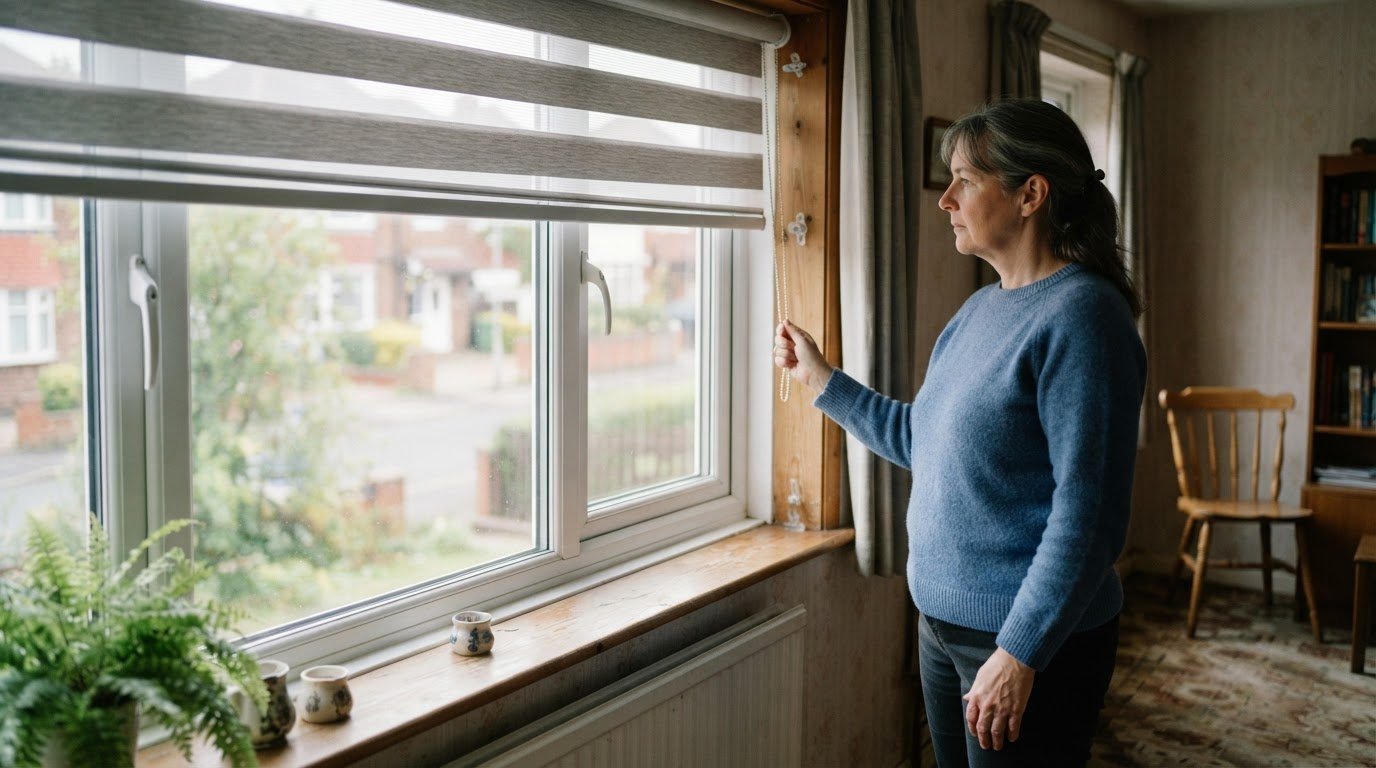
Vision blinds are a good idea when you want to balance daylight, privacy and glare control rather than block all light. Their two layers of striped fabric let you align sheer sections to filter daylight or overlap opaque bands for more privacy. They are not a blackout solution, and indoor lighting can make silhouettes visible from outside after dark.
That balance can work well in living rooms and home offices, but it may not suit every room. If you are considering vision blinds, it helps to understand how their stripes affect light and privacy, which rooms they suit, and how they compare with other window treatments. Match their adjustable light control to the room’s purpose and the level of evening privacy you need.
Key Takeaways
- Match the fabric and blind style to the room: bedrooms needing genuine darkness are better suited to a dedicated blackout option.
- Consider the window’s size and position when choosing a recess or face fit, as the fit affects how much light escapes around the edges.
- Weigh adjustable light control against upkeep: the double fabric layer can need more careful cleaning than a standard roller blind.
- Compare vision blinds with other treatments by prioritising what matters most in each room, such as glare reduction, privacy, light exclusion or simpler care.
Light control and privacy
Vision blinds use two layers of horizontal fabric with alternating sheer and opaque bands. Their day-and-night design lets you adjust the layers without raising the whole blind. This gives you flexible control over light and privacy in one contemporary window treatment, with a different look from vertical blinds.
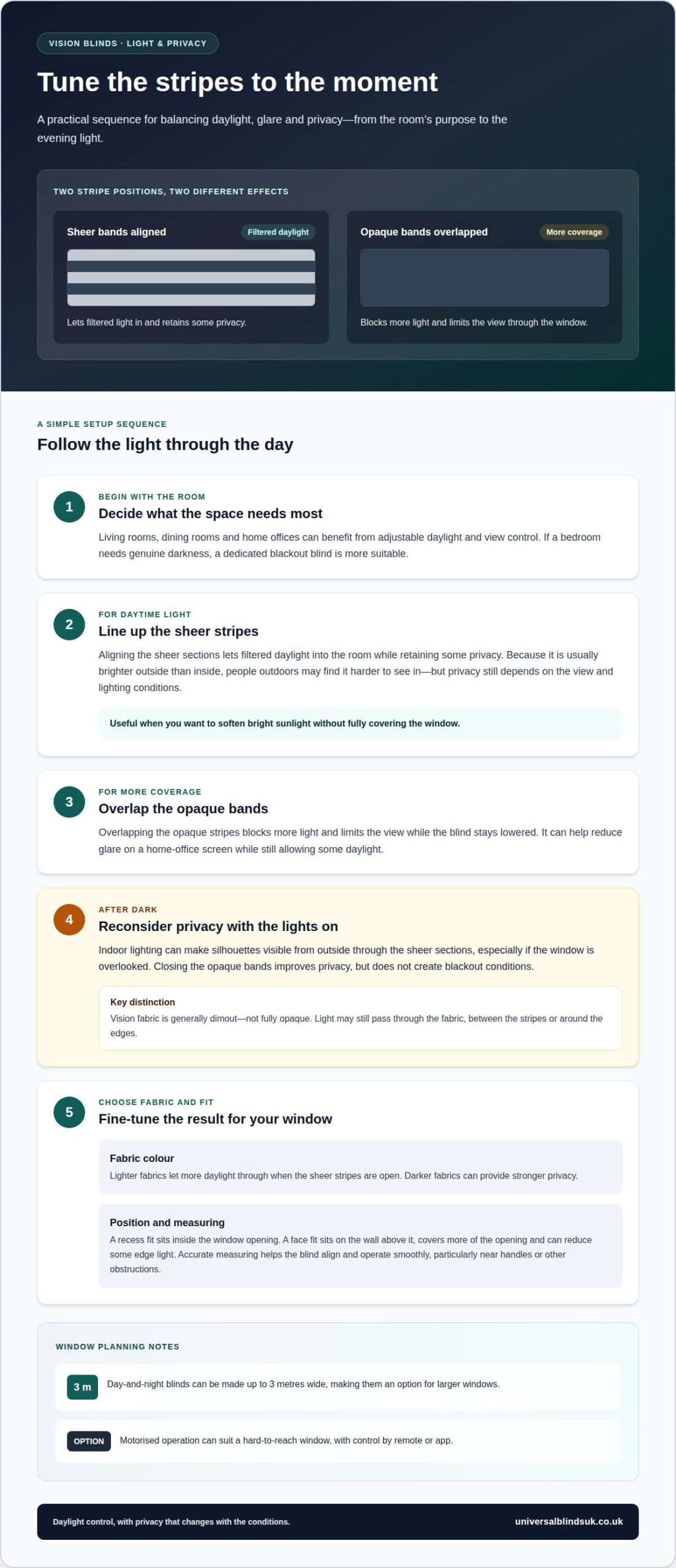
In daylight, aligning the sheer stripes lets filtered light into the room while retaining some privacy. Because it is usually brighter outside than inside, people outdoors may find it harder to see in. For example, this setting can soften bright sunlight in a living room without fully covering the window. Privacy still depends on the view and lighting conditions.
For more privacy, adjust the fabric so the opaque stripes overlap. This blocks more light and limits the view through the window while keeping the blind lowered. It can be useful when you want to reduce glare on a home-office screen but still let in some daylight. Realign the sheer bands when you want a brighter feel.
Fabric colour also affects the result. Lighter fabrics let more daylight through when the sheer stripes are open, while darker fabrics can provide stronger privacy. The fabric is generally dimout rather than fully opaque, so some light may still pass through. Light can also show between the stripes or around the edges.
At night, the balance changes. With indoor lights on, people outside may see into the room through the sheer sections, and silhouettes may be visible, especially if the window is overlooked. Closing the opaque bands improves privacy but does not create blackout conditions. You can also raise the blind for a clearer view or lower and adjust it for a softer effect.
Suitability for different window types
Vision blinds can suit living rooms, dining rooms and home offices, where alternating fabric bands let you adjust the view and daylight. They’re often chosen for larger windows because the horizontal stripes create a consistent look across a broad glazed area. The fabric colour also affects the room’s feel, from a lighter, airier appearance to a stronger visual contrast.
Are vision blinds suitable for kitchens and bathrooms? They can work in kitchens, but the fabric needs to suit the conditions in bathrooms and other damp rooms. Moisture and cooking activity are important considerations alongside the window’s size and shape.
Bedrooms call for a more specific choice. Vision blinds may not suit a room where complete darkness is essential, such as a bedroom used by a shift worker. Their fabric is generally dimout, and light can pass through or around the blind. If genuine darkness matters, a dedicated blackout blind is more suitable.
The window’s position affects how the blind is fitted. It can sit inside the recess or on the wall above the opening. A face fit covers more of the window and can reduce some edge light, while a recess fit sits within the opening. Accurate measuring helps the blind align and operate smoothly, particularly near handles or other obstructions.
Day and night blinds can be made up to 3 metres wide, making them an option for larger windows. Motorised operation can suit a hard-to-reach window, with control by remote or app. If you’re considering a tailored fit for your window, explore made-to-measure blinds as one way to match the treatment to the opening.
Comparing vision blinds with other window treatments
Vision blinds use alternating fabric bands, while a standard roller blind raises or lowers one continuous sheet. This difference affects how you control daylight, privacy and the view.
Comparison with Standard Roller Blinds
A roller blind offers a straightforward choice: raise it for more daylight or lower it for coverage. With vision blinds, you can adjust the sheer and opaque stripes while the blind stays down. Their two layers use more fabric than a traditional roller blind, which can also collect more dust and require more careful upkeep.
Fabric use alone does not determine the cost. The price depends on the window dimensions, fabric and operating style, and is provided in a quote. Compare those details rather than assuming that using more fabric means the price will double.
Insulation and Energy Bills
Blinds can provide an additional layer at a window, but a specific saving from vision blinds can’t be inferred from general blind testing. In testing at the University of Salford’s Energy House, certain blinds and shutters reduced heat loss through tested double-glazed windows by up to 33%. That result applies to the tested products and conditions, not automatically to every vision blind or household energy bill.
Accurate measurements help the striped layers align and the blind operate smoothly. A vision blind can sit inside the window recess or on the wall above it. Face fitting covers more of the opening and can reduce some edge light.
For routine care, dust the fabric with a soft cloth or a suitable vacuum attachment. Spot-clean small marks, avoid harsh chemicals and follow the fabric manufacturer’s care instructions. Adjust the stripes occasionally to keep the layers aligned.
Benefits and styles of vision blinds
Vision blinds, also called zebra blinds or day-and-night blinds, combine striped fabric with adjustable positioning. Their appeal lies in pairing a distinctive look with practical control over daylight and privacy.
Benefits of Vision Blinds
Their main benefit is flexibility: you can adjust the fabric layers without fully raising the blind. This makes it easier to switch from filtered daylight to greater coverage as the room’s use changes. In a living room, for example, you can soften incoming light during the day and close the opaque bands for more privacy later.
Vision blinds offer a contemporary alternative to a single-sheet blind, but they are not a blackout treatment. Light can pass through the fabric or around its edges, so a bedroom that needs complete darkness may be better suited to a dedicated blackout blind. This distinction helps you choose a treatment that fits the room’s main purpose.
Styles of Vision Blinds
Style comes from the fabric’s colour and stripe pattern, as well as the way the sheer and opaque sections align. Lighter fabrics create a brighter effect when the sheer stripes are open; darker fabrics offer stronger privacy. For a coordinated interior, choose a colour that complements nearby furnishings rather than treating the blind as a separate feature.
Some vision blinds are motorised and operate by remote or app, which can make adjusting a high or awkwardly positioned window more convenient. Motorised operation can also help keep cords away from young children. Fabric options vary too: Portofino Vision blind fabric is available in four colourways.
Before choosing a style for kitchens, consider the room’s conditions and the fabric’s suitability, particularly where moisture or cooking activity is present. Accurate measuring also matters: it helps the blind fit the opening and lets its alternating stripes align as intended. A tailored option can bring the fabric, colour and operation together for your window. Explore made-to-measure blinds to find a fit suited to your space.
Universal Blinds UK
Universal Blinds UK can help you weigh your window’s light, privacy and room requirements when choosing a suitable treatment. Made-to-measure blinds are tailored to your window, while custom shutters offer another way to manage daylight and privacy.
The free measuring service establishes the dimensions and fitting requirements, and professional fitting completes the process. This is particularly useful for an awkward recess, a window that needs a precise fit, or a room where blackout or evening privacy matters more than adjustable daylight.
Contact Universal Blinds UK to discuss your window and the balance of light and privacy you want.
Choose the right fit for your next step
To decide whether vision blinds are a good idea, think about how you want each room to feel throughout the day. A window treatment should suit your routines, not just match a photograph or trend. You might prefer a softer look in one room and a different balance of privacy and daylight elsewhere. Considering each room separately can help you make a more informed choice.
Universal Blinds UK can help you explore made-to-measure blinds or custom shutters for your home. The free measuring service establishes the right fit for your windows and gives you a practical starting point before you choose a style. You do not need to decide on every room at once. Start with the window where the choice matters most, then consider how you want the space to work.
Contact Universal Blinds UK to talk through your options and take the next step with confidence.
Frequently Asked Questions
What Are Vision Blinds?
Vision blinds are commonly called zebra blinds or day-and-night blinds. They combine sheer and opaque fabric bands in two layers that move against each other as you adjust the blind. Align the bands to soften incoming light or shift them to change the view through the window. Their stripes give them a distinctive look compared with plain roller blinds.
Are There Any Drawbacks?
Yes. The layered fabric can collect dust and may need more careful cleaning than a single-layer roller blind. Vision blinds also do not provide complete blackout, which can matter in a bedroom facing street lighting or a room used for daytime sleep. Consider the room’s main purpose: flexible light adjustment may suit a living room, while darkness may matter more elsewhere.
Are they child-safe?
Motorised vision blinds can be operated by remote or app, helping keep cords away from young children. This feature applies to motorised operation, not every blind design. When choosing a treatment for a child’s room, consider how it will be operated and whether you can adjust it conveniently. The operating style is one part of finding a suitable option.
What are vision blinds and how do they work?
Vision blinds use alternating sheer and opaque bands across two fabric layers. Adjusting the blind moves one layer against the other, changing how the stripes line up. Aligning the sheer sections gives a filtered view, while positioning opaque bands across them reduces the view through the fabric. Raising the blind opens up more of the window than adjusting the stripes alone.
What are the advantages and disadvantages of vision blinds?
For a living room, are vision blinds a good idea if you want to adjust the view without raising the blind? They can be, because their fabric layers offer more flexibility than a single sheet. The trade-offs include more involved cleaning and limited light exclusion. Consider the room’s purpose: are vision blinds a good idea for a bedroom that needs darkness? A dedicated blackout blind is more suitable.
How much do vision blinds cost in the UK?
The cost depends on the individual order and is provided in a quote. Window dimensions, fabric choice and fitting requirements all affect the specification. A narrow window and a wide glazed opening may need different materials and measurements, so compare quotes based on the treatment and fitting included. A made-to-measure blind is priced for the specific window, not a universal size.