

Versatile blinds for flexible light, warmth and style
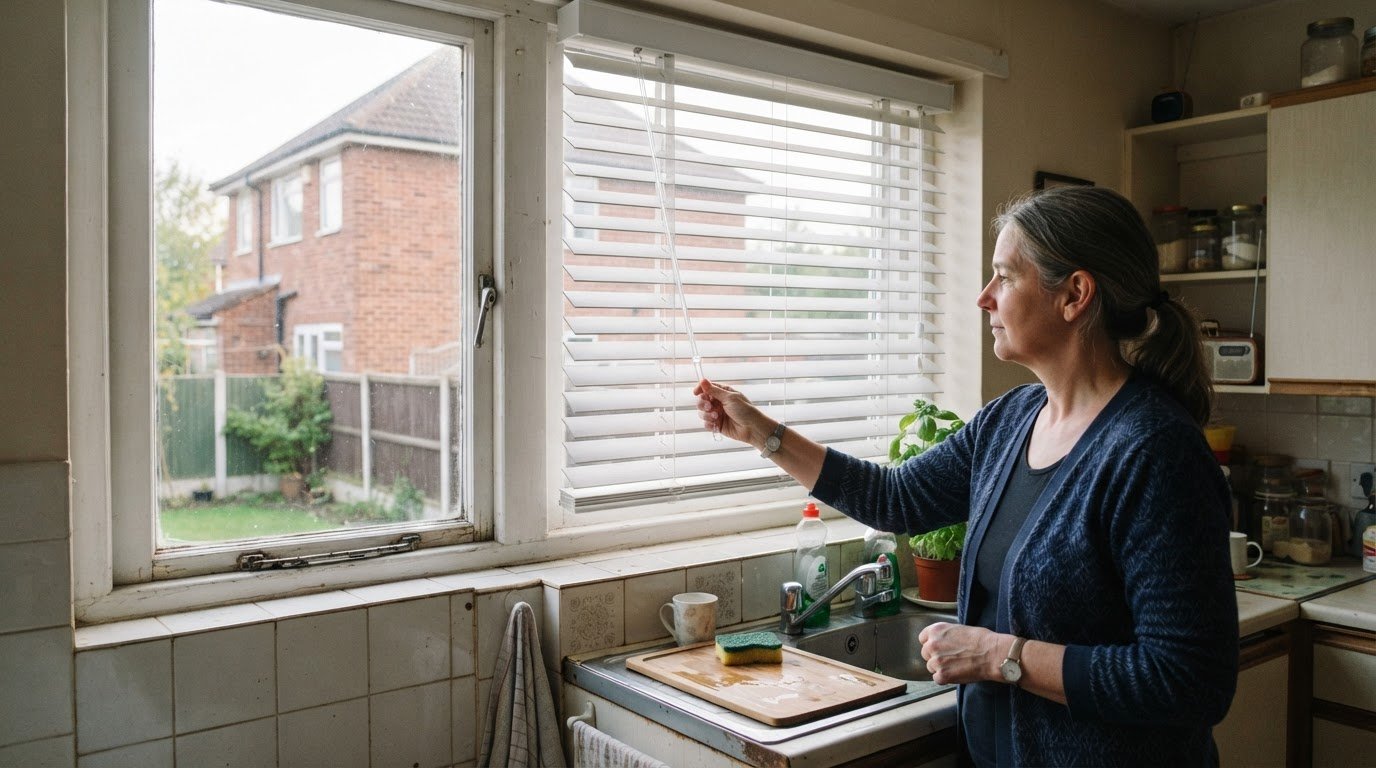
A blind that blocks every ray of light isn’t always the most useful choice. The best versatile blinds for many homes are Venetian blinds, whose adjustable horizontal slats help balance daylight and privacy. Wood, aluminium and plastic options also let you consider the room’s conditions alongside your preferred look.
Choosing blinds can feel like a balancing act: you want control over light and warmth without losing the style that makes a room feel like yours. The right choice depends on how you use the space, the window itself and the effect you want to create.
Here, you’ll learn how Venetian blind materials compare, what to consider when choosing blinds for warmth, and how colour and design shape the finished look. We’ll also cover other flexible styles and the rooms they can suit, helping you make a confident choice for your home.
Key Takeaways
- Match the blind style to how you use the room, the shape of the window and the level of light control you want.
- Compare Venetian slat materials with the room’s conditions and the look you want to create.
- Consider how fabric weight and thermal properties may influence comfort through changing seasons.
- Use colour and pattern to complement your interior, then consider made-to-measure blinds and professional fitting for a tailored finish.
1. Ultimate Guide to Window Blinds: Which Type is Best?
Venetian blinds use horizontal slats to balance natural light and privacy. Aluminium is a practical option for kitchens or bathrooms, while wooden slats bring warmth to living rooms. Vertical blinds suit large windows and patio doors, with panels you can tilt to adjust the light. Roman blinds offer a softer fabric finish, while pleated blinds can suit awkward or non-standard window dimensions.
Roller blinds use one piece of fabric that rolls up or down. A sheer fabric filters daylight, while a blackout option can create near darkness in a bedroom. Double roller systems pair fabrics for more than one light-control option. For a living room, this can help adapt the window to changing daylight and privacy needs.
Most standard roller blinds are available in widths up to around 2400-3000 mm. A sturdy tube can support a roller blind spanning approximately 3 metres, while a centre bracket can reduce tube flex on spans over 1800 mm. For windows wider than 3000 mm, vertical, panel or split roller blinds are alternatives.
For kitchens, wipe-clean roller fabric or fauxwood Venetians can handle moisture and grease; fauxwood is also suggested for bathrooms. Homes with children or pets can consider roller models without cords, which provide an additional safety benefit. To measure a large window, take the width at three heights and the drop at three positions. A 5 mm error on a 3000 mm blind can leave a visible tilt or gap.
For a UK purchase, compare suppliers that offer made-to-measure blinds, measuring and professional fitting, then review the warranty terms for the product and installation. The right choice depends on the window, fabric and support required.
2. Aluminium, wooden and faux wood Venetian blinds
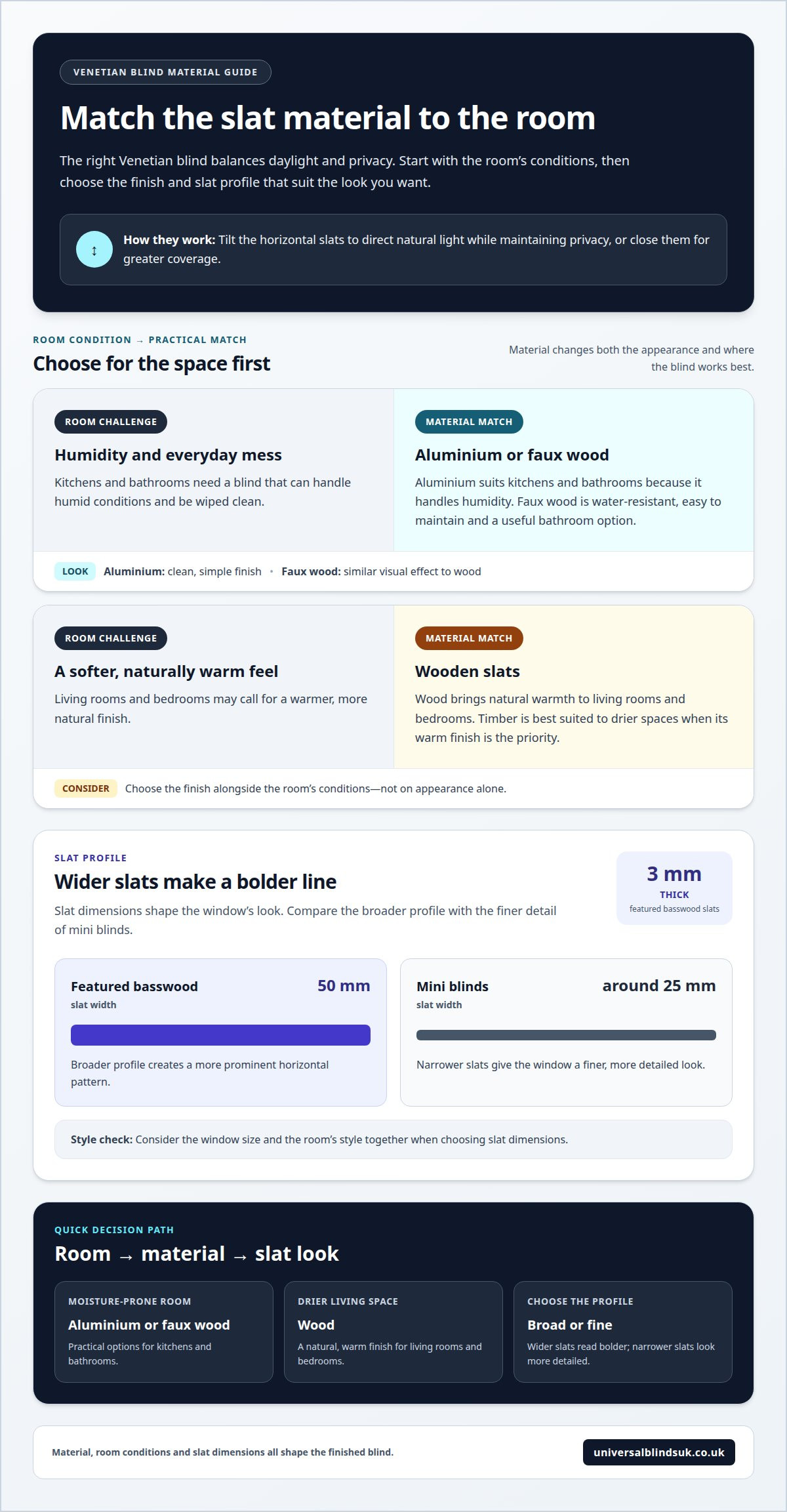
Venetian blinds use adjustable horizontal slats to direct daylight while maintaining privacy. Tilt the slats to admit natural light without fully opening the blind, or close them for greater coverage. Their practical operation suits rooms where light changes throughout the day, and the slatted design creates a different look from fabric blinds.
Material affects the look and where a blind works best. Aluminium gives a clean, simple finish and suits kitchens or bathrooms because it can handle humidity. Wooden slats bring natural warmth to living rooms and bedrooms. Faux wood offers a similar visual effect, with water-resistant properties and easy maintenance that make it a useful bathroom option.
Slat dimensions also shape the finished appearance. Featured basswood Venetian blinds have slats 50 mm wide and 3 mm thick, creating a broader profile than mini blinds with slats around 25 mm wide. Wider slats create a more prominent horizontal pattern; narrower ones give the window a finer, more detailed look. Consider the window size and the room’s style together.
There is no single operating limit that fits every Venetian blind. The blind’s dimensions, slat material, headrail and operating mechanism all affect how it functions, so match the system to the window rather than choosing by appearance alone. For moisture-prone rooms, aluminium and faux wood are practical choices; both can be wiped clean, and faux wood is water-resistant. Timber suits drier spaces where its warm finish is the priority. If a tailored fit matters, explore options for a precise window fit.
3. Thermal performance and energy efficiency
Blinds influence how a room feels by adding a layer at the window. Insulating styles can help retain warmth on cold nights and reduce excess heat gain on hotter days. The effect depends on fabric, fit and window placement, so match the blind to the room’s main challenge. A draughty bedroom may need a different approach from a sunny living room.
For a conservatory, consider Perfect Fit pleated blinds. Their pockets trap air, helping retain heat in winter and block some incoming heat in summer. Thermally treated roller fabric is another practical option for conservatories and south-facing rooms, where direct sun can make spaces uncomfortable. Choose based on when the room feels too warm, rather than appearance alone.
In a colder home, heavier fabric blinds can help reduce cold coming through windows and doors. Roller fabrics with thermal properties may also help regulate indoor temperatures. Blackout blinds can offer an additional insulating feature, helping keep rooms cooler in summer and warmer in winter. Their light-blocking function also suits bedrooms where darkness is important.
Vertical blinds can help block harsh sunlight and insulate against heat or cold. Their adjustable panels let you alter light entering a living space, while the material and coverage influence thermal performance. To compare styles, first note whether the room needs help retaining warmth, limiting sun or addressing both. Then consider the window’s direction, the blind’s fabric and how closely it fits. A classic fabric blind may complement a bedroom, while pleated blinds can be a practical conservatory choice. The right combination supports comfort without treating every window in the same way.
4. Colour and pattern choices
Start with the room’s existing palette: wall colour, flooring and large furniture. In a neutral living room, a blind in a similar tone can keep the window understated. A deeper colour, such as forest green against pale walls, creates contrast and makes the window a feature. For adjoining rooms, repeat a colour to create a visual link.
Consider how daylight changes the colours you see. A south-facing window receives strong sunlight, so view fabric samples in that room during the day. Pale shades can keep the window visually light, while darker shades make a stronger statement. Check each sample against the wall and floor, rather than choosing from a screen or under shop lighting.
Patterns can add interest without changing the room’s furnishings. Small repeating designs suit a restrained scheme, while a bold geometric print can become the focal point above a plain sofa. If cushions or rugs already feature strong patterns, choose a simpler blind to avoid competing motifs. For a classic look, consider a subtle stripe or understated texture.
Match the design to the window, too. Vertical blinds create long lines across large windows, and their panels can be tilted for light control. A plain pleated blind can keep an awkward window’s shape from competing with patterned décor. On a wide window, consider whether one continuous colour or a repeated pattern will sit comfortably with the room’s proportions.
Before deciding, place shortlisted fabric samples beside the window, wall and main furnishings. Compare them in daylight and after dark, with the room’s lamps switched on. This simple step helps reveal how colours shift across the day and whether a pattern feels too prominent. Choose your preferred colour and pattern, then explore made-to-measure blind options for a tailored finish.
Universal Blinds UK: Made-to-Measure Blinds
Universal Blinds UK supplies and fits made-to-measure blinds, helping you choose a material, colour and style to suit your windows. A tailored fit is especially useful for unusual dimensions or when you want blinds to sit neatly within a particular space.
The free measuring service establishes your window dimensions before you decide on a fit. After choosing your blinds, professional fitting completes the process. If you’re considering a different window treatment, custom shutters are another option.
Choose this service if you’d like support with measuring and fitting rather than handling each step alone. Share which rooms you’re furnishing and what you want from the window covering, such as adjustable light or a particular finish, to help guide your selection.
Contact Universal Blinds UK or visit universalblindsuk.co.uk to discuss your windows.
Make your next choice with confidence
Before choosing, give each window its own purpose. Think about how you want the room to feel and which practical need matters most. A clear priority makes it easier to compare styles without getting distracted by options that don’t suit your home. The best versatile blinds work with your daily routines as well as your interior.
Jot down a short brief for each room, including your preferred look and the feature you value most. This gives you a useful starting point for discussing sizes, finishes and suitable options, especially if several rooms need attention. You don’t need to settle every detail at once. A considered plan can make the final decision more straightforward.
For tailored guidance on your windows, talk through your plans with Universal Blinds UK. Take the next step towards a home that feels comfortably yours.
Frequently Asked Questions
1. The Ultimate Guide to Window Blinds: What Type is Best For You?
The best type depends on the room’s purpose and the window’s shape. For a colder bay window, thicker Roman blind fabric can provide insulation; adjustable Venetian slats suit windows needing flexible light and privacy. The best versatile blinds are those chosen around your priority, whether that’s softness, coverage or light adjustment. Decide what matters most, then compare styles that meet that need.
Which types of blinds are most versatile for UK homes?
Venetian blinds are a flexible choice because their slats can be tilted to adjust daylight and privacy. The best versatile blinds may differ from one room to another. For example, choose a style that is easy to wipe clean for a kitchen and a fabric design for a living room. This approach balances practical needs with your preferred interior design.
How do roller, Venetian, vertical and Roman blinds compare?
Roller blinds use a single fabric panel, so the fabric shapes how much light they filter. Venetian blinds adjust through horizontal slats, while vertical blinds use tilting panels and suit large windows or patio doors. Roman blinds fold into soft pleats as they rise, creating a tailored look. Compare how each operates and fits the room’s use before choosing.
Which blinds offer the best balance of privacy and light control?
Venetian blinds provide precise adjustment because you can tilt their slats rather than raising the whole blind. Vertical blinds also let you angle panels, which is useful when you want some view through a large window. Sheer roller fabric filters daylight, while denser fabrics provide greater coverage. Choose according to whether you value a view, privacy or room darkening most.
Can blinds improve insulation and reduce energy bills?
Thermal blinds can help retain warmth during cold weather and limit excess heat entering on sunny days. Pleated fabrics trap air in their pockets, while heavier fabrics can help reduce cold coming through windows and doors. These features may support a more comfortable indoor temperature and reduce reliance on heating or cooling. Any effect on household bills depends on overall energy use and the home.
Which UK blind brands offer good quality, warranties and installation?
Universal Blinds UK offers made-to-measure blinds, a free measuring service and professional fitting. Compare suppliers’ warranty terms for both the product and installation.