

How to Stop Neighbours Seeing In: Practical Window Privacy Solutions
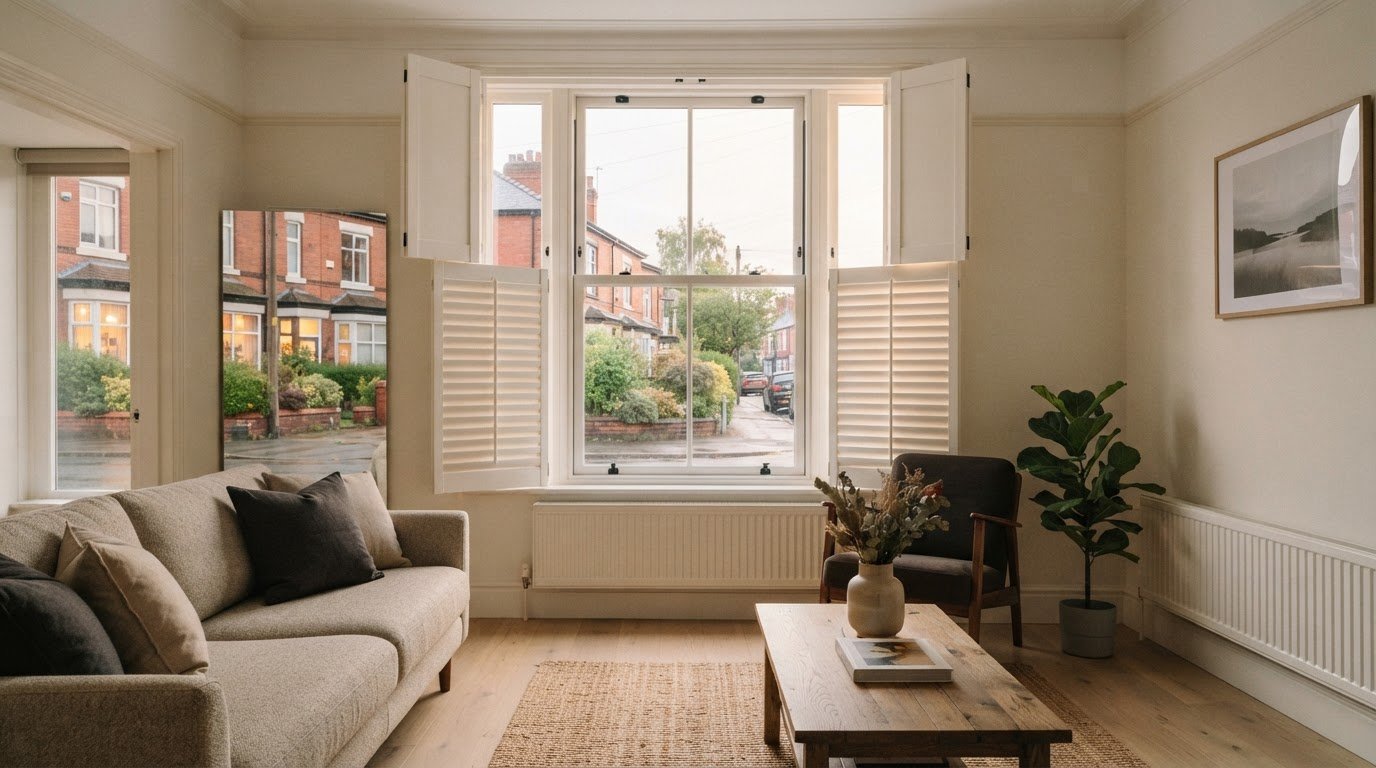
What if the best way to stop neighbours seeing in isn’t to cover every window completely? Finding how to stop neighbours seeing in can feel especially urgent after dark, when indoor lights make uncovered rooms easier to see into. But keeping a covering fully closed can also reduce daylight and block the view you enjoy.
The right approach depends on where people can see in, how you use the room and how much natural light you want to retain. A bedroom may call for a different level of privacy from a living room, while a bathroom or street-facing window has its own practical considerations. You don’t have to choose between feeling overlooked and shutting out the outside world.
This guide explains how to reduce overlooking, from assessing sightlines to choosing tailored window coverings. You’ll learn what to consider room by room and how made-to-measure blinds or shutters can suit individual window dimensions, helping you make a considered choice for your home.
Key Takeaways
- To work out how to stop neighbours seeing in, identify the window, likely viewing angle and times when privacy matters most.
- Match the covering to each room’s use and decide how much daylight and outside view you want to preserve.
- Compare adjustable and more consistent coverage, weighing everyday convenience against your privacy needs.
- Note each window’s dimensions and practical constraints before choosing a made-to-measure option.
- Made-to-measure blinds and shutters can be tailored to individual windows, but the right choice depends on your home and priorities.
How to stop neighbours seeing in: start by finding the sightlines
You want to feel comfortable at home without closing off useful daylight or the view outside. Before deciding how to stop neighbours seeing in, identify where the view into the room comes from. A ground-floor window beside a path may need a different approach from an upstairs window facing another home.
Check the view from inside, looking towards the window from both standing and seated positions. Then consider possible sightlines from nearby paths, gardens and facing windows, while respecting your neighbours’ privacy. Window coverings include different ways to manage light and privacy, but the best fit depends on the window and how you use the room.
How to check whether a window is overlooked
Make a short note for each window you’re concerned about. Record where someone might be standing, the angle into the room and when privacy matters. This turns a general worry into a practical starting point for choosing a covering.
- Window: Which room and window are affected?
- Observer position: Could someone see in from a path, garden or neighbouring window?
- Viewing angle: Is the view direct, or does it come from the side or above?
- Timing: Is privacy a concern throughout the day, after dark or only at particular times?
Repeat the check from the places where you sit as well as where you stand. A view that feels unobtrusive from one position may be more noticeable from a sofa, dining chair or bed. Note whether the window is at ground level, upstairs or directly opposite another property, as each position can create different sightlines.
Why privacy changes between daylight and evening
During the day, brighter outdoor conditions can make it harder to see into a room. After dark, indoor lights can make the room more visible from outside. A covering’s effect depends on its design and position, as well as the difference in light indoors and outdoors. Don’t assume it provides the same privacy at every hour. Your notes will help you decide whether you need coverage at particular times or a solution that suits your routine more consistently.
Choose a window covering that balances privacy and daylight
The best covering depends on the sightline, the room’s purpose and how much daylight you want to retain. A design that lets you adjust the view may suit a living room used throughout the day, while a bedroom may call for more consistent coverage at certain times. Blind styles work differently, so consider how each one handles light and privacy rather than assuming they all offer the same balance.
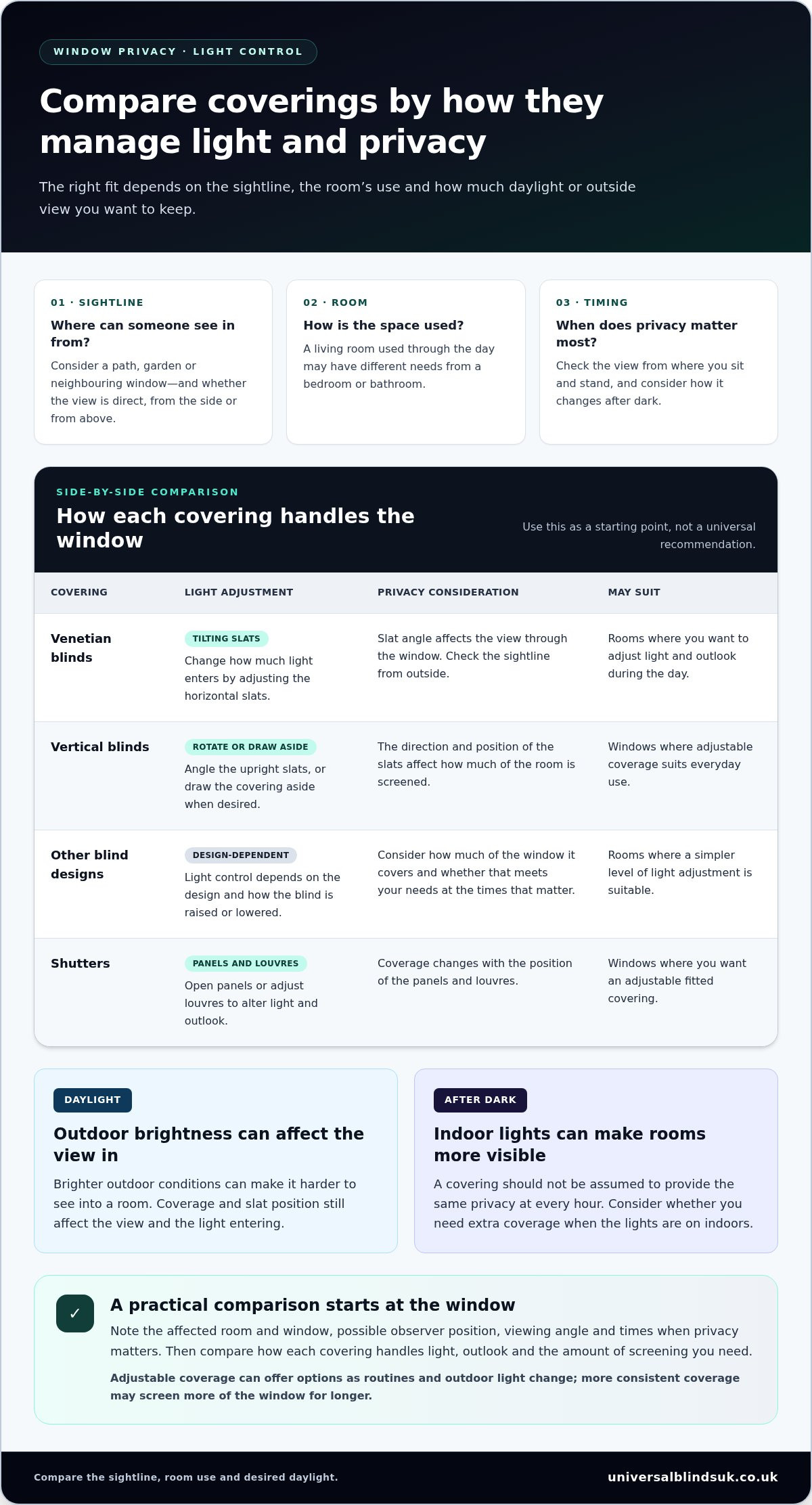
Use this comparison as a starting point, not a universal recommendation:
| Covering type | Light adjustment | Privacy considerations | May suit |
|---|---|---|---|
| Venetian blinds | Tilting slats let you change how much light enters. | Slat angle affects the view through the window; check the sightline from outside. | Rooms where you want to adjust light and outlook during the day. |
| Vertical blinds | Rotating slats can be angled, with the covering drawn aside when desired. | The direction and position of the slats affect how much of the room is screened. | Windows where adjustable coverage suits everyday use. |
| Other blind designs | Light control depends on the design and how the blind is raised or lowered. | Consider how much of the window it covers and whether it meets your privacy needs at the times that matter. | Rooms where a simpler level of light adjustment is suitable. |
| Shutters | Panels and louvres can be opened or adjusted to alter light and outlook. | Coverage changes with the position of the panels and louvres. | Windows where you want an adjustable fitted covering. |
When adjustable blinds may suit overlooked windows
Adjustable slats can help you manage daylight and the view through a window without treating privacy as an all-or-nothing choice. Venetian blinds have horizontal slats, while vertical blinds use upright slats. Their appearance and operation differ, so consider the window’s shape, the room’s routine and the direction of the sightline. A guide to blind styles can help you compare designs before choosing a made-to-measure option.
When shutters may be worth considering
Shutters offer another way to vary coverage at a window. Opening the panels can restore more of the outlook, while adjusting the louvres changes how light enters and how open the window feels. The right arrangement depends on the window and room, so shutters aren’t a one-size-fits-all answer. A homeowner’s guide to window shutters can offer more background as you weigh up the choice.
To explore options tailored to your windows, take a look at made-to-measure blinds and shutters.
How to stop neighbours seeing in without making rooms feel dark
Privacy doesn’t have to mean keeping every covering closed from morning to night. The practical answer to how to stop neighbours seeing in is often to adjust coverage to suit the time of day, the room and the direction of the view. This lets you make use of daylight and your outlook when privacy allows, then increase coverage when you need it.
Adjustable blinds or shutters give you options as household routines and outdoor light change. You might angle slats during the day to soften a direct sightline, then close them further in the evening when lights are on indoors. The trade-off is that adjusting them takes attention, and changing the angle may alter both the light and the view. More consistent coverage can feel simpler, but may screen more of the window for longer. No arrangement should be assumed to block every view in every condition.
Ways to adjust coverings throughout the day
Think about your routine rather than relying on a single setting. In a living room, you may prefer a more open view while the room is bright, then adjust the covering as evening approaches. In a bedroom, you might want privacy at night and a more open window during the day. Try different positions from the places you actually sit, work or rest, since the view through a covering can change with your angle.
How to think about privacy room by room
Start with the activities that call for more privacy, such as relaxing, sleeping or changing. Then consider whether you want light and outlook at other times. Each room can need a different balance, even if the windows face the same neighbouring property.
- Living rooms: Weigh the benefit of an outside view against visibility from nearby homes. Adjustable coverage may help you alter the balance through the day.
- Bedrooms: Decide how much coverage feels comfortable at night, and whether you want to open up the window during daytime hours.
- Street-facing rooms: Consider the view from passing pedestrians as well as neighbouring windows. You may prefer coverage that can be adjusted without blocking the window all day.
Window position and covering design matter as much as the room itself. A front room overlooking a pavement may need a different approach from an upstairs bedroom facing a neighbouring house. Made-to-measure blinds and shutters can be tailored to individual window dimensions, while the right choice depends on the sightline and how you want to use the space. Keep track of when you adjust a covering and what you gain or lose in light and outlook. This simple trial can clarify what works for your home.
A practical step-by-step plan for improving window privacy
A clear plan makes it easier to decide how to stop neighbours seeing in without choosing a covering that doesn’t suit the room. Work through each window separately: the sightline, the time privacy matters and the way you use the space can all affect your choice.
- Identify the sightline. Note which window is overlooked and where the view comes from, such as a neighbouring window, garden or pavement.
- Decide when privacy matters. Record whether you want more coverage during the day, in the evening or at particular times.
- Compare suitable coverings. Consider made-to-measure blinds or shutters, thinking about how you’ll adjust them and how much daylight and outlook you’d like to retain.
- Record the window details. Note its dimensions, direction and any practical constraints that could affect the covering or its operation.
What to consider before selecting a covering
Before making a choice, note which way the window faces and what you’d like to keep visible, whether that’s the garden, a view or simply natural light. Think about the room’s purpose, your existing décor and whether you’re happy to adjust the covering as daylight and household routines change. A living room used throughout the day may call for different flexibility from a bedroom where privacy at night is the priority. A complete guide to choosing blinds can help you compare options more broadly.
Use this compact checklist to keep the decision focused:
- Where can someone see into the room from?
- At what times do you want more privacy?
- What light or view would you prefer to preserve?
- How often are you likely to adjust the covering?
- What are the window dimensions and any practical constraints?
How measuring and fitting support a tailored result
Window dimensions and details help inform a made-to-measure choice, so you can select a covering for the individual opening rather than rely on a general size. If you’re unsure how to assess your windows or compare options, an in-home consultation can help you consider the sightline, room use and preferred balance of privacy and light together.
Universal Blinds UK provides a complimentary home consultation and measuring service, along with professional fitting of made-to-measure blinds and shutters. For more detail on fitting, refer to the professional blind fitting guide. If you’re ready to discuss your windows, arrange a complimentary home consultation.
Find a made-to-measure privacy solution for your home
Choosing how to stop neighbours seeing in starts with the details of your home, not a one-size-fits-all product. Revisit the sightlines you’ve identified, consider how privacy needs change between day and night, then match a covering to the room. Made-to-measure blinds and shutters are worth considering when window dimensions, room use and the balance of light and privacy all matter.
A living room where you want to keep an outside view may need a different approach from a bedroom where you prefer more coverage at night. The aim is to find an option that suits your priorities and the way you use each space.
What to expect from a home consultation
During a complimentary home consultation, you can discuss which windows feel overlooked, when privacy matters most and how much daylight or outlook you’d like to retain. A home visit also gives you the opportunity to consider the window itself and how a potential covering may work in the room.
Measuring helps inform a made-to-measure choice for each window. Universal Blinds UK provides a measuring service, a no-obligation quote and professional fitting of blinds and shutters. You can take time to consider the options and decide what feels right for your home.
Choose the next step that feels right
To make a consultation useful, bring a few simple notes: which rooms need more privacy, where the sightlines come from, when you want coverage and what you’d like to keep visible. Style preferences can help guide the discussion, too. If you’re still comparing blind designs, revisit the complete guide to choosing blinds for broader selection advice.
Universal Blinds UK is a family-run business serving the West Midlands. If you’re in the area and would like tailored guidance for your windows, arrange a complimentary home consultation.
Find the right balance for your windows
The most practical answer to how to stop neighbours seeing in starts with understanding the sightline and when privacy matters. Consider how each room is used, then choose a covering that suits your need for privacy while preserving the daylight and outlook you value. Made-to-measure blinds and shutters can be tailored to individual windows, helping you find an option that feels right for your home.
If you’d like guidance with the decision, Universal Blinds UK is a family-run West Midlands business offering a complimentary home consultation and measuring service. You’ll receive a no-obligation quote, with professional fitting for your chosen blinds or shutters. Take time to consider the options and choose what suits your home.
Arrange your complimentary home consultation to discuss your windows and take a considered next step towards greater comfort and privacy at home.
Frequently Asked Questions
How can I stop neighbours seeing into my house during the day?
To reduce daytime overlooking, first identify where the view into the room comes from, such as a nearby path, garden or facing window. Adjustable blinds or shutters may let you change the angle or amount of coverage while keeping some daylight and outlook. The right setting depends on the sightline and where you sit or stand. Consider how the covering works at different times, as indoor lighting can change visibility after dark.
Can neighbours see through blinds at night?
They may be able to, depending on the blind’s design, position and the lighting indoors and outside. A bright room can be more visible after dark, particularly if a blind is open or angled in a way that leaves a clear sightline. Check the view from outside at the time you’re concerned about, and adjust the blind if needed. Don’t assume a particular covering guarantees complete privacy in every lighting condition.
What is the best type of blind for privacy?
There isn’t one blind that’s best for every window. The right choice depends on the direction and angle of the view, how much privacy you want and whether you’d like to adjust daylight during the day. Venetian blinds have tilting horizontal slats, while vertical blinds have upright slats that can be angled. Other blind designs offer different ways to cover a window, so compare how each suits your room and routine.
Do shutters stop people seeing into a room?
Shutters can provide adjustable coverage, but the privacy you get depends on how the panels and louvres are positioned, as well as the viewing angle and light conditions. Adjusting the louvres can change the light and outlook, while opening the panels exposes more of the window. Consider the sightline from outside and the room’s use before choosing. Shutters are an option to explore, rather than a guarantee of complete privacy.
How can I get privacy without blocking natural light?
Consider a covering that you can adjust rather than keeping the window fully covered all day. Blinds or shutters may allow you to alter the angle or extent of coverage to suit the sightline and your need for daylight. Try different positions from where you sit or work, then check how the room feels at different times. After dark, indoor lighting can affect visibility, so you may want more coverage in the evening.
Should I choose blinds or shutters for an overlooked window?
Choose according to the window, the room and how you prefer to manage coverage. Blinds come in different designs, including options with adjustable slats. Shutters offer panels and louvres that can be opened or adjusted. Think about how often you’ll change the setting, what you want to keep visible and when privacy matters most. Made-to-measure blinds and custom shutters can both be considered, but neither is automatically right for every window.
Can made-to-measure blinds help with window privacy?
Made-to-measure blinds are tailored to individual window dimensions, which helps you choose a covering suited to the window and your privacy priorities. The best design still depends on the sightline, room use and desired balance of daylight and outlook. Universal Blinds UK offers a complimentary home consultation and measuring service, a no-obligation quote and professional fitting. You can discuss your windows and consider options for your home.