

Modern Shutters for Contemporary Homes: Buying Guide
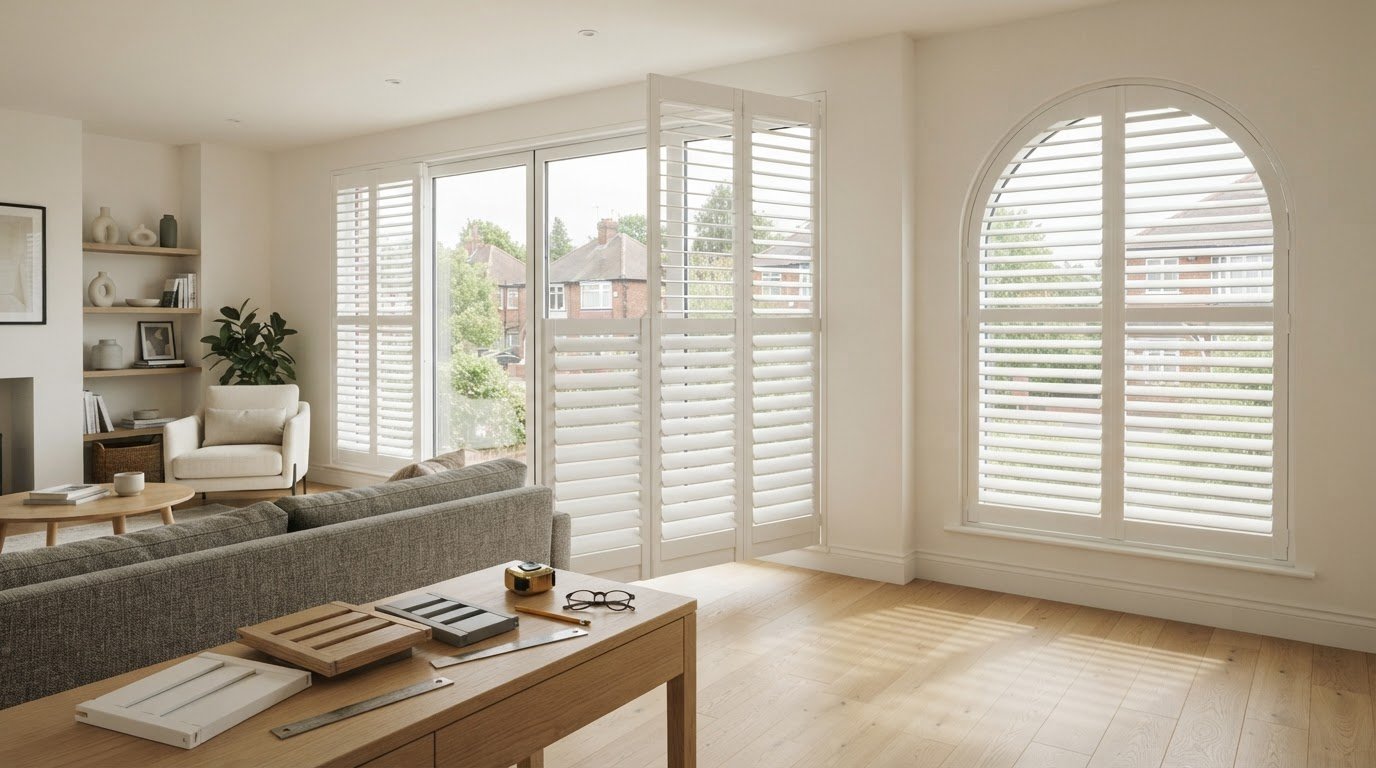
Could shutters make a contemporary room feel more considered, rather than more traditional? If you’re weighing up modern shutters for contemporary homes, you may wonder whether their frames and louvres will feel too prominent, or whether an unusual window will be difficult to fit. The right choice depends on how the design relates to your room, as well as the look and level of privacy you want.
This guide compares shutter configurations and finishes, with practical pointers on how panel proportions and louvre positioning affect daylight, privacy and the feel of a space. You’ll also find room-by-room advice for choosing shutters, including for shaped or larger windows.
A tailored fit is part of the decision, not an afterthought. Viewing samples at home helps you compare finishes with your décor and see how they look in natural light. Universal Blinds UK offers a complimentary home consultation, free measuring and professional fitting to guide you from your first design choices to shutters made to suit your windows.
Key Takeaways
- Modern shutters for contemporary homes can feel clean and current when their proportions, finish and placement suit the room.
- Compare shutter configurations by how they frame the window and balance daylight with privacy, not by appearance alone.
- Consider the room’s use, existing finishes and changing light through the day before settling on a design.
- Shutters aren’t automatically traditional, but their visual impact depends on choosing proportions that work with the architecture.
- Careful measuring and professional fitting help bring your design preferences to life, including around distinctive window shapes.
Why modern shutters can work in contemporary homes
Modern shutters for contemporary homes aren’t defined by one colour, material or fashionable detail. Their overall effect comes from proportion, finish and placement. A neatly aligned frame can echo a room’s clean lines, while adjustable louvres let you manage daylight and sightlines without adding a bulky-looking window covering.
This balance is useful in rooms with different needs. You might want a bright, open feel in a living space, but more privacy in a bedroom or street-facing room. The window matters too: its shape, size and position in the wall all influence how shutters sit within the architecture. A restrained design on a broad, simple window may look quite different around a bay or an unusual opening.
Contemporary style isn’t a fixed colour scheme. A soft neutral might blend with pale walls and understated furnishings, while a deeper tone could relate to existing joinery or create a deliberate contrast. Choose a finish that feels connected to the room, rather than one selected simply to follow a trend. Shutters can serve a practical purpose by helping you manage light and privacy, while also shaping the look of the window.
What makes shutters feel contemporary rather than traditional?
Proportion is key. Consistent lines and a frame that feels balanced against the window can create a calm, considered impression. Relate the finish to nearby details such as skirting, doors or window joinery, so it complements rather than competes with them. No particular colour or configuration is automatically modern. The shape of the opening and the surrounding architecture help determine whether the finished look feels crisp, understated or more decorative.
Can shutters suit both modern and period homes?
Yes. In a clean-lined home, shutters can reinforce a sense of order. In a period property, a carefully chosen finish can sit comfortably alongside original features without trying to imitate them. Look at the whole room: existing joinery, wall colours and furnishings all contribute to the result. For a broader introduction to shutter design and use, read A Homeowner’s Guide to Elegant Window Shutters.
There’s no need to treat every window alike. A consistent finish can bring rooms together, while different choices may make more sense where daylight, privacy or the character of the window changes. Aim for a coherent home, not identical treatments everywhere.
Compare shutter design choices for contemporary rooms
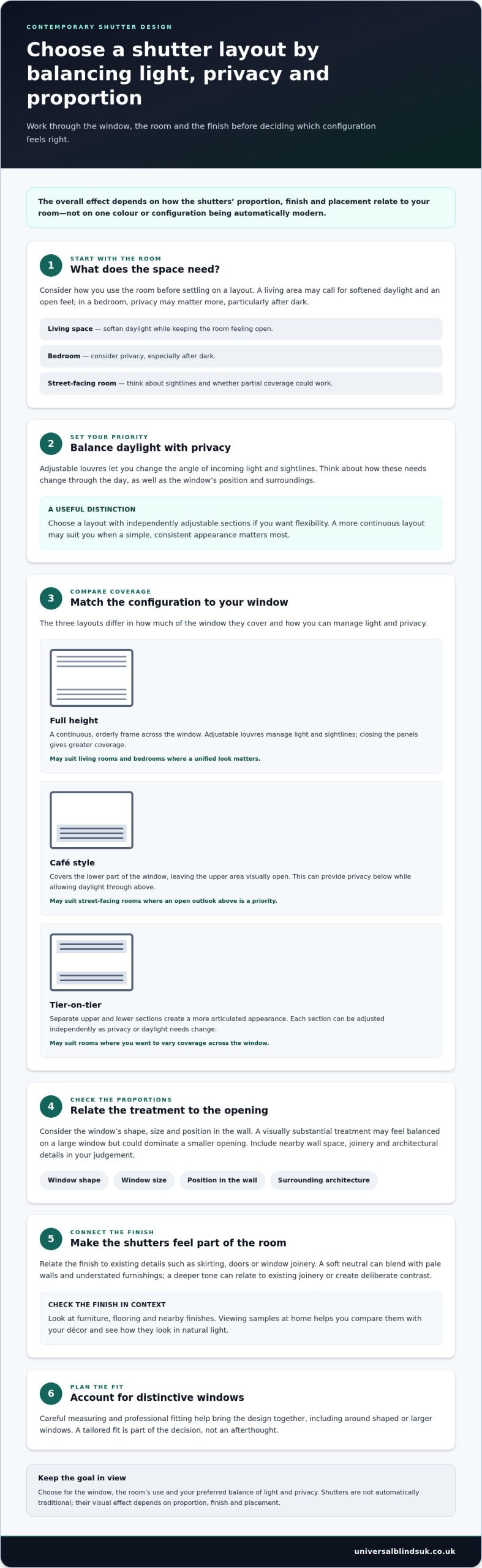
The right layout depends on the window’s proportions and how you use the room. A tall window may suit a simple, full-height treatment, while a street-facing room may call for a different balance of privacy and daylight. Use the comparison below to identify your priorities before settling on a design.
| Configuration | Visual effect | Light and privacy considerations | May suit |
|---|---|---|---|
| Full height | Creates a continuous, orderly frame across the window. | Adjustable louvres offer control over light and sightlines; closing the panels gives greater coverage. | Living rooms and bedrooms where a unified look matters. |
| Café style | Covers the lower part of the window, leaving the upper area visually open. | Can provide privacy below while allowing daylight through the uncovered section. | Street-facing rooms where retaining an open outlook above is a priority. |
| Tier-on-tier | Uses separate upper and lower sections for a more articulated appearance. | Each section can be adjusted independently, offering flexibility as privacy or daylight needs change. | Rooms where you want to vary coverage at different parts of the window. |
Shutter suitability depends on the window, the room and your desired balance of light and privacy.
How should light and privacy guide your shutter choice?
Start with the main job the shutters need to do. In a living area, you may want to soften daylight while keeping the room feeling open. In a bedroom, privacy may take priority, particularly after dark. For a street-facing room, consider where people can see in and whether covering only part of the window could meet your needs. Adjustable louvres let you change the angle of incoming light and sightlines, although the result also depends on the window’s position and surroundings.
Think about how the room changes through the day. If you want flexibility rather than a fixed compromise, consider a configuration with independently adjustable sections. If a simple, consistent appearance matters most, a more continuous layout may suit the interior better.
Which shutter look suits your window and room?
Scale matters. A visually substantial treatment can feel balanced on a large window but may dominate a smaller opening. Consider the frame alongside nearby wall space, joinery and architectural details. Then look at the room as a whole: furniture, flooring and existing finishes can help you decide whether the shutters should blend in or provide a deliberate contrast.
If you’re comparing other window-covering options, consider how made-to-measure blinds might suit your room. Looking at samples at home can make it easier to judge finishes in your own light; see how tailored shutter advice can help.
Do shutters look too traditional in a contemporary home?
No. Shutters aren’t inherently traditional; their appearance depends on how their proportions, finish and placement relate to the window and room. In a contemporary interior, a well-scaled treatment can create clean visual structure while giving you adjustable control over daylight and privacy. A poor fit, by contrast, can draw attention for the wrong reasons.
Tailored proportions help shutters sit comfortably in contemporary interiors, making the window feel considered rather than visually weighed down. Look beyond trends: a broad window, a compact opening and a bay each have a different visual presence. A bedroom and a living space may also need different levels of privacy and light. The best design responds to these details and the surrounding décor.
What can make shutters feel visually heavy?
Scale is often the deciding factor. A substantial frame or strong contrast against the wall can make a small window feel more prominent; around a larger opening, the same visual weight may feel balanced. Existing trim and joinery matter too. If the finish clashes with nearby details or competes with bold furnishings, the window treatment may feel disconnected from the room.
Don’t judge a finish in isolation. Look at samples beside your wall colour, flooring and joinery, and consider them in the room’s natural light. A shade that appears subtle in one setting may feel more pronounced against a different surface. Assess the window, its surrounding wall and the rest of the interior together to judge whether the overall effect feels calm or too dominant.
When might another window covering suit your priorities better?
Shutters may suit you if you value a defined architectural frame and adjustable louvres. If your priority is a softer or less structured appearance, made-to-measure blinds could be worth comparing. Neither option is right for every room: consider how much coverage you want, how you use the space and whether you prefer the window treatment to stand out or blend in.
For example, a room where you want to alter light and sightlines through the day may call for a different solution from one where a simple, consistent look matters most. Compare options against the window itself, not just a photograph or colour sample. If you’re weighing up made-to-measure blinds, consider how their style and operation would work in the room.
How to choose modern shutters for your windows
A little preparation can make it easier to choose shutters that look right and work well in everyday life. Use this four-step process to move from general ideas to a design that suits your windows.
- Assess the room. Consider how you use it throughout the day. A bedroom may call for greater privacy, while a living space might need flexibility as daylight changes. Note whether you want the shutters to blend into the room or make the window a feature.
- Record the window details. Look at each window’s shape, position and surrounding features, including handles, sills and trim. Note differences between windows, even when they’re in the same room. Bays, angled or otherwise unusual shapes, and groups of windows, deserve careful consideration so the finished arrangement suits each opening and feels consistent.
- Set your priorities. Decide whether privacy, adjustable daylight or a cohesive appearance matters most. You may need to balance all three, but identifying your main priority helps narrow down suitable layouts and finishes.
- Compare samples at home. View samples beside your wall colour, joinery, flooring and furniture. Check them in the room’s natural light, which can change how a finish appears, and consider how it relates to the rest of your décor.
What should you assess before choosing shutters?
Look at the window as part of the room, not in isolation. Its shape and position influence the visual effect, while nearby features can affect how a made-to-measure treatment sits. Then consider how you use the room and the degree of privacy or daylight flexibility you want. Comparing samples with existing colours and finishes can help you picture the result before choosing modern shutters for contemporary homes.
Why does made-to-measure advice matter for shutter design?
Windows vary in width, height, shape and the details around their frames. Accurate measuring should account for the actual window and the intended fit. A professional assessment relates those dimensions to your design choice, particularly when several openings need to feel balanced or a window has an unusual shape.
Discussing samples in your home also lets you compare them with your finishes and natural light, rather than relying on an impression from elsewhere. For related guidance on professional measuring and fitting, read about the benefits of professional blind fitting.
For tailored advice on your windows, arrange a complimentary home consultation and explore samples in your own space.
From shutter ideas to a professionally fitted finish
Choosing a shutter design is easier when you can consider it in your own home. A complimentary consultation gives you the chance to discuss your rooms, windows and priorities, whether you’re drawn to a clean-lined look, need more privacy or have an unusual window shape. You can take time to consider your options without pressure to decide on the spot.
What happens during a home shutter consultation?
Bring your questions and ideas. You can talk through how each room is used, the effect you want and details that may influence your choice, such as existing joinery or distinctive window shapes. Samples brought into your home make it easier to compare finishes with your walls, furnishings and natural light, so you can judge them in the space itself.
Measuring helps establish your windows’ dimensions for a made-to-measure design. You’ll also receive a no-obligation quote, giving you the information to consider the project in your own time. For modern shutters for contemporary homes, this step connects the design idea to the particular window, rather than relying on a look that may not suit its proportions.
How does professional fitting complete the look?
Once you’ve chosen a design, professional fitting brings the measured shutters into the room as a finished part of the window. A considered fit helps the treatment relate to the opening and surrounding details, supporting the overall appearance you’ve chosen. Fitting is the final step that brings your design decision into the everyday room.
Universal Blinds UK serves homes in and around the West Midlands, guiding customers from an initial conversation and sample selection through measuring, a no-obligation quote and professional fitting. The process is tailored to your home and windows, so you can take time over the decision.
Ready to explore shutters for your windows? Book a free home consultation to discuss your ideas, view samples and arrange measuring for a made-to-measure shutter project.
Choose shutters that feel right for your home
The right shutters are guided by more than a trend. Consider how the window’s proportions, the room’s purpose and your preferred balance of light and privacy work together. Comparing samples with your existing finishes can help you choose a look that feels at home in your interior, whether it’s contemporary or period in character.
For a confident next step, Universal Blinds UK offers a complimentary at-home consultation with samples and tailored advice, followed by free, no-obligation measuring and a quote. Professional fitting from this family-run West Midlands business helps bring your made-to-measure choice to a considered finish. Explore how modern shutters for contemporary homes could suit your windows, with guidance shaped around your home.
Book your free, no-obligation home consultation and take the first step towards shutters chosen for your space.
Frequently Asked Questions
Are shutters suitable for contemporary homes?
Yes, shutters can suit contemporary homes when their proportions and finish work with the window and interior. Their clean lines can complement a considered scheme, while adjustable louvres let you manage daylight and privacy. There isn’t one universally modern colour or configuration, so consider the room’s architecture, furnishings and purpose. The best modern shutters for contemporary homes are chosen to feel balanced in their setting, not simply to follow a trend.
Can modern shutters work in a period property?
Yes, shutters can work in period properties as well as newer homes. Choose a design that relates thoughtfully to existing features, such as original joinery, wall colours and furnishings, rather than competing with them. Consider the window’s shape and proportions alongside the surrounding architecture. A sample viewed in the room can help you judge whether the finish feels harmonious with the home’s character.
How do shutters affect light and privacy?
Shutters let you adjust daylight and sightlines by changing the position of the louvres. More coverage can support privacy, while an open arrangement can keep a room feeling brighter. The effect depends on the window’s location, surrounding buildings and how you use the room. Decide whether you mainly want privacy, flexibility with daylight or a balance, then choose a configuration to suit those priorities.
What should I consider when choosing shutters for a modern room?
Consider the window’s size and shape, the room’s function, and how much light and privacy you want. Then look at nearby finishes, including joinery, walls, flooring and furniture, so the shutters feel connected to the wider scheme. Think about how the room is used at different times of day, too. Comparing samples at home can help you assess the finish in the room’s own light.
Can made-to-measure shutters suit unusual window shapes?
A made-to-measure approach takes account of a window’s specific dimensions and shape, including details that may make a standard layout unsuitable. A careful assessment considers how the shutter design relates to the opening and surrounding features. For a bay, angled or otherwise distinctive window, discuss its shape and how you want the room to feel during measuring. This helps inform a design tailored to the opening.
How does a home shutter consultation work?
A home shutter consultation is a chance to discuss your rooms, windows and priorities with an adviser. Samples brought into your home help you compare finishes with your décor and natural light, while tailored advice helps you consider suitable designs. Universal Blinds UK offers a complimentary at-home consultation, free measuring and a no-obligation quote. You can take time to consider the options without pressure to make an immediate decision.
Do shutters need professional measuring and fitting?
Professional measuring and fitting provide a practical route to a made-to-measure finish. Measuring considers the actual window and intended fit, which is particularly helpful when openings vary or have unusual shapes. Universal Blinds UK provides free measuring and professional fitting for its custom shutters. Fitting completes the process from your design choice to the finished window.