

Repair or Replace Blinds? How to Make the Right Choice
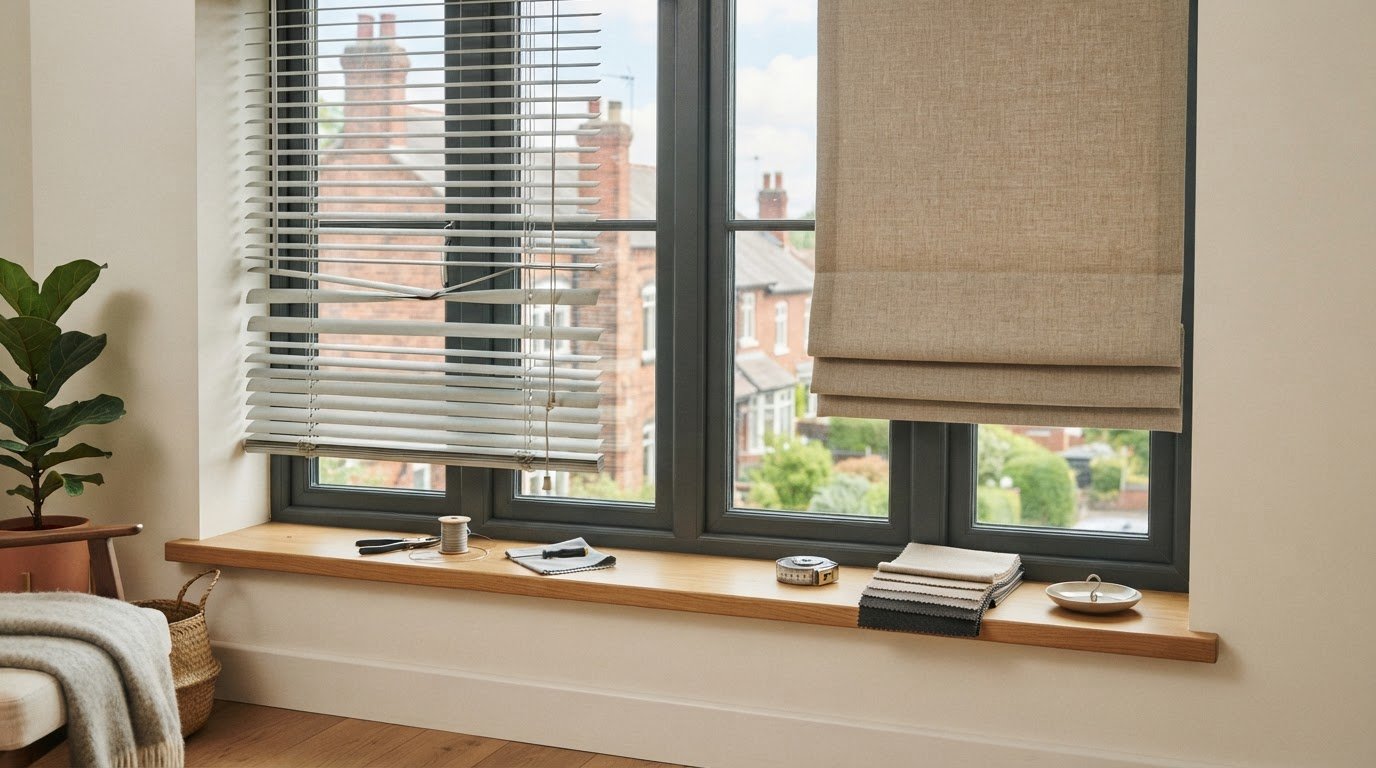
Could a blind that looks worn have one simple fault, while a minor-looking problem points to wider damage? Deciding whether to repair or replace blinds depends on what has changed, how much of the blind is affected and whether it still works for your room. A damaged slat may be an isolated issue, while repeated sticking, widespread fading or unreliable movement can shift the balance towards replacement.
Before taking action, look at the blind’s overall condition rather than focusing on one symptom. Note whether it operates as usual, whether the damage is limited to one area and whether the problem keeps returning. Avoid forcing the blind or dismantling its mechanism: careful observation is a safer and more useful first step.
This guide explains what to look for, how blind type and damage affect the decision, and what to consider before choosing a replacement. If a new blind seems more suitable, a made-to-measure home consultation can help you compare options, see samples and arrange measuring for your window.
Key Takeaways
- Check how the blind operates and look for fabric damage, poor alignment or repeated sticking to understand the issue more clearly.
- Blind type, material and the extent of the damage affect whether repair is practical. A symptom alone cannot confirm the cause.
- When deciding whether to repair or replace blinds, compare the extent and recurrence of the problem with the blind’s appearance, function and suitability for the room.
- Stop if the blind catches or feels different to operate. Note what changed, how often it happens and whether the blind moves evenly.
- If replacement makes more sense, a made-to-measure consultation, samples, measuring and professional fitting can help you choose a blind suited to your window and preferences.
Repair or replace blinds? Start by identifying the problem
A blind may have one isolated fault, or show wider wear that affects its appearance and operation. Before deciding whether to repair or replace blinds, take a close look at what has changed. The aim is to describe the issue clearly, not to fix it yourself.
- Operation: Does the blind raise, lower or tilt as it normally would? Does it move smoothly from one end of its travel to the other?
- Visible condition: Look for fraying, tears, creases, discolouration, damaged slats or damaged vanes. Note whether the marks are local or spread across the blind.
- Alignment: Does the blind hang evenly, or does one side sit lower? Does fabric or a vane appear to drift as it moves?
- Repeated sticking: Does it catch occasionally, or has the same difficulty become a regular problem? Note whether it catches at the same point each time.
Blind type matters because materials and control systems vary. A roller blind, Venetian blind and vertical blind have different components, so similar symptoms can have different causes. The extent of the fault matters too: a problem in one area is different from damage or unreliable operation across the whole blind.
Keep your checks observational. Don’t force a blind that catches or dismantle its mechanism or any electrical component. If it no longer moves smoothly, stop using it and note what you can see from the outside. A clear description of the symptom is more useful than a guess about what has failed.
Which signs suggest an isolated blind fault?
A single, recent change, such as one damaged slat while the rest of the blind looks and works as before, may point to a local issue. Check whether the blind still moves evenly and whether the problem appears at the same point each time. Note if the fault is limited to one part or seems to affect other sections too.
If the blind hangs straight and the rest appears in good condition, that suggests the issue may be limited rather than widespread. It does not establish whether a repair is possible, but it helps you compare a local fault with wear that affects the blind as a whole.
When does visible wear change the decision?
Look at the fabric or slats as a whole, not just the most noticeable mark. Check for fraying along the edges, widespread discolouration, persistent creases or damage across several sections. Consider appearance separately from function: fading may change how the blind looks without stopping it from operating, while a blind that repeatedly sticks may be unreliable even if its fabric remains presentable.
Age alone doesn’t decide the issue. The extent of wear and its effect on appearance and operation matter more. An older blind in good condition may still suit your needs, while a newer one with widespread damage may not.
How blind type and damage affect repairability
A similar-looking fault can mean different things depending on how a blind is made. Fabric may crease or fray, while a control mechanism may become stiff or uneven. The visible symptom helps you describe the issue, but it cannot confirm its cause or whether a repair is practical. Consider the material, moving parts and how much of the blind is affected before weighing up whether to repair or replace blinds.
What should you check on roller, Venetian and vertical blinds?
- Roller blinds: Observe whether the fabric tracks evenly as it moves or drifts to one side. Look for creases, fraying or damage across the fabric, and note whether the problem affects appearance, movement or both.
- Venetian blinds: Check whether slats are bent, marked or damaged in several places. Notice whether tilting the slats or raising and lowering the blind feels different from normal, without forcing the controls.
- Vertical blinds: Look for damaged vanes and check whether they hang in line. Observe whether they turn and travel consistently, or if several vanes appear out of position or move unevenly.
A fault confined to one visible part is different from problems affecting the fabric and operation across the blind. Neither observation guarantees that a repair is possible. Use what you can see to judge whether the issue appears local or part of wider wear, and consider the blind’s overall condition rather than relying on one symptom.
Do Roman, motorised or conservatory blinds need a different assessment?
They can. With Roman blinds, note whether the folds sit evenly and whether fabric damage affects one fold or a wider area. Larger blinds may have more material or moving parts to consider. Conservatory blinds fitted across roof sections can be harder to view closely, so assess only what you can see safely. Don’t reach or climb to inspect them.
For a motorised blind, stop operating it if movement becomes irregular or any component looks damaged. Don’t open a powered mechanism or attempt electrical work. Leave the mechanism intact and note what happens during normal use.
Fabric damage affects the covering itself; a mechanism problem affects how the blind moves. Either may influence the next step. If the blind’s condition or your needs point towards replacement, a made-to-measure blind consultation can help you consider an option suited to the window and room.
Repair vs replacement: compare the long-term practical choice
There’s no single rule for deciding whether to repair or replace blinds. An isolated fault may make it worth exploring repair, while several problems affecting appearance and everyday use can make replacement more practical. Age alone doesn’t settle the question. Compare how extensive the fault is, whether it keeps returning and whether the blind still meets your needs.
| What to consider | Repair may be worth exploring | Replacement may be more practical |
|---|---|---|
| Fault extent | The issue appears limited to one area or component. | Damage or wear affects several parts or much of the blind. |
| Recurrence | The problem is isolated and hasn’t become a regular disruption. | The same fault keeps returning or new issues are appearing. |
| Appearance | The fabric, slats or vanes remain in a condition you’re happy with. | Widespread fading, fraying or damage affects the overall look. |
| Function | The blind still operates reliably apart from the identified issue. | It no longer moves or adjusts reliably in everyday use. |
| Room needs | The blind still suits the window and how you use the room. | Your preferences for appearance, light control or window fit have changed. |
When might repairing an existing blind be worth exploring?
If the fault seems limited and the rest of the blind remains in good condition, it may be sensible to explore whether repair is suitable. That is more relevant if the blind still fits the window and meets your household’s needs. A single symptom cannot confirm the cause or likely outcome, so consider the whole blind rather than deciding from its age alone.
When can replacing a blind be the more practical decision?
Replacement may be worth considering when problems recur, wear is extensive or the blind has become unreliable in daily use. It may also suit you better if the room’s needs have changed, perhaps because you’d prefer a different look, more suitable light control or a made-to-measure fit for the window. These factors don’t make replacement inevitable, but together they can shift the balance.
The right choice depends on the existing blind’s condition and what you want it to do next. Weigh the usefulness of keeping it against the benefits a new covering could bring. A replacement is most useful when it addresses a real need, such as a better fit, a different appearance or changed preferences for light and privacy.
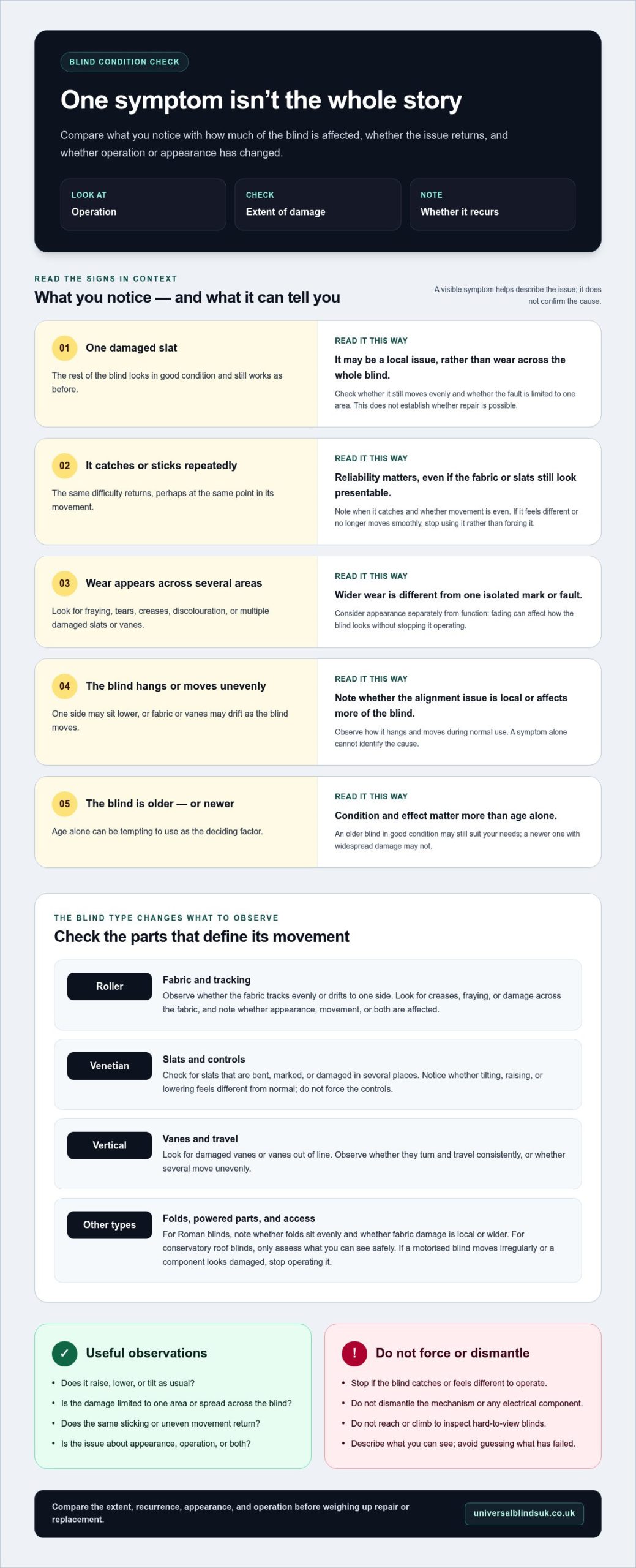
What to do before repairing or replacing blinds
A few careful observations can make the next step clearer, whether you’re weighing up repair or considering replacement. Keep the checks simple and don’t try to diagnose the mechanism yourself.
- Stop if it catches. Don’t pull harder or force a stuck control.
- Observe the fault. Note what happens during normal use and whether the blind still moves evenly.
- Record the details. Write down the blind type, which window it covers and its approximate age, if known. Photograph visible damage without moving parts to get a clearer record.
- Separate what works from what doesn’t. Note the condition of the fabric or slats, controls and alignment, along with any changes to light, privacy or everyday use.
This record can help you judge whether the problem appears isolated or part of a wider change. For example, a blind may still hang evenly but no longer provide the privacy you want. Treat that as a room requirement to weigh separately from physical damage.
Which details help you make a more confident decision?
Be specific about what changed and how often it happens. Does the fault occur every time you use the blind, or only occasionally? Does it affect one section or the whole covering? Note whether it still raises, lowers or tilts as expected, and whether visible damage is limited to the fabric, a slat or another part. Changes in how you use the room can also help clarify what a replacement would need to do differently.
How can you avoid making the problem worse?
Don’t keep operating a damaged motorised blind, open a powered mechanism or attempt electrical work. Avoid dismantling any mechanism, and keep children away from loose or damaged operating components. If the blind appears unstable or unsafe, stop using it and keep clear rather than trying to adjust it.
If replacement is the practical next step, professional measuring and fitting can help ensure the new blind suits the window. Read about the benefits of professional blind fitting, then explore made-to-measure blinds as an option tailored to your home.
If replacement makes sense, make the next blind a better fit
Choosing a replacement is an opportunity to address what wasn’t working as well as the damage. Think about how the room is used, how much privacy you want and whether you’d prefer to soften daylight or reduce it. Consider the window’s shape and position, along with any details that affect how a blind will sit and operate. These priorities can turn the repair-or-replace decision into a clear plan for a more suitable window covering.
How do you choose a replacement that suits the room?
Start with the everyday requirements. A bedroom may call for different light control from a living space, while a window overlooking a neighbouring property may make privacy a priority. Consider how you want to operate the blind, whether it needs to fit an unusual window shape and which finish will work with the room. Roller, Venetian and vertical blinds each offer a different look and operation, while shutters may also suit some windows. For wider style guidance, read our guide to choosing the perfect blinds for your home.
You don’t need to settle on an option before considering the room as a whole. If you’re still weighing up whether to repair or replace blinds, decide what you’d most like to improve: light control, privacy, appearance or the way the covering fits and functions. Those priorities make it easier to choose a replacement that responds to your needs rather than simply repeating the old choice.
What happens during a made-to-measure consultation?
A complimentary home consultation gives you the chance to see samples in your own space and discuss tailored advice. Measuring establishes the window’s dimensions and requirements, while a no-obligation quote gives you the details to consider before a bespoke order proceeds. Professional fitting completes the process, helping the made-to-measure blind suit its window.
For homeowners in and around the West Midlands, Universal Blinds UK is a family-run business supplying and fitting made-to-measure blinds and shutters. If you’re ready to explore a new fit for your home, arrange your complimentary home consultation.
Choose the next step with confidence
Deciding whether to repair or replace blinds comes down to the extent of the fault, whether problems keep returning and how well the blind still suits your room. A single issue may be worth assessing, while widespread wear or unreliable operation can make replacement more practical. Age alone doesn’t decide it.
Before you act, observe the problem without forcing the blind. Note what still works, what has changed and whether your needs for privacy, light or appearance have shifted. These details help you make a considered choice rather than replacing a blind unnecessarily.
If a new made-to-measure blind or shutter feels like the right next step, Universal Blinds UK offers a complimentary, no-obligation home consultation, measuring and quote, followed by professional fitting. The family-run business serves homes and commercial properties in and around the West Midlands, with options to consider for your space.
Arrange your complimentary home consultation and take the next step at your own pace.
Frequently Asked Questions
Should I repair or replace my blinds?
Base your decision on the fault’s extent, whether it recurs and how well the blind still works for your room. A single, clearly limited issue may make it worth exploring repair, while widespread wear or unreliable operation can favour replacement. Check the fabric or slats, alignment and controls, and note what still functions. Age alone isn’t decisive; consider the condition and usefulness of the whole blind.
Is it worth repairing old blinds?
It may be worth exploring if an older blind has one specific fault, remains in good overall condition and still suits the window and your needs. Consider its appearance and everyday operation alongside its age. If the fabric is extensively worn or the mechanism is unreliable, replacement may be more practical. Let the condition of the whole blind, rather than age alone, guide the decision.
Can you repair a blind with a broken mechanism?
A broken mechanism may be repairable, but the blind type, cause of the fault and extent of any damage all matter. Sticking or uneven movement doesn’t identify the cause by itself. Don’t force the control or dismantle the mechanism to investigate. If the blind is motorised, stop using it if operation becomes irregular, and don’t open the powered mechanism or attempt electrical work.
How do I know if my blinds need replacing?
Replacement may be worth considering if damage or fading affects much of the blind, faults keep returning or it no longer operates reliably in everyday use. Changed needs can matter too: perhaps you want different light control, more privacy or a better fit for the window. A blind doesn’t automatically need replacing because it’s old. Compare its condition and performance with what you need from a new covering.
What happens if I keep using a damaged blind?
Continued use could worsen the damage or make operation less reliable, particularly if you have to pull harder or force a control. Stop using a blind that appears unstable, has loose components or operates irregularly, especially if it’s motorised. Keep children away from loose or damaged operating parts. Observe and photograph the visible issue instead of trying to adjust or dismantle the blind yourself.
Can I replace one blind without changing the others?
Yes, you can consider replacing a single blind if it’s damaged or no longer suits the room. Keep in mind that an existing blind may have faded or may not match a new one exactly, even if you choose a similar appearance. Consider whether a contrast would work or whether a consistent look across the room matters more. A made-to-measure option can be tailored to the individual window.
Is a made-to-measure blind a sensible replacement?
A made-to-measure blind can be a sensible choice if you want a covering tailored to the window and room. Universal Blinds UK offers a complimentary home consultation with samples, advice, measuring and a no-obligation quote, followed by professional fitting once a bespoke order is ready. The family-run business serves homes and commercial properties in and around the West Midlands, helping you consider a replacement suited to your needs.