

Expert Guide to Professional Window Finishing
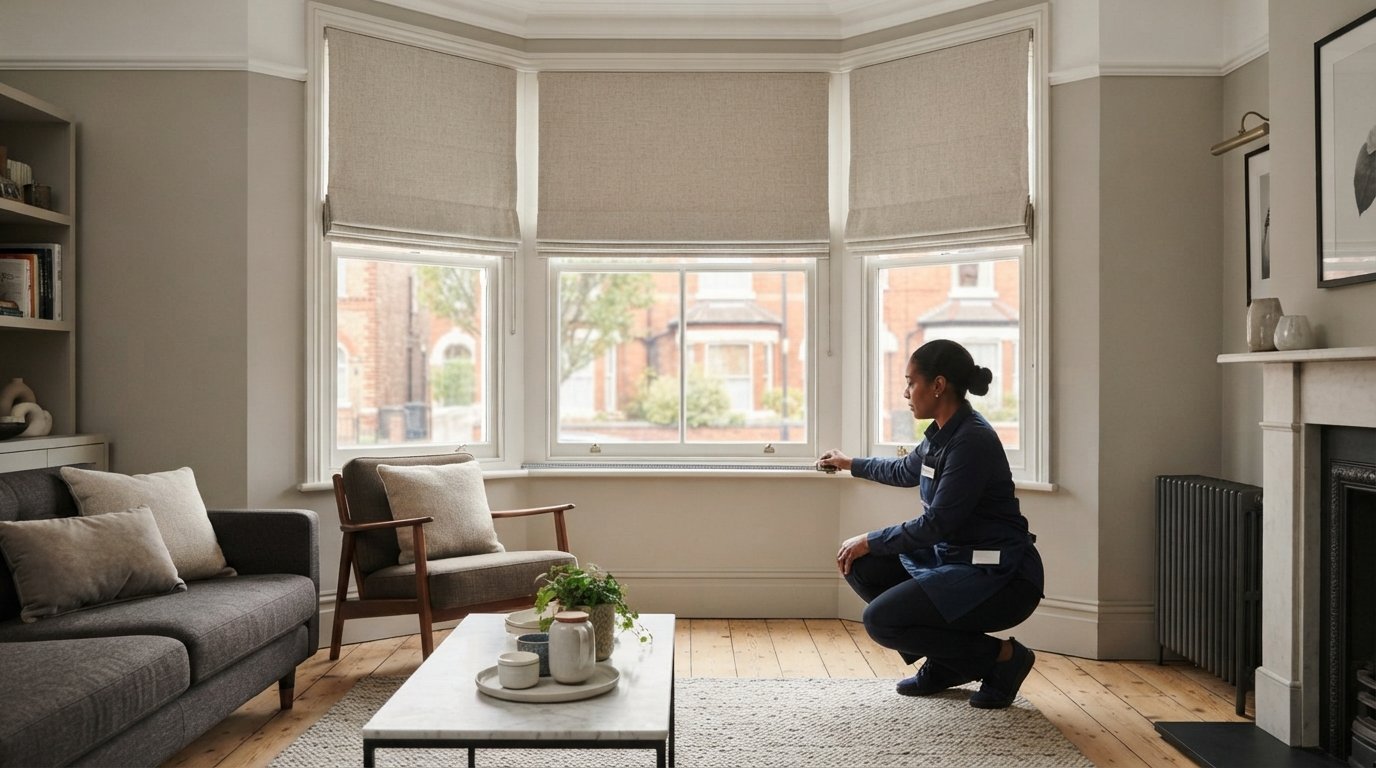
Did you know that an error of just 10mm when measuring a window recess is the primary reason why DIY window treatments fail to achieve a sleek, high-end look? It’s a common frustration for homeowners who find that even quality fabrics look misplaced if the fit isn’t exact. You want your home to feel polished and cohesive, yet unsightly light gaps or wonky installations often stand in the way of that vision.
We understand that your windows are a focal point of your property, and you shouldn’t have to settle for a finish that looks like a compromise. This guide shows you how to get a professional finish for your windows by focusing on the precision that only a bespoke, heritage-led service can provide. You’ll discover the secrets to achieving a flawless, built-in appearance through expert design and technical measuring that accounts for every architectural quirk, including those tricky bay windows.
We’ll walk you through the benefits of made-to-measure solutions, from choosing materials that last to ensuring your installation meets the latest UK safety standards. By the end, you’ll know exactly how to transform your living space with the elegance and ease of a truly professional touch.
Key Takeaways
- Learn why off-the-shelf options often lead to unsightly light gaps and how you can avoid the common pitfalls of DIY measurements.
- Discover how bespoke window treatments act as a structural element to enhance your room’s symmetry and long-term property value.
- Follow our expert five-step process to assess your privacy needs and select the perfect style to get a professional finish for your windows.
- Understand the critical differences between mass-produced items and made-to-measure installations that provide a seamless, built-in look.
- Explore the stress-free journey offered by local heritage specialists who handle everything from technical assessment to final implementation.
Why Standard Windows Often Lack That “Professional Finish”
Most homeowners believe that a premium look comes solely from the quality of the fabric or the price of the material. In reality, the difference between a high-end interior and a standard one often lies in the precision of the fit. Ready-made options are designed for a mass market, which inevitably leads to the “DIY Gap.” This occurs when a blind is slightly too narrow for a recess, leaving vertical strips of glass exposed and ruining the clean lines of your room.
Light leakage isn’t just a minor annoyance during a Sunday morning lie-in; it creates a visual distraction that draws the eye to the edges rather than the window’s design. According to industry data, an error of just 10mm when measuring a window recess is the leading reason why DIY window treatments fail. When these edges are uneven, the entire wall feels off-balance, disrupting the symmetry that is so vital in professional interior design.
To better understand how trade techniques impact the overall look of your window area, watch this helpful video on preparing the surrounding woodwork:
The Aesthetic Impact of Poorly Fitted Coverings
Luxury interiors rely on seamless integration. If you try to force a standard blind into a Victorian bay or a modern tilt-and-turn window, you’ll likely end up with visible brackets or oversized headrails that protrude awkwardly. These bulky components make a window feel cluttered, effectively shrinking the perceived size of the room. To truly get a professional finish for your windows, the hardware should be as discreet as the fabric is beautiful. When “close enough” is the standard, you lose the “built-in” look that defines high-end property styling.
Functionality vs. High-End Design
Beyond looks, substandard hardware often fails after just a few months of daily use. Blinds that catch on the plasterwork or cords that become a tangled mess are common frustrations for those who skip professional installation. A bespoke setup prioritises smooth operation and longevity. Crucially, it ensures full compliance with UK child safety regulations, specifically BS EN 13120, meaning all cords are managed with tensioning devices fitted at least 1.5 metres above floor level. When you explore different types of window blinds, it’s vital to remember that the mechanism must be as reliable as the fit is precise. This level of detail protects your family and prevents unnecessary damage to your window frames, which is essential if you want to get a professional finish for your windows that lasts for years.
The Role of Bespoke Coverings in Professional Window Design
While many homeowners focus on the colour of their window frames, a truly professional finish is achieved through seamless integration. Bespoke coverings aren’t merely accessories; they act as a structural element that defines the room’s symmetry. When you choose tailored solutions, you’re investing in a sense of permanence that off-the-shelf products simply cannot replicate. Working with accredited blind and shutter specialists ensures that every component is engineered to fit your specific architectural features, such as the deep recesses of a Victorian terrace or the complex angles of a modern bay window.
The psychology of tailored design is powerful. A flush, “built-in” look suggests that the window dressing was considered during the initial construction of the home. This level of detail is how you get a professional finish for your windows, moving away from the cluttered look of visible brackets and towards a clean, intentional aesthetic. It creates a calm environment where the window dressings complement the architecture rather than competing with it.
Made-to-Measure Blinds: A Tailored Approach
The primary difference between bespoke and ready-made is the “build-to-order” philosophy. Trimming a standard blind to fit often leaves frayed edges or compromised mechanisms. In contrast, made-to-measure blinds are manufactured to the millimetre. By selecting luxury woods or high-performance fabrics, you ensure the texture complements your interior palette. This precision allows the blind to sit perfectly within the window recess, creating a flush look that eliminates light bleed. It’s the most effective way to get a professional finish for your windows while also enhancing thermal efficiency.
Shutters: The Ultimate Architectural Finish
Often described as “furniture for your windows,” custom shutters offer a level of sophistication that few other treatments can match. Because they are fixed directly to the frame, they provide a clean, cordless aesthetic that is as functional as it is beautiful. They are particularly effective for awkward shapes where traditional blinds might struggle to provide full coverage. For those looking to explore specific styles, A Homeowner’s Guide to Elegant Window Shutters provides excellent inspiration for various room types.
If you’re ready to see how these elements could work in your home, our team can help you explore bespoke options during a relaxed, no-pressure home visit.
Made-to-Measure vs. Ready-Made: Evaluating the Final Look
Choosing between an off-the-shelf product and a bespoke installation often comes down to how much you value the final aesthetic. While mass-produced blinds might seem convenient, they rarely offer the longevity or the exactness required to get a professional finish for your windows. A professional finish isn’t just about the first day of installation; it’s about how the product performs several years later. Bespoke coverings use superior components that resist the daily wear and tear of the British climate, whereas ready-made alternatives often show signs of fatigue within months.
Investing in a professional service is often more cost-effective over time. You avoid the cycle of replacing brittle plastic parts or frayed fabrics that haven’t been treated for UV resistance. To achieve a truly high-end look, you should evaluate three key areas: fit, fabric, and fixing. A flush fit ensures no light bleed, premium fabrics provide better texture, and robust fixings ensure the blind doesn’t sag. This level of detail is why The Benefits of Professional Blind Fitting: Why DIY Can’t Compare when you’re aiming for a seamless, designer-led result.
The Technical Differences in Construction
The internal mechanisms of your window dressings are just as important as the fabric. Ready-made options typically rely on generic plastic headrails that can warp or crack over time. In contrast, bespoke blinds feature precision-engineered metal headrails designed to support the specific weight of your chosen material. This is particularly important for larger windows where weight-bearing fixings are essential for safety and smooth operation. High-quality construction also aids thermal performance. Correctly fitted treatments help manage domestic heat loss, a point echoed in the Energy Saving Trust window insulation guidance, which highlights the importance of eliminating draughts through tailored installations.
Visual Comparison: Bespoke vs. DIY
The visual difference between a tailored installation and a DIY attempt is immediate. A bespoke service allows for custom colour matching to your existing decor, ensuring the window dressing feels like a natural extension of the room. You’ll notice consistent slat alignment in Venetian and Vertical styles, where every line is perfectly horizontal or vertical. DIY kits often result in overlapping edges or “stepped” slats that disrupt the room’s symmetry. When you get a professional finish for your windows, the blind sits perfectly within the recess, providing a crisp, clean border that enhances your home’s kerb appeal and internal elegance.
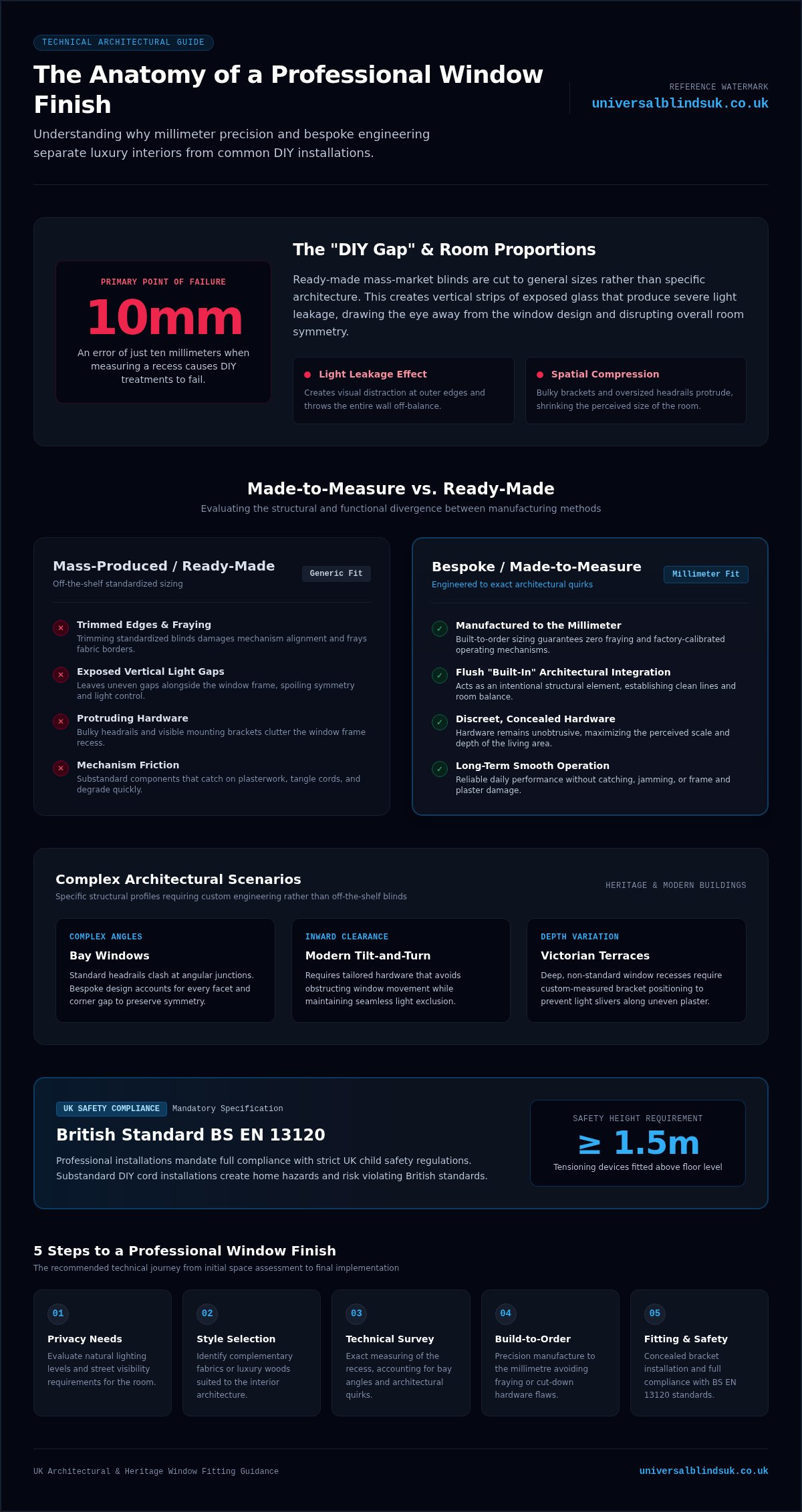
5 Steps to Get a Professional Finish for Your Windows
Achieving a flawless look isn’t a matter of luck; it’s the result of a methodical approach that considers both aesthetics and engineering. To get a professional finish for your windows, you must look beyond the fabric and consider the specific architectural demands of each room. This process ensures that your window dressings don’t just “fit,” but actually enhance the structural lines of your home.
The journey begins with five essential steps:
- Step 1: Assessing light and privacy. Determine if a room requires total blackout, such as a nursery, or soft light filtration for a communal living space.
- Step 2: Choosing the right style. Select between Roller, Roman, or Shutters based on the room’s moisture levels and decor.
- Step 3: Technical assessment. Identify potential obstructions like protruding handles, trickle vents, or uneven plasterwork.
- Step 4: Customising hardware. Tailor the headrails, brackets, and bottom bars to match your interior trim for a cohesive look.
- Step 5: Professional installation. Ensure the treatment is perfectly level and securely fixed to the correct substrate for long-term stability.
Consultation: The Foundation of the Finish
Showroom lighting can be deceptive. Seeing physical samples in the unique light of your own home is the only way to ensure colours and textures truly complement your walls. During a consultation, specialists provide invaluable advice on “awkward” windows, such as box bays or slanted recesses, where standard solutions often fail. If you’re unsure which direction to take, you can consult A Complete Guide to Blind Styles to find the perfect match for your home.
Precision Measuring and Installation
Millimetre-accuracy is what separates a designer look from a DIY attempt. Professionals use high-precision tools to account for the slight variances found in almost every window recess. This ensures a “flush” look where the blind sits perfectly within the frame without catching or leaving gaps. Expert fixing techniques also guarantee that the weight of the blind is properly supported, preventing sagging and ensuring the mechanism operates smoothly for years. It’s this technical rigour that allows you to get a professional finish for your windows while protecting your window frames from damage.
Ready to start your transformation? Book your free home consultation with our West Midlands experts to see the difference a professional touch makes.
Expert Window Fitting in the West Midlands with Universal Blinds UK
Choosing a local partner is the final piece of the puzzle when you want a truly refined look. Universal Blinds UK brings a heritage-led approach to every installation. Based in Aldridge, Walsall, we’ve spent years helping homeowners across the West Midlands achieve their design goals. Whether you live in a Victorian terrace in Birmingham or a contemporary new-build in Solihull, we understand the nuances of local architecture. This local knowledge is vital because regional property styles often feature specific window handle placements or masonry quirks that off-the-shelf products can’t accommodate.
Choosing Your Local Blinds Experts in the West Midlands ensures that your project benefits from a personal touch. We don’t just supply products; we provide a complete service that manages everything from the initial technical assessment to the final implementation. It’s the most reliable way to get a professional finish for your windows without the stress of managing the measurements yourself.
Our Commitment to Quality and Service
Our reputation is built on trust and transparency. We operate a strictly no-pressure sales environment, meaning our complimentary home visits are focused entirely on helping you make an informed decision. You’ll have the opportunity to browse our extensive range of fabrics and materials in the actual light of your room, guided by specialists who prioritise your satisfaction over a quick sale. This customer-centric approach is why so many of our clients in Walsall and the surrounding areas recommend us to their friends and family. By supporting a local, family-run business, you’re investing in high standards and a personal level of care that corporate retailers often lack.
Ready for Your Professional Finish?
Taking the first step toward your window transformation is simple. When you book your free home consultation, we’ll visit your property at a time that suits you. During this expert measuring appointment, we’ll take millimetre-perfect dimensions and discuss the best hardware options to complement your interior trim. We’ll also assess child safety requirements to ensure your new blinds are fully compliant with UK regulations, specifically concerning cord tensioning and safety mechanisms.
If you’re ready to get a professional finish for your windows, our team is here to guide you through the entire journey. We take the guesswork out of bespoke design, leaving you with a seamless, high-end look that adds genuine value to your home. Contact us today to arrange your visit and experience the calm expertise of our West Midlands fitting team.
Elevate Your Home with Precision Window Design
Achieving a high-end look is about more than just picking a fabric; it’s about the technical precision that ensures every line is level and every gap is eliminated. We’ve explored how bespoke coverings serve as structural elements in your room, offering a level of permanence and durability that mass-produced options simply can’t match. By choosing a tailored approach, you ensure that your window dressings complement your architecture perfectly.
It’s the most reliable way to get a professional finish for your windows while also improving your home’s thermal efficiency and kerb appeal. As a family-run business with deep local heritage in the West Midlands, Universal Blinds UK is here to make the process entirely stress-free. We provide free measuring and no-obligation quotes, ensuring you feel secure and informed at every stage of the journey.
Book Your Free Home Consultation with Universal Blinds UK today to see how our expert fitting can transform your living space. Your windows deserve a finish that reflects the quality and care you’ve put into your home.
Frequently Asked Questions
How do I get a professional finish on my window dressings?
You achieve this by prioritising precision measuring and bespoke manufacturing rather than settling for off-the-shelf alternatives. A flush fit within the window recess eliminates unsightly light gaps and creates a seamless, built-in appearance. To get a professional finish for your windows, you should also focus on high-quality hardware and professional installation, ensuring every component is level and secure. This methodical approach transforms a standard window into a polished architectural feature.
Is it better to choose blinds or shutters for a high-end look?
Both options offer a sophisticated aesthetic, but the choice depends on your specific design goals. Shutters are often viewed as permanent furniture for your windows, providing a clean, cordless look that enhances kerb appeal. Alternatively, made-to-measure Roman or wooden Venetian blinds offer a softer, elegant touch. Both routes provide a high-end finish as long as they are custom-built to fit the exact dimensions of your window frames and architectural features.
Why should I avoid DIY blind installation for large windows?
Large windows present unique challenges regarding weight distribution and structural integrity. Standard DIY fixings often fail to support heavier bespoke materials, leading to sagging headrails or damaged plasterwork over time. Professional fitters use trade-specific tools and techniques to ensure the installation remains level and secure. Avoiding the DIY route prevents costly errors and ensures that your window dressings operate safely, especially in high-traffic areas where children or pets are present.
Can professional blinds help with energy efficiency in the UK?
Yes, correctly fitted window dressings significantly reduce heat loss through glazed surfaces. Independent testing by the University of Salford Energy House Labs proves that professional installations can reduce heat loss by up to 33% for certain roller blind styles. By creating an effective thermal barrier and eliminating draughts around the edges, bespoke blinds help keep your home warmer during UK winters. This makes them a smart, non-invasive insulation improvement for older properties.
What is the best way to dress a bay window for a professional finish?
Bay windows require individual, made-to-measure units for each pane to ensure a cohesive and functional result. Attempting to use standard blinds often leads to overlapping headrails or large light gaps at the angles. A professional fitting service involves measuring every section of the bay to the millimetre, allowing the blinds to sit flush against the glass. This approach maintains the window’s architectural shape while providing complete light control and privacy without compromise.
How long does a professional blind fitting take?
A typical professional installation takes between 30 and 60 minutes per window. This timeframe includes the careful alignment of brackets, drilling, mounting the blind, and tensioning any safety devices. While it might seem like a quick process, the expertise lies in ensuring the blind is perfectly level and operates without catching. Our fitters handle the technical assessment and final implementation, leaving you with a stress-free experience and a flawless result every time.
Do you provide window fitting services across the West Midlands?
Yes, we offer our full bespoke service across the entire West Midlands region, including Walsall, Birmingham, and Solihull. As a family-run business based in Aldridge, we’re deeply invested in our local community and reputation. Our team provides free home consultations where we bring samples directly to you. This local expertise ensures we understand the specific property styles found in our area, allowing us to provide tailored advice for your home.
What is the difference between made-to-measure and ready-made blinds?
The primary difference lies in the precision of the fit and the quality of the components used. Ready-made blinds are mass-produced to standard sizes, often requiring you to trim them yourself, which can lead to frayed edges. Made-to-measure blinds are built from scratch to your exact specifications. This ensures a millimetre-perfect fit and allows you to get a professional finish for your windows with superior materials that offer much greater longevity and performance.