

Choosing Between Wood and Faux Wood Blinds: The 2026 Comparison Guide
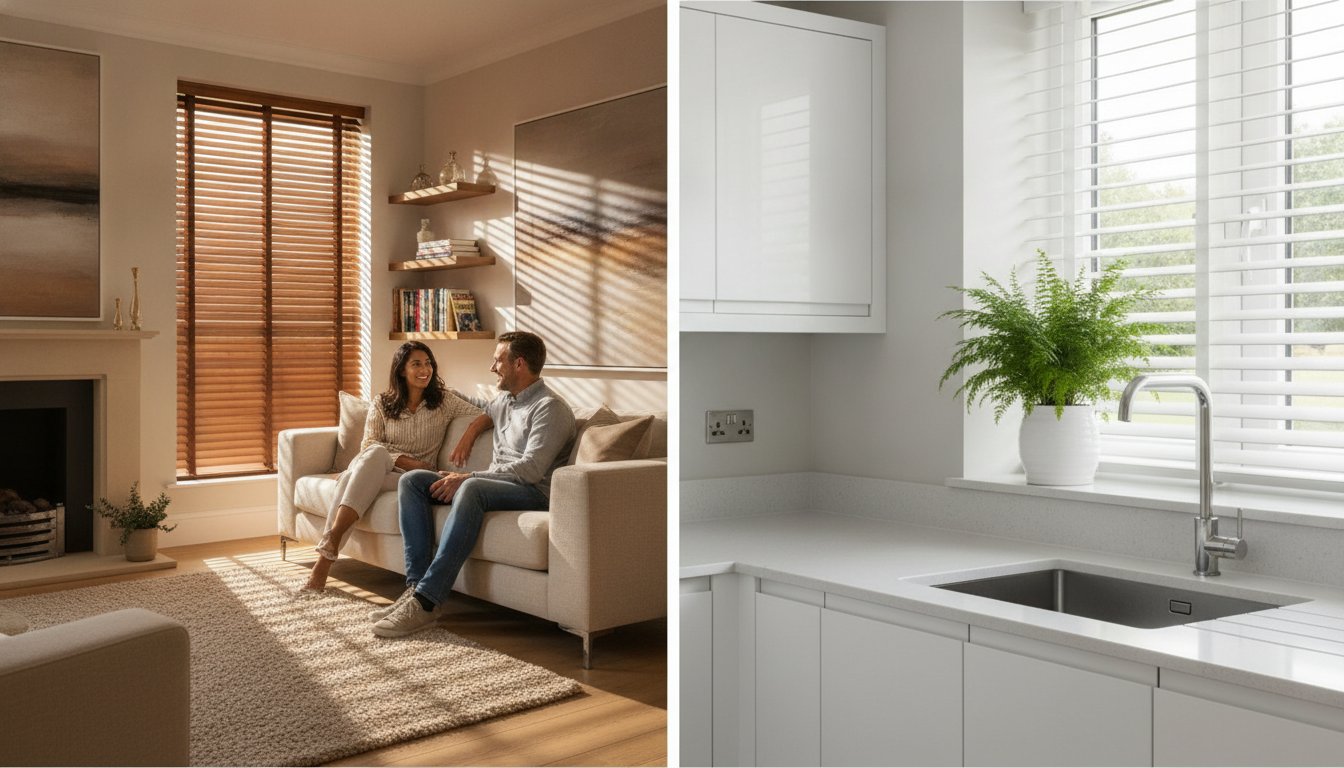
The most expensive real timber blind you can buy might actually be the worst possible choice for your home. While the natural grain of authentic wood is undeniably beautiful, installing it in the wrong environment often leads to the very warping and fading you’re desperate to avoid. You want a window treatment that reflects your style, but when choosing between wood and faux wood blinds, the conflicting labels of ‘composite’ and ‘PVC’ often make the decision feel unnecessarily stressful.
We understand that selecting the right material is about ensuring your investment stands up to the unique conditions of your British home. Whether you’re worried about heavy slats damaging your window frames or seeking that perfect professional finish in a humid kitchen, we’re here to provide the calm expertise you need. This 2026 comparison guide will reveal the definitive differences between materials, helping you select the perfect made-to-measure solution for every room. You’ll discover how to balance the warmth of natural wood with the resilience of modern alternatives, ensuring a durable result that looks elegant and stays functional for years to come.
Key Takeaways
- Understand the core differences between lightweight, sustainable Basswood and high-grade, moisture-resistant PVC composites.
- Navigate the process of choosing between wood and faux wood blinds by prioritising natural luxury in living areas and practicality in damp environments.
- Learn why real wood is the superior choice for large windows because it’s much lighter than composite alternatives, reducing strain on your window frames.
- Discover why faux wood is the essential selection for kitchens and bathrooms, offering total protection against warping and splintering.
- Realise the value of professional, made-to-measure installation in ensuring your window treatments remain structurally sound and perfectly aligned.
Understanding the Fundamental Differences Between Wood and Faux Wood
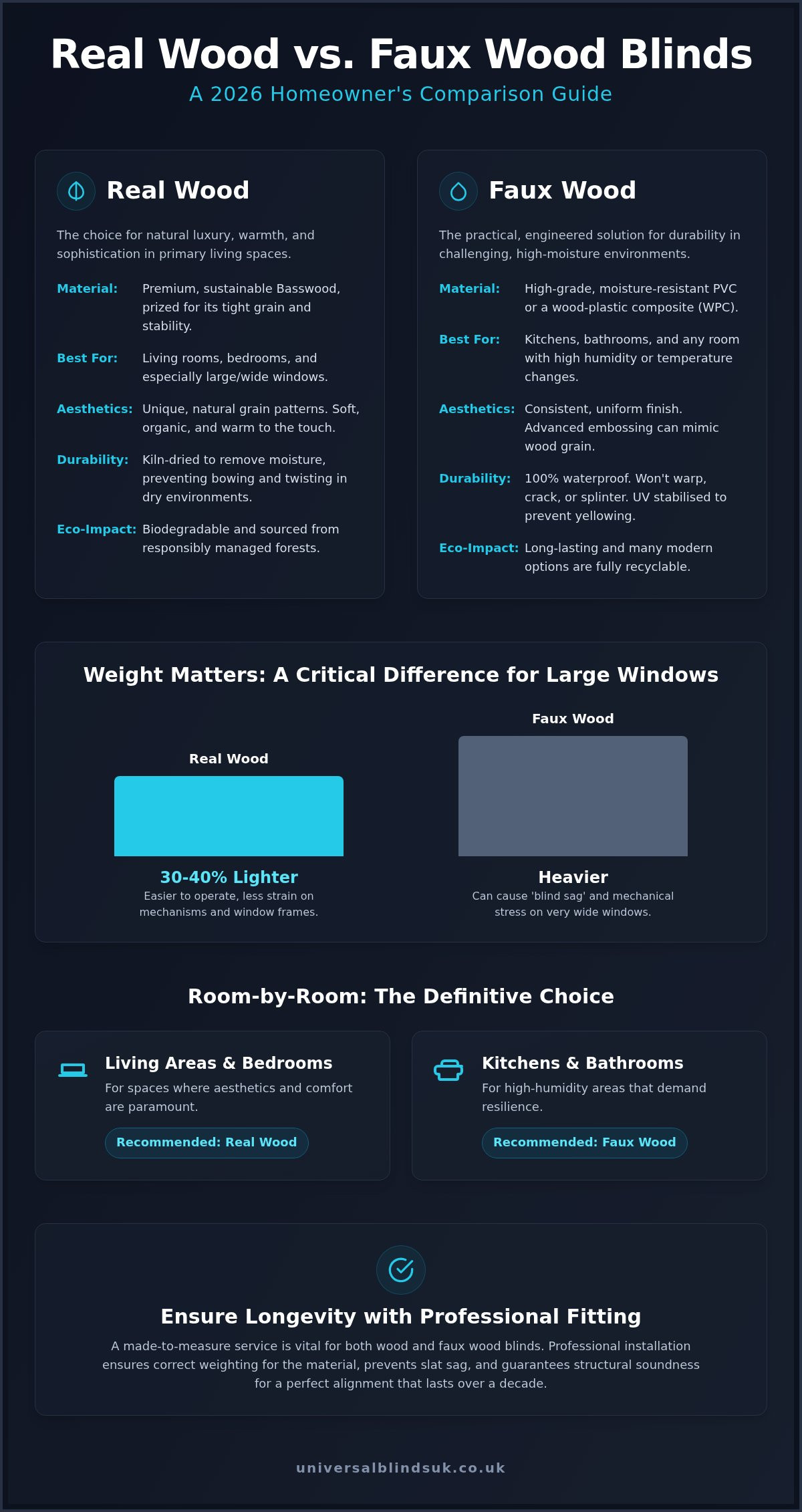
When Understanding the Fundamental Differences, the first thing to consider is what’s actually inside the slats. Choosing between wood and faux wood blinds often starts with a preference for either nature or engineering. Real wood blinds are traditionally crafted from premium, lightweight timbers such as Basswood. This specific wood is prized in the UK for its tight grain and inherent stability. In contrast, faux wood blinds are engineered from high-grade PVC or a wood-plastic composite (WPC). While they look similar from across a room, these materials behave very differently once they’re hanging in your window.
Modern manufacturing has made the ‘visual test’ harder than ever. Many high-quality faux wood ranges now feature advanced embossing techniques that mimic the subtle textures and growth rings of natural timber. However, the ‘touch test’ remains the ultimate decider. Natural wood possesses an organic warmth. It feels soft and substantial, whereas PVC can feel cooler and more clinical to the touch. This tactile difference often dictates whether a room feels cosy or purely functional.
Material Composition and Manufacturing
The way these blinds are made ensures they survive the British climate. Real wood slats undergo a rigorous kiln-drying process. This removes moisture to prevent the timber from bowing or twisting after installation. Faux wood blinds rely on chemical engineering instead. Manufacturers incorporate UV stabilisers into the PVC mix to ensure the slats don’t yellow or become brittle when exposed to direct sunlight. Regardless of the material, opting for a made-to-measure service is vital. It ensures the internal mechanisms are correctly weighted for the specific material, preventing the slat sag often seen in cheaper, cut-to-size alternatives.
Sustainability and Longevity
Homeowners often weigh up environmental impact alongside aesthetics. Natural timber blinds come with strong eco-credentials when sourced from responsibly managed forests. They are biodegradable and require less energy to produce than synthetic alternatives. Modern PVC window treatments have also improved, with many now being fully recyclable at the end of their life. When professionally fitted, you can expect a high-quality blind to last upwards of ten years. The key to this longevity is matching the material to the room’s environment, ensuring that your choice remains a beautiful feature of your home for the long term.
The Luxury and Performance of Real Wood Venetian Blinds
Authentic timber brings a level of sophistication that synthetic materials struggle to match. Every slat tells a story through its unique grain patterns, knots, and subtle colour variations. When you’re choosing between wood and faux wood blinds, this visual depth is often the deciding factor for those seeking a premium, bespoke look. There’s an undeniable sense of quality that comes from knowing your window treatments are crafted from natural, sustainable materials.
Natural Aesthetics and Customisation
You can tailor real wood to suit any interior theme. Stained finishes highlight the intricate beauty of the timber, while painted options provide a crisp, uniform appearance that still retains a soft, organic feel. This versatility makes them an excellent companion to other high-end window treatments, such as those discussed in A Homeowner’s Guide to Elegant Window Shutters. The character of real wood adds a layer of warmth and texture that feels intentionally designed rather than mass-produced, making it the ideal choice for primary living spaces.
Weight Considerations for Wide Windows
Technical performance is where real wood truly excels, particularly regarding weight. Genuine timber is roughly 30% to 40% lighter than its faux wood counterparts. This isn’t just a minor detail; it’s a critical factor for the longevity of your window treatments. In large bay windows or wide spans, the cumulative weight of faux wood slats can put immense pressure on the internal cords and mounting brackets. This often leads to mechanical failure or difficulty when raising the blinds.
Using lightweight timber prevents ‘blind sag’ in wider spans, ensuring the slats remain perfectly horizontal over years of use. It also makes the blinds significantly easier to operate daily, which is a vital consideration for those with limited mobility or very tall windows. Beyond the mechanical benefits, wood is a superior natural insulator. For homes in the West Midlands, this provides an extra layer of thermal protection, helping to keep rooms warmer in winter and cooler in summer. If you aren’t sure which material suits your specific window size, our experts can bring samples to your home and provide a professional assessment of your window’s structural needs.
Why Faux Wood Blinds Are the Practical Choice for Modern Homes
While natural timber offers a classic appeal, choosing between wood and faux wood blinds often comes down to the specific demands of your room’s environment. Faux wood has become the practical favourite for modern British households because it solves the most common issues associated with window treatments. It provides the high-end look of a Venetian blind while offering a level of resilience that natural materials simply can’t match. For busy families or commercial spaces, these blinds are a dependable, low-maintenance investment.
Moisture and Humidity Resistance
The standout feature of faux wood is its 100% moisture resistance. Engineered from high-grade PVC, these slats are completely non-porous. In rooms where steam and condensation are constant, such as bathrooms or kitchens with heavy cooking use, natural wood can eventually absorb moisture, leading to warping or unsightly peeling. Faux wood remains entirely unaffected by these conditions. It won’t crack or bow, even in the most humid wet rooms.
When you look at A Complete Guide to Blind Styles, you’ll see that faux wood is frequently cited as the ‘gold standard’ for functional areas. It offers the aesthetic warmth of a shutter or timber blind but with the industrial-strength protection of modern synthetics. This makes it a stress-free choice for any window located directly above a sink or near a shower enclosure.
Family-Friendly Durability
Life in a busy home can be tough on window coverings. Pets, children, and high-traffic hallways require materials that can withstand accidental knocks. Faux wood slats possess a unique ‘flex’ that allows them to bend slightly without snapping or splintering. This durability is a significant advantage over real wood, which can be more prone to surface dents or scratches if handled roughly.
Maintenance is equally straightforward. Because the surface is sealed, a simple damp cloth is all you need to remove dust, grease, or sticky finger marks. This ‘wipability’ is essential for keeping your home looking professional and clean with minimal effort. Additionally, modern faux wood is designed with UV stabilisers to handle south-facing windows. Even in intense, direct sunlight, the slats are engineered to resist fading and brittleness, ensuring they stay as vibrant as the day they were fitted. For those seeking a durable, high-performance solution, faux wood delivers a premium finish that stands up to the rigours of daily life.
Decision Framework: Room-by-Room Recommendations
The ideal window treatment isn’t just about what looks best in a showroom; it’s about how the material performs under the specific conditions of your home. When choosing between wood and faux wood blinds, you should consider the temperature, humidity, and usage frequency of each individual space. A one-size-fits-all approach often leads to premature wear, so we recommend a tailored strategy for every room.
- The Lounge and Master Bedroom: These rooms are your sanctuaries. We suggest prioritising the warmth and luxury of real wood here. The natural timber grain creates a soft, inviting atmosphere that synthetic materials struggle to replicate.
- The Bathroom and Kitchen: These are high-humidity zones. Faux wood is the essential choice here to prevent the slats from absorbing steam and losing their shape over time.
- The Conservatory: This space faces extreme temperature shifts. While real wood offers superior thermal insulation to keep the heat out, the lightweight nature of timber is also vital for the large, often complex window spans found in many West Midlands conservatories.
- The Home Office: A professional aesthetic is key for video calls. Real wood provides a high-end backdrop while offering precise light control to reduce screen glare throughout the day.
The Kitchen-Diner Dilemma
Modern UK homes often feature open-plan living spaces where the cooking area flows directly into the dining room. This creates a challenge when choosing between wood and faux wood blinds. If your windows are far from the oven and sink, real wood can work beautifully to match your dining furniture. However, if the blinds are positioned near a heat source or water, we recommend high-quality faux wood. “If the blind is within splashing distance of a tap or a steaming kettle, faux wood is your only safe bet for long-term durability.” You can still achieve a cohesive look by matching the paint colour of your faux wood slats to the real timber used elsewhere in the room.
Bay Windows and Special Shapes
In the West Midlands, many period properties feature grand bay windows that are the focal point of the home. Structural integrity is a major concern here. Because real wood is significantly lighter, it’s often the superior choice for wide bays to avoid putting unnecessary strain on older window frames. If you are debating different styles for these large openings, you might find our comparison of Blinds vs Curtains: The Definitive Guide helpful for deciding on the right level of coverage. Mixing materials is perfectly acceptable; you might choose real wood for your front-facing bay window to maximise kerb appeal, while using faux wood for smaller side windows. To see how different materials look in your specific light, book a free home consultation and let our experts bring the samples to you.
Professional Fitting: Ensuring Your Choice Lasts a Lifetime
Even after carefully choosing between wood and faux wood blinds, the final result depends entirely on the quality of the installation. A premium timber slat or a high-grade PVC composite will only perform as intended if it fits the window recess with absolute precision. Many homeowners are tempted by ‘cut-to-size’ DIY kits, but these often lead to frayed edges and weakened slats that compromise the blind’s structural integrity. By opting for a professional service, you ensure that every component is factory-finished and perfectly balanced for your specific window.
The Universal Blinds UK process is designed to be entirely stress-free. We bring the showroom to you, allowing you to see physical samples against your own walls. This is a critical step because the specific lighting in a West Midlands home can make a particular colour look completely different than it does under artificial showroom lights. Our experts provide calm, professional advice to help you match the material to your room’s environment without any sales pressure.
The Importance of Accurate Measuring
Precision is the difference between a blind that operates smoothly and one that becomes a daily frustration. A mere 2mm error in your measurements can lead to light bleed at the edges or slats that stick against the window frame. Our Free Measuring Service takes the guesswork out of the process. During the visit, we don’t just measure the width and drop; we conduct a technical assessment of your lintels and window frames. This is especially important when choosing between wood and faux wood blinds for large windows, as the heavier weight of PVC requires secure anchoring to prevent long-term damage to your plasterwork.
Expert Installation in the West Midlands
Our team of local specialists serves Walsall, Birmingham, and the wider West Midlands region with a focus on heritage and quality. We understand the unique architectural challenges of local period properties and modern developments alike. When our professional fitters arrive, they ensure that your made-to-measure blinds are mounted safely and level, providing that crisp, high-end finish that DIY attempts rarely achieve. You won’t have to worry about crooked slats or loose brackets. It’s a comprehensive service that builds confidence from the initial consultation to the final implementation. You can book your complimentary home visit today to see our range in person and receive a tailored assessment for your home.
Elevate Your Interior with Tailored Window Solutions
Finding the right balance between natural elegance and everyday practicality doesn’t have to be a challenge. By matching the material to your room’s specific environment, you ensure your window treatments remain a beautiful, functional part of your home for years. Whether you prioritise the lightweight luxury of real timber for a large bay window or the moisture-resistant durability of high-grade PVC in a busy kitchen, your decision should always focus on longevity and ease of use.
The process of choosing between wood and faux wood blinds is much simpler when you can see physical samples in your own light. As a family-run business with deep local heritage, we take pride in providing a stress-free experience from start to finish. Our team offers expert local fitting across the West Midlands, ensuring your made-to-measure blinds are anchored securely and operate flawlessly.
Book your free home consultation and professional measure today to receive your no-obligation quote. We look forward to helping you create a professional, premium finish that truly elevates your living space.
Frequently Asked Questions
Do faux wood blinds look like plastic?
Modern manufacturing ensures that high-quality faux wood blinds look remarkably authentic. Many ranges feature advanced embossing techniques that replicate the subtle textures and grain patterns of natural timber. While they’re made from PVC, they don’t have a shiny or clinical appearance. When they’re professionally fitted in your window, it’s difficult for guests to tell the difference between them and real wood without touching the slats themselves.
Can real wood blinds be used in a bathroom if I have good ventilation?
We generally advise against using real wood in bathrooms, even if you have an extractor fan or open windows. Timber is a naturally porous material that absorbs moisture from the air. Over time, the repeated cycle of dampness and drying can lead to warping, twisting, or the paint finish peeling away. Faux wood is the safer, more durable choice for any room where steam and condensation are present.
Which type of blind is better for wide windows?
Real wood is the superior choice for wider windows because it’s significantly lighter than faux wood. Genuine timber is roughly 30% to 40% lighter than PVC composites, which puts much less strain on the internal lift cords and mounting brackets. For large spans, such as those found in West Midlands period properties, using real wood prevents the slats from sagging and ensures the mechanism remains easy to operate daily.
Are faux wood blinds heavier than real wood?
Yes, faux wood blinds are notably heavier than real wood blinds. Because they’re made from high-density PVC or wood-plastic composites, the slats have more mass than lightweight timbers like Basswood. This weight difference is a crucial factor when choosing between wood and faux wood blinds for large installations. Heavier blinds require more effort to raise and need more robust anchoring to the wall to ensure they stay secure over time.
Do real wood blinds fade in the sun faster than faux wood?
Natural wood can be susceptible to UV fading over several years if it’s not treated correctly. However, our premium real wood blinds are finished with high-quality stains and paints that include UV protection. Modern faux wood blinds are also engineered with UV stabilisers specifically to prevent yellowing or becoming brittle in direct sunlight. Both materials perform exceptionally well in sunny, south-facing windows when they’re professionally manufactured and fitted to high standards.
How do I clean real wood vs faux wood Venetian blinds?
Cleaning requirements differ slightly between the two materials. You should clean real wood blinds with a soft, dry cloth or a dedicated wood polish to preserve the timber’s finish; avoid using water as it can soak into the grain. Faux wood blinds are much simpler to maintain because they’re waterproof. You can easily wipe away dust, grease, or sticky marks with a damp cloth and mild detergent without worrying about damaging the slats.
Is there a significant price difference between the two materials?
Real wood is typically a more premium investment than faux wood. This reflects the cost of sourcing sustainable timber and the intricate kiln-drying process required to ensure slat stability. While faux wood offers a more budget-friendly entry point, both options provide excellent long-term value when professionally installed. During our free home consultation, we can provide a detailed quote for both materials to help you decide which fits your specific project and budget.
Can I mix wood and faux wood blinds in the same house?
Mixing materials is a very common and practical strategy for many homeowners. You might choose real wood for your primary living areas and master bedrooms to maximise warmth and luxury. You can then switch to faux wood in kitchens and bathrooms where moisture resistance is the priority. By matching the colours and slat widths, you’ll maintain a consistent, professional look throughout your property while ensuring every room has the most suitable material.