

Conservatory Blinds to Reduce Heat: The 2026 Homeowner Guide
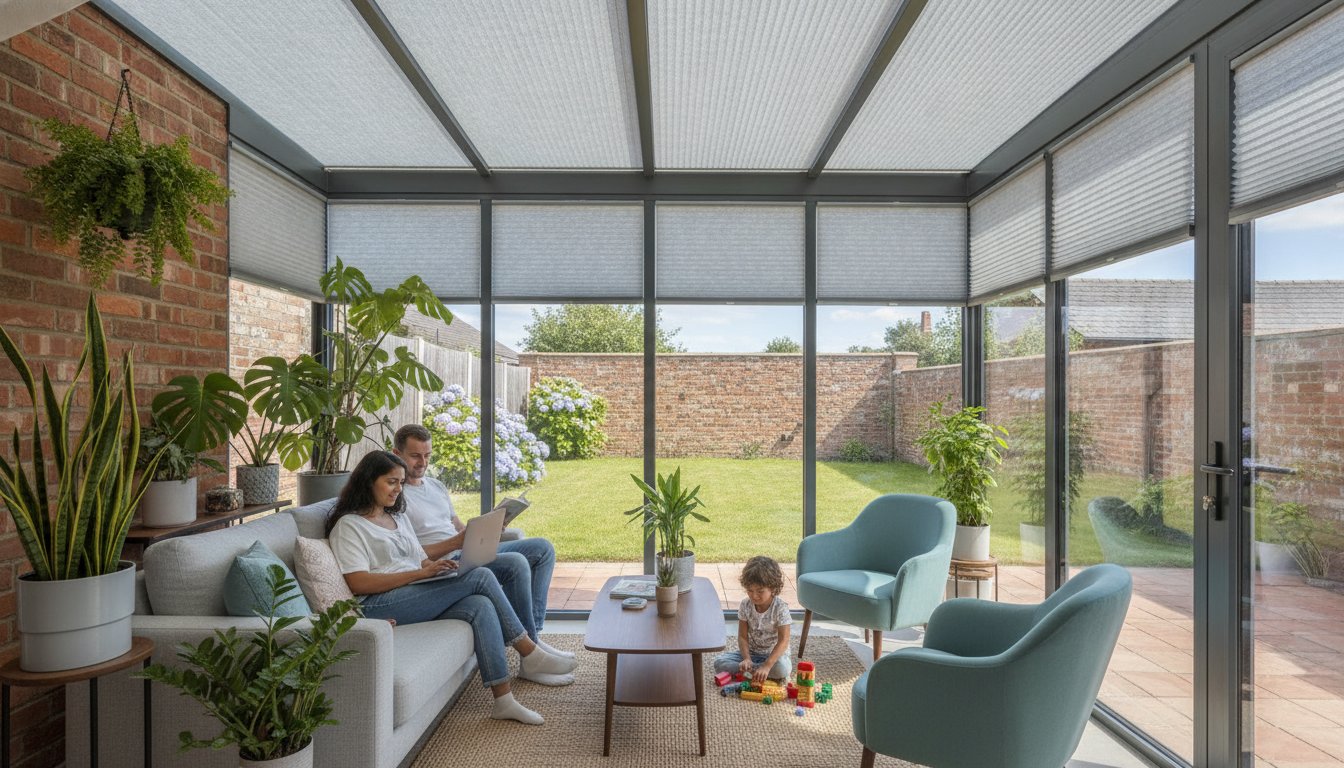
Did you know that on a typical 25°C British afternoon, an unshaded conservatory can soar to a stifling 40°C in less than an hour? It’s a frustrating reality for many homeowners who find their glass extensions transformed into unusable greenhouses, prompting a search for effective conservatory blinds to reduce heat. If you’re tired of battling blinding glare on your laptop screen or worrying about your furniture fading under harsh UV rays, you’re certainly not alone.
We understand that you want to reclaim your home. This guide explores how the right made-to-measure solutions can lower indoor temperatures by as much as 13°C, according to the government’s 2026 Warm Homes Plan. You’ll discover how bespoke, professionally fitted blinds provide a sophisticated finish that adds genuine value to your property while helping to manage rising energy costs. We’ll walk you through the latest 2026 fabric technologies and smart integration options that turn your conservatory back into the comfortable, year-round living space it was always meant to be.
Key Takeaways
- Understand the physics of the greenhouse effect and why reflection is the secret to choosing effective conservatory blinds to reduce heat.
- Explore the latest 2026 fabric technologies, including Solar Reflective Coatings and honeycomb structures designed for maximum thermal insulation.
- Learn how made-to-measure frames eliminate thermal gaps to provide a professional finish that keeps your living space comfortable year-round.
- Discover how to navigate complex conservatory layouts, from Edwardian gables to Lean-to roofs, with bespoke fitting solutions.
- See the benefits of choosing a local, heritage-led service for a stress-free experience from your initial consultation to final implementation.
Why Your Conservatory Overheats: The Greenhouse Effect
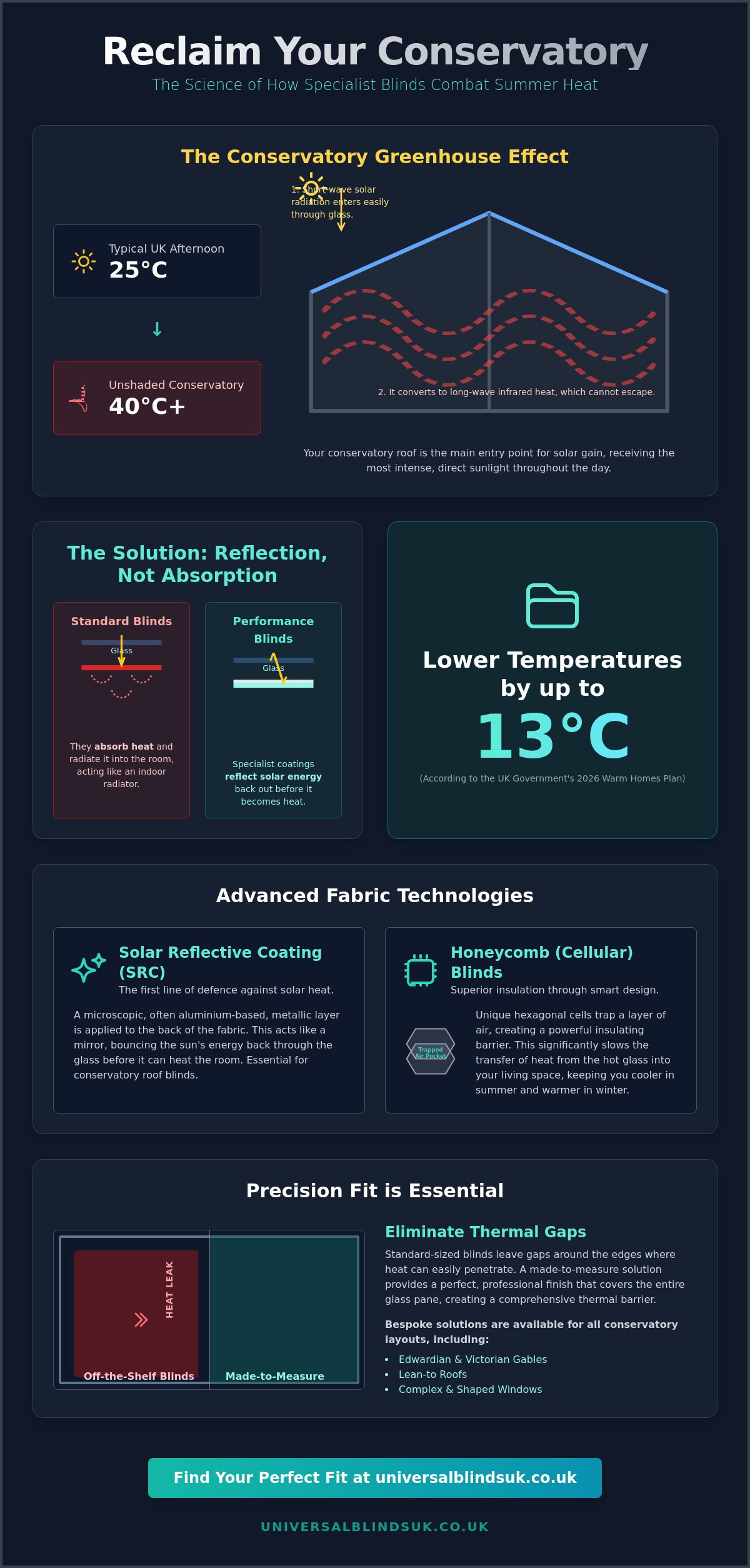
Many homeowners in the West Midlands view their conservatory as a prized asset until the first summer heatwave arrives. The space quickly becomes an oven because of a physical phenomenon known as The Greenhouse Effect. Short-wave solar radiation passes through the glass panels with ease, but once it strikes the floor and furniture, it transforms into long-wave infrared radiation. This heat cannot escape back through the glass, leading to a rapid temperature spike that makes the room unbearable without effective conservatory blinds to reduce heat.
While the side windows contribute to the problem, the conservatory roof is the primary source of heat entry. Because it’s angled directly towards the sun for most of the day, it receives the most intense radiation. Standard blinds often fail here because they are designed for privacy rather than thermal performance. Instead of reflecting the energy back out, they absorb it. The fabric itself gets hot and acts like a radiator inside the room, essentially trapping the heat between the blind and the glass.
To better understand how different window coverings impact this process, watch this helpful video:
The Role of Solar Gain in UK Homes
Solar gain is the primary cause of conservatory overheating in the UK. While we often welcome the sun, south-facing conservatories in areas like Birmingham or Walsall face a relentless barrage of UV rays. These rays don’t just raise the temperature; they actively damage your interior. Constant exposure leads to the fading of expensive timber flooring and the bleaching of soft furnishings. While external temperatures play a part, it’s the direct sunlight hitting the glass that does the most damage. Even on a cool, bright day, the internal temperature can rise significantly if the solar energy isn’t managed correctly.
Convection vs. Radiation
Understanding the difference between convection and radiation is key to a comfortable home. Convection refers to the warm air circulating in the room, but radiation is that intense “burning” sensation you feel when sitting near the glass. High-quality conservatory blinds to reduce heat work by creating a vital thermal barrier. This barrier interrupts the radiant heat before it can warm the air in the room. By reflecting the sun’s energy at the point of entry, you prevent the glass from becoming a giant radiator, ensuring your living space remains a sanctuary rather than a sauna.
The Science of Heat-Reducing Fabrics and Coatings
Many homeowners assume that thick, heavy fabrics are the best way to block out the sun. In reality, modern conservatory blinds to reduce heat rely on advanced engineering rather than bulk. High-performance materials use specialised treatments and structural designs to manage solar energy before it has a chance to warm the air in your room. It’s a common misconception that thickness equals efficiency; some of the most effective heat-reflecting fabrics are surprisingly lightweight and elegant.
Solar Reflective Coatings (SRC) Explained
The most effective tool in a homeowner’s arsenal is the Solar Reflective Coating. This is a microscopic metallic layer, often aluminium-based, applied to the street-facing side of the fabric. While standard fabrics absorb solar energy and radiate it into the room, SRC acts like a mirror. It bounces a significant portion of solar radiation back through the glass before it can be converted into long-wave infrared heat. This technology is essential for roof blinds specifically, as they face the most direct and intense sunlight throughout the day. By choosing a fabric with high reflectivity, you’re ensuring the energy never has a chance to settle in your living space.
Honeycomb vs. Pleated Structures
Beyond coatings, the physical shape of the blind plays a massive role in temperature control. Traditional pleated blinds offer a single layer of protection, but honeycomb, or cellular, designs take this a step further. These blinds feature a unique hexagonal structure that creates distinct pockets of dead air. This trapped air acts as a high-performance insulator, significantly slowing down the transfer of heat from the glass into your home. Industry research from the British Blind and Shutter Association (BBSA) highlights that these air-gap barriers are among the most effective ways to regulate indoor climates.
An added benefit of the honeycomb structure is its year-round utility. While they keep you cool in July, they also prevent heat from escaping during a cold West Midlands winter, making your extension feel like a true part of the home. For those who value aesthetics, these designs also hide the internal operating cords within the cells, providing a cleaner, more professional finish. If you’re unsure which fabric suits your specific roof pitch, you can browse our range of made-to-measure options to see these technologies in person.
Many people worry that blocking heat means sitting in the dark. Modern 2026 fabrics are designed with varying levels of light transmission. You can select fabrics that filter harsh glare and UV rays while maintaining a bright, airy atmosphere. The goal isn’t just to provide shade; it’s to manage the specific wavelengths of light that cause overheating without sacrificing the outdoor-in feel that makes a conservatory so special. Choosing a high-tech fabric ensures you don’t have to choose between a cool room and a bright one.
The Best Blind Styles for Temperature Control
Choosing the right style is just as important as selecting the correct fabric. Not all window coverings are created equal when you’re looking for conservatory blinds to reduce heat. While any shade is better than none, the specific design you choose determines whether your room stays at a pleasant temperature or climbs towards the stifling levels we discussed earlier. Traditional styles like Vertical or Venetian blinds are excellent for privacy, but they often struggle with heat management. Their multiple slats create thousands of tiny gaps that allow “thermal leakage,” letting hot air circulate almost as if the blinds weren’t there at all.
To achieve the best results, you need a solution that provides a continuous barrier. Research from the British Blind and Shutter Association (BBSA) shows that high-performance blinds can reduce heat transfer through glass by an impressive 77%. Furthermore, studies from the University of Salford’s Energy House Labs found that well-fitted blinds can reduce heat loss through windows by up to 33%, proving their value as a year-round climate control tool. The secret lies in a made-to-measure fit that eliminates gaps around the edges where heat usually seeps in.
Pleated and Honeycomb Blinds
Pleated and honeycomb designs are the gold standard for conservatory roofs and windows. Their lightweight nature makes them perfect for the complex angles of a glass roof. You can also benefit from “Top-Down Bottom-Up” functionality, which allows you to position the blind anywhere on the window. This means you can block the direct overhead sun while still enjoying the view outside. For a deeper look at how these compare to other options, you can read our Complete Guide to Blind Styles to find your ideal match.
Perfect Fit Roller Blinds
If you have modern uPVC windows or doors, Perfect Fit frames are a game-changer. These frames clip directly into the window bead without any need for drilling or screws. This creates a seamless thermal seal between the blind and the window frame, effectively preventing heat from leaking around the sides. It’s an ideal choice for conservatory doors and tilt-and-turn windows because the blind moves with the window itself. You get a sleek, professional finish that looks like an integral part of the conservatory rather than an afterthought.
Ultimately, the most effective system is one that is tailored specifically to your room’s measurements. A professional fitting ensures that every millimetre of glass is covered, leaving no room for the sun to penetrate. This bespoke approach is what transforms a simple sunshade into a high-performance climate control system. By investing in a made-to-measure solution, you aren’t just buying a product; you’re ensuring your conservatory remains a comfortable, usable space regardless of the weather outside.
Choosing Blinds for Your Specific Conservatory Layout
Your conservatory’s orientation and architectural style play a massive role in how you should select conservatory blinds to reduce heat. A south-facing Victorian conservatory in the West Midlands faces a completely different set of challenges than a north-facing lean-to in Birmingham. South-facing rooms require high-performance solar reflection on every pane to prevent the 40°C temperature spikes mentioned earlier. Conversely, north-facing spaces might prioritise heat retention during winter while still needing glare control for bright summer afternoons.
Edwardian and Victorian layouts often feature complex roof gables and faceted windows that ready-made solutions simply can’t cover. These architectural details are beautiful, but they create awkward angles where heat can easily penetrate. If you’re balancing the need for a clear garden view with effective temperature control, a coordinated approach between your roof and side windows is essential. Victorian conservatories, with their curved fronts, require multiple individual blinds that must align perfectly to maintain a professional look, while Edwardian styles offer more space for larger panels but often feature high, vaulted ceilings.
Roof Blinds vs. Side Window Blinds
While side windows are important for privacy, your roof is the primary entry point for solar radiation. In fact, covering the roof is the most critical part of the solution for heat management. Research from the University of Salford’s Energy House Labs, commissioned by the BBSA, shows that well-fitted blinds can reduce heat loss through windows by up to 33%, and this efficiency starts with the roof. Motorised options are increasingly popular for these high, hard-to-reach areas, allowing you to adjust your environment at the touch of a button. By coordinating the fabric styles between your roof and side windows, you create a cohesive, elegant look that transforms the room’s aesthetic.
Bespoke Fitting for Awkward Angles
Triangular gables and trapezoid windows are where DIY kits usually fail. These non-standard shapes require a precision-led approach to ensure there are no gaps. Even a 1cm gap can significantly reduce a blind’s thermal effectiveness, as it allows a concentrated stream of heat to bypass the barrier. At Universal Blinds, our heritage-led measuring service ensures every panel fits perfectly into your specific frame. This attention to detail is what separates a professional installation from a temporary fix. To see how we can tailor a solution to your unique space, book your free in-home consultation today.
Our approach focuses on the synergy between different window types. We don’t just look at a single window; we look at how the entire room breathes and reacts to the sun. This methodical process ensures that whether you have a P-shaped conservatory or a simple lean-to, the final result is a temperature-regulated room that you can enjoy every day of the year. By addressing the specific needs of your layout, we help you achieve a professional finish that adds genuine value to your home.
Expert Installation in the West Midlands with Universal Blinds
Choosing high-performance conservatory blinds to reduce heat is only half the battle. The final result depends entirely on the precision of the installation. As a local, family-run business, we’ve spent years perfecting our craft across the West Midlands. We understand that a conservatory isn’t just a glass box; it’s a vital part of your home that requires a tailored approach. Our team knows the specific challenges posed by local architecture, from the classic Edwardian gables found in Solihull to the contemporary lean-to extensions in Birmingham. Professional fitting ensures that your blinds operate smoothly for years, even under the constant stress of the UK’s fluctuating temperatures.
The Universal Blinds Service Journey
We’ve designed our service journey to be as transparent and helpful as possible. It begins with a free measuring service where we visit your home at a time that suits you. We bring our extensive collection of fabric samples directly to your conservatory. This step is crucial because it allows you to see how different textures and solar reflective coatings interact with your room’s specific light levels. Our heritage-led team provides expert guidance without any pressure, helping you select the best materials for your needs. This bespoke approach eliminates the risks associated with off-the-shelf products. You can read more about the benefits of professional blind fitting to understand why precision is the key to energy efficiency.
Trusted Local Expertise
Our reputation in Walsall and the surrounding areas is built on trust and dependable service. We take pride in our roots as a small-scale, heritage-led operation, which allows us to offer a personal touch that larger corporate entities simply can’t match. Every project undergoes a thorough technical assessment before implementation, ensuring that even the most complex shaped roof gables are covered perfectly. We’re committed to a low-stress sales environment, where our focus is on finding the right solution for your lifestyle rather than hitting targets. This customer-first philosophy is why so many homeowners across the region trust us to transform their living spaces. If you’re ready to reclaim your room from the summer sun, book your free conservatory blind consultation today and experience our professional service for yourself.
Reclaim Your Living Space Today
Transforming your conservatory from an unusable greenhouse into a comfortable sanctuary is entirely possible with the right technology. You now understand how advanced Solar Reflective Coatings and honeycomb structures create a high-performance barrier against solar gain. Choosing the right conservatory blinds to reduce heat isn’t just about shade; it’s about a precision fit that eliminates thermal gaps and protects your interior for years to come.
As a family-run local business, we take pride in our heritage-led approach to every unique home project. Whether you have a complex Victorian roof or a modern lean-to, our bespoke made-to-measure service ensures a perfect finish every time. We’re here to guide you through the process with transparency and expert care. To get started, book your free West Midlands home consultation and quote today. Our team provides free no-obligation measuring and fitting to ensure your experience is completely stress-free. We look forward to helping you create a beautiful, temperature-regulated room that your family can enjoy in every season.
Frequently Asked Questions
Do conservatory blinds really reduce heat in the summer?
Yes, they are highly effective at regulating temperature. Research cited in the government’s 2026 Warm Homes Plan indicates that internal blinds can lower indoor temperatures by 9 to 13°C during hot weather. By using conservatory blinds to reduce heat, you interrupt the greenhouse effect before solar radiation converts into infrared heat. This prevents the room from becoming an oven and protects your furniture from UV damage.
Which type of conservatory blind is best for heat reduction?
Honeycomb or cellular blinds are widely considered the most efficient option for climate control. These designs feature a unique hexagonal structure that traps a layer of air, creating a powerful thermal barrier. When paired with a Solar Reflective Coating (SRC), they bounce the sun’s energy back through the glass while providing an extra layer of insulation that works throughout the year.
Can I still see outside if I have heat-reducing blinds?
You don’t have to sacrifice your view to stay cool. Many modern 2026 fabrics are designed with varying levels of transparency, allowing natural light to filter through while blocking harsh UV rays. Alternatively, “top-down bottom-up” pleated styles allow you to lower the top section of the blind to block the overhead sun while keeping the bottom open to enjoy your garden scenery.
Will conservatory blinds help keep the room warm in winter?
The same technology that keeps you cool in summer provides vital insulation during a cold British winter. Research from the University of Salford’s Energy House Labs shows that well-fitted blinds can reduce heat loss through windows by up to 33%. The trapped air within cellular structures acts as a thermal buffer; it helps to keep your extension warm and potentially reduces your energy bills.
Are roof blinds or side blinds more important for cooling?
Roof blinds are the most critical component for temperature regulation. Because the roof is angled directly towards the sun, it accounts for the vast majority of solar gain. While side blinds are important for privacy and low-level glare, installing high-performance conservatory blinds to reduce heat on the roof is the most effective way to prevent the room from overheating during the day.
Can you fit blinds to curved or awkwardly shaped conservatory roofs?
Professional made-to-measure services are designed specifically for complex architectural details. Whether you have the faceted curves of a Victorian conservatory or the sharp triangular gables of an Edwardian roof, bespoke blinds are cut to the exact millimetre. This precision eliminates the thermal gaps that often occur with DIY kits, ensuring every pane of glass is effectively shielded from the sun’s rays.
How much do made-to-measure conservatory blinds cost in the UK?
The investment for bespoke blinds depends entirely on the dimensions of your room, the choice of fabric, and the complexity of the roof. Since every conservatory is a unique shape, we provide a tailored quote following a free in-home consultation. This ensures you only pay for exactly what your space requires, with the professional measuring and fitting service included as part of our dedicated process.
Is it better to have motorised blinds for a conservatory roof?
Motorisation is an excellent choice for high or hard-to-reach conservatory roofs. It allows you to adjust multiple blinds simultaneously with a remote or smartphone app, ensuring you can react quickly to changing weather. Many 2026 systems also feature sensors that automatically close the blinds when a certain temperature is reached, maintaining a comfortable environment even when you aren’t at home.