

Privacy blinds for clinics and hospitals: blinds or curtains
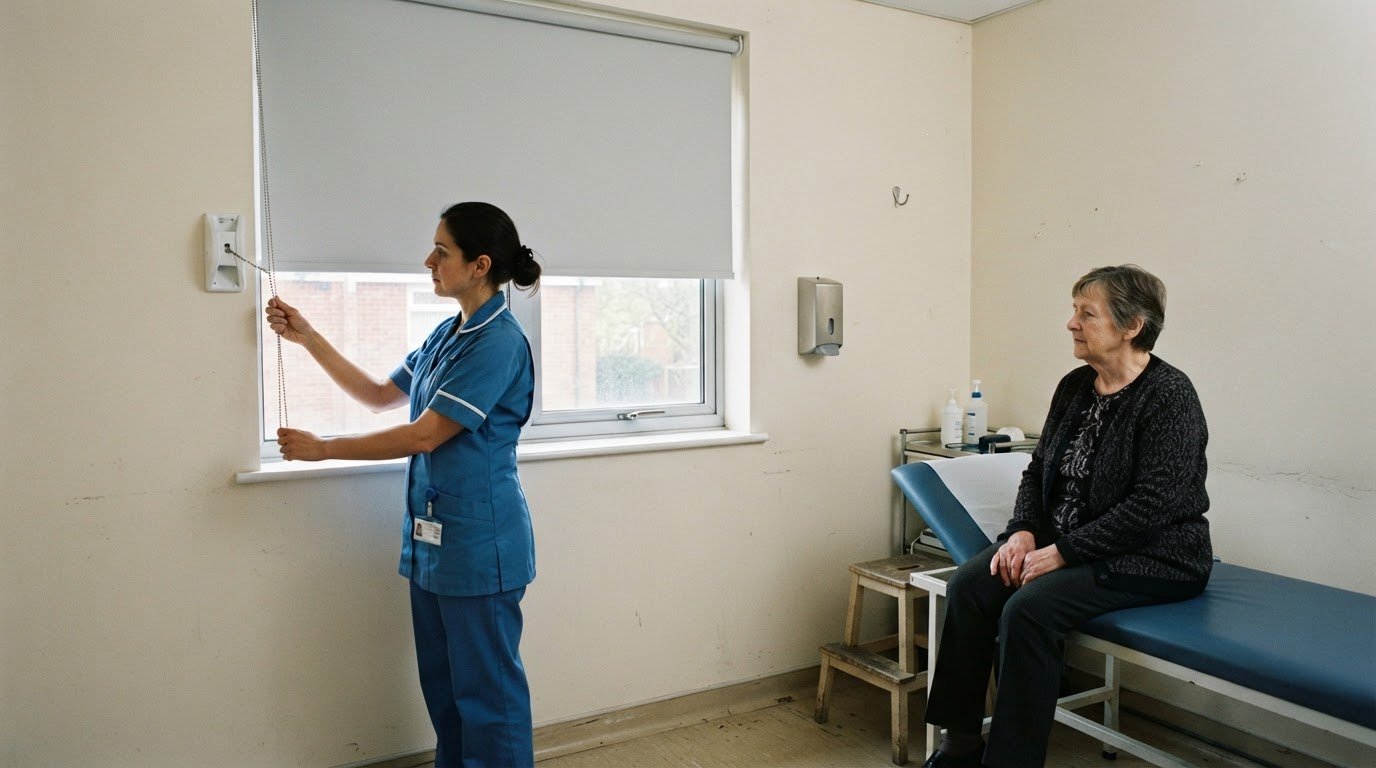
Curtains may feel like the familiar choice, but privacy blinds for clinics and hospitals offer more precise control over light and sightlines. In treatment and consultation rooms, blinds can be adjusted as privacy and shading needs change throughout the day. Curtains may still suit spaces where a softer, fabric-based look is preferred.
Choosing a window covering for a healthcare space involves more than appearance. Consider the room’s purpose, daylight needs, patient privacy and how easily the covering can be cleaned.
This guide compares blinds and curtains and explains which options may suit treatment rooms, waiting areas, wards and staff spaces. It also covers practical considerations, from light-filtering or blackout fabrics to made-to-measure fitting for windows of different sizes.
Key Takeaways
- Match blackout or dim-out fabric to each treatment room’s need for darkness, privacy and daylight.
- Plan product selection and installation around cleaning procedures, clinical activity and the room’s practical constraints.
- Made-to-measure sizing can help reduce privacy gaps, especially across large windows and continuous glazing.
- Choose the blind style and controls according to sightlines, glare and how staff need to adjust light in each space.
Blackout and dim-out blinds for treatment rooms
Choose blackout or dim-out blinds according to each treatment room’s purpose. Whether in hospital examination suites or private facilities delivering physiotherapy Milton Keynes, therapy sessions and clinical assessments may need strong control over daylight, while recovery spaces need privacy without losing all natural light. Before choosing a fabric, assess the window’s position, nearby sightlines and how the room is used.
In the UK, specialist healthcare-blind suppliers and commercial made-to-measure blind providers offer options for clinical spaces. Look for products suited to the room’s privacy, shading and cleaning needs rather than assuming one fabric will work throughout a clinic or care home.
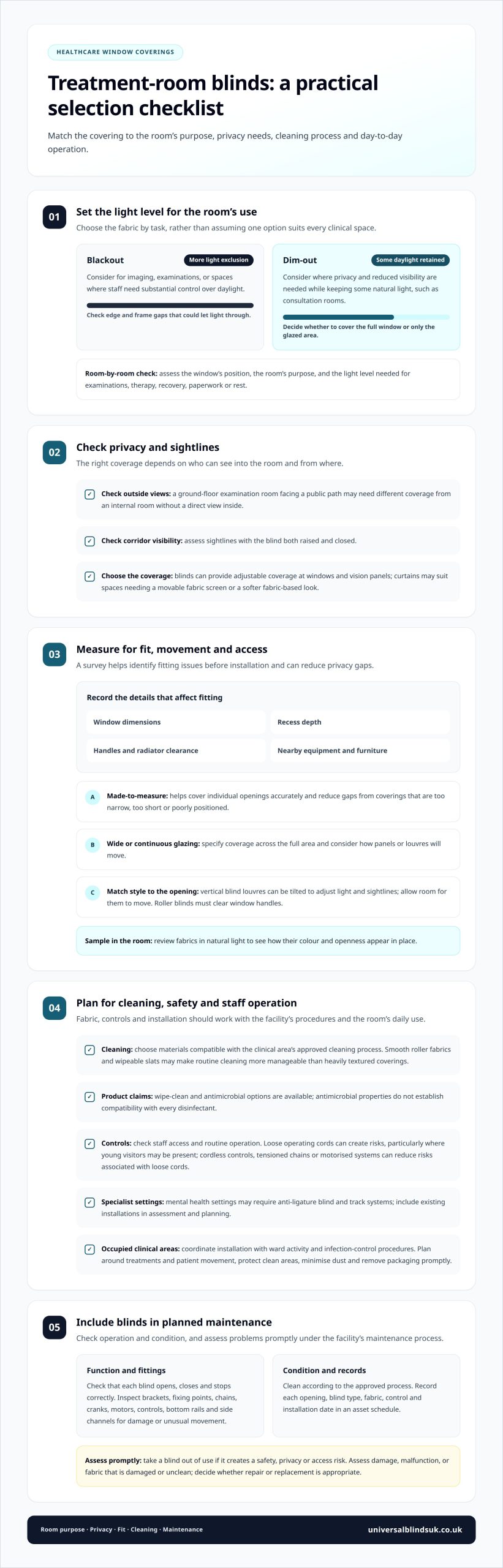
Blackout roller blinds suit rooms where staff need substantial light exclusion, such as spaces used for imaging or examinations. They may also help create a more controlled environment for therapy or rest. Fit matters: gaps at the edges or around the frame can let light through, so made-to-measure sizing helps cover the intended area more accurately.
Dim-out fabric is useful where staff need privacy but still want some daylight. A consultation room, for example, may need to reduce visibility from outside while remaining comfortable for conversations and paperwork. Compare the required light level with the room’s function, then decide whether the blind should cover the full window or only the glazed area.
Plan operation and cleaning as well as fabric choice. In a frequently used treatment room, controls should be practical for staff, and the surface should suit the cleaning process. Check how the blind moves around window handles, equipment and nearby furniture, as these details can affect access and everyday use.
Privacy needs also depend on sightlines. A ground-floor examination room facing a public path needs different coverage from an internal treatment room with no direct view inside. Check visibility from the corridor and outside when the blind is both raised and closed. Assessing each room individually helps balance patient privacy, useful daylight and reliable operation.
Healthcare product manufacture and installation
Follow the clinical area’s approved cleaning process and use products compatible with the blind fabric. Include blinds in planned maintenance inspections. Take a blind out of use if it creates a safety, privacy or access risk, and assess any damage before deciding whether repair or replacement is appropriate.
A professional survey should record details that affect fitting and operation, including window dimensions, recess depth, handles, radiator clearance and nearby equipment. For example, a roller blind must clear a window handle, while a vertical blind needs room for its louvres to move. These checks can identify access issues before installation.
Fabric selection matters in treatment rooms and other frequently used areas. Choose a material that suits the facility’s approved cleaning process, not appearance alone. Consider cleaning needs alongside patient privacy and staff access to the controls. Mental health settings may require anti-ligature blind and track systems, with existing installations assessed as part of planning.
Installation in occupied clinical areas needs to be coordinated with ward activity and infection-control procedures. Plan access around treatments and patient movement, protect clean areas, minimise dust and remove packaging promptly. These steps help organise the work while limiting disruption to clinical use. The plan should also account for equipment and restricted access around the window.
During planned maintenance, check that each blind opens, closes and stops correctly. Inspect brackets, fixing points, chains, cranks, motors, controls, bottom rails and side channels for damage or unusual movement. Record each opening, blind type, fabric, control and installation date in an asset schedule. If a blind stops working properly or its fabric is damaged or unclean, assess it promptly under the facility’s maintenance process.
Clean blinds according to the clinical area’s approved cleaning process and include them in planned maintenance inspections. Assess damage promptly and replace a blind when the assessment indicates that replacement is appropriate.
Made-to-measure and extra-large healthcare blinds
Made-to-measure blinds help cover wide glazing and individual window openings accurately. In healthcare settings, the choice also depends on cleaning needs, patient privacy and how staff control light.
Selection and compliance criteria
Selection should account for the building, the room’s use and relevant safety requirements. For a wide ward window, vertical blinds let staff tilt the louvres to adjust light and sightlines without raising the full blind. Extra-large openings may need a different configuration from a consultation room, so measure each window and assess how the covering will operate around equipment.
Loose operating cords can create safety risks, particularly where young visitors may be present. Cordless controls, tensioned chains or motorised systems can reduce risks associated with loose cords. Controls should also suit staff access and routine operation.
Cleanable, disinfectant-resistant materials
Smooth roller fabrics and wipeable slats can make routine cleaning more manageable than heavily textured coverings. Wipe-clean and antimicrobial options are available, but antimicrobial properties do not establish compatibility with every disinfectant. Choose materials according to the facility’s approved cleaning process, considering how their surface and construction affect regular care.
Blinds and curtains suit different needs. Blinds provide adjustable coverage at windows and vision panels, while curtains may suit spaces where a movable fabric screen is needed. Choose according to the room’s privacy needs, cleaning routine and available space, not appearance alone.
Made-to-measure sizing can reduce gaps caused by blinds that are too narrow, too short or poorly positioned. For continuous glazing, specify coverage across the full area and consider how louvres or panels will move. Reviewing samples in the room shows how fabric colour and openness appear in natural light. In non-clinical offices, wooden-look composite Venetian slats can add warmth and offer a practical alternative to natural wood where easy upkeep matters.
Privacy and shading solutions for hospitals and clinics
Choose a window covering according to each room’s sightlines, daylight and treatment needs. The right privacy blinds for clinics and hospitals balance coverage with practical control of incoming light.
Suitable privacy blind types
Roller blinds offer a neat option for reception windows, with fabrics ranging from light-filtering to more private. Vertical blinds suit wide ward windows and patio-style doors; tilting louvres adjust light and sightlines without raising the entire blind. Venetian blinds give staff precise light adjustment in offices. Panel blinds can also divide larger communal spaces while providing shading.
Privacy with daylight and observation
Privacy does not always require a dark room. At a consultation window, tilting vertical louvres can reduce direct views while allowing controlled daylight. On internal glazing or a vision panel, a removable flap can cover the glass when privacy is needed, then be removed for cleaning or observation. Alternatively, switchable privacy films—such as those showcased by faagg.no—allow glazed partitions to transform from clear to frosted instantly. Choose an arrangement based on who needs to see through each opening.
For reception areas, light-filtering roller fabrics can soften outside views without making the space dark. In a waiting room facing strong afternoon sun, solar-control fabric can reduce glare. The UK Health and Safety Executive identifies blinds as one way to shade people from direct sunlight in workplaces. Consider patient sightlines, sunlight and room temperature when choosing shading.
For exposed windows, cassette blinds with side channels can protect fabric, limit movement when windows are open and reduce light leakage. Smooth fabrics and wipeable slats can make routine cleaning easier than heavily textured coverings. In clinical areas, choose fabrics and components that work with infection-control procedures. Electric controls can help staff adjust several windows without moving around beds or treatment equipment.
Match each window’s privacy and shading needs with an appropriate blind style. Plan made-to-measure blinds to suit your healthcare space. A considered choice of privacy blinds for clinics and hospitals can help balance patient privacy, daylight and staff visibility.
Universal Blinds UK
Universal Blinds UK helps you choose window coverings suited to your space, privacy needs and light-control priorities. Made-to-measure blinds can be tailored to individual windows, while custom shutters offer another option for suitable interiors. A free measuring service establishes the dimensions, and professional fitting completes the installation.
For a clinic or hospital considering blinds, we can help turn room requirements into practical decisions about coverage, style and fitting. Share the purpose of each space and the features that matter, such as patient privacy or adjustable daylight. Contact Universal Blinds UK to discuss your requirements.
Plan the next step for your space
Start with a brief for each room, outlining its use and priorities for privacy, daylight and operation. This gives you a practical basis for discussing privacy blinds for clinics and hospitals without assuming one window covering suits every space. Keep clinical cleaning and safety requirements part of the facility’s decision-making.
Universal Blinds UK offers made-to-measure blinds, custom shutters and a free measuring service. These options help you consider dimensions and styles for your premises, while professional fitting takes the process from selection to installation.
Share your requirements and explore the options at your own pace. Contact Universal Blinds UK to discuss your project and take a considered next step.
Frequently Asked Questions
Blinds or curtains for the Healthcare sector?
Blinds often suit healthcare windows where staff need adjustable control over light and sightlines. Curtains can provide a fabric screen around a patient area, while blinds manage daylight at the glazing. A consultation room, for example, may benefit from window blinds, while a bedside privacy curtain serves a different purpose. Choose according to the room’s function, privacy needs and cleaning routine.
How do privacy blinds compare with curtains and privacy screens in healthcare settings?
Blinds provide privacy and shading at windows, while curtains and screens can divide areas within a room. A ward might use window blinds to reduce outside views and a screen to separate a treatment space. The distinction is placement: a window covering manages incoming light and external sightlines, while an internal divider creates a more local visual barrier.
What UK healthcare regulations and infection-control guidance apply to window blinds?
Requirements depend on the building, room use and relevant safety considerations. Healthcare teams should select blind fabrics compatible with the facility’s approved cleaning products and infection-control procedures. For example, a high-use treatment room needs a covering staff can clean as part of its established routine. Consider window access and operation too, so cleaning and patient care are not obstructed.
What are the fire-safety requirements for blinds in UK hospitals and clinics?
Blind selection should account for fire resistance and the safety requirements that apply to the building and room. These may depend on the installation and how the space is used, so a product suited to an office may not suit a treatment area. Include the blind and its fitting in the facility’s fire-safety planning, alongside the room’s other furnishings and equipment.
How do professionals measure, specify and install privacy blinds in patient rooms, and what should healthcare providers prepare?
Professionals assess each window’s dimensions, recess, handles, nearby radiators and equipment before specifying a blind. Healthcare teams can prepare by identifying room use, privacy needs, cleaning procedures and suitable access times. For example, a patient room with equipment close to the window may need a fitting plan that preserves staff access. Coordinate installation with clinical activity.