

Hygienic blinds for dental surgeries and patient privacy
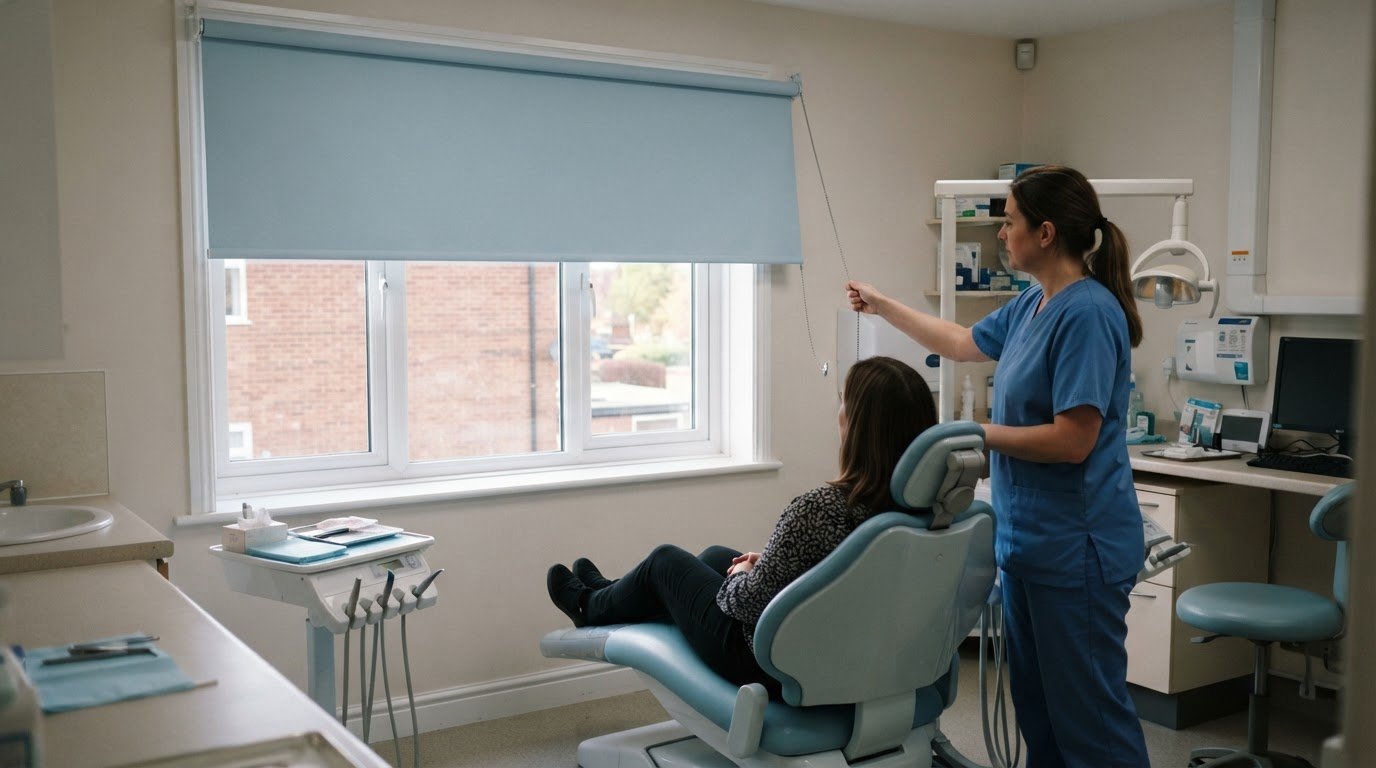
Blinds can be a practical alternative to curtains in dental surgeries, but the right choice depends on each room’s need for privacy, light control and straightforward cleaning. The CQC does not specify a particular type of blind, while missing window coverings in consultation rooms have been highlighted as a patient privacy concern. Hygienic blinds for dental surgeries should therefore be chosen with patient comfort and the demands of the space in mind.
It’s understandable to prioritise privacy in treatment and consultation rooms. Blinds can screen windows while still allowing you to manage daylight, and a suitable wipe-clean fabric can make routine cleaning easier. Material and operation matter too: a blind that works well in one room may not suit another.
This article explains when blinds may suit a dental practice, how they can support privacy, and which fabric properties to consider. You’ll also learn how light control and cleaning needs can shape your choice, helping you make a more informed decision about supply and fitting.
Key Takeaways
- Choose between blinds and curtains by considering the room’s privacy needs, daylight and practical requirements.
- Plan window coverings for examination and consultation rooms to support patient privacy.
- Prioritise fabrics suited to the room’s cleaning routine, and consider their moisture resistance.
- Made-to-measure blinds and professional fitting can help tailor window coverings to the space.
Blinds or curtains for the Healthcare sector?
Healthcare settings need window coverings that balance privacy, light control and practical use. The right choice can differ between a dental treatment room, a hospital bay and a waiting area.
Blinds for Dental Practices
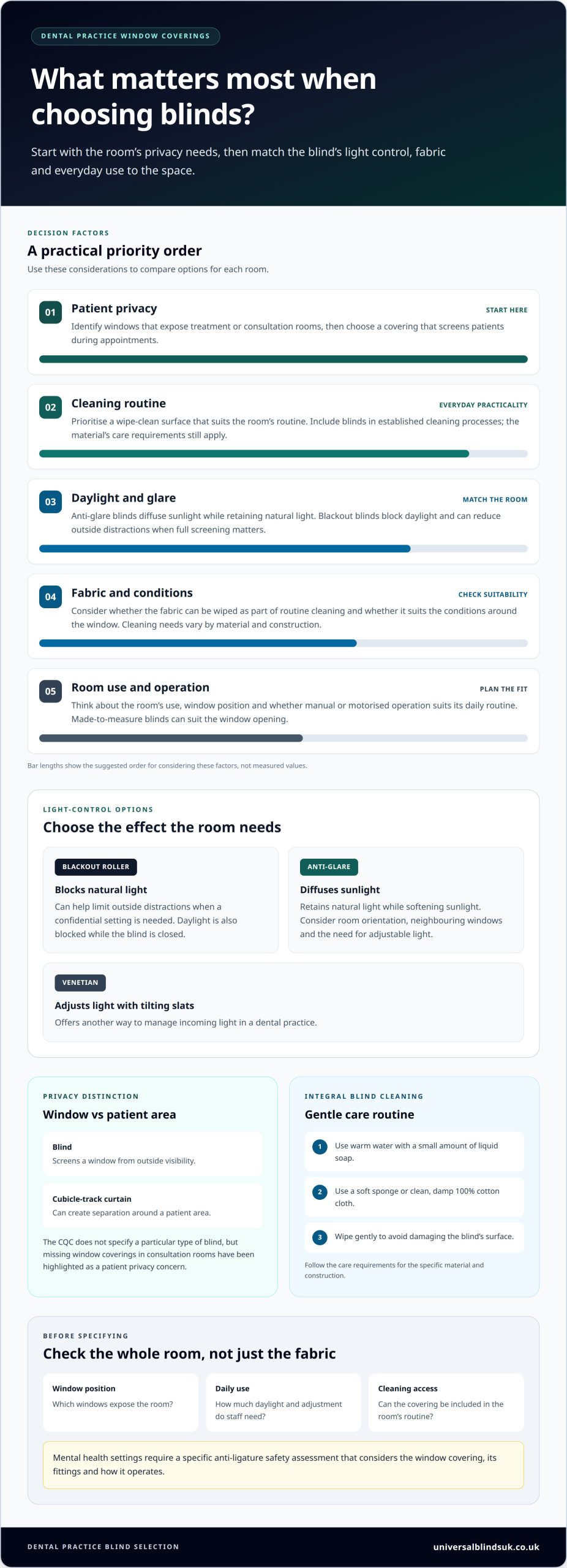
In a dental practice, roller blinds cover a window without taking up space around a treatment chair. Anti-glare options diffuse sunlight while retaining natural light, while blackout blinds can block it to reduce outside distractions. Venetian blinds offer another approach: tilting the slats lets staff adjust incoming light. Consider the room’s use, window position and whether manual or motorised operation best suits its daily routine.
Healthcare Blinds and Hospital Curtains
Blinds and curtains serve different purposes across healthcare premises. A blind covers a window, while hospital curtains on cubicle tracks can create separation around a patient area. A Faversham NHS Health Centre project combined seven vertical blinds with two cubicle tracks and disposable curtains, showing how both options can feature in one setting. In waiting areas, window blinds can help manage daylight; in clinical rooms, the choice should reflect the space’s privacy needs and use.
Mental health settings call for particular care around anti-ligature safety. Choosing between standard roller blinds and curtains does not resolve that consideration by itself. The design assessment needs to account for the window covering, its fittings and how it operates in the specific room. This distinguishes general light-control decisions from safety requirements that depend on the setting.
Healthcare Blind Project Case Studies
Project examples show how requirements vary between healthcare sites. At the Faversham NHS Health Centre, the installation included seven vertical blinds and two cubicle tracks with disposable curtains, within a 10-day project timeframe. A Harley Street dental clinic project involved 32 vertical blinds, with installation completed by 1 a.m. These examples highlight the value of planning around room type, window count and the practical demands of fitting in an operating healthcare setting.
Privacy in examination and consultation rooms
In an examination room, a window covering should screen patients from outside views during treatment and consultation. The CQC does not specify a particular type of blind, but it has highlighted missing window coverings in consultation rooms as a patient privacy concern. Start by identifying which windows expose the room, then consider how a covering will screen them during appointments. Hygienic blinds for dental surgeries can provide window-level privacy without changing how the room is used.
Blackout roller blinds block natural light and can help limit outside distractions when a confidential setting is needed. They’re useful where full screening matters, though they also remove daylight while closed. Anti-glare blinds offer a different balance, diffusing sunlight while still letting natural light enter. Consider the consultation room’s orientation, neighbouring windows and whether staff need adjustable light during examinations. These factors help match the covering to the room’s everyday use.
Window blinds and cubicle tracks address different privacy needs in a healthcare setting. A blind screens a window; a curtain on a cubicle track can screen a patient area. Where both outside visibility and examination privacy matter, these solutions may serve different parts of the same space. Planning their placement around the treatment area can help preserve privacy without obstructing access for staff or patients.
Privacy also contributes to the atmosphere of a consultation room. A well-fitted covering can reduce visibility from outside, while a clean, orderly appearance supports a calm professional setting. Include the window covering in the room’s regular cleaning routine, and consider how its controls will be reached without disrupting appointments. For a tailored fit around the window, made-to-measure blinds can be specified to suit the opening and its privacy needs.
Wipe-clean, moisture-resistant blind fabrics
In a clinic, fabric choice affects how window coverings fit into the cleaning routine. Prioritise surfaces that can be wiped clean and suit the room’s day-to-day use.
Easy-Clean Blind Materials
Clinical blinds may be designed to be easy to clean, with materials described as resisting bacteria and allergens. In a dental treatment room, consider whether the fabric can be wiped as part of routine cleaning and suits the conditions around the window. A functional blind should also cover the glass effectively, supporting patient privacy without making cleaning awkward.
Infection Prevention and Cleaning
A blind is one surface within the clinic, so include it in the room’s established cleaning process. Automatic operation does not remove the need to clean treatment-room blinds; staff still need to follow the fabric’s care requirements. Choosing a wipe-clean material can make routine surface cleaning more practical, but it does not replace the practice’s infection-control procedures or guarantee infection prevention.
What clients should know about cleaning and maintaining hygienic blinds
For integral blinds, warm water with a small amount of liquid soap can be used with a soft sponge or clean, damp 100% cotton cloth. Wipe gently, taking care not to damage the blind’s surface. These details help prevent unsuitable cleaning methods from becoming part of the routine. Cleaning requirements still depend on the blind material and construction.
Vision panel flaps provide a screen on doors or windows without a blind mechanism. In a dental practice, this can preserve patient privacy at a viewing panel while keeping the design simple. The flaps can be removed and replaced for cleaning, making maintenance easier. Include them separately in the cleaning schedule, and ensure the panel remains covered when the flap is back in place.
Antimicrobial and flame-retardant properties
Antimicrobial and flame-retardant properties address different considerations when specifying window coverings for a dental practice. Antimicrobial describes a material property; flame retardancy concerns how a material responds to fire. Discuss each separately when planning blinds for a commercial healthcare room, alongside the room’s operation and cleaning routine.
For antimicrobial claims, focus on the specific fabric and treatment being described. The term alone does not explain how a product performs or what cleaning it needs. A useful specification identifies the material and any stated antimicrobial treatment, rather than treating the word as a substitute for practical hygiene. Cleaning remains part of maintaining the blind, even when a treatment is described as antimicrobial.
Flame-retardant materials are relevant to window coverings in UK clinical settings. Healthcare window treatments, cubicle curtains and privacy screens installed in clinical settings are made from inherently flame-retardant materials. This is a property to consider when discussing a blind for a dental surgery or other commercial premises. It does not remove the need to consider the wider room specification and intended operation.
Consider fire-retardant blinds as part of the complete window-covering choice, not by fabric description alone. The fabric, fittings, controls and position all contribute to the finished installation. A measured assessment accounts for the window opening and how the blind will be used in the room. Before specifying a material, discuss how its properties fit the practice’s cleaning routine and operational needs.
Keep the decision practical: identify the room, note its window dimensions, and distinguish antimicrobial claims from flame-retardant properties. Then match the specification to the space and its use. Discuss made-to-measure blinds for a dental setting where the fit and material choice need careful consideration.
Universal Blinds UK
Universal Blinds UK can help plan window coverings for a dental practice, from measuring the openings to professional fitting. Made-to-measure blinds are tailored to each window, while custom shutters offer another option for suitable spaces. The free measuring service establishes the window dimensions, with a free quote for supply and fitting to help you decide on a solution.
For treatment and consultation rooms, consider how the chosen covering will support privacy and light control while fitting the room’s cleaning routine. These practical needs can guide the discussion and fitting plan without losing sight of how the space is used each day.
If you’re considering window coverings for your practice, contact Universal Blinds UK to discuss your requirements.
Plan the right fit for your practice
Use each room’s needs to guide your next decision. A consultation room may call for a different balance of screening and daylight than a treatment space, while the cleaning routine can influence which fabric is practical. Bringing these priorities together helps shape a considered specification for hygienic blinds for dental surgeries.
Before choosing, note which windows need screening, how staff use the room and what routine cleaning involves. This gives the discussion a clear starting point and helps align the window covering with the practice’s day-to-day needs. The aim is a solution that fits the space, supports patient privacy and works within the existing care routine.
For support in planning a suitable fit, speak with Universal Blinds UK. A thoughtful next step can help you move from general requirements to a considered choice for your practice.
Frequently Asked Questions
What Does the CQC Look for When It Comes to Window Blinds?
The CQC does not prescribe a particular blind type for dental surgeries. Its privacy considerations include whether patients can be seen from outside during consultations or examinations. Review each exposed window, the views into the room and whether the covering screens patients during care. The window treatment supports privacy, but it does not replace the practice’s wider approach to confidential consultations.
What blinds are suitable for dental surgeries in the UK?
Suitable blinds depend on the room’s use, required light control and cleaning routine. A roller blind can provide a simple window screen, while a Venetian blind lets staff adjust incoming light by tilting its slats. In a treatment room, consider how the blind operates and whether its fabric suits regular cleaning. The choice should fit the window and support the room’s practical needs.
What infection control and hygiene standards apply to blinds in UK dental practices?
Include blinds in the dental practice’s established cleaning arrangements, with care suited to their material. The CQC does not name a specific blind type as an infection-control requirement. For example, consider whether the fabric is wipe-clean and how staff can reach its surfaces during routine cleaning. A blind does not replace the practice’s wider infection-prevention procedures.
Are wipe-clean or antimicrobial blinds recommended for dental treatment rooms?
Wipe-clean materials are a practical consideration for treatment rooms because they can be cleaned as part of routine care. Clinical blind materials may also be described as resisting bacteria and allergens, but an antimicrobial property is not a substitute for cleaning. Consider the fabric’s care requirements alongside the room’s use, and make sure staff can maintain the blind appropriately.
How do roller blinds, vertical blinds and Venetian blinds compare for dental surgeries?
Roller blinds provide a straightforward screen across a window, while blackout versions block natural light when closed. Venetian blinds offer adjustable daylight because their slats can be tilted. Vertical blinds have also been used in healthcare projects, including a dental clinic installation. Compare how each option handles the room’s privacy and light needs, then consider which design best fits the window and daily operation.
What blind fabrics and finishes are easiest to clean and disinfect?
Look for a fabric described as wipe-clean and suited to the room’s cleaning routine. The most practical choice is one whose care method staff can follow consistently without disrupting appointments. Don’t assume every cleaning product is suitable for every fabric; follow the material’s care instructions when selecting cleaning methods. For integral blinds, warm water with a small amount of liquid soap is one stated cleaning approach.