

Anti-glare blinds for offices and commercial buildings
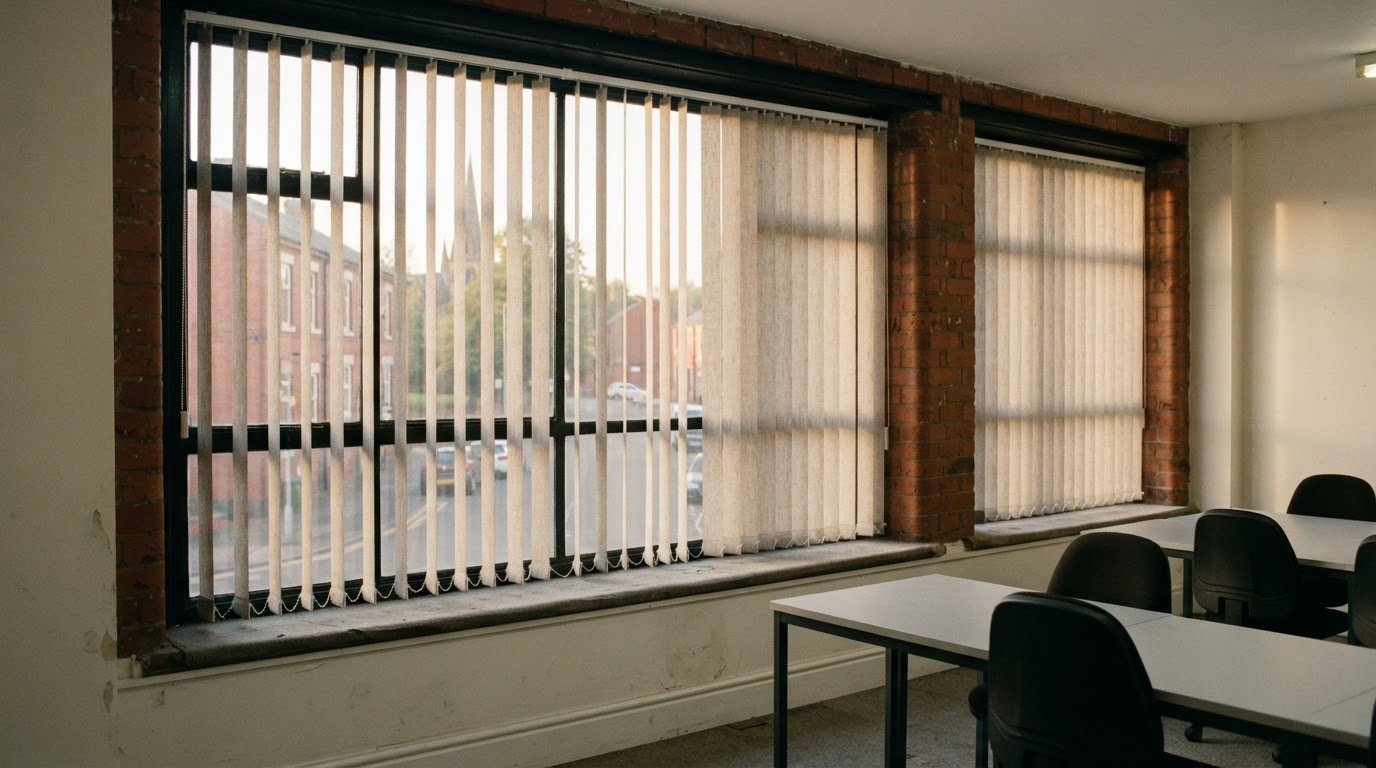
The darkest blind isn’t automatically the best choice for an office. The right anti-glare blinds for commercial buildings depend on how much daylight, visibility and privacy each space needs; UK Health and Safety (Display Screen Equipment) Regulations 1992 require blinds to prevent direct glare or distracting reflections on screens.
A comfortable workspace should balance natural light, screen comfort and the view outside. Choosing a suitable blind and fabric can help manage glare, while blackout options may suit rooms used for presentations.
This guide explains how roller, vertical and blackout blinds work in commercial settings, and how fabric colour, openness and glazing affect light transmission. You’ll also learn what to consider for different rooms and how routine cleaning can help keep blinds in good condition.
Key Takeaways
- Match the blind type to the room: presentation spaces may need stronger light control, while offices often benefit from softened daylight.
- Assess fabric colour, weave openness and glazing together to balance glare reduction, natural light and outside visibility.
- Choose shading with the building’s window layout and control needs in mind, especially across larger glazed areas.
- Plan simple, regular cleaning to remove dust and dirt and help keep blinds presentable.
Commercial blind types and applications
Choosing anti-glare blinds for commercial buildings means matching the blind and fabric to each room’s daylight, privacy and light-control needs. Offices, schools and retail spaces may need different solutions, even within one building.
Blind Styles for Glare Control
Roller blinds use a continuous fabric panel to cover a window. Vertical blinds have adjustable slats, allowing occupants to change their angle to manage sunlight while letting some daylight through. Venetian blinds also tilt, with horizontal slats for adjustable light control. Screen fabrics filter sunlight, with their openness affecting glare reduction and visibility outdoors. Blackout blinds suit presentation rooms where minimal light is needed. The right choice depends on the task, glazing and desired view.
Commercial Settings and Sectors
Offices and meeting rooms often benefit from light-filtering blinds that soften daylight around screens. In shops and reception areas, softer light can reduce glare while maintaining a welcoming feel. Schools, restaurants and public buildings also use blinds to manage daylight across different spaces. For industrial facilities, consider the glazing, room use and daily operating conditions before choosing a fabric or control. Assess how sunlight reaches work areas throughout the day when planning each window.
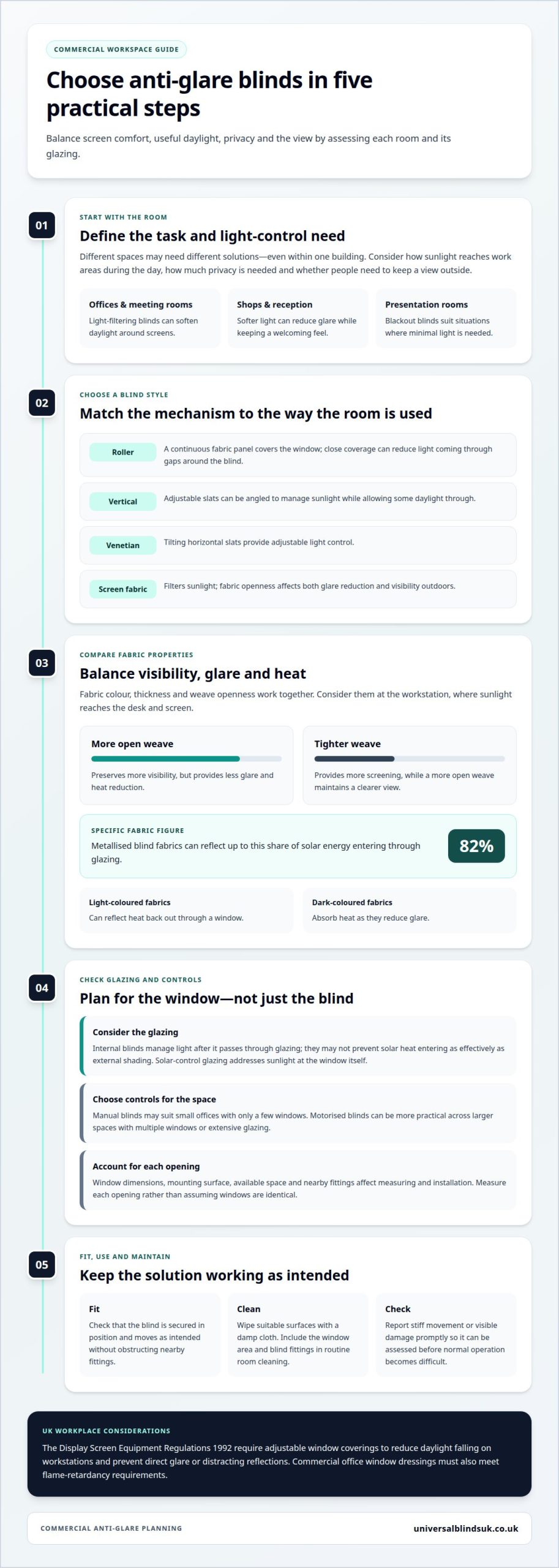
For UK screen work, the Display Screen Equipment Regulations 1992 require adjustable window coverings to reduce daylight falling on workstations and prevent direct glare or distracting reflections, according to UK Government, legislation.gov.uk. Commercial office window dressings must also meet flame-retardancy requirements.
Manual blinds may suit small offices with only a few windows. Motorised blinds can be more practical across larger spaces with multiple windows or extensive glazing. Consider how occupants will use the controls.
The cost of measuring, supplying and fitting blinds depends on window dimensions, blind type, fabric, control system and installation complexity.
Internal blinds manage light after it passes through the glazing, so they may not prevent solar heat from entering as effectively as external shading. Solar-control glazing addresses sunlight at the window itself. The right approach depends on the building’s glazing and its need to manage glare, heat and views.
Factors affecting light transmission
Light transmission depends on the blind fabric, its construction and the window glass behind it. Consider these factors together to balance screen comfort, daylight and the view from inside.
Workplace Lighting Needs
At a workstation beside a bright window, fabric thickness, colour and weave openness affect how much sunlight reaches the desk. A more open screen weave preserves more visibility but provides less glare and heat reduction. Some screen fabrics filter direct light while remaining translucent enough to retain an outside view. Low-E solar-protective coatings on some roller fabrics are designed to reflect light and heat, reducing solar gain through the glazing.
Roller blinds made from a single piece of fabric can reduce light coming through gaps in and around the blind. Their continuous coverage can be useful where bright edges would distract people using screens. Light-filtering Roman blinds can also soften daylight. The fabric and coverage determine how much light enters, so compare the visual effect with the room’s lighting needs.
Privacy and Light Balance
Privacy and daylight are not always opposing choices. Some blind fabrics obscure views into a room while still allowing light through, which can suit ground-floor offices or meeting spaces. Screen fabrics allow people to see through them, so their openness factor helps indicate visibility. A tighter weave provides more screening, while a more open weave maintains a clearer view.
Colour also changes a fabric’s properties: light-coloured fabrics can reflect heat back out through a window, while dark-coloured fabrics absorb heat as they reduce glare. Metallised blind fabrics can reflect up to 82% of solar energy entering through glazing. For a tailored fit across differently sized windows, made-to-measure blinds can help align the covering with the glazing and the room’s intended use.
Blind durability and maintenance
Commercial blinds face repeated use, sunlight and dust in busy workspaces. Fabric choice and the demands on each window affect how well a blind suits its working environment. A vertical blind in a reception area, for example, may be opened and adjusted throughout the day. Consider how often staff will use each blind and whether the space needs frequent changes in light.
Professional measuring starts with assessing each window and its position. The fitter considers the mounting surface, available space and how the blind will sit when raised or adjusted. Accurate measurements help the finished blind cover the intended area and operate without obstructing nearby fittings. For multiple windows, measuring each opening accounts for differences across the building instead of assuming they are all identical.
During installation, the fitter secures the blind in its selected position and checks that it moves as intended. They can also consider how staff will operate it in everyday use, such as adjusting a vertical blind as sunlight changes. Correct fitting supports a tidy finish and helps blinds work as intended in meeting rooms, shared offices and other workspaces.
To maintain blinds, wipe suitable surfaces with a damp cloth to remove dust and dirt. Regular cleaning helps keep fabric and slats presentable in a busy workplace. Include the window area in routine room cleaning, as dust can gather around the blind and its fittings. Staff can report stiff movement or visible damage promptly so it can be assessed before normal operation becomes difficult. These simple steps help maintain a clean working environment without harsh cleaning methods.
Commercial blind types for offices
Office blinds should suit the glazing, screen positions and daily tasks in each area. A reception window, open-plan desk and presentation room may call for different levels of light control. The key is to choose by zone, rather than assume one fabric or mechanism will suit every office.
Roller blinds use a continuous fabric panel for a simple finish across individual windows. Multiple rollers can be linked so one chain or motor controls them together, helping maintain consistent shading across a row of office windows. For workstations, screen fabric can reduce direct light while retaining a view outside. Consider the openness factor: a more open weave keeps a clearer view but reduces heat and glare control.
Vertical blinds offer a different approach. Their listed commercial slats are 89mm wide and can be adjusted to redirect incoming light. This makes them useful where daylight changes during the day or staff need to adjust the view. The commercial range is described as suitable for offices, schools, shops, restaurants and public buildings, giving them relevance beyond desk areas.
For stronger solar control, high-performance metallised fabric has a thin, reflective aluminium backing. It is designed to manage glare and solar heat gain while retaining a view outside. A dual blind system combines screen fabric with blackout fabric, allowing an office to retain a view during normal work and block light when presentations call for a darker room.
During planning, group windows by use: screen-facing desks, meeting rooms and shared spaces may each need different settings. Then match the fabric, colour and control to the room’s working pattern and interior. This approach can improve comfort without treating every window alike. A professional can measure the openings and plan the installation around the chosen configuration.
For office shading tailored to your windows, arrange made-to-measure office blinds.
Universal Blinds UK
Universal Blinds UK helps commercial customers turn their shading priorities into practical choices for their buildings. If glare affects screens or brightens meeting rooms, made-to-measure blinds can be selected to suit the windows and how each space is used. A free measuring service establishes the dimensions, and professional fitting completes the installation.
Where shutters better suit the building or interior, custom shutters are also available. The right option depends on the room’s light, privacy and appearance requirements, rather than applying the same treatment to every window.
Contact Universal Blinds UK to discuss made-to-measure shading for your commercial space.
Plan your next shading decision
Before selecting anti-glare blinds for commercial buildings, decide what a successful result means for the people using each space. A screen-focused office may prioritise comfort during computer work, while a shared reception could place greater value on daylight and appearance. Setting that priority gives the shading plan a clear purpose.
Think beyond the window itself. Consider how each room is used throughout the working day, whether occupants need adjustable control and how the chosen treatment will fit the existing interior. These practical details guide a tailored recommendation without forcing every room into the same solution. If different teams share a space, their daily routines can help clarify which needs matter most.
Universal Blinds UK can help turn those priorities into a considered choice for your commercial property. Discuss the spaces that need attention and the outcome you want, then explore a suitable way forward.
Contact Universal Blinds UK today to discuss your requirements and take the next step towards a more comfortable working environment.
Frequently Asked Questions
Which Type of Solar Shading is the Best for Office and Residential Buildings?
There isn’t one best type for every office or home. Match the shading to the room’s use and glazing. A bedroom may call for stronger light exclusion, while an office meeting room may need adjustable shading for screen work and presentations. In a shared office, consider whether staff need a clear outside view or privacy during meetings before choosing the fabric and blind style.
Why might you need an anti-glare blind solution?
An anti-glare solution can help when sunlight on a screen makes work uncomfortable or creates distracting reflections. It may also suit rooms where bright windows affect meetings, reception tasks or reading. For example, a desk facing a sunlit window may need filtered daylight, while a presentation room may benefit from stronger light control. Match the covering to the task.
What types of anti-glare blinds are suitable for commercial buildings?
Roller, vertical and Venetian blinds can all suit commercial spaces, alongside screen fabrics and blackout options. A roller blind may work well for a simple office window, while adjustable slats can help manage changing light in a shared room. Screen fabrics are useful where an outside view matters. For a presentation room, blackout fabric offers stronger light control.
What openness factor and fabric colour best reduce glare while preserving daylight?
Choose the openness factor by balancing the view and shading: a tighter weave limits visibility, while an open weave preserves more of the outside view but reduces glare and heat control. Fabric colour also affects the room. Light fabrics can reflect heat back through the glazing, while dark fabrics absorb heat and reduce glare. Consider the window’s exposure alongside the room’s need for daylight.
How can blinds reduce screen glare without making offices too dark?
Choose a light-filtering screen fabric that blocks direct sunlight while allowing diffused daylight into the office. Apply stronger shading where screens face bright windows, rather than darkening every window in the room. A screen fabric with a suitable openness factor can also retain an outside view. For presentation areas, a separate blackout layer can provide stronger light control when needed.