

Blinds for Large Glass Windows: A Practical Buying Guide
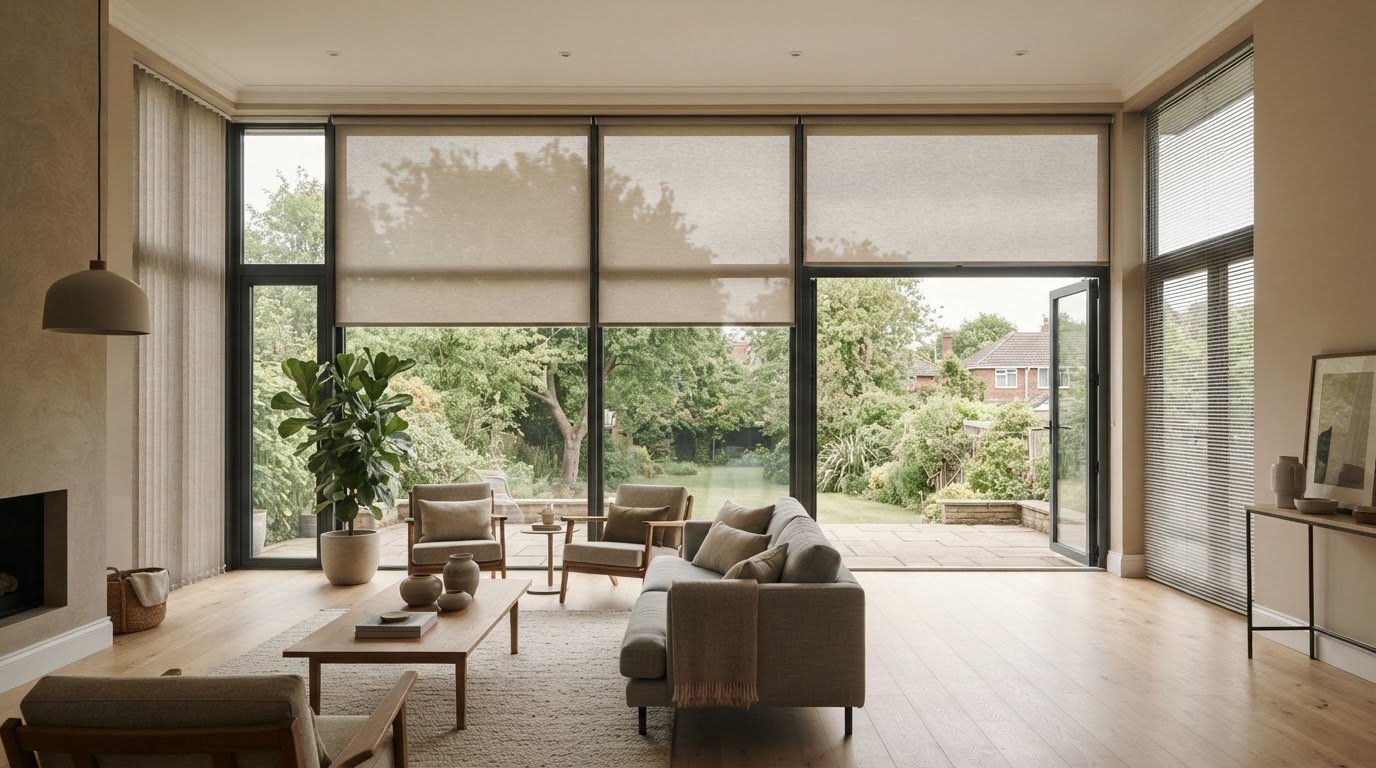
The most obvious choice for a wide glass wall isn’t always the most practical. The right blinds for large glass windows depend on more than width: the glazing layout, how you use the room and the balance you want between daylight and privacy all matter. A style that works well on one broad window may be less suitable for tall panes or doors you open every day.
Choosing a style, achieving an even appearance and planning an accurate fit can feel more complicated with larger glazed areas. This guide compares popular blind styles and their practical trade-offs, so you can narrow down what may suit your window and room before requesting a quote. You’ll also find what to consider when planning a larger installation and what to expect from made-to-measure support. For homes around Walsall and the West Midlands, a home consultation with samples, advice and measuring can help you make a tailored decision.
Key Takeaways
- Choose blinds for large glass windows by considering the glazing layout, how you use the room and the level of light and privacy you prefer.
- Compare vertical, roller and Venetian blinds with shutters for their different looks and ways of managing daylight and privacy.
- Set your priorities before arranging measurements, so you can discuss options that suit your space and appearance preferences.
- A home consultation with samples and advice can help you compare styles, while free measuring and a no-obligation quote clarify the next steps.
Blinds for Large Glass Windows: What Should You Consider First?
A large glazed area can make privacy, daylight and visual balance harder to manage. A covering needs to work with the window itself and feel right in the room, whether the glass spans one wall or is divided into several panes.
The best blinds for large glass windows are chosen by considering the glazing layout, how you use the room and how much control you want over light, privacy and appearance. There’s no single style for every space, so compare options against your priorities rather than searching for a universal winner.
Before comparing styles, check how the glass is arranged and what you want the covering to do day to day. Note whether the window is one broad pane or several sections, and where the frames and handles sit. Also consider whether you want one treatment across the full opening or an arrangement that relates to individual sections. These details help make the discussion more specific to your window.
Consider the room as well. Nearby furnishings, the room’s proportions and whether you want the glazing to stand out or blend in can all influence your preference. The next section compares vertical, roller and Venetian blinds, as well as shutters, to help you weigh their different looks and practical considerations.
Compare Blind Styles for Large Glass Windows
Different styles create different visual effects and ways to adjust light. Compare them against your priorities rather than looking for a universal winner. This overview is a starting point; for broader inspiration, explore this complete guide to blind styles.
| Style | Visual effect and practical points | Questions to raise at consultation |
|---|---|---|
| Vertical blinds | Vertical lines can suit a broad glazed area. Consider how the slats will sit across separate panes and whether their look suits the room. | How could the arrangement relate to the window sections, frames and handles? |
| Roller blinds | A continuous fabric surface gives a different, simpler look from slatted styles. Consider how you want the covering to sit against the glazing and furnishings. | What arrangement would work with the window layout and the room’s appearance? |
| Venetian blinds | Horizontal slats create a defined, layered appearance. Think about whether that visual detail fits the scale of the glazing and your interior. | What light adjustments would suit how you use the room? |
| Shutters | Shutters offer a structured look that can become part of the window’s overall design. Consider how their proportions would relate to the frames and surrounding decor. | Which shutter arrangement would complement the glazing and furnishings? |
Vertical blinds for broad expanses of glazing
Vertical blinds are one option to discuss for wide glazed areas, but the window’s divisions and the look you prefer matter. With several distinct panes, consider how the blind arrangement would relate to each section. A broad expanse may instead suit a more continuous visual effect. Ask to see samples in the room and discuss how the proposed layout would sit alongside frames and handles. This makes the comparison specific to your window, rather than relying on a general recommendation.
Roller, Venetian blinds and shutters
Roller blinds provide a different visual treatment from the defined lines of Venetian blinds. Shutters bring another distinct look. Compare how each option would work with your furnishings and preferred approach to adjusting light. For more detail on shutters, read this homeowner’s guide to window shutters.
At a consultation, ask how each style could be tailored to your glazing and what measuring and fitting would involve. If you’re considering made-to-measure blinds or shutters, you can find out about a home consultation and discuss options for your space.
How to Compare Large-Window Blinds for Light, Privacy and Appearance
Rather than expecting one blind to maximise daylight, privacy and visual impact at once, decide which qualities matter most in each room. Then discuss the trade-offs: how you want to adjust light, how private the space needs to feel at different times, and what finish will sit comfortably with your interior.
Suitability depends on both the window layout and your household’s priorities. A broad glazed wall in a living room may call for a different balance from tall panes beside a dining area. Consider fabric, finish and configuration together, in relation to the actual glazing and the way you use the room.
Balancing daylight and privacy
Start by deciding when privacy matters most. Do you want it during the day, mainly in the evening, or at both times? As daylight changes and interior lights come on, the room can look different from outside. Consider each situation rather than making a decision based only on daytime conditions.
Blind styles offer different ways to manage incoming light. Some can be adjusted gradually, while others are moved to uncover or cover more of the glazing. Think about whether you prefer to fine-tune the light or make a simpler change, and how that would fit your routine.
A room’s purpose matters, too. In a space used for reading or relaxing, you may want to retain a sense of daylight while reducing glare or views in. In a bedroom, privacy after dark could be the leading concern. Use these as prompts for discussion, not assumptions about which style is right.
Creating a considered look across wide glazing
Colour and finish can help the blind blend with the room or make the window a feature. Compare samples with your existing furnishings, wall colours and flooring. A shade that looks subtle on its own may feel more prominent across a large glazed area. There’s no need to follow a trend; choose a look that feels cohesive with your home.
Configuration also shapes the overall effect. Consider whether you prefer one consistent treatment across the glazing or an arrangement that relates to separate sections. Frame positions, handles and nearby furniture can influence how the finished window looks and works, so include these details in the conversation.
Review fabric and finish samples in the room during a home consultation, where you can see the light and surrounding colours. This makes it easier to compare options in context and explain your priorities. Before deciding, ask how each proposed arrangement balances the privacy you want, the daylight you’d like to keep and the appearance you’re aiming for.
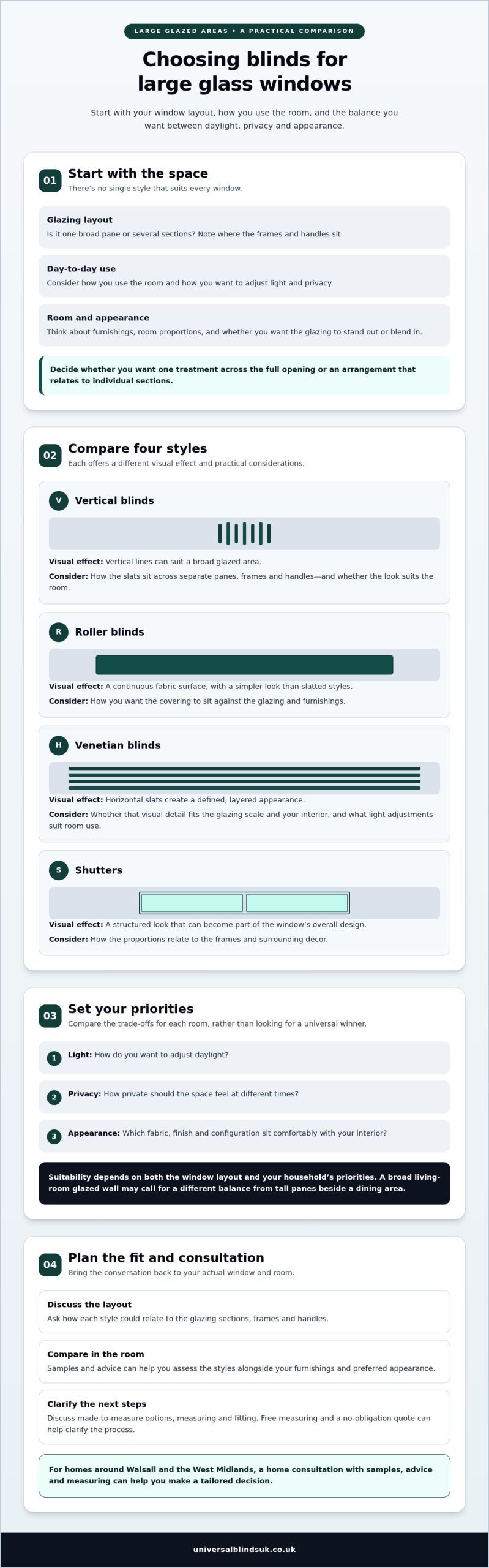
Measure and Plan Blinds for Large Glass Windows Before Ordering
Good planning turns a broad or divided glazed area into a clear brief for made-to-measure blinds. Work through the decisions in order: assess the window, note your priorities, compare suitable styles, then arrange professional measuring before confirming a design.
Careful measurements matter because bespoke blinds are made for the dimensions and arrangement of your particular window. Frames, handles and nearby surfaces can affect how a design fits and operates. Rather than relying on estimates, ask a professional to assess the glazing and check the surrounding space before the order is confirmed.
What to note before a measuring appointment
A few simple notes can make the consultation more focused. Record whether the glazing is one wide pane or several sections, and note visible obstructions such as handles, furniture or features close to the window. Room photos can also help you discuss how the blind might sit with the furnishings and overall style.
Write down whether privacy, daylight, appearance or ease of use matters most, including any difference between daytime and evening needs. These details support the conversation, but they don’t replace professional measuring. The final assessment should take account of the actual window and its surroundings.
What happens during measuring and fitting?
With Universal Blinds UK, the process begins with a home consultation, where you can view samples and discuss your room, preferred style and practical requirements. You’ll receive advice, followed by free measuring and a no-obligation quote. This gives you the opportunity to consider the proposed option before deciding how to proceed.
After you approve the bespoke order and it’s ready, professional fitting completes the process. You can also read about the benefits of professional blind fitting if you’re weighing up support with installation.
Professional measuring checks the window and its surroundings; fitting then puts the made-to-measure choice in place. Together, these steps help manage the details of a larger glazing project, from assessing the space to completing the installation.
To discuss your window and arrange measuring, book a home consultation with Universal Blinds UK.
Choose Made-to-Measure Blinds with a Local Consultation
By now, you’ve considered how you use the room, what matters most for light and privacy, and which styles might suit your glazing. Take those priorities into a consultation, along with room photos or notes about frames, handles and furnishings. This gives the adviser a clearer picture of what you want from blinds for large glass windows and helps focus the discussion on options for your space.
Universal Blinds UK provides a complimentary home appointment with fabric samples and advice, followed by free measuring and a no-obligation quote. If you decide to proceed, professional fitting follows. The family-run business serves customers around Walsall and the West Midlands.
Questions to ask about your large glazed area
Use the appointment to explore how each option relates to your actual window, not just how it looks in a sample. Useful questions include:
- Which blind styles could suit this glazing layout and my priorities for privacy, daylight and appearance?
- How would the proposed arrangement work with the frames, handles and furnishings around the window?
- What will measuring and professional fitting involve for this particular project?
These questions help connect your preferences to practical details. You can also compare fabric samples in the room, alongside your existing colours and finishes.
What to expect from a no-obligation quote
The quote follows advice and measuring based on your requirements. Review the proposed style and fit, and ask what the quoted service includes so you understand the next steps. If you’re comparing options, focus on how well each proposal addresses your window layout and priorities, rather than relying on unverified performance claims.
A consultation is a chance to get tailored advice and clearer measurements before making a decision. You can consider the recommendation and quote without obligation, then choose whether to proceed. This practical support can make planning a made-to-measure solution feel more straightforward.
Arrange a complimentary home consultation to discuss your large glazed area, explore samples and find out about measuring and fitting.
Make a Confident Choice for Your Glazing
The right blinds for large glass windows depend on your glazing layout, how you use the room and the balance you want between daylight, privacy and appearance. Compare styles against those priorities, then consider how each option will work with your frames, handles and furnishings. Careful measuring helps ensure your made-to-measure choice is planned for the actual window.
Universal Blinds UK is a family-run business serving homes and commercial properties around the West Midlands. A complimentary home consultation brings samples and advice to your space, followed by free measuring and a no-obligation quote. If you choose to proceed, professional fitting completes the service.
Take the next step at your own pace. Arrange a complimentary home consultation to discuss your glazing and explore suitable options. With practical guidance and a tailored plan, you can move forward feeling confident about your choice.
Frequently Asked Questions
Which blinds are best for large glass windows?
The best choice depends on the glazing layout, room use and your priorities for privacy, daylight and appearance. Vertical blinds, roller blinds and Venetian blinds each create a different look and approach to adjusting light; shutters are another option to compare. Consider frames, handles and nearby furnishings too. Made-to-measure blinds can be tailored to the window, with professional measuring helping establish a suitable arrangement.
Are vertical blinds a good choice for large windows?
Vertical blinds are one option to consider for wide glazed areas, but they won’t suit every room or window layout. Think about whether their vertical lines complement your interior and how the blind would relate to separate panes, frames and handles. During a consultation, ask to see samples and discuss how the proposed arrangement would look across your glazing and work with your everyday use of the window.
Can made-to-measure blinds be fitted to wide windows?
Yes, made-to-measure blinds can be planned for wide windows following an assessment of the specific glazing. Window divisions, frames, handles and surrounding space can all influence the proposed arrangement. A professional measuring service helps establish the dimensions for a bespoke order, while a fitting service completes the installation once it’s ready. Discuss the window’s layout and your priorities before confirming a design, rather than relying on estimates.
How do I choose blinds for large windows without losing natural light?
Decide how much daylight you’d like to retain and whether privacy matters during the day, after dark or both. Then compare how different blind styles let you adjust or uncover the glazing. Consider the room’s use, such as relaxing, working or sleeping, and discuss fabric, finish and configuration in relation to the actual window. Samples viewed in the room can help you assess the appearance before choosing.
What is the difference between vertical, roller and Venetian blinds for large glazing?
Vertical blinds have upright slats, roller blinds create a continuous fabric surface, and Venetian blinds use horizontal slats. These differences affect the visual effect and the way you adjust the covering and incoming light. For large glazing, compare how each style relates to the width and divisions of your window, as well as frames and furnishings. The right option depends on your room and preferences, not a universal ranking.
How are large-window blinds measured and fitted?
First, a professional assesses the window, including its layout and surrounding details, then takes measurements to inform the made-to-measure order. With Universal Blinds UK, the process includes a home consultation, advice, free measuring and a no-obligation quote. Once the bespoke order is ready, professional fitting follows. You can note your priorities and visible obstructions beforehand, but those notes don’t replace professional measurement.
Can I arrange a home consultation for blinds in the West Midlands?
Yes. Universal Blinds UK serves domestic and commercial clients around Walsall and the West Midlands. The complimentary home consultation includes fabric samples and advice, followed by free measuring and a no-obligation quote. If you decide to proceed with a bespoke order, professional fitting is available once it’s ready. The appointment gives you the opportunity to discuss your window layout and compare suitable options in your home.