
View blind samples at home and compare colours with your furniture
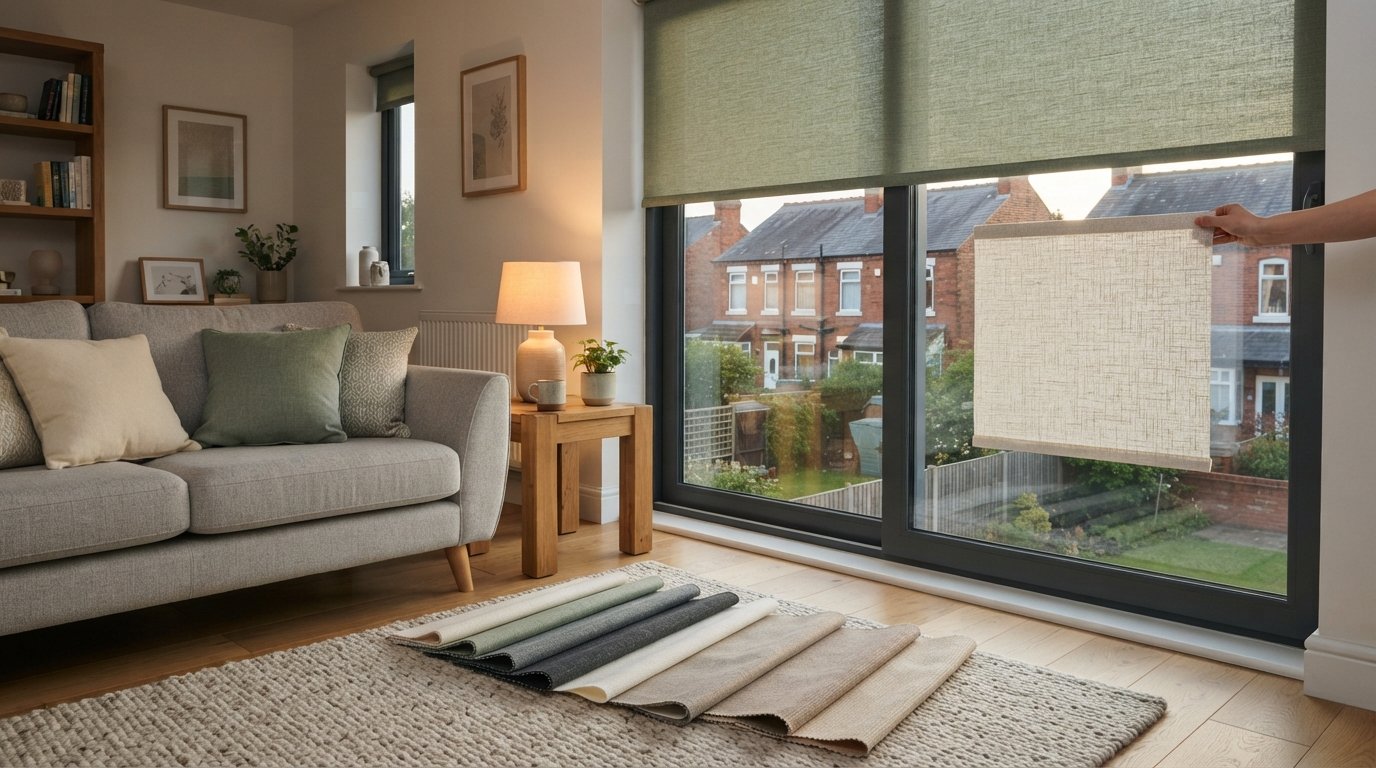
You can order up to eight free blind samples at a time, then view blind samples at home before deciding on a colour. Seeing the fabric beside your walls and furniture helps you judge how it will look in the room, rather than relying on a screen. For roller and day-and-night blind samples, hold the fabric in front of a window to compare it with the wall colour.
Choosing a blind colour can feel tricky when fabrics look different in changing light or against nearby furnishings. Comparing samples in your own space gives you a practical way to narrow down your options. This guide explains what to look for in a sample kit, how to compare colours with furniture near your windows, and why it helps to view fabrics in daylight and under your interior lighting at night. You’ll have a clearer way to assess each shade and find a blind colour that feels right in your home.
Key Takeaways
- Learn how to assess sample fabrics in different lighting before settling on a colour.
- Compare each option with nearby furniture to see how it works with your room’s existing palette.
- Find out what to look for in a sample kit and how home delivery fits into the decision process.
- See how made-to-measure blinds, free measuring and professional fitting can help take your choice from sample to finished window.
- Explore how custom shutters may suit your home if blinds aren’t the right fit for your windows.
How many free samples can I order?
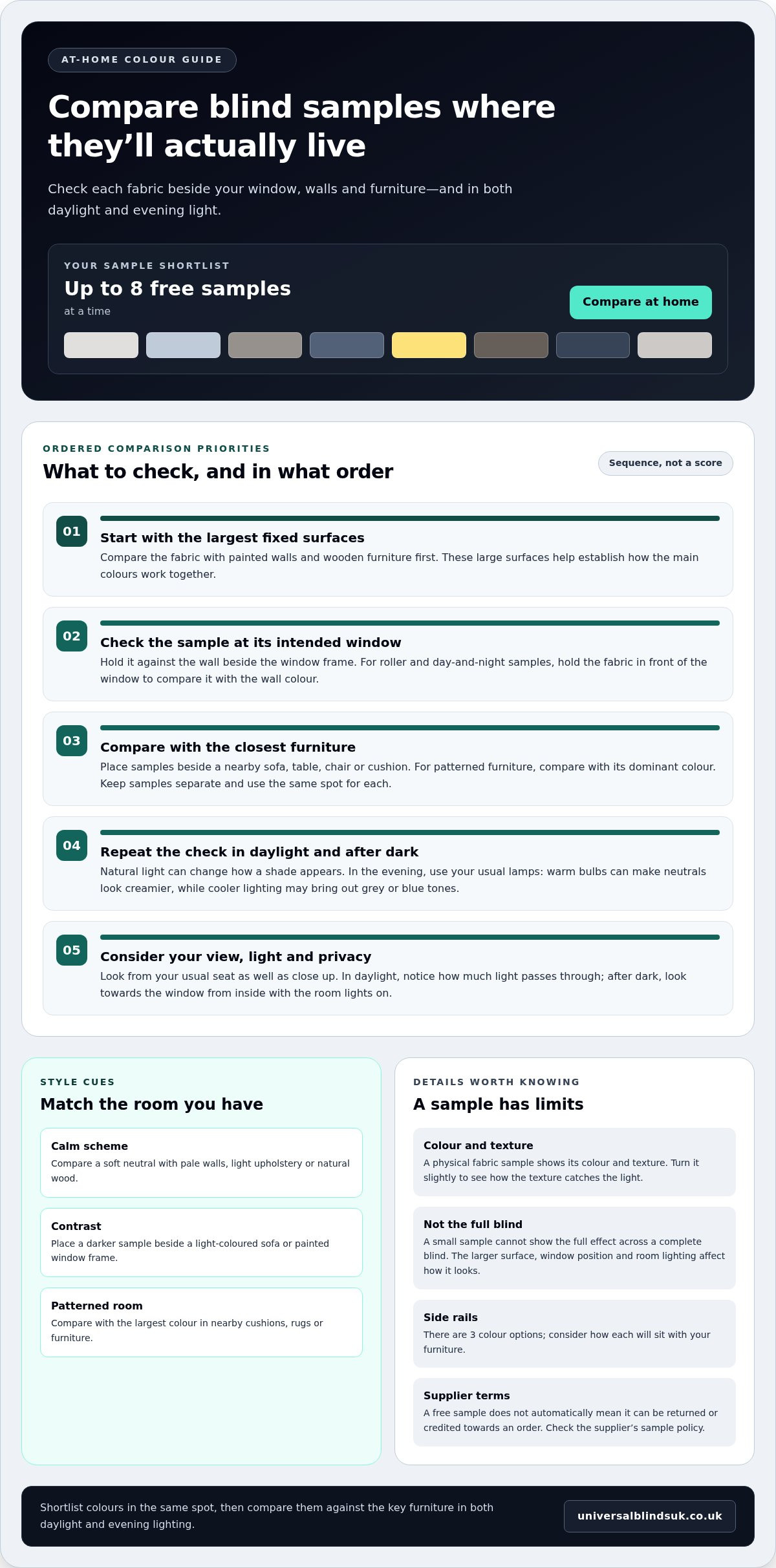
UK customers can order up to eight free blind samples at a time. That gives you room to compare several colours or fabrics where the finished blind will sit. To view blind samples at home, place each piece near its intended window and assess it against the wall, furniture and changing light.
For online ordering in the UK, choose the fabric samples you want and submit a sample request with your delivery details. Keep your selection within the limit of eight samples per order. Before submitting, check each fabric name and colour to make sure the samples match the options you intend to compare.
Check the colour in daylight first. Hold roller blind and day-and-night blind samples in front of the window, then compare the fabric with the wall colour. Natural light can make a shade look different from how it appears indoors, so view each option beside the window it will cover.
Repeat the comparison after dark with the room’s usual lamps switched on. A warm bulb can make a neutral fabric look creamier, while cooler lighting may bring out grey or blue tones. Assess the sample from your usual seating position as well as close up. This shows whether the colour feels balanced across the room, not just in your hand.
Use the same lighting check to consider privacy and light control. Hold the fabric against the window during daylight and notice how much light passes through. After dark, stand inside and look towards the window with the interior lights on. This gives you a practical sense of how the fabric appears in both settings, although a small sample cannot show the full effect across a complete blind.
Compare samples with your existing décor before choosing. Place one beside the window frame, then hold it near a nearby sofa, table or cushion. Look at the fabric against the largest fixed surfaces first, such as painted walls or wooden furniture. If two shades seem close, move them between daylight and evening lighting before deciding.
Free samples are useful for comparing colours, but a free sample does not automatically mean it can be returned or credited towards a blind order. Each supplier sets those terms, so the sample-order policy explains whether either option applies.
Comparing blind fabric samples side by side at home can help you judge which blind style and fabric combination suits your window and décor. This keeps your choice grounded in how each option looks alongside the room’s existing surroundings.
Checking sample colours against nearby furniture
After comparing a blind sample with the wall, place the remaining samples one by one on furniture near the window. A nearby oak table, upholstered chair or dark sofa can change how a fabric colour feels in the room. Compare each option with the furniture it will sit beside, rather than judging it against a distant accent.
Do sample colours and materials accurately match finished blinds? A fabric sample gives you a direct view of its colour and texture, but it cannot show the full effect across a complete blind. The larger finished surface, its position at the window and the room’s lighting all affect how the colour looks.
Start with the largest or most visually prominent nearby item. If the window overlooks a grey sofa, hold the sample beside its fabric and check whether the tones feel harmonious or stark. Then compare it with the window frame, flooring and any wooden furniture close to the glass. This order helps you assess the main colour relationships before considering smaller decorative details.
Use the same position for each comparison. Place one sample on the furniture nearest the window, look at it from your usual seat, then repeat with the next. Keep the samples separate so one colour doesn’t influence your impression of another. If a table has a patterned surface, compare the blind fabric with its dominant colour rather than one small detail.
- For a calm scheme: compare a soft neutral sample with pale walls, light upholstery or natural wood.
- For contrast: place a darker sample beside a light-coloured sofa or painted window frame.
- For patterned rooms: compare the fabric with the largest colour in nearby cushions, rugs or furniture.
Repeat these checks at the window, since the sample may look different there than it does beside the furniture. Hold it against the wall beside the frame, then return it to the closest furniture. This makes it easier to see whether the fabric connects those surfaces or creates a contrast you don’t want.
Before choosing, view your shortlist together in the same spot. A colour that looks balanced beside a wooden table may feel too warm against a cool-toned sofa. If you’re deciding between two similar shades, compare them separately with the key furniture and choose the one that works across the room.
When you’re ready to turn your preferred colour into a complete window design, explore options for your window.
Check the side rails alongside your furniture samples too; the side rails come in 3 colour options, so consider how each will sit within the room.
What the sample kit includes
The useful part of a blind sample kit is its fabric samples: physical pieces you can compare with your room’s colours and finishes. Your selection lets you assess the actual surface, rather than relying only on a photograph. The fabrics you choose determine what you can compare, such as a plain neutral beside a patterned option or different shades of one colour.
Start by laying the samples flat on a clear table. Look closely at each fabric’s colour, texture and pattern. A smooth surface can look different from a woven one, even when both appear similar on screen. Turn each piece slightly to see how its texture catches the light, then compare it with the other options under the same conditions.
Next, take the samples to the window they’re intended for. Hold each fabric against the glass, then move it beside the window frame. This shows how the colour relates to the frame and how much light passes through the material. A sample is a useful guide to the fabric, but its small size won’t show how a full blind will look across the window.
- Colour: compare closely related shades beside the wall and frame.
- Texture: feel and inspect the surface, especially if the fabric has a visible weave.
- Pattern: view a patterned piece from across the room as well as close up.
- Light: hold the fabric at the window and notice how it changes the incoming light.
For a clear comparison, assess one sample at a time. Put the first fabric beside a pale wall, then repeat with the next sample in exactly the same position. If you’re comparing a plain fabric with a patterned one, check whether the pattern feels balanced beside nearby décor, such as a striped cushion or a veined stone surface.
Keep your shortlist together after checking each piece. Place the preferred fabrics side by side on a neutral surface, such as a plain table, then return them to the window individually. This helps separate differences in colour from differences in texture. A muted grey, for example, may look cooler beside cream fabric and warmer beside a blue-toned option.
The kit helps you judge fabric choices in the context of your own home. Use each sample to compare the details that matter for your window: colour, surface, pattern and how light passes through. Those observations can help you narrow your preferences before deciding on a finished blind.
Can I get made-to-measure blinds samples delivered to my home in the UK?
Yes. UK customers can order blind fabric samples to compare at home, with up to eight free samples available at a time. These are small fabric pieces for assessing colour and texture, not finished blinds made to your window measurements. This lets you judge materials in your own room before choosing a made-to-measure design.
To arrange a sample order, select the fabrics you want to assess and enter the address where you can receive the delivery. Check the fabric names and colours before submitting your request. For example, if you’re choosing between a warm cream and a cool grey, order both so you can compare them in the same room.
Once the samples arrive, take them to the window where you’re considering a blind. Hold each piece against the glass, then place it beside the frame and wall. This helps you assess the fabric in the setting that matters, rather than judging it under different conditions elsewhere in the house.
A delivered sample can help you decide whether a fabric suits the room, but it doesn’t establish the finished blind’s size or fit. Those depend on measuring the individual window and selecting the relevant design. A sample also represents only a small area, so a large pattern may look different across a full blind.
Make your comparison useful by keeping the samples together and following the same checks for each one:
- Check the label: match each fabric piece to the colour or material you selected.
- Compare at the window: hold each sample beside the glass and frame.
- Look across the room: assess whether the fabric works with visible furniture, such as a nearby sofa.
- Keep your shortlist: separate preferred options from fabrics that don’t suit the room.
For a room with several windows, assess the sample at each intended position. A fabric beside a north-facing window may look different from the same fabric in a brighter room. Comparing it where the finished blind will hang helps you decide based on that window’s surroundings.
Samples let you consider a made-to-measure blind before committing to a fabric choice. Use the delivered pieces to narrow your colour preferences, then treat accurate window measurements and the finished product as separate decisions. This keeps your sample comparison focused on what it can show: the fabric’s appearance and feel in your home.
Which UK blind companies offer free fabric samples?
UK blind companies offer free fabric samples so you can compare fabrics before choosing a blind. Customers can order up to eight free samples at a time. Comparing them side by side at home helps you assess which style and fabric combination suits your window and décor.
Rather than choosing from a screen alone, use sample pieces to compare colour, texture and pattern in your room. A charcoal fabric might look sleek online but feel too strong beside pale walls. A softer grey could sit more comfortably with the same furnishings. The sample lets you make that comparison in context.
To make a shortlist, choose samples that answer a clear question. For example, compare two similar shades to decide between warm and cool tones, or select different textures in a similar colour. If you’re weighing up plain and patterned fabrics, consider how each relates to nearby cushions, flooring or furniture.
- Compare colours: place each fabric beside the wall and window frame.
- Assess texture: look closely at the surface and feel the material.
- Check the style: consider whether a pattern suits the room’s existing décor.
- Keep the shortlist focused: order samples that help resolve a specific choice.
Once the samples arrive, compare them in the same place and under the same conditions. Hold each one at the intended window, then look at it from across the room. This makes it easier to judge the fabric’s overall effect, not just how it looks in your hand.
Think about what a sample can show. It gives you a close view of the fabric’s colour and surface, but its small size won’t represent how a blind will look across the window. A bold repeat, for example, may feel more prominent when viewed across a larger area. Use the sample to compare material choices, not to judge the finished blind’s scale.
Free samples are most useful when you compare them with a purpose. Before ordering, decide which window you’re planning for and what matters most: matching the wall, coordinating with furniture or introducing a contrasting colour. Then use the samples to compare those details at home.
After narrowing your fabric preferences, plan your next window-design step with a clear idea of the colours and textures that suit your room.
Universal Blinds UK: Made-to-Measure Blinds
Universal Blinds UK can help turn your preferred colour and fabric choice into made-to-measure blinds for your windows. Once you’ve compared samples with your room, its free measuring service helps establish the measurements needed for a tailored fit. Professional fitting completes the process, while custom shutters offer another option if you’re considering a different window treatment.
This is a practical next step when you’ve narrowed your fabric preferences but want support with measuring and fitting. Your sample comparison can guide your choice, while accurate measurements help shape the finished blind for the intended window.
Contact Universal Blinds UK to discuss made-to-measure blinds for your home.
Make your next window decision with confidence
The right blind colour should feel at home in the room throughout the day, not just look appealing as a fabric swatch. As you view blind samples at home, notice which option sits comfortably with the window, furnishings and the way you use the space. Your preferred choice might coordinate quietly with existing colours or create a considered contrast. Either can work when it feels intentional in the room.
Before moving ahead, keep your preferred sample nearby and consider the window as a whole. Think about the look you want and the practical details that matter in that space. A clear sense of those priorities can make the next decision easier, whether you’re planning one window or updating several rooms.
If you’d like support with your plans, contact Universal Blinds UK to discuss the next step. You can move forward at your own pace, with your colour preferences and room requirements ready to guide the conversation.
Frequently Asked Questions
How long will my samples take to arrive?
Arrival timing depends on the sample order’s processing and the postal journey to your address. Allow for both stages rather than assuming samples will arrive immediately after you submit a request. If you’re choosing fabric before decorating or arranging window work, order samples early enough to compare them before making that decision.
What do you get with the fabric samples?
You receive small pieces of the selected blind fabrics to assess at home. Use them to compare the material’s colour, texture and pattern with your room. For example, place a plain fabric beside a patterned cushion to judge how the two look together. The pieces represent fabric options, not a finished blind sized for your window.
How many blind samples can I order at once?
UK customers can order up to eight free samples at a time. Use the selection to answer a specific design question, such as choosing between several neutral shades or comparing different textures. If you’re considering fabrics for separate rooms, note which window each sample is for so your comparisons stay organised when they arrive.
Are blind samples free, and are there delivery charges?
Blind fabric samples are free, with up to eight available per order. Delivery charges are a separate part of the order terms, so review the delivery information shown during ordering before submitting your request. This helps you understand the complete arrangement rather than assuming “free samples” also describes every aspect of delivery.
How long does it take for blind samples to arrive in the UK?
There isn’t one arrival timeframe that applies to every UK sample order. The dispatch process and postal journey both affect when the package reaches you. If you’re working towards a room refresh, request samples before finalising your fabric choice. That gives you time to compare the options before coordinating other decisions, such as paint or furniture.
Can I view blind samples in different lighting at home?
Yes. Compare each fabric in daylight, then look at it after dark with your usual room lights on. A sample near a window may look different from one viewed beneath a lamp. For a fuller assessment, check it from your normal seating position as well as close up, and note whether the colour suits both settings.
What should I compare when choosing blind fabric samples?
Compare colour, texture and pattern, then consider how each fabric relates to the window frame, wall and nearby furnishings. A sample that coordinates with a sofa may contrast with the frame, so assess those surfaces together. Also consider the room’s intended look: a subtle fabric can blend in, while a strong pattern creates a more noticeable feature.