

How to Prepare for a Blind Fitting by Clearing the Work Area
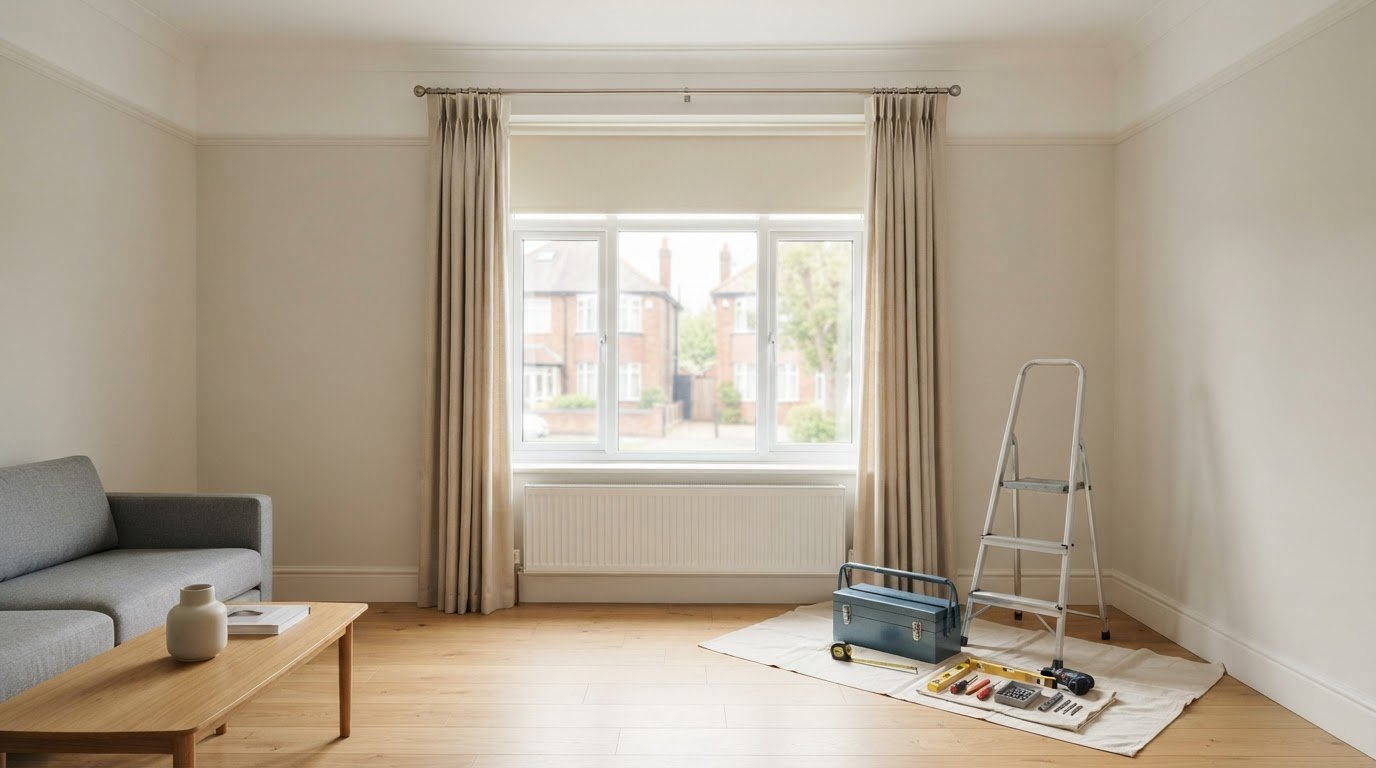
The most useful preparation is to clear the space, not to move every fitting in advance. To know how to prepare for a blind fitting, leave roughly one to two metres of clear space around each window, with access to both sides of the recess and room for a step ladder. Wipe away dust and loose debris, and keep the area dry.
It’s natural to want everything ready before the fitter arrives, but some decisions are best left until they can assess the window. Keep children and pets out of the room during the work, and don’t remove existing blinds, curtains or poles unless removal has been agreed or requested.
This guide explains how to clear furniture and belongings, make the work area safer, and flag anything that could affect the fitting. You’ll also learn what to discuss if you’re considering an inside- or outside-recess fit, and why the fitter should make the final measurement checks.
Key Takeaways
- Clear roughly one to two metres around each window and leave space for the fitter’s ladder and tools.
- Keep children and pets out of the room while work is underway, and until the area has been checked afterwards.
- Tell the installer about recent decorating, changes to the window area, or any access arrangements that could affect the appointment.
- Leave final measurements and fitting-position checks to the professional, especially where handles or other obstructions may affect the fit.
- Decide what you’d like to discuss about the blind’s position and operation, but leave existing fittings in place if you’re unsure whether they should be removed.
Fitting blinds inside or outside the window recess
A typical blind fitting involves confirming the windows, choosing a position, clearing access, fixing the brackets and checking operation. A suitable no-drill system avoids drilling; fitting time depends on the number of windows, access and complexity. Start preparing by checking each window and making the fitting area accessible.
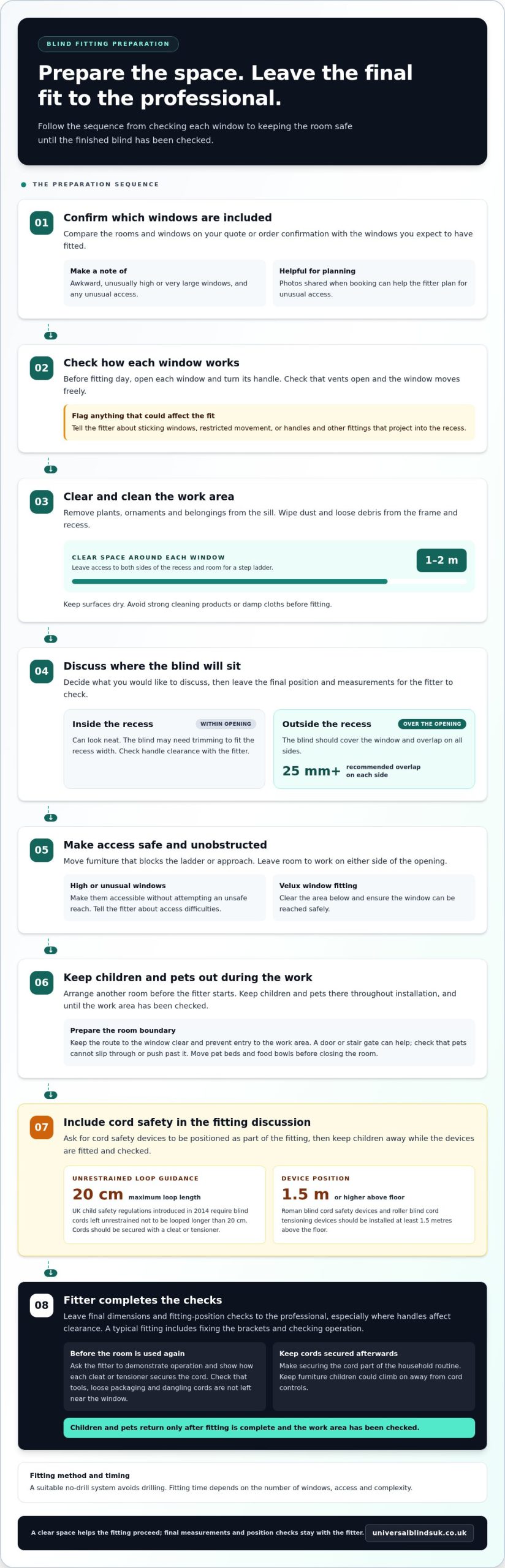
- Check the quote or order confirmation for the rooms and windows included. Compare its details with the windows you expect to have fitted. Include awkward, unusually high or very large windows in your notes. Photos shared when booking can help the fitter plan for unusual access. For anyone learning how to prepare for a blind fitting, this early check helps keep the appointment focused on the right windows.
-
Check Window Operation and Handle Clearance
Open each window and turn its handle before fitting day. Check that vents open, the window moves freely and handles won’t obstruct the planned blind position. Tell the fitter about any sticking window or restricted movement. An inside-recess blind sits within the opening, so check whether handles or other fittings project into that space.
-
Clear Sills and Nearby Work Areas
Remove plants, ornaments and other belongings from the sill, then wipe dust and loose debris from the frame and recess. Keep surfaces dry, and avoid strong cleaning products or damp cloths before fitting. Leave roughly one to two metres clear around the window, with access to both sides of the recess and room for a step ladder.
- Choose whether the blind will sit inside the recess or overlap the window opening. An inside fit can look neat, but the blind may need trimming to fit the recess width. An outside fit should cover the window and overlap on all sides. For good coverage, an overlap of 25 mm or more on each side is recommended.
- Make high or unusual windows accessible without attempting an unsafe reach. For a Velux window fitting, clear the area below and ensure the window can be reached safely. Tell the fitter about access difficulties. Move furniture that blocks the ladder or approach, and leave room to work on either side of the opening.
Leave final dimension and position checks to the fitter, particularly where handles affect clearance. Focus on access and window details, not drilling or changing measurements yourself.
Keeping children and pets away from the work area
Before drilling, keep children and pets out of the room and follow a safe system of work. The UK Government recommends using a safe system of work, a safe work area and appropriate equipment, and carrying out final checks when drilling to fit blinds.
- Arrange another room for children and pets before the fitter starts. Keep them there throughout installation, then wait until the work area has been checked before allowing them back. This keeps them away from tools, packaging and fittings while work is underway. For example, move a pet’s bed and food bowls before closing the room door.
- Keep the route to the window clear and prevent children from entering the work area. A door or stair gate can help separate the room, but check that pets cannot slip through or push past it. Tell the fitter where children and animals will stay, especially if the route to the window passes their room.
- Plan for blind cords before choosing the final position and operation. UK child safety regulations introduced in 2014 require blind cords left unrestrained not to be looped longer than 20 cm. Cords should be secured with a cleat or tensioner to reduce accident risk. Keep children away while these safety devices are fitted and checked.
- Ask for cord safety devices to be positioned as part of the fitting, not left loose afterwards. Roman blind cord safety devices should sit at least 1.5 metres above the floor. Roller blind cord tensioning devices should also be installed at least 1.5 metres above the floor. Keep children out until the devices are secure and the work area is clear.
- Check the completed blind before children or pets return. Ask the fitter to demonstrate its operation and show how any cleat or tensioner secures the cord. With roller or Venetian blinds, look for dangling cords, loose packaging or tools left near the window. Keep the room closed until these checks are complete.
- Choose a simple household routine for keeping cords secured after installation. For example, make winding or securing the cord part of closing the blind, and keep furniture that children could climb on away from cord controls. A consistent routine helps maintain the intended setup beyond fitting day.
If you’re planning made-to-measure blinds, include cord safety and room access in the fitting discussion.
Agree in advance who will keep the children and pets in the separate room, and make sure the fitter knows the room is not available during the job. Keep children and pets away from the room while blind installation is underway. Maintain the boundary for the full fitting, rather than reopening the door during a pause. If the arrangement needs to change, move everyone to another room before work continues.
Young children and pets should be kept in another room until blind fitting is complete and the work area has been checked. Before bringing them back, confirm that fitting is finished and the area has been checked, then guide them back while keeping them away from tools or materials being moved. Use the same arrangement for each room being fitted, so no one enters a space where work is still underway.
Leaving final measurements and fitting decisions to the professional
Use your own measurements only as a guide, then leave final dimensions and fitting-position checks to the professional. A professional fitting is particularly useful for made-to-measure blinds where window shape, handles or other obstructions affect the fit.
-
Share Obstructions and Fitting Instructions
Show the fitter anything near the window that could affect measuring or fixing. Point out handles, alarm sensors, known wiring or pipes, and smart-home equipment. Mention changes made since the survey, such as replacement glazing, tiling or a new window board. Bring the made-to-measure fitting instructions, too, so the intended blind position and product details can be considered together.
- Use your own measurements as useful notes, not final fitting dimensions. For an inside-recess blind, measure the width at three points and record the smallest measurement. Recesses can vary from top to bottom, so note where each measurement was taken. Also measure the height at different points and share the results, but leave the final dimension checks to the fitter.
-
Discuss Bracket Spacing
Ask the fitter to confirm bracket positions after checking the window and chosen blind. Vertical blind brackets should be at least 5 centimetres from the window to allow for handles. For vertical blind sizing, subtract 1 centimetre from the distance between brackets to allow for the mechanism. These details depend on the blind type, so don’t set or adjust bracket spacing from a rough measurement alone.
-
Confirm Blind Type and Size with the Fitter
Discuss whether the blind will sit inside or outside the recess, then confirm how that position affects coverage and operation. Roller blind fabric and its bottom bar require a different allowance from the top bar: subtract 32 millimetres from bracket spacing for the fabric and bottom bar, and 27 millimetres for the top bar. Cordless roller versions use 37 millimetres and 32 millimetres respectively.
- Make the final decision with the window’s obstructions and the blind’s movement in mind. Ask the fitter to check that handles can turn and the blind can operate without catching. For example, a handle projecting into an inside recess may affect the usable depth or position. A spirit level can help show whether brackets are positioned evenly, but the fitter should confirm the final placement.
Before the fitting visit, check the area near the window and tell the fitter about any known wiring, pipes, alarm sensors, smart-home equipment or unusual construction. Share what you know, even if the feature is not immediately visible, and distinguish confirmed details from anything you’re unsure about. This gives the fitter the information you have without asking you to make technical judgements or decide how the blind should be fixed.
Keep the handover straightforward: describe where each known feature is in relation to the window and mention it before fitting decisions are made. If several items are present, mention them all rather than focusing only on the most obvious one. This makes relevant information available to the professional to consider alongside the window and blind. Leave assessment of what the details mean for the fitting to the fitter.
Clearing furniture and belongings from the fitting area
Start with the route and the space around each window, then decide what should stay. A clear work area helps the fitter reach the fixing position without shifting belongings mid-appointment.
- On the morning of fitting, clear a path from the entrance to every window being worked on. Move shoes, bags, toys and loose boxes from hallways and doorways. If the route passes through a living room, shift a coffee table or floor lamp before the fitter arrives. Keep the path open throughout the visit, especially when carrying blinds between rooms.
- Move furniture that blocks access to the window or the space beside it. A desk directly beneath a bedroom window, for example, may need moving so the fitter can reach the sill and position equipment. Shift larger pieces far enough to create a practical working area, and avoid stacking belongings where they could fall or obstruct another window.
- Clear the sill and protect nearby belongings from dust or loose debris. Put plants, ornaments, photographs and small electronics somewhere secure, rather than on the floor beside the work area. If a blackout blind is planned for a bedroom, remove bedside items that could obstruct access to the sides of the window or fitting position.
- Switch off or move electrical items directly beneath the window before fitting begins. For example, unplug a lamp or move a radio away from the drilling area. If a motorised blind needs access to a power source, leave the required nearby socket visible and reachable instead of hiding it behind a cabinet or sofa.
- Leave existing curtains or blinds in place unless removal was agreed as part of the fitting service or you were asked to remove them. A curtain pole or pelmet may affect the new blind’s position. If you’re unsure whether either fitting needs to come down, leave it in place for the fitter to assess rather than removing it in advance.
- Make space around vertical blinds and other wide window coverings before the appointment. Move chairs, laundry baskets and side tables that could obstruct the blind’s movement or the fitter’s access. In a narrow room, move only the items blocking the work area, then keep the route clear while the fitter checks the finished installation.
- For a flat, share entry codes, concierge arrangements, lift restrictions or limited parking details ahead of the visit. These practical details affect how the fitter and equipment reach your door. Before work starts, walk the entrance-to-window route once more and remove anything you missed, such as a folded buggy or delivery parcel.
How do you choose the right blind type and size?
Choose a blind by matching each window’s use, shape and operation with a suitable style. Then discuss the final size and position with the fitter.
- Start with the room’s main purpose. In a bedroom, consider how much light you want to manage; in a living room, note whether privacy or daytime light matters more. Write down your priorities for each window rather than choosing one style for every room. This gives the fitter clear criteria for discussing suitable options.
- Look at the window itself before deciding on a style. A narrow recess, projecting handle or nearby wall can affect how a blind sits and moves. For example, note whether a kitchen window opens inwards or sits above a worktop. Share these details so the intended blind position can be considered against the actual space.
- Think through how you want the blind to operate each day. For a roller blind, decide which side you’d prefer the chain on. For vertical blinds, consider which direction you want them to open. These choices affect access around the window, so discuss them alongside furniture placement and the room’s everyday use.
- Compare the intended coverage with the recess and surrounding wall. An inside-recess blind sits within the opening, while an outside-recess blind covers the window from beyond it. Consider handles, vents and nearby fittings when discussing either position. A neat appearance matters, but the blind must also clear obstructions and operate as intended.
- Use measurements as a starting point, not a final order size. For an inside recess, the width can vary across the opening, and the smallest reading matters. Handles and other obstructions can also change the usable space. Share your notes, then leave final dimension checks and fitting-position confirmation to the professional.
- Discuss the blind type and size together. A roller blind’s chain position, a vertical blind’s opening direction and the choice of recess fit all influence the finished arrangement. If you’re comparing options for several rooms, list each window separately. That helps prevent a bedroom preference, for example, being applied automatically to a kitchen window.
- Before agreeing the final choice, describe what you expect the blind to do and where it should sit. Mention how the window operates and any handles, vents or nearby fittings. A professional can then assess how those details affect the fit, coverage and movement, rather than relying on a single measurement or photograph.
Plan your made-to-measure blinds around each window’s shape, use and preferred operation.
Universal Blinds UK: Made-to-Measure Blinds
Universal Blinds UK supplies and fits made-to-measure blinds for windows in homes and commercial properties across the West Midlands. Its free measuring service and professional fitting take final measurements and installation decisions out of your hands, which is useful for recesses, handles or other features that affect the fit.
If you’re considering shutters instead, Universal Blinds UK also supplies and fits custom shutters. Discuss the rooms and window details you’ve noted, along with how you want each blind or shutter to look and operate. This helps shape a tailored choice around your space.
To discuss your windows and fitting, contact Universal Blinds UK or visit universalblindsuk.co.uk.
Make your next step a confident one
Knowing how to prepare for a blind fitting gives you a clear starting point, but the room’s needs should guide the final choices. Think about how daylight, privacy and the finished look should work together in each space. A bedroom, home office and kitchen may each call for a different approach, even when their windows seem similar, while exterior areas may benefit from specialised solutions by Best Outdoor Blinds.
Before deciding, note what matters most in each room and which details you’d like to discuss. You can then make choices with the window, its everyday use and your preferred finish in mind. There’s no need to settle every detail alone.
For help planning a tailored solution, contact Universal Blinds UK and discuss what would suit your home. Take the next step when you’re ready, with a clearer idea of what you want from each window.
Frequently Asked Questions
How do you measure a window for inside-fit blinds?
Measure the recess width at three points, then record the smallest reading. This accounts for a window opening that isn’t perfectly even. Note the locations of handles or other obstructions, since they can affect the blind’s position. Keep your measurements as a guide rather than adjusting them yourself; the professional fitter should make the final dimension checks for made-to-measure blinds.