

Creating a Dark Bedroom for Better Sleep: A Practical Guide
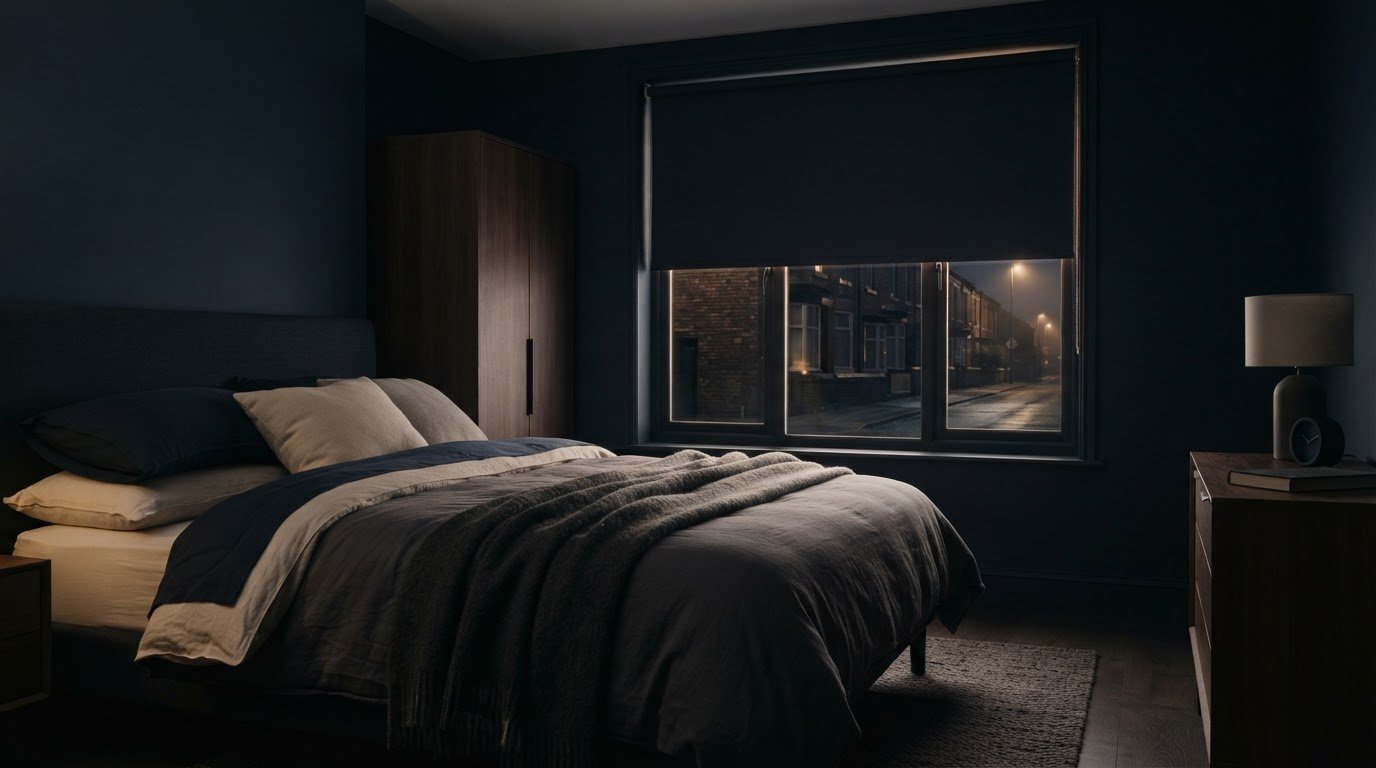
What if the light waking you isn’t coming from the window alone? Streetlights, early morning daylight, glowing device indicators and screens can all make a bedroom feel less restful. Creating a dark bedroom for better sleep starts with identifying each source of unwanted light, then choosing practical ways to reduce it without making the room difficult to use.
If you’ve tried to sleep through a bright patch on the wall or a glowing charger, you’ll know how distracting small amounts of light can feel. The Sleep Charity recommends making the bedroom as dark as possible, while keeping any necessary night light consistent through the night. This guide shows you how to check for light leaks, manage screens and indicator lights, and compare window-covering options for your room and routine. A made-to-measure blind or shutter may help reduce light entering around a window, although no covering can promise complete darkness. Start with simple changes, then consider whether tailored window coverings could help with any remaining gaps.
Key Takeaways
- Start creating a dark bedroom for better sleep by noting when and where light appears, so you can target its sources rather than make changes by guesswork.
- Check outdoor light, overhead and bedside lighting, screens and small electronic indicators.
- Compare light-blocking options by their effect on privacy, light control, adjustability and fit.
- Make easy indoor changes first, then check whether window light still needs attention.
- When choosing window coverings, consider your window’s shape, the fit you need, your privacy and how much daylight you want to keep.
Creating a Dark Bedroom for Better Sleep: Find the Light Sources
You don’t need to buy new window coverings straight away. First, notice where light enters or glows in your bedroom and when it appears. This helps you focus on what affects your room, whether that’s outdoor light at the window, a bedside lamp or a small indicator on a device.
Look around at bedtime, once your usual lights are off, then check again in the early morning. Streetlights and security lighting may be noticeable after dark, while daylight can reach the bed before you’re ready to get up. The Sleep Charity, a UK organisation offering sleep advice, recommends keeping the bedroom dark enough to support sleep, while recognising that individual needs can differ.
How to spot light entering around bedroom windows
Check the window edges, where sections meet, the frame and any uncovered glass. From your bed, notice whether streetlights, security lighting or the first daylight reaches your pillow or another part of the room. Note the time and where the light appears. This can help you work out whether it’s coming through the glass or around the window.
Which indoor lights can make a bedroom feel brighter?
After checking the window, look at ceiling lights, bedside lamps, chargers and visible indicators on electronics. Screens can also remain in view when they’re switched off. Try practical adjustments that suit your routine, such as turning a device away, switching off an unused indicator or moving a charger farther from the bed. Don’t cover or alter electrical devices in a way that could be unsafe.
Quick light-source checklist:
- Outdoor light through glass or around the window frame
- Ceiling lights and bedside lamps
- Phone, tablet or television screens
- Chargers and other glowing device indicators
Check the room from the bed, not just from the doorway. That gives you a clearer picture of what’s visible where you actually sleep. This light audit is a useful first step in creating a dark bedroom for better sleep. It can show whether a simple indoor adjustment is enough or whether window light needs further attention.
How Darkness and Light Relate to Your Sleep Routine
Light is one part of your sleep environment, alongside factors such as comfort, noise and your usual routine. The body’s circadian rhythm is its internal 24-hour timing system, which helps coordinate patterns such as sleep and waking. Light and darkness are cues that can influence this rhythm, but making a bedroom darker shouldn’t be treated as a guaranteed fix for sleep difficulties.
A dark bedroom can reduce unwanted light, but it can’t guarantee good sleep or resolve every cause of disrupted rest.
Does a darker bedroom automatically mean better sleep?
No. People’s preferences and circumstances differ. One person may prefer a very dark room, while another may feel more comfortable with a gentle night light. The Sleep Charity advises making the bedroom dark enough to support sleep, while recognising that a low-level light may be appropriate for someone who feels uneasy in darkness. The aim is a comfortable environment, not a rigid rule that every room must be completely blacked out.
Think of darkness as one practical adjustment, rather than a treatment. If sleep problems persist or affect your day-to-day life, speak with your GP or seek advice through the NHS. A change to window coverings may help with light entering the room, but it can’t address every possible reason for poor sleep.
Balance darkness with a comfortable waking routine
Consider your usual bedtime and wake time, as well as when daylight reaches your bedroom. If early morning light wakes you before you want to get up, reducing it may suit your routine. If you prefer a naturally bright start to the day, you may want a covering that’s easy to open rather than one that keeps the room dark after waking.
Adjustable window coverings can help you manage changing daylight and privacy through the day. Choose an arrangement that feels practical at night and in the morning, rather than assuming the darkest possible setup is right for everyone. For example, you might want greater light control while sleeping but still prefer to open the covering soon after waking.
Once you’ve considered the balance you want, you can make a more informed choice about your window. A made-to-measure fit may help address light around the edges, though it can’t promise complete darkness. To discuss suitable options, explore made-to-measure blinds and shutters with Universal Blinds UK.
Compare Bedroom Light-Blocking Options Before You Make Changes
The best first step depends on what your light check revealed. If a charger or screen is the main distraction, a small change may be enough. If light is entering around a window, compare window coverings for privacy, adjustability and fit. The right choice supports creating a dark bedroom for better sleep without sacrificing the daylight or convenience you value.
| Option | Privacy | Light control | Adjustability | Fitting considerations |
|---|---|---|---|---|
| Simple room changes | Little effect on window privacy | Can reduce light from lamps and devices | Easy to change as needed | Usually involves moving or switching off a light source |
| Window coverings | Can provide privacy when closed | Varies by design, fabric and fit | Depends on the covering and how it operates | Window dimensions and fitting position matter |
| Reducing visible device lights | No effect on window privacy | Can address small points of indoor light | Often simple to adjust | Check that any change is safe and doesn’t interfere with the device |
What should you consider when choosing room-darkening window coverings?
Use your observations to identify how much light reaches the room and whether it comes through uncovered glass or around the window. Then weigh this against your daytime needs. Do you want privacy during the day, an easy way to let in morning light, or greater light control at bedtime? Results depend on the window, covering design, fabric and installation, so don’t assume a particular material or style will perform the same in every room. Check current options and their suitability for your window before deciding.
For a broader starting point, explore this guide to choosing blinds for your home.
When might made-to-measure blinds or shutters be worth considering?
A made-to-measure covering is planned for your window dimensions, which may help address gaps caused by a poor fit. Accurate measuring and professional fitting can help you assess how a covering sits in relation to the frame, but neither guarantees a light-proof result. Consider this option if light around an unusually shaped or sized window remains a concern after simpler changes.
To compare different options, see the guide to blind styles. Choose based on the balance of privacy, daylight and light control that feels right for your room.
How to Make Your Bedroom Darker: A Step-by-Step Check
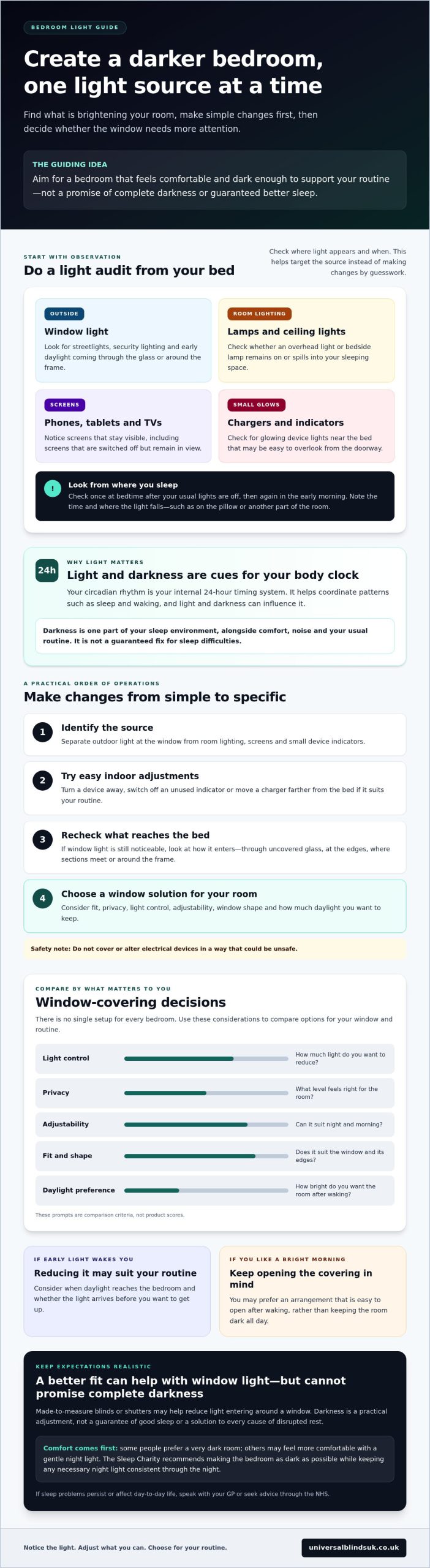
A short, repeatable check can help you decide what to change without buying anything first. Compare your bedroom at bedtime, with its usual evening lights switched off, and again around your normal wake time. The difference can reveal whether the main issue is a device light, outdoor lighting or daylight that changes through the night.
A simple evening and morning light audit
Stand where you usually sleep and note what you can see. Look for light at the window, glowing screens, device indicators and bright points near the bed. In the morning, check which parts of the room catch daylight and whether it reaches your bed before you want to wake. Write down the source, location and time so you can compare after making a change.
Choose changes that fit your room and routine
Try reversible adjustments first when the source is easy to address. You could switch off a device, move a glowing charger out of view or change how you use a bedside lamp. Choose changes that feel manageable in your evening routine, and don’t cover or alter electrical devices in a way that could be unsafe.
Then follow this simple sequence:
- Observe: Check the room at bedtime and around your usual wake time.
- Adjust: Address easy indoor sources that you can control safely.
- Reassess: Repeat the checks and see what light remains.
- Choose: If window light is still an issue, consider a covering suited to your window and preferences.
In brief: observe, adjust, reassess and choose.
If light continues to enter around the window, review how the current covering sits and whether a different option may better suit the shape and dimensions. A made-to-measure blind or shutter may help address light around the edges, though the result depends on the window, product and fitting. For more on what a professional fitting involves, read about the benefits of professional blind fitting.
A measured approach keeps the focus on the sources that matter in your room. If you’re considering new window coverings, ask about a free measuring service to help assess your window before choosing.
Create a Darker Bedroom with Window Coverings That Fit
Your light audit gives you a practical starting point: you know where light enters, when it appears and whether simple indoor changes have helped. If light around the window remains distracting, use those observations to guide your choice rather than selecting a covering by appearance alone. Window shape, fitting position, privacy needs and how much daylight you want during the day all affect which option may suit your bedroom.
Made-to-measure blinds and custom shutters are options to discuss if you want a covering planned for your window. They may help address light entering around the edges, but how much light is reduced depends on the window, chosen product and fitting. They aren’t guaranteed sleep solutions, and you shouldn’t assume a particular result without checking the specific options.
What to discuss when selecting made-to-measure window coverings
A home consultation can help you look at the window and talk through suitable choices for your room. Explain where light appears, whether privacy matters during the day and how easily you’d like to adjust the covering. Universal Blinds UK brings fabric samples to complimentary home consultations, so you can consider options in your own space. Check which current materials and styles suit your desired level of light control before deciding.
How measuring and professional fitting support a tailored result
Accurate measuring helps plan a covering around a specific window’s dimensions, including its frame and any features that could affect the fit. This gives you a more considered basis for comparing options than choosing by general window size alone. Universal Blinds UK provides a free measuring service and professional fitting for made-to-measure blinds and shutters. Fitting puts the selected covering in place, but it isn’t a promise of a perfect seal or complete darkness.
Creating a dark bedroom for better sleep is about finding a balance that works for your room and routine. A tailored covering may be worth discussing if unwanted window light remains after simpler adjustments, while preserving the privacy and daylight you want at other times. West Midlands readers can arrange a complimentary home consultation with fabric samples and no obligation to choose a particular option.
Make Your Bedroom Feel More Restful, One Step at a Time
Creating a dark bedroom for better sleep doesn’t have to mean changing everything at once. Start by identifying when and where unwanted light appears, then try simple adjustments before deciding whether your window coverings need attention. The best choice depends on your window, privacy needs and how much daylight you want to keep.
If light around the window remains a concern, made-to-measure blinds or custom shutters may be worth discussing. A tailored fit can help address gaps, though it can’t guarantee complete darkness or resolve every sleep difficulty.
Universal Blinds UK is a family-run West Midlands business offering complimentary home consultations with fabric samples, free no-obligation measuring and quotes, and professional fitting for made-to-measure blinds and shutters. You can discuss options for your room without pressure to choose a particular solution.
Arrange a complimentary home consultation to discuss window-covering options for your bedroom and routine.
Frequently Asked Questions
Can making a bedroom darker help you sleep better?
A darker bedroom may help reduce unwanted light that makes your sleep environment feel less restful. Light is one cue that influences the body’s sleep-wake timing, but darkness alone can’t guarantee better sleep or resolve every sleep difficulty. The Sleep Charity recommends a dark bedroom, while recognising that people’s needs vary. If sleep problems persist or affect daily life, seek advice from your GP or the NHS.
How can I make my bedroom darker without changing the window coverings?
Start by switching off or moving indoor light sources that are easy to adjust. Turn chargers with visible indicators away from the bed, switch off unused devices and keep screens out of view when you’re settling down. Check that any change is safe and practical for your routine. If light still comes through the window, note when and where it appears before deciding whether another adjustment is needed.
Do blackout blinds block all light?
No blind should be assumed to block every trace of light. The result can depend on the covering’s design, how it fits the window and whether light enters around the edges or through uncovered areas. If you’re considering a room-darkening option, check current fabric and style details and ask what level of light control may suit your window. A made-to-measure fit may help address gaps, but it can’t guarantee complete darkness.
Are made-to-measure blinds better for a dark bedroom?
Made-to-measure blinds may be worth considering if your current covering leaves gaps or doesn’t suit your window’s shape and dimensions. Measuring for the specific window can help plan a more tailored fit, which may reduce light entering around the edges. However, performance depends on the product and fitting, so made-to-measure doesn’t automatically mean blackout. Compare light control with privacy, adjustability and how much daylight you want during the day.
Can electronic lights affect how dark my bedroom feels?
Yes. Visible indicator lights from chargers, televisions or other devices can make a dark room feel brighter, especially when they’re near the bed or within your line of sight. Screens can also remain visible when you’re trying to wind down. Try switching off or moving devices if it’s convenient, or turning them away from the bed. Don’t cover or alter electrical equipment in a way that could be unsafe.
What should I check before choosing bedroom blinds for light control?
Check where light enters, including around the frame and through uncovered glass, and note whether it’s street lighting at night or daylight in the morning. Then consider the window’s shape, privacy needs, how easily you want to adjust the covering and how much daylight you’d like to retain. Ask about current materials and styles that may suit your requirements. The right choice depends on your room and priorities.
Should I make my bedroom completely dark all night?
Not necessarily. A dark room may suit your preferences, but a completely dark bedroom isn’t the only appropriate setup for everyone. Some people feel more comfortable with a low-level night light, and the Sleep Charity notes this can be suitable when someone is uneasy in darkness. Consider your comfort and waking routine, including how you’d like to manage morning daylight. Darkness can support a restful environment, but it isn’t a guaranteed solution for sleep concerns.