

Home Sale Prep: A Practical Guide to New Blinds
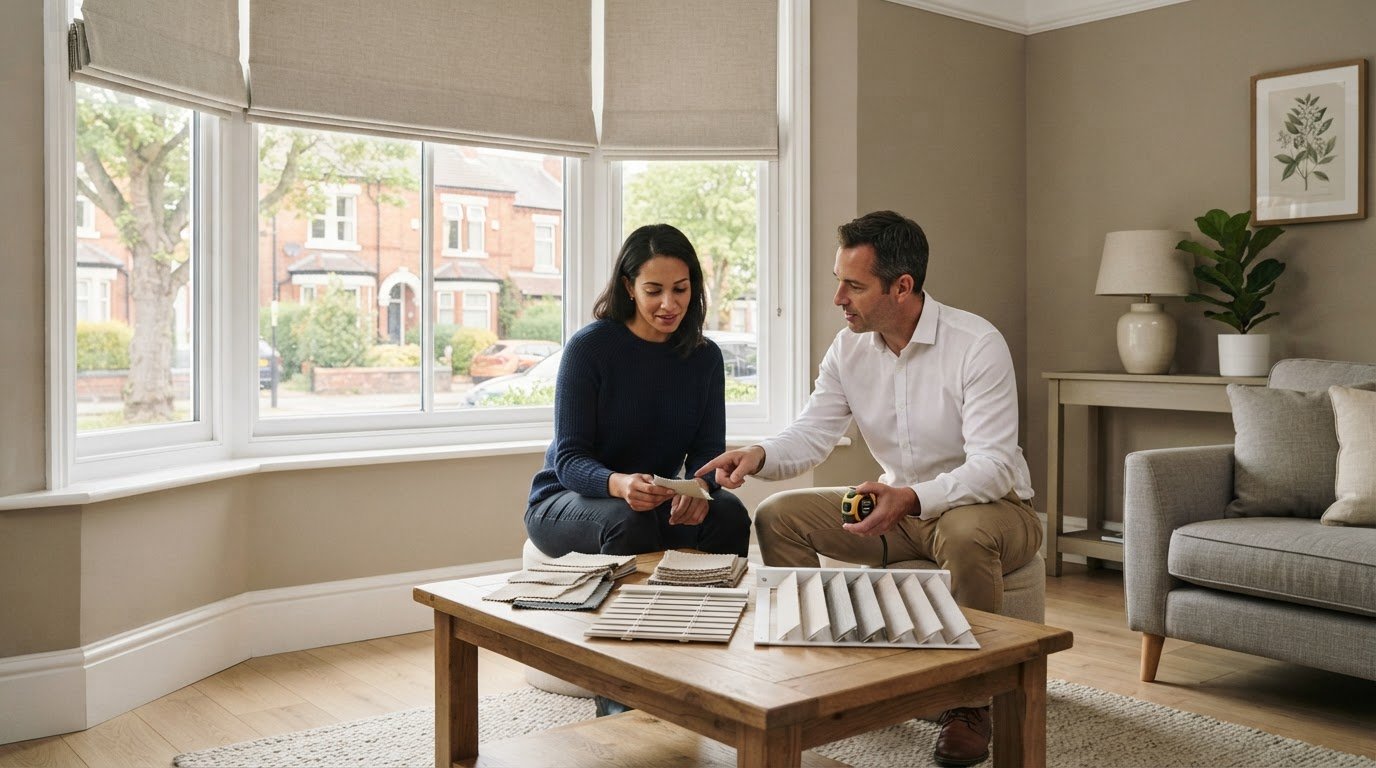
Could replacing every blind before a sale be less helpful than focusing on the rooms that need it most? Getting your home ready for sale with new blinds is about creating a clean, coordinated impression, not over-improving or trying to predict what buyers will pay. Dated, damaged or overly personal window coverings can draw attention away from a room, while simple, well-chosen blinds can help it feel cared for and practical.
It’s understandable to wonder whether replacing blinds is worthwhile when you’re preparing to move. There’s no guarantee they’ll increase your sale price or speed up a sale, so prioritise visible issues and choose options that work with the home rather than imposing a strong personal style.
This guide will help you decide which rooms to tackle first, compare suitable blind styles and levels of light control, and choose colours that sit comfortably with your existing décor. You’ll also learn how an in-home consultation with samples, free measuring and professional fitting can simplify the process, helping you make considered choices without taking on more work than the home needs.
Key Takeaways
- When getting your home ready for sale with new blinds, prioritise windows where coverings look worn, dated or distracting rather than replacing everything automatically.
- Compare roller, Venetian and vertical blinds, as well as shutters, by their appearance, light control, privacy and suitability for each room.
- Decide whether existing blinds need cleaning, repair or replacement by weighing their condition against the time and effort involved.
- Before measuring, note each room’s privacy, light and operation needs so your choices are practical as well as well-coordinated.
- Use an in-home consultation and professional measuring to compare samples in your rooms and check what may suit your windows before deciding.
Getting your home ready for sale with new blinds: what should you assess first?
Preparing a home for sale can mean balancing cleaning, repairs, paperwork and viewings against a limited budget. Window coverings are one part of that work, not a guaranteed route to a sale. Blinds can support a tidy, cared-for presentation, but replacing them won’t guarantee a buyer, a quicker sale or a higher offer. Start by checking the rooms and windows prospective buyers are likely to see, then decide where attention would make a practical difference. There’s no universal room-by-room priority order: the condition of your home and your budget should guide you.
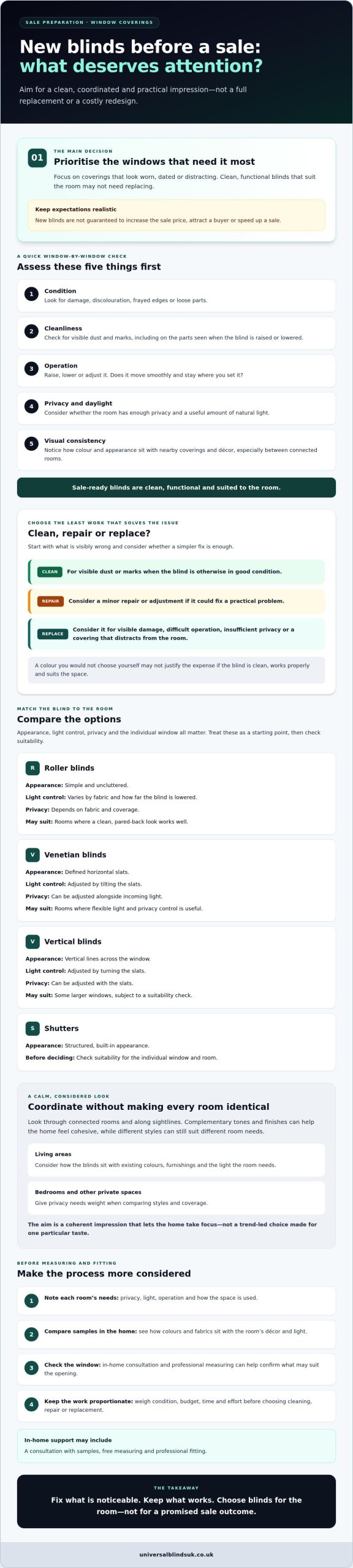
Use this checklist to assess each window:
- Condition: Look for damage, discolouration, frayed edges or loose parts.
- Cleanliness: Check for visible dust or marks, especially on the parts that are easiest to see when the blind is raised or lowered.
- Operation: Raise, lower or adjust the blind to see whether it moves smoothly and stays in the position you set.
- Privacy and light: Consider whether it gives the room enough privacy and lets in a useful amount of daylight.
- Visual consistency: Notice how its colour and appearance sit alongside nearby coverings and décor, particularly where rooms connect.
Sale-ready blinds are clean, functional and suited to the room.
Which blind problems are worth addressing before viewings?
Visible damage, difficult operation and a build-up of dust are practical issues to address first. A covering that looks poorly fitted may also distract from the window or room, so check whether it appears secure and sits neatly. Blinds come in different forms and mechanisms; this overview of window covering types offers a general introduction.
Separate functional needs from personal preference. A damaged or hard-to-use blind, or one that offers little privacy where it’s needed, may be worth repairing or replacing. A colour you simply wouldn’t choose for yourself may not justify the expense if it’s clean, works properly and suits the space. Ask whether the issue would be noticeable during an ordinary viewing, and whether cleaning, a minor repair or a small adjustment could resolve it before considering replacement.
How can a consistent look make rooms feel considered?
Look through connected rooms and along sightlines, such as from an entrance into a living area. Very different colours or visual weight can make the overall scheme feel unsettled, while complementary tones and finishes can help rooms feel considered. Coordination doesn’t require identical blinds throughout: a different style may suit a bedroom’s privacy needs better than a kitchen’s.
For getting your home ready for sale with new blinds, favour a calm, cared-for appearance over a trend-led choice. Consider how each option works with the room’s existing colours and furnishings, as well as the light and privacy it needs. The aim is a coherent impression that lets the home itself take focus, not a costly redesign to suit one particular taste.
How to choose new blinds that suit buyers and the room
A blind that looks smart in one room may feel impractical in another. As you’re getting your home ready for sale with new blinds, weigh the window’s size and shape, how the room is used, the light and privacy you need, and the existing décor. Aim for a tidy, cohesive impression rather than a particular style you hope will attract buyers or add value. No blind choice can guarantee either outcome.
Use this comparison as a starting point. Consider how you’ll use the room and what the window needs, then confirm that the style is suitable for the individual opening before deciding.
| Option | Appearance | Light control | Privacy | May suit |
|---|---|---|---|---|
| Roller blinds | Simple, uncluttered | Varies by fabric and how far the blind is lowered | Depends on fabric and coverage | Rooms where a clean, pared-back look works well |
| Venetian blinds | Defined horizontal slats | Adjustable by tilting the slats | Can be adjusted alongside incoming light | Rooms where flexible light and privacy control is useful |
| Vertical blinds | Vertical lines across the window | Adjustable by turning the slats | Can be adjusted with the slats | Some larger windows, subject to a suitability check |
| Shutters | Structured, built-in appearance | Adjusted through the louvres and panels | Can be adjusted to balance privacy and light | Windows where the frame and room suit this more defined look |
Which blind styles may suit different rooms?
Simple roller blinds can work where you want an uncluttered finish, while Venetian slats let you adjust the balance of daylight and privacy. Vertical blinds may suit some larger windows, but size alone doesn’t confirm that they’ll fit or operate well. Shutters offer another option with a more structured appearance. Think about how the room is used, how much privacy it needs and how you want to adjust the light, then check the window itself rather than choosing by style alone.
How should colour and light control influence your choice?
Compare each fabric or finish with the walls, flooring and furnishings it will sit beside. A sample can look different under daylight and indoor lighting, so view it in the room at different times of day. Consider the trade-off: a more open setting may let in more daylight, while a more closed one may provide greater privacy. Also consider whether the chosen covering is easy to adjust for the way you use the room. Choose the balance that makes sense for the space, not just for a photograph.
If you’d like help assessing options in your own rooms, an in-home consultation lets you compare samples against your existing décor. You can explore made-to-measure blinds and shutters as part of that process, then consider professional measuring to check the fit for your windows.
Are new blinds worth considering before you sell?
Not automatically. If your existing blinds are clean, work properly and suit their rooms, replacement may add unnecessary expense and another job to manage. While getting your home ready for sale with new blinds, judge each window on its condition, function and fit, not simply whether its style feels current. New coverings can’t guarantee a sale or a particular offer, so focus on solving visible or practical problems rather than making changes for fashion alone.
Consider the options window by window:
- Keep: A blind that looks presentable, operates smoothly and provides suitable privacy and light control may need no work.
- Clean: This could be enough if the covering is dusty or marked and its material can be cleaned safely.
- Repair: A minor operational issue may be fixable without replacing the whole blind.
- Replace: Consider this if the blind is damaged, unsuitable for the room or visibly ill-fitting.
When might cleaning or repairing existing blinds be enough?
Check the manufacturer’s care guidance before cleaning. Materials and finishes vary, and using an unsuitable method could cause damage. If a blind sticks or is awkward to operate, check for an obvious obstruction and consider whether the issue can be resolved without replacing it. Cleaning may improve a dusty covering, but it won’t necessarily remove wear, staining or damage. Be realistic about what a tidy-up can achieve.
There are trade-offs. Keeping or cleaning blinds can limit cost and disruption, but it won’t address a persistent fault or poor fit. Repairs may be a focused solution, although not every problem is minor or worth fixing. Replacement gives you the opportunity to choose a better-suited covering, but involves arranging measuring and fitting as well as considering your schedule.
When could made-to-measure replacement make sense?
Replacement makes most sense when a clear condition or function issue exists. For example, a blind that won’t raise properly, has visible damage or doesn’t provide the privacy a bedroom needs may be worth addressing. A made-to-measure option can be considered where the current covering looks noticeably ill-fitting, but assess that specific window rather than assuming every blind in the home needs replacing.
Before arranging bespoke work, think about your timeline and the effort involved. You’ll need to allow for decisions, measuring and fitting, so consider whether the window is a priority and whether there’s enough time before viewings. If several coverings are worn, focus first on the ones that are most noticeable or least functional. There’s no need to replace a serviceable blind simply to make every room match.
How to prepare rooms and windows before measuring and fitting
A little preparation can make a blind consultation more focused, especially if you’re getting your home ready for sale with new blinds and want to concentrate on windows that need attention. Before an appointment, note what each room needs and make sure the windows are accessible. You don’t need to make every decision in advance; clear priorities and questions are a useful starting point.
What should you decide before a blind consultation?
Use this sequence to organise your thoughts before discussing options:
- List priority windows. Note which coverings are damaged, difficult to operate, poorly fitted or unsuitable for the room. Rank them by condition and practical need, rather than assuming the whole house needs new blinds.
- Record how each room is used. A bedroom may need more privacy, while a living space may benefit from flexible daylight. Think about how the current covering performs in everyday use.
- Consider the existing décor. Note the wall, floor and furnishing colours nearby, so you can compare potential samples with the room rather than choosing in isolation.
- Identify anything around the window. Clear access where possible and mention visible obstructions, such as handles, deep sills or furniture close to the window. These details can help inform a discussion about suitability.
- Prepare questions. Ask which blind categories may work for each window, what samples are available to view, and what measuring and fitting involve.
Keep the notes simple. A short list of priorities, privacy needs, light preferences and operational requirements gives you a practical basis for comparing choices without committing to a particular style too early.
What should you expect from measuring and fitting?
Universal Blinds UK offers a home consultation with samples, along with free measuring and a no-obligation quote. Seeing samples in the rooms where they may be fitted can help you judge colour and finish against your décor. The measuring service helps establish the window dimensions for a made-to-measure choice; ask any questions you have about the options before deciding whether to proceed.
If you choose to order, professional fitting follows. Measuring and fitting help establish whether the chosen covering is suited to the window; read more about the benefits of professional blind fitting. Keep timing expectations general and discuss any scheduling requirements directly, as arrangements can depend on the work involved.
To discuss your priority windows, you can find details about home consultation and measuring with Universal Blinds UK.
Choosing a local made-to-measure blinds service for sale preparation
Once you’ve identified which windows need attention, professional guidance can help you match a blind or shutter to each window and the way its room is used. That can be useful if you’re getting your home ready for sale with new blinds, but aren’t sure whether one solution will work throughout the house. A consultation can help you consider dimensions, privacy, light and operation, as well as how your choices sit with the existing décor.
Universal Blinds UK is a family-run business serving Walsall and the wider West Midlands. Its home consultation gives you the chance to look at samples in your own rooms and consider them alongside your furnishings and natural light. It’s an opportunity to ask questions and weigh up options, not an obligation to order. For broader inspiration before you speak with a specialist, read the complete guide to choosing the perfect blinds.
What should you ask a blinds specialist?
Bring your priority list and ask about the windows that matter most to you. Useful questions include:
- Which options may suit each window’s dimensions and the room’s use?
- How might different choices balance privacy, daylight and ease of operation?
- What does measuring involve, and what will the quote cover?
- If you decide to order, what should you know about professional fitting?
- Can the proposed work fit your sale-preparation schedule, and what timing should you allow?
Discussing your intended schedule early helps you understand the process without relying on assumed appointment or fitting times. You can then decide whether the work is practical before viewings, or whether cleaning or a repair is the more suitable next step.
How can a low-pressure consultation help you decide?
Samples are easier to judge at home, where you can compare them with wall colours, flooring and furnishings in the room’s own lighting. Universal Blinds UK offers a complimentary home consultation, free measuring and a no-obligation quote. These steps can clarify which windows may benefit from made-to-measure blinds or custom shutters and what the proposed work involves. If you choose to order, professional fitting follows.
You don’t need to have every detail settled before asking for advice. Start with the window that concerns you most, whether the issue is poor fit, damage or day-to-day function, then decide what makes sense for the rest of the home. View consultation details to discuss your windows, view samples and consider the next step.
Make a considered plan for your windows
Getting your home ready for sale with new blinds doesn’t mean replacing every covering. Start with the windows that are damaged, difficult to use or poorly suited to their rooms. If existing blinds are clean and functional, keeping them may be the more sensible choice. Where replacement is needed, weigh the window’s practical requirements, the room’s décor and your preparation schedule before choosing.
A made-to-measure option can be discussed with a specialist who can consider the window and how you use the room. Universal Blinds UK is a family-run business serving Walsall and the wider West Midlands. Its home consultation lets you compare samples in your own space, with free measuring and a no-obligation quote to help you understand the proposed work. Professional fitting is available for bespoke orders if you decide to proceed.
Take the next step at your own pace. Arrange a complimentary home consultation to discuss your windows and explore suitable options. A clear plan can help you prepare thoughtfully, without taking on work your home may not need.
Frequently Asked Questions
Do new blinds make a home easier to sell?
New blinds may help a room look tidy and cared for, but they can’t guarantee a sale or make a home easier to sell. Focus on coverings that are visibly damaged, difficult to operate or poorly suited to the room. If your existing blinds are clean and functional, replacement may not be needed. Think of blinds as one part of presenting your home, alongside other practical sale preparations.
Should I replace all the blinds before putting my house on the market?
No, replacing every blind isn’t automatically necessary. Assess each window separately and prioritise issues such as damage, poor fit, difficult operation or inadequate privacy. Clean or repair existing coverings if that’s a suitable option, and replace only where there’s a clear reason. This targeted approach can help you avoid spending time and money on blinds that already look presentable and work as they should.
Which blinds are best for staging a home for sale?
There’s no single best style for every home. Roller blinds can give a room a simple, uncluttered appearance, while Venetian blinds allow you to adjust light and privacy using their slats. Vertical blinds may suit some larger windows, and shutters offer a more structured look. Choose according to the window, room use and existing décor, and confirm that the option is suitable for the individual window.
Are neutral blinds better when selling a house?
Neutral blinds can work well if they complement the room’s existing colours and create a calm, coordinated appearance. They may also feel less personal than a bold pattern or strong colour, but they aren’t automatically the right choice for every space. Compare samples with the walls, flooring and furnishings, ideally in the room’s natural and indoor light, before deciding on a colour or finish.
Can I keep my existing blinds when selling my home?
Yes, you can keep existing blinds if they’re clean, functional, suitably fitted and provide the privacy and light control the room needs. Check that they operate as expected and don’t have visible damage or wear that distracts from the space. If they simply aren’t your preferred style, replacement may not be necessary. Consider cleaning or a suitable repair before deciding whether a new covering is justified.
Is professional measuring worth considering for new blinds?
Professional measuring can be useful if you want made-to-measure blinds and would rather have the windows measured for you. Accurate measurements help establish what may suit each window, while a specialist can discuss practical requirements such as room use and privacy. Universal Blinds UK offers free measuring and a no-obligation quote. You can review the proposed work before deciding whether to place an order.
How do I prepare for a home consultation about new blinds?
List the windows you’re considering and note why each needs attention, such as poor fit, damage or difficulty operating the blind. For every room, consider how much privacy and daylight you want and how the covering will work with the existing décor. Clear access around the windows, and prepare questions about suitable options, measuring and fitting. Universal Blinds UK brings samples to its home consultations, so you can view them in your own rooms.