

Victorian House Window Shutters: How to Choose the Right Style
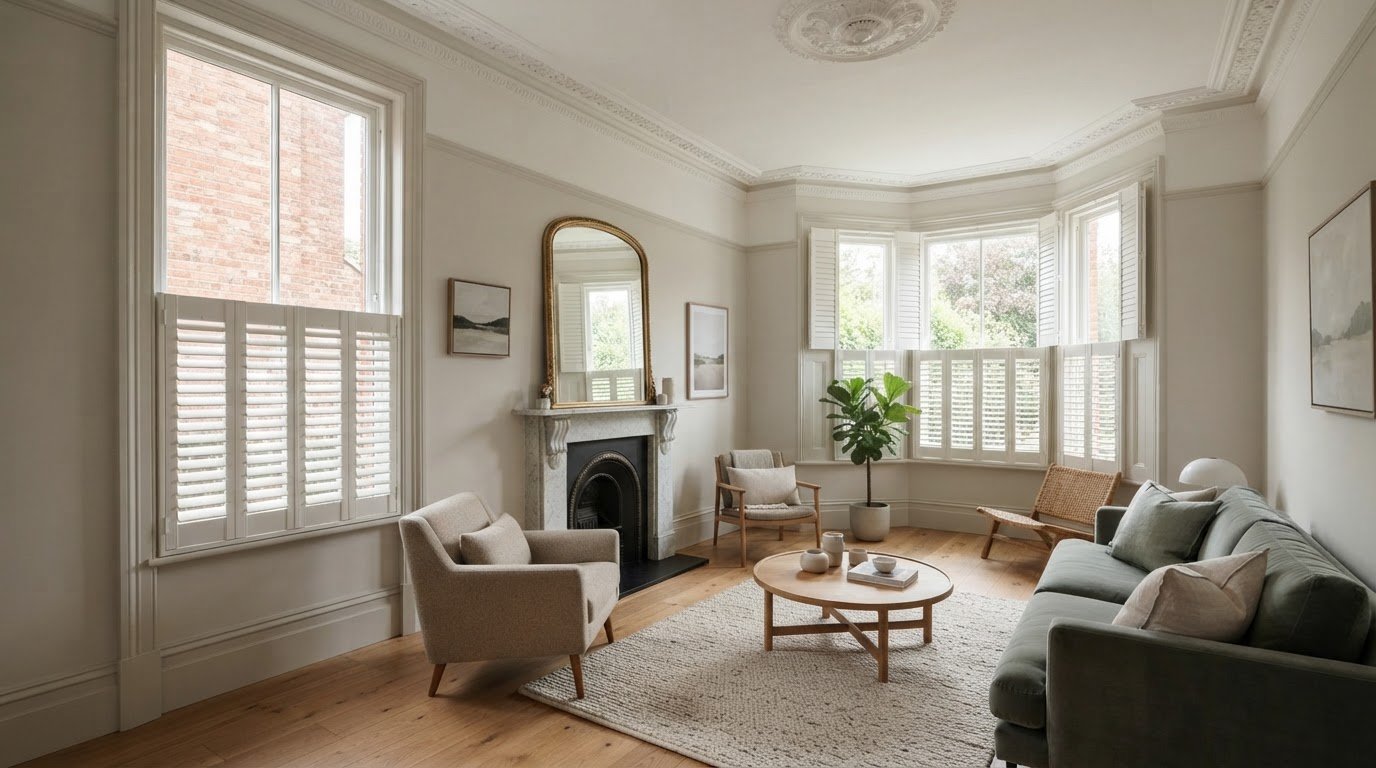
What suits a bay window may not be right for the sash windows in the next room. Choosing victorian house window shutters is about more than finding a style that feels at home in a period property. Consider each window’s shape and condition, the room’s character, and how you use the space, including your needs for privacy and daylight.
This guide compares shutter configurations for different Victorian windows and explains what to check before choosing. You’ll find practical ways to assess sash and bay windows, set priorities room by room and prepare for an in-home consultation, measuring and professional fitting. That makes it easier to choose for each window while keeping the home’s original character in mind.
Key Takeaways
- Choose victorian house window shutters by considering each window’s shape and condition alongside the room’s privacy and daylight needs.
- Compare configurations for coverage, light and appearance instead of assuming one style will suit every period home.
- For sash and bay windows, check the recess, frame condition, handles and window operation before deciding.
- Use a room-by-room checklist to set priorities, then have the windows measured before settling on an option.
- Know what to expect from the process, from discussing your needs and reviewing a no-obligation quote to arranging professional fitting.
Victorian House Window Shutters: What Should You Consider First?
Victorian homes often have tall windows, generous proportions and distinctive period details. But no two properties are quite alike, and windows in the same house can differ in shape, condition and use. The right victorian house window shutters depend on the window, the room and the balance you want between privacy and daylight.
Start by deciding what matters most in each room, rather than choosing one arrangement for the whole house. This homeowner’s guide to elegant window shutters offers broader inspiration. Here, the focus is on practical questions to ask before comparing options. For a basic overview of shutters, see Window shutter.
Which Victorian window details affect shutter choices?
Start with the frame and recess, noting their condition and depth. Check where handles sit and whether anything could obstruct access or the window’s usual operation. These details can affect which arrangements are practical, so don’t make a decision based on appearance alone.
Consider how a shutter would sit against the window’s proportions and existing period features. The aim is to complement the room, not cover details without considering their character. If the frame is irregular or the recess is shallow, make a note to raise it during measuring.
What do you want shutters to do in each room?
Rank your priorities for daylight, privacy, appearance and everyday use. A street-facing sitting room may need more privacy than a room overlooking a secluded garden. In a bedroom, you might prioritise privacy and the look of the shutters when closed, while still considering how much daylight you want during the day.
Assess each room separately before choosing a consistent look for the whole house. A shared colour or finish can help create a sense of flow, but the best configuration may vary with the window and how you use the space. There isn’t one universally right Victorian style. First, decide what you need each shutter to do.
Which Shutter Styles Suit Victorian House Windows?
Different shutter configurations offer different balances of coverage, daylight, privacy and visual detail. When considering Victorian house window shutters, compare each option with the window’s proportions and the way you use the room. Don’t assume one style will suit every period home.
The configurations below are useful starting points to discuss. Availability and suitability depend on the specific window, so ask about them during a professional consultation. For UK historical context, the Building Conservation Directory’s history of window shutters explores their development and traditional details. Use this background alongside an assessment of your own home.
| Configuration | Potential fit | Practical benefit | Detail to check |
|---|---|---|---|
| Full-height | Tall windows where broad coverage is being considered | Can provide privacy across more of the window | How coverage affects daylight, handles and window opening |
| Café-style | Rooms where privacy is most needed at the lower part of the window | Leaves the upper area open to admit daylight | Whether the uncovered section gives enough privacy |
| Tier-on-tier | Windows where separate upper and lower sections may suit the proportions | Sections can be arranged independently | Availability, proportions and how the sections will be used |
Are full-height shutters a good fit for tall windows?
Full-height coverage is one option to discuss for a tall Victorian window, subject to accurate measuring. Covering more of the window may offer greater privacy, but consider how much daylight you want and whether the arrangement leaves comfortable access to handles and the usable opening. Check these practical points before choosing based on appearance alone.
When might café-style or tier-on-tier shutters work?
Café-style coverage may suit a street-facing room where you want privacy below while leaving the upper part of the window open to light. Tier-on-tier shutters have separate upper and lower sections that can be arranged independently, if this configuration is available and suitable. Compare both with your privacy needs, window proportions and preferred look. If you’re unsure how a configuration might work on your windows, discuss your shutter options during a professional consultation.
Will Shutters Work on Victorian Sash and Bay Windows?
They may, but there isn’t a reliable yes-or-no answer for every Victorian sash or bay window. The frame’s condition, recess depth, available fixing space and the way the window operates all affect what may be practical. A shutter can look right in a photograph yet be unsuitable for a particular opening, so assess visual fit and practical fit separately.
That distinction matters in a period home, where existing details and window function need to be considered together. The Building Conservation Directory’s history of window shutters provides useful context on how shutter designs and hardware developed in the UK. For your own windows, a professional should assess the actual frames and measurements before recommending an arrangement.
What should you check before choosing shutters for sash windows?
Note how each sash opens, where its handles sit and whether existing fittings project into the recess. These details can affect fixing space and access to the window. Ask how a proposed arrangement would let you open and use the sash as intended. Don’t assume it will work just because the same configuration has been used on another sash window.
Frame condition is another point to raise. If the timber is uneven, worn or altered, mention this during the assessment. Measuring and discussing the individual opening helps establish what may be suitable, but compatibility should only be confirmed after the specific window has been checked.
How can shutters be planned around a Victorian bay window?
A bay needs more than one measurement. Each section may sit at a different angle, and the available fixing space can vary across the opening. An on-site assessment lets a fitter consider the sections together instead of relying on a general assumption about the bay’s shape.
Consider the overall appearance as well as the fit of each panel. You may want the shutters to look consistent across the bay, but the arrangement also needs to suit its angles, frames and available space. Discuss how the sections could work as a whole and how access to each window will be maintained.
For a more detailed look at what professional installation involves, read this professional blind fitting guide. The same care with measuring and assessing each opening is valuable when considering victorian house window shutters, particularly for older or shaped windows.
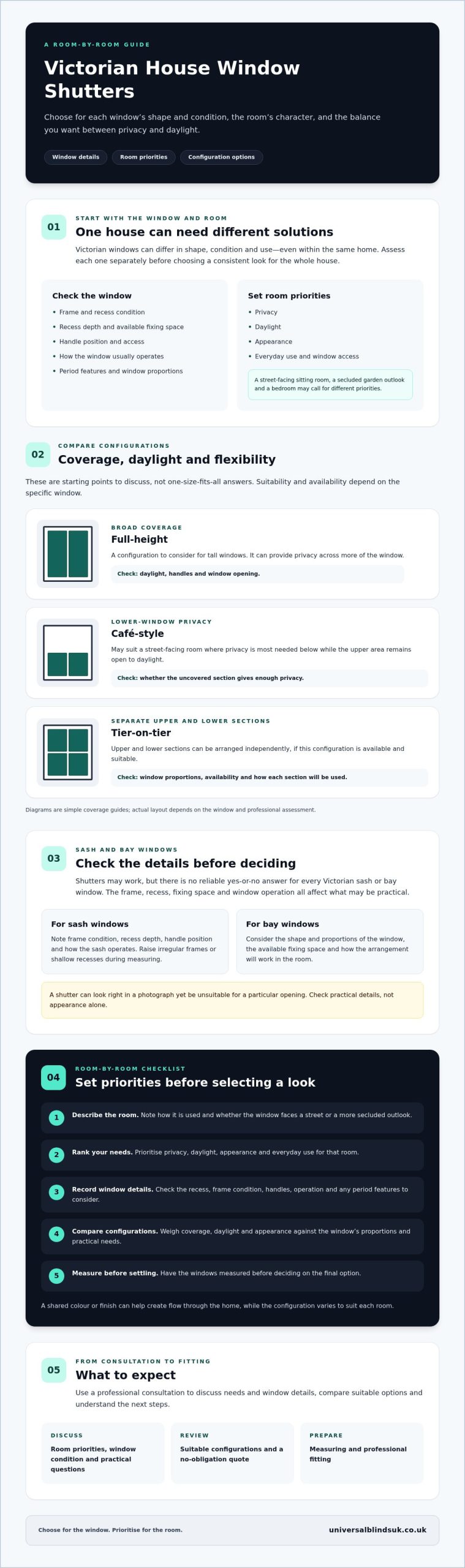
How to Choose Victorian House Shutters: A Room-by-Room Checklist
A room-by-room approach helps you choose victorian house window shutters to suit the way you live, rather than forcing every window into the same solution. Use this five-step checklist to organise your priorities before discussing configurations and confirming measurements.
- 1. Assess the room. Note how you use it, how much daylight you enjoy and whether privacy is a concern.
- 2. Inspect the window. Record its shape, frame condition, handles and how it opens. Include access constraints or details that could affect fitting.
- 3. Set your priorities. Rank privacy, daylight, appearance and everyday use. Decide which matter most for each window.
- 4. Compare options. Discuss possible configurations in relation to your priorities and the window’s proportions. Ask what is available and suitable for that opening.
- 5. Confirm measurements. Have the windows measured before making a final decision, especially if openings differ or have unusual shapes.
How should you match shutter decisions to each room?
In a living area, you might want to retain a bright feel while gaining privacy, and choose a look that sits comfortably with the existing interior. In a bedroom, consider the privacy you need and whether the arrangement will leave practical access to the window. In overlooked rooms, check sightlines from outside at different times of day. Nearby pavements, neighbouring windows and the room layout can all affect how private a space feels. Avoid assuming one arrangement will suit every room.
What should you prepare for a shutter consultation?
A little preparation makes it easier to discuss your home’s individual details. List the windows you’re considering and note unusual shapes, ageing frames, awkward access or handles that could affect how they open. Photos can help show the room and window, while notes on how each window operates give the fitter useful context.
Bring your priorities for each room, your preferred appearance and any questions about available configurations. Universal Blinds UK offers a complimentary home consultation and measuring, followed by a no-obligation quote. You can discuss the options in your own rooms and have the measurements assessed before deciding.
Arrange a complimentary home consultation to review your windows, priorities and measuring needs.
From Victorian Shutter Consultation to Professional Fitting
Choosing shutters for a Victorian home is easier when you know what happens after you identify your priorities. A clear process gives you the chance to discuss individual windows, check measurements and review the options before deciding whether to proceed. For victorian house window shutters, this window-by-window assessment can be especially useful when openings differ in shape, condition or operation.
- Discuss your needs. Talk through how you use each room, the look you want and your priorities for privacy and daylight.
- Measure the windows. A professional measuring visit can assess each opening, including period details that may affect suitability.
- Review the quote. Check what has been discussed and quoted, and ask about any options or details you’re unsure of. A no-obligation quote gives you time to consider the proposal before committing.
- Arrange fitting. If you decide to proceed, confirm the fitting arrangements and practical details with the provider.
What happens during an in-home shutter consultation?
An adviser can review the windows with you, discuss each room’s priorities and explain which options may be worth considering. Professional measuring helps assess the individual openings before a bespoke order is considered. Use the visit to ask which configurations are available, whether they appear suitable for each window and what fitting or access considerations to keep in mind. You don’t need to have every answer in advance.
Universal Blinds UK provides a complimentary home consultation, measuring and a no-obligation quote. The consultation gives you the opportunity to compare options in your own rooms and discuss your windows before deciding.
How can you choose a local shutter fitting service?
Look for a provider that explains each step clearly, from consultation and measuring through to quotation and professional fitting. Ask what the quote includes and how the proposed solution accounts for your particular windows. You can also read customer feedback, checking that it comes from genuine, verifiable customers and reflects the service you’re looking for.
Universal Blinds UK is a family-run business serving customers around the West Midlands and supplying and fitting made-to-measure shutters. If you’re in the region and would like to discuss your options, discuss made-to-measure shutters with the team.
Choose Shutters That Feel Right for Your Victorian Home
The best victorian house window shutters aren’t simply the ones that match a period look. They’re the options assessed for each window’s condition and proportions, then matched to how you use the room. Sash and bay windows may need particular attention to measuring, access and operation before a suitable configuration can be confirmed.
Start with your priorities for privacy, daylight and appearance, then consider them room by room. Compare options with a professional who can assess your windows and explain the next steps clearly.
Universal Blinds UK is a family-run business serving customers around the West Midlands. Its service includes a complimentary home consultation and measuring, a no-obligation quote, and professional fitting. You can ask questions before deciding on the details.
Arrange a complimentary home consultation and explore made-to-measure shutters. A careful assessment can help you find an option that respects your home’s character and suits everyday life.
Frequently Asked Questions
Are shutters suitable for Victorian sash windows?
Shutters may be suitable for Victorian sash windows, but the specific frame and opening should be assessed first. Check how the sash moves, where handles and fittings sit, and whether the recess offers suitable fixing space. These details can affect access and the recommendation. A professional measurement helps establish what may work for your window, rather than relying on a general rule or assuming every sash can take the same configuration.
Which shutters look best in a Victorian house?
The best-looking option depends on the window’s proportions, the room’s character and the effect you want. Full-height coverage, café-style coverage or separate upper and lower sections can create different visual impressions and balances of privacy and daylight. Treat these as configurations to discuss, not a universal ranking. Compare how each might sit alongside your period details, then confirm which options are available and suitable for your windows.
Can you fit shutters to a Victorian bay window?
Shutters may be possible for a Victorian bay, but each section needs to be assessed individually. The bay’s angles, frame condition, recess depth and available fixing space can affect the fit and panel arrangement. An on-site assessment is more reliable than assuming the same measurements or configuration will suit every bay. Ask the fitter to consider both the practical fit of each section and the appearance across the whole window.
Do shutters block all the light in a room?
Not necessarily. The amount of daylight depends on the shutter arrangement and how you position it. Opening the panels can let more light into the room, while closing them provides greater coverage. The result also depends on your particular window and surrounding conditions, so don’t assume shutters will create complete darkness or leave a room bright. Discuss your preferred balance of privacy and daylight when comparing configurations.
How are shutters measured for older Victorian windows?
Measuring should take account of the individual opening, rather than treating an older window as a standard size. A professional will assess details such as the frame, recess, handles, window operation and any irregularities that may affect the fit. For a sash or bay, make sure the assessment considers how each part opens and relates to the others. Universal Blinds UK provides a measuring service as part of its shutter service.
Are bespoke shutters worth considering for a period home?
Bespoke shutters are worth considering if your windows have individual dimensions or details that make a standard assumption unhelpful. A made-to-measure approach allows the specific opening to be assessed alongside your preferences for privacy, daylight and appearance. It doesn’t mean every configuration will suit every Victorian window, so confirm availability and fit with a professional. Comparing options against each room’s needs can help you decide whether a tailored solution is right for your home.
What happens at a shutter home consultation?
A home consultation is an opportunity to discuss your rooms, window details and the look and function you want from shutters. The adviser can assess the openings, take measurements and talk through options to check availability and suitability. Universal Blinds UK provides a complimentary in-home consultation, measuring and advice, followed by a no-obligation quote. You can ask questions and review the proposal before deciding whether to arrange professional fitting.