

Maximising Light with Window Shutters: The Comprehensive 2026 Homeowner Guide
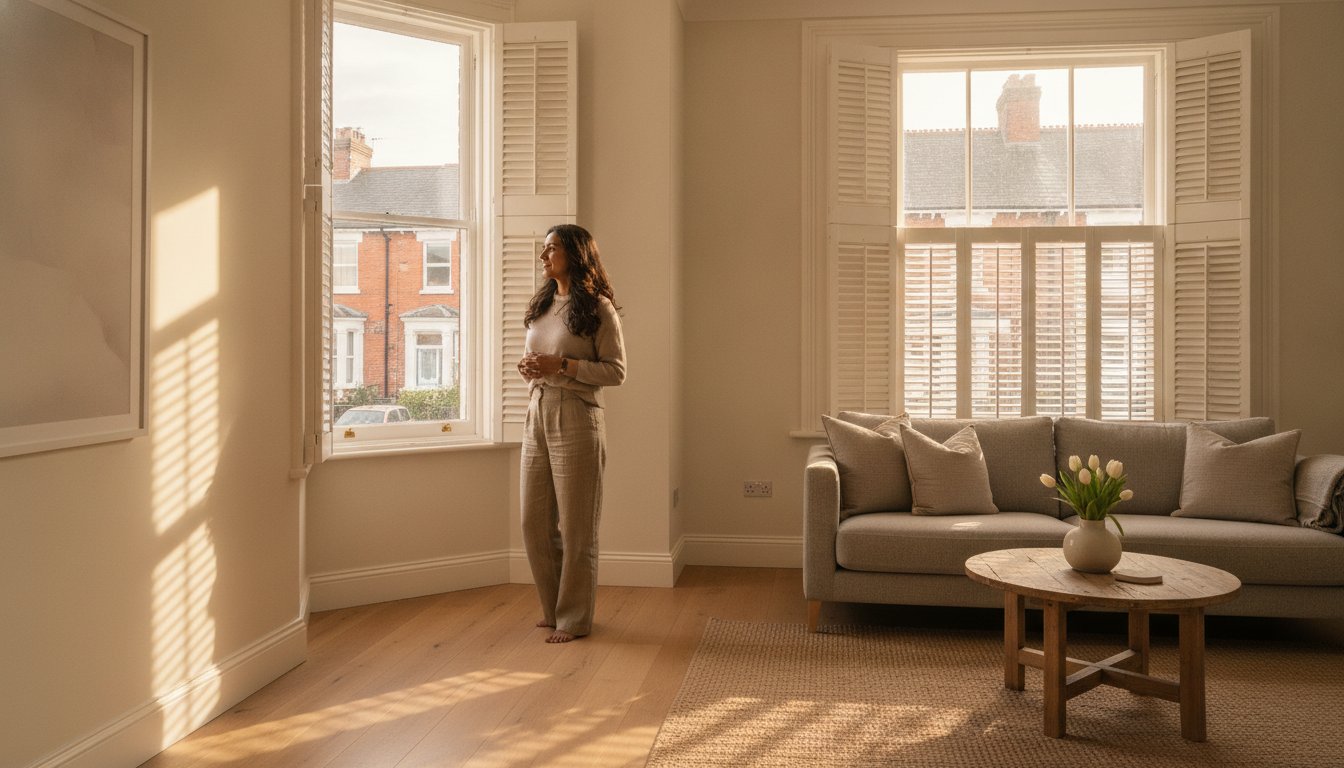
You might think that adding solid window coverings would inevitably plunge your living room into darkness, but the opposite is often true. It’s a common worry for many homeowners across the UK, especially during those grey winter months when natural light is at a premium. You want to stop neighbours from peering in, yet you don’t want to feel like you’re living in a gloomy box. Finding that balance between seclusion and sunshine often feels like an impossible trade-off.
This guide shows you that maximising light with window shutters isn’t just possible; it’s a science. You’ll discover how the right shutter style, louvre size, and colour choice can actually brighten your home while maintaining total privacy. We’ll clear up the confusion around technical terms and show you how bespoke specifications create a bright, airy atmosphere. From selecting the right materials to the importance of professional installation, you’ll gain the confidence to choose a solution that fits your home perfectly and enhances every ray of sun.
Key Takeaways
- Learn how louvres act as horizontal mirrors to reflect natural light deeper into your home rather than blocking it out.
- Discover the best shutter configurations for North-facing and South-facing rooms to ensure you get the perfect balance of brightness and privacy.
- Understand how choosing the right louvre size and tilt rod options is essential for maximising light with window shutters in traditional UK homes.
- Find out why white and off-white finishes provide a crucial “bounce” effect that amplifies ambient light across your interior surfaces.
- See why professional, made-to-measure fitting is the only way to eliminate unwanted light bleed and ensure your shutters integrate perfectly with your window frames.
The Shutter Light Myth: Do Shutters Make a Room Dark?
Many homeowners across the West Midlands hesitate to install shutters because they fear losing natural light. It’s a logical concern. You’re adding a solid structure to your window, so it’s easy to assume the room will get darker. However, this is a common misconception. When you’re maximising light with window shutters, you’re actually using the louvres as architectural tools to manipulate how the sun enters your space.
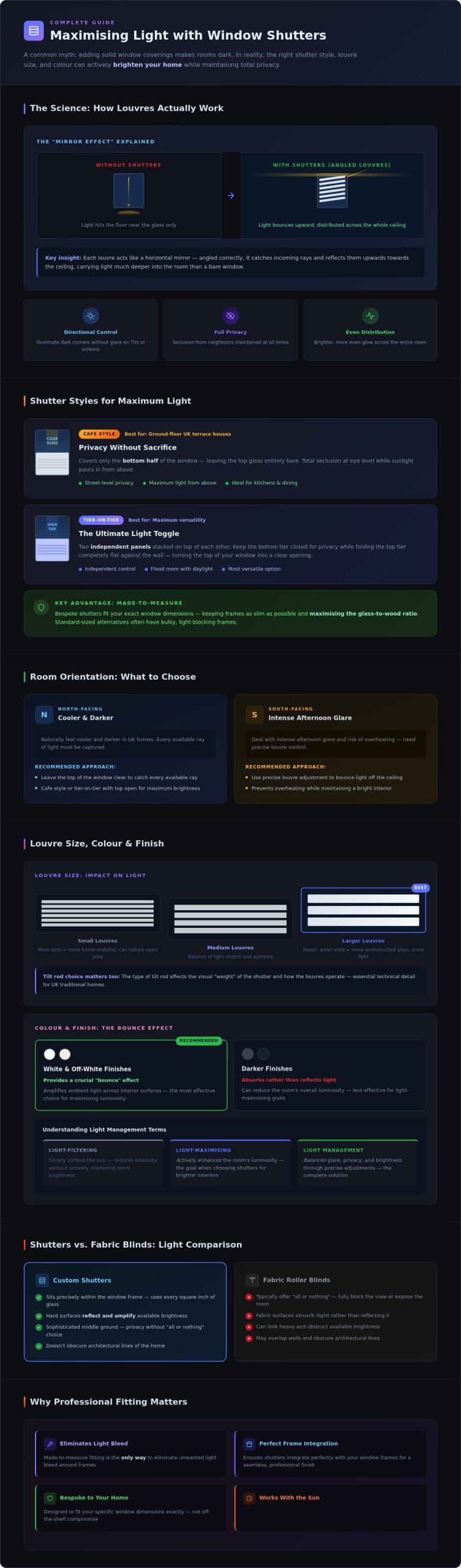
Think of each louvre as a horizontal mirror. When angled correctly, the surface of the slat catches incoming rays and reflects them upwards towards the ceiling. This “bounce” effect carries light much deeper into the room than a bare window would. While an open window allows light to hit the floor near the glass, shutters distribute it across the entire ceiling, creating a brighter, more even glow. This unique “directional light control” means you can illuminate a dark corner without suffering from direct glare on your television or computer screen.
Shutters vs Blinds: Which Wins for Natural Illumination?
Choosing between blinds vs curtains often leaves homeowners stuck with an “all or nothing” choice. Fabric roller blinds, for instance, typically either block the view entirely or expose the room to everyone passing by. Shutters provide a sophisticated middle ground. Because they sit precisely within the window frame, they don’t overlap the walls or obscure the architectural lines of your home. This streamlined fit ensures you’re utilising every square inch of glass available. Unlike fabric options that can look heavy or absorb light, the hard surfaces of a custom shutter reflect and amplify the available brightness.
The Psychology of a Bright Home in the UK
During our gloomy UK winters, every scrap of daylight matters for our well-being. Living in a dark, shadowy room can feel restrictive, yet we still need privacy from neighbours in busy areas like Walsall. It’s helpful to distinguish between “light-filtering,” which simply softens the sun, and “light-maximising,” which actively enhances the room’s luminosity. Light management is the ability to balance glare, privacy, and brightness through precise adjustments. By maximising light with window shutters, you aren’t just covering a window; you’re improving the daily atmosphere of your living space with a professional, bespoke solution.
Choosing Shutter Styles for Maximum Illumination
Selecting the right configuration is vital for achieving the perfect balance of brightness and seclusion. Every shutter design has a different “glass-to-wood” ratio; this refers to how much of your window is covered by the frame and rails versus the adjustable louvres. For maximising light with window shutters, you want to keep the frame as slim as possible. Bespoke, made-to-measure shutters offer a significant advantage here. They are designed to fit your specific window dimensions exactly, which avoids the bulky, light-blocking frames often found in standard-sized alternatives. You can see how these styles look in practice by viewing our Homeowner Guide to Elegant Window Shutters.
Your room’s orientation should also dictate your choice. North-facing rooms in the UK often feel naturally cooler and darker. These spaces benefit from styles that leave the top of the window clear to catch every available ray. South-facing rooms, however, deal with intense afternoon glare. In these areas, you need a style that allows for precise louvre adjustment to bounce light off the ceiling while preventing the room from overheating. This level of customisation ensures that your window coverings work with the sun rather than against it.
Cafe Style Shutters: Privacy Without Sacrifice
Cafe style shutters cover only the bottom half of the window, leaving the top glass entirely bare. This design is the gold standard for ground-floor UK terrace houses where privacy from the street is essential. You gain total seclusion at eye level while allowing sunlight to pour in from above. It’s an ideal solution for maximising light with window shutters in high-traffic areas. Many of our customers find the charm of cafe style shutters works perfectly in kitchens and dining rooms where you want a bright, bistro-like feel without feeling overlooked.
Tier-on-Tier Shutters: The Ultimate Light Toggle
If you want the most versatile option, tier-on-tier designs are unbeatable. They feature two independent sets of panels stacked on top of each other. You can keep the bottom tier closed for privacy while folding the top tier back completely flat against the wall. This effectively turns the top of your window into a clear opening, flooding the room with daylight. Homeowners often choose tier on tier shutters to replace heavy, dated curtains that can make Victorian bay windows feel small. To see which style would best suit your home, you might consider booking a free measuring and consultation session to see samples in your own light.
Louvre Sizes and Tilt Rods: The Technical Side of Light
The physics of light entering your home depends heavily on the physical space between your shutter slats. When you’re maximising light with window shutters, the louvre size you choose acts as the “aperture” of your window. A wider louvre creates a larger physical gap, allowing more sunlight to flood the room when the panels are open. However, it’s not a one-size-fits-all decision. While large louvres are excellent for modern glass, they can sometimes look out of proportion on the smaller, charming cottage windows often found in rural parts of the West Midlands. A professional measurement ensures the scale of the wood never overwhelms the glass.
Comparing Louvre Sizes: 63mm vs 76mm vs 89mm
The choice of louvre width significantly impacts both the view and the brightness of your interior. Each size offers a different level of light diffusion:
- 63mm louvres: These provide a traditional look. Because there are more slats per panel, there is slightly more wood to obscure the light, but they suit narrow window panes perfectly.
- 76mm louvres: We recommend this as the modern UK standard. It offers a perfect balance, providing a generous gap for light without overwhelming the room’s aesthetics.
- 89mm louvres: These are the ultimate choice for large patio doors or contemporary extensions. The wide gaps ensure an almost unobstructed flow of light, making them ideal for north-facing spaces that need every bit of help.
The Impact of Hidden Tilt Rods
Traditional shutters feature a vertical wooden rod in the centre of the panel to move the louvres. While classic, this rod adds another vertical line that can break up your view. By opting for a “Hidden Tilt” or “Clearview” mechanism, you remove this rod entirely. The Clearview option involves a discreet metal strip on the rear of the panel, providing an unobstructed view of the outdoors. Hidden Tilt is a mechanism concealed within the shutter stile for a cleaner aesthetic.
Removing this central rod can increase your “view-through” by up to 10%. It creates a sleeker, more contemporary look that allows your eyes to focus on the garden rather than the window furniture. It’s a small technical change that makes a noticeable difference when you are maximising light with window shutters and aiming for a bright, modern interior.
Colour, Finish, and Positioning for Brighter Interiors
While the physical structure of your window covering is essential, the aesthetic choices you make are equally powerful. Choosing the right colour and finish is a strategic move for maximising light with window shutters. Darker tones and heavy wood stains might look sophisticated in a large, high-ceilinged room, but they can absorb a significant amount of available light. In a typical UK lounge with standard-sized windows, these darker options can make the space feel somewhat enclosed. To keep your home feeling open and energetic, focus on finishes that treat light as a resource to be shared, not absorbed.
The Power of White Plantation Shutters
White is the most effective choice for light amplification. It has the highest reflectance, meaning it bounces rays back into the room rather than soaking them up. Shades like Vivid White, Silk White, or Pearl allow you to match your existing woodwork while creating an illusion of a much larger window. When a white shutter frame blends with your window reveal, the glass area appears to expand visually. For a deeper look at how these colours transform a space, you can browse our Plantation Shutters Style Guide.
Beyond the colour itself, the finish you choose matters. A silk or gloss finish has a subtle sheen that acts as a reflective surface. Matte finishes are modern and beautiful, but they tend to diffuse light more softly. If your goal is a brilliant, high-energy room, a silk finish provides that extra “ping” of brightness as the sun hits the louvres. This “bounce” effect is particularly useful in West Midlands homes during the darker months, as it makes the most of every lumen entering the house.
Strategic Tilt Angles for Light Tracking
Once your shutters are installed, how you position your louvres changes the atmosphere throughout the day. You aren’t limited to just “open” or “closed.” By maximising light with window shutters through active adjustment, you can track the sun’s path:
- Upward Tilt: Angling the slats so the front edge points up directs light towards the ceiling. This is the best technique for deep rooms, as the white ceiling acts as a giant reflector to illuminate the back of the space.
- Downward Tilt: This is perfect for reducing glare on TV screens or monitors. It keeps the room bright while shielding your eyes from direct sun.
- Mid-Tilt: Setting louvres to a flat, horizontal position provides the maximum “view-through” and ventilation, making it ideal for bright but mild mornings.
To see how these various finishes and colours look under your own roof, you can book a free in-home consultation where we bring our full sample palette directly to your door.
Expert Shutter Fitting in the West Midlands
Achieving the perfect balance of illumination and seclusion requires more than just selecting the right style; it demands absolute precision during installation. When you’re maximising light with window shutters, the quality of the fit is just as important as the louvre size or colour. A professional installation ensures that the shutter frame sits as close to the window glass as possible, preserving every millimetre of your view. At Universal Blinds UK, our heritage as a family-run business in the West Midlands means we understand the specific architectural quirks of local homes, from modern Solihull apartments to traditional terraces in Walsall.
A professional fit also addresses the issue of “light bleed.” This occurs when gaps between the shutter frame and the window reveal allow unwanted streaks of light to enter the room. While a few millimetres might seem insignificant, these gaps can cause distracting glare and compromise your privacy. Our expert fitters use technical assessments to ensure a seamless finish that eliminates these leaks, resulting in a cleaner aesthetic and better light control.
Bespoke Solutions for Victorian Bay Windows
Victorian and Edwardian bay windows are iconic features of Birmingham and the surrounding areas, but they present unique challenges for window coverings. Standard, off-the-shelf solutions often involve bulky frames that obscure a significant portion of the glass. Choosing bay window shutters that are truly made-to-measure allows the frames to follow the exact curve or angle of the bay. This bespoke approach saves space and ensures the shutters don’t feel heavy or intrusive. During our stress-free home consultations, we handle all the complex measurements, so you don’t have to worry about the technicalities of awkward angles.
Why DIY Can Hinder Your Light Goals
It’s often tempting to consider a DIY approach, but ready-made kits can inadvertently work against your goal of a brighter home. DIY shutters frequently rely on thicker, “one-size-fits-all” frames that block more of the glass than necessary. This reduces the overall glass-to-wood ratio, making your room feel smaller and dimmer. Understanding the benefits of professional blind fitting is essential if you want a result that looks elegant and functions perfectly. By maximising light with window shutters through a professional service, you avoid the common pitfalls of misaligned panels and obstructed views.
We pride ourselves on providing a low-pressure environment where our specialists guide you through the decision-making process. Whether you’re in Birmingham, Walsall, or Solihull, we invite you to book a free, no-obligation home consultation. We’ll bring samples directly to your window, allowing you to see exactly how different configurations interact with your home’s unique natural light.
Brighten Your Living Space with Confidence
You don’t have to choose between a private sanctuary and a sun-drenched home. By understanding how louvres reflect light and selecting the right bespoke configurations, you can create an interior that feels both secluded and incredibly airy. We’ve explored how maximising light with window shutters depends on the interplay between louvre size, reflective white finishes, and professional installation. These elements work together to ensure your windows remain a source of energy and warmth throughout the year, even during the greyest British months.
As a family-run heritage business, we’re dedicated to helping homeowners across the West Midlands achieve this balance without any stress. Our specialists provide free measuring and no-obligation quotes, bringing samples directly to your door in Walsall, Birmingham, or Solihull. We handle every technical detail of the professional installation, ensuring your shutters fit perfectly and function beautifully for years to come. We look forward to helping you transform your home into a brighter, more elegant space.
Book Your Free West Midlands Shutter Consultation Today
Frequently Asked Questions
Do shutters make a room look smaller or darker?
Shutters don’t necessarily make a room darker; in fact, they often enhance brightness through reflection. Because custom shutters are made-to-measure, they sit neatly within the window reveal without overlapping your walls. This streamlined look can actually make a room feel larger and more structured. By choosing lighter colours and larger louvre sizes, you ensure that natural light bounces deep into the room rather than being absorbed by heavy fabrics or curtains.
What is the best shutter colour for a dark room?
White is the superior choice for any room that lacks natural illumination. Shades like Vivid White or Silk White have a high Light Reflectance Value, acting as a mirror to bounce sunlight across your ceiling and walls. While dark wood stains look classic, they absorb light, which can make a small space feel enclosed. For those prioritising maximising light with window shutters, a bright white finish with a silk sheen is always our top recommendation.
Which shutter style lets in the most natural light?
Cafe style shutters are often considered the best for light as they leave the top half of the window completely unobstructed. However, Tier-on-Tier shutters offer the most versatility for those who want full coverage. You can fold the top panels back entirely while keeping the bottom panels closed for privacy. This configuration allows a massive amount of daylight to enter from the top, effectively illuminating the entire depth of your living space.
Can I still open my windows fully with shutters installed?
Yes, you can still access and open your windows with ease. Shutter panels are designed to hinge open 180 degrees, allowing you to reach the window handles for cleaning or ventilation. During our professional fitting service, we ensure the frames are positioned so they don’t interfere with the window’s operation. This means you can enjoy fresh air and a clear view whenever you like, then simply swing the panels shut for evening security and privacy.
Are larger louvres better for small windows?
Not always. While larger louvres like the 89mm size provide a bigger gap for light, they can sometimes look out of proportion on small, traditional UK cottage windows. We usually recommend a 76mm louvre for smaller apertures. This size still offers excellent light entry but maintains an elegant aesthetic that doesn’t overwhelm the glass. Our experts will bring samples to your home so you can see which size scales best with your specific window dimensions.
How do I clean my shutters to ensure they reflect light properly?
Keeping your shutters free from dust is essential for maintaining their reflective properties. A build-up of grime can dull the finish, reducing the bounce effect of natural light. We recommend a quick weekly wipe with a dry microfibre cloth or a soft feather duster. For more stubborn marks, a slightly damp cloth is fine, but avoid harsh chemicals that might damage the paint. Clean louvres ensure that every ray of sun is reflected efficiently into your room.
Do shutters provide better light control than Venetian blinds?
Shutters generally offer more nuanced control than standard Venetian blinds. Because shutters are fixed into a solid frame, they eliminate the light bleed that often occurs at the edges of blinds. The thicker, more stable louvres also allow you to direct light with greater precision, bouncing it off the ceiling to illuminate dark corners. While both products are effective, the bespoke nature of shutters provides a more permanent, architectural solution for maximising light with window shutters.
What happens during a free home consultation with Universal Blinds UK?
Our free consultation is a relaxed, no-obligation process designed to help you make an informed choice. One of our specialists will visit your home in the West Midlands to take precise measurements and show you our full range of shutter samples. We’ll discuss your light and privacy needs, explain the technical options like louvre sizes, and provide a clear quote. It’s a stress-free experience with no pressure to buy, focusing entirely on your home’s unique requirements.