

Best Blinds for Tilt and Turn Windows: The Expert Guide to Style and Function
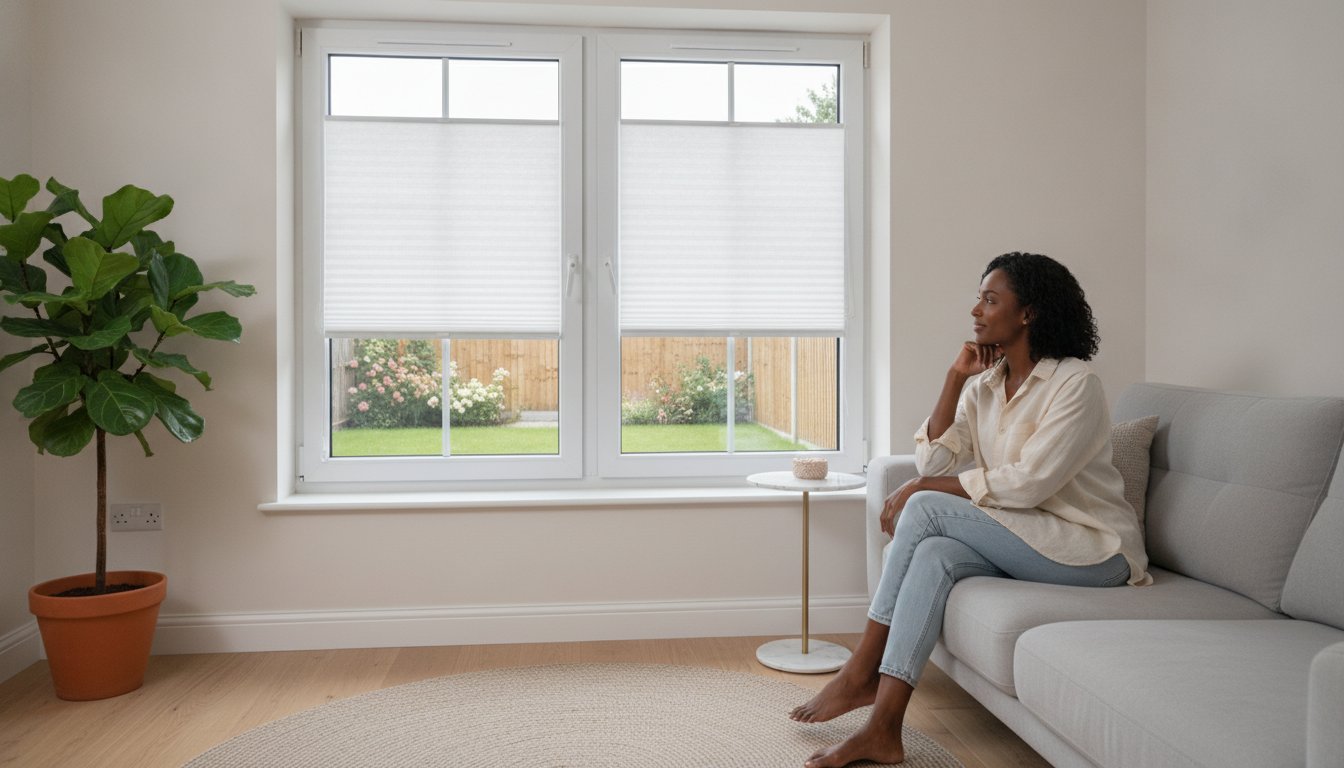
Why should you have to choose between a beautifully dressed room and a window that actually functions? If you’ve ever felt the frustration of a standard blind clattering against the frame or obstructing the handle every time you tilt your window, you aren’t alone. It’s a common struggle for homeowners who want to maintain the sleek, modern aesthetic of their property without sacrificing the practical benefits of their specialised glazing.
We understand that your home is an investment, and the fear of drilling into expensive UPVC frames to fix light gaps is entirely valid. This expert guide is here to show you the best blinds for tilt and turn windows, focusing on bespoke, made-to-measure solutions that integrate directly with the sash. You’ll discover how professional no-drill systems allow for a seamless finish where the blind moves as one with the window. We’ll explore stylish, child-safe options that provide full coverage and effortless operation, ensuring your windows look elegant and work perfectly every single time.
Key Takeaways
- Learn why traditional blinds often fail with inward-opening mechanisms and how integrated systems resolve the common “recess conflict.”
- Discover why “no-drill” options like Perfect Fit and INTU are considered the best blinds for tilt and turn windows due to their seamless operation.
- Explore how custom-made plantation shutters can be tailored with slimline frames to maintain your window’s full range of movement.
- Understand the “millimetre margin” and why professional measuring is vital to prevent blinds from interfering with your window handles or locking mechanisms.
- Gain insights into achieving a professional, clatter-free finish that allows you to tilt for ventilation or turn for cleaning without any mechanical interference.
Understanding the Tilt and Turn Window Challenge
A Tilt and Turn Window is a sophisticated piece of engineering that has become a staple in modern UK architecture. Its dual-action mechanism is its greatest strength, allowing you to tilt the top of the sash inwards for secure, weather-resistant ventilation or swing it open like a door for easy cleaning. However, this versatility creates a unique set of obstacles when it comes to choosing window dressings. Because the window opens into the room rather than pushing outwards, any covering fitted within the window recess becomes a physical barrier to the window’s movement.
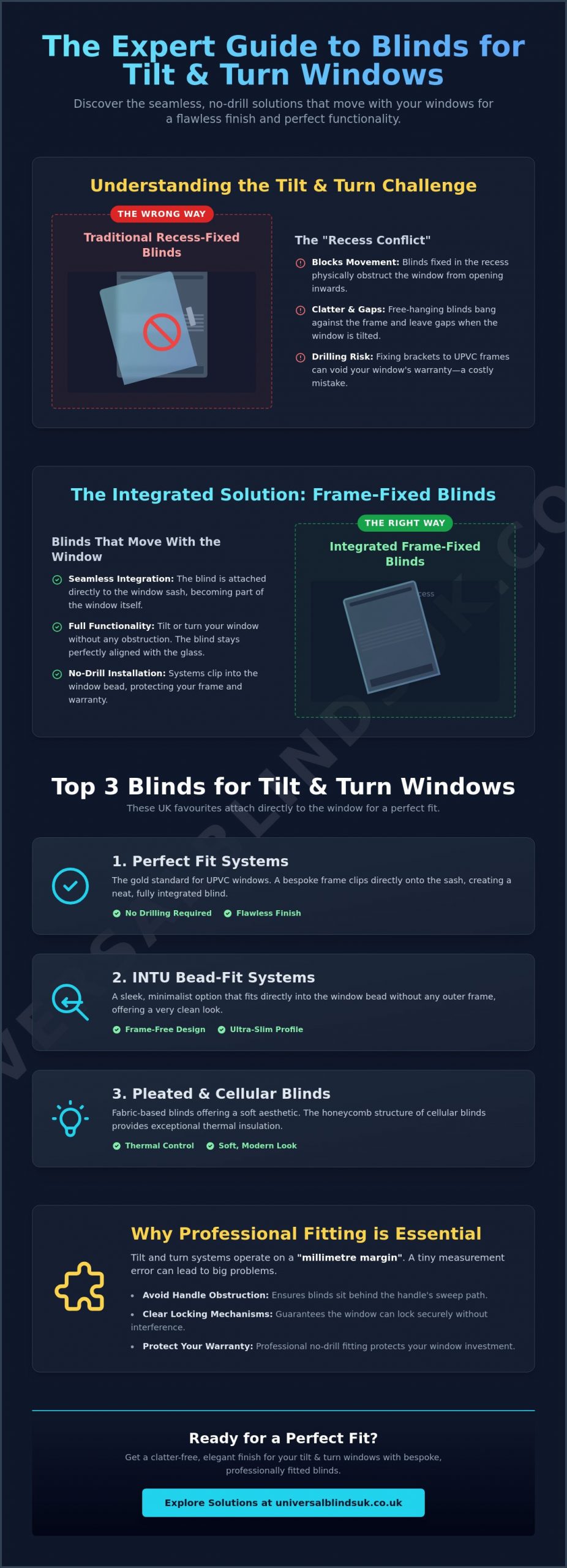
This “Recess Conflict” is the most common complaint we hear from homeowners. When you try to use the “turn” function, a standard blind will often block the sash from opening more than a few inches. Even in “tilt” mode, a free-hanging blind stays vertical while the window leans back, creating an annoying gap. This leads to the “clatter” effect, where the blind bangs rhythmically against the glass or frame whenever there’s a slight breeze. Finding the best blinds for tilt and turn windows requires moving away from traditional hanging styles and looking toward integrated solutions.
To better understand how these windows operate and why they require a specific approach, watch this helpful video:
Why Traditional Recess Blinds Often Fail
Standard blinds typically rely on brackets screwed into the lintel or the side of the window recess. For tilt and turn windows, this is often a recipe for disaster. Most of these windows are high-specification UPVC or aluminium units, and drilling into the frames to secure standard brackets can actually void your manufacturer’s warranty. It’s a costly mistake that many DIY enthusiasts realise too late.
Beyond warranty concerns, traditional blinds leave unsightly light gaps at the edges because they can’t sit flush against the glass. There is also the daily frustration of operation. If you want to open your window fully, you have to raise the blind entirely first. If you forget, you risk damaging the fabric or the blind mechanism as the window sash forced its way past. It’s an inefficient way to live that compromises the very benefits these windows were designed to provide.
The Integrated Solution: Blinds That Move With the Window
The secret to success lies in choosing “frame-fixed” coverings rather than “recess-fixed” ones. By attaching the blind directly to the window sash, the covering becomes part of the window itself. This ensures 100% functionality in both tilt and turn positions. Whether the window is closed, tilted, or wide open, the blind stays tensioned and perfectly aligned with the glass.
This approach offers a sleek, “built-in” look that complements the clean lines of modern glazing. You won’t have to worry about loose cords or fabric obstructing the handle sweep, as the best blinds for tilt and turn windows are designed with slimline profiles that sit behind the handle. This ensures you can grip, turn, and lock your window without ever wrestling with your blinds.
The Top 3 Blind Styles for Tilt and Turn Windows
Finding the best blinds for tilt and turn windows means looking for systems that attach directly to the window sash. Since the window needs to move freely, these blinds are designed to sit within the “bead” of the window, the area where the glass meets the frame. This ensures the blind moves as one with the window, whether you are tilting it for a breeze or turning it wide for cleaning. In the UK, three specific styles have become the go-to solutions for homeowners seeking both elegance and practicality.
- Perfect Fit: A versatile frame-based system that clips into place.
- INTU: A sleek, bead-fit option that requires no outer frame.
- Pleated and Cellular: Fabric-based blinds that offer a slim profile and exceptional thermal control.
Perfect Fit Systems: No Drilling Required
Perfect Fit is widely considered the gold standard for modern UPVC windows. This system uses a bespoke frame that snaps onto the window sash, creating a neat, integrated appearance. The installation is remarkably simple; it uses thin metal brackets that slide between the glass and the rubber gasket. This “no-drill” approach is a game-changer for anyone worried about window warranties or those living in rented accommodation. It’s a secure, permanent-feeling solution that leaves no marks if you ever decide to change your decor.
INTU Blinds: The Minimalist Choice
If you find the additional frame of a Perfect Fit system a bit too bulky, INTU blinds offer a more streamlined alternative. These blinds lack the side frames, sitting instead directly against the glass beads. They use a clever tension system that keeps the blind taut against the glass. This is crucial for tilt and turn functionality, as it prevents the blind from sagging or flapping when the window is tilted. Because they have fewer components, they’re often easier to wipe down and maintain over time.
Both systems allow for a variety of blind types, including aluminium Venetians for light control or pleated fabrics for a softer look. Pleated and cellular options are particularly popular for their energy-saving benefits. The honeycomb structure of cellular blinds creates a thermal barrier that helps regulate your room’s temperature throughout the year. If you aren’t sure which style would look best in your space, you can explore our full range of made-to-measure blinds during a local home visit.
For those who want a classic aesthetic, integrated Venetian blinds are a brilliant choice. These allow you to tilt the slats to manage glare while the window itself is tilted open. It’s the perfect balance of privacy, light management, and ventilation that standard blinds simply cannot match. By choosing a system that moves with the window, you eliminate the clatter and light gaps that plague traditional installations.
Custom Shutters: The Premium Alternative
While integrated fabric systems are often praised as the best blinds for tilt and turn windows, they aren’t the only premium option available. Many homeowners seek a more substantial, architectural solution that offers superior durability and a timeless aesthetic. Custom-made plantation shutters provide exactly that. Unlike fabric coverings, shutters offer a solid structure that enhances the window’s presence in the room. They provide exceptional light-blocking capabilities and a level of privacy that thinner materials simply cannot replicate.
Choosing shutters is often a decision based on longevity. While fabric blinds may eventually need replacing due to wear or changing trends, shutters are designed to last for decades. They offer a robust barrier that improves thermal insulation and significantly boosts your home’s kerb appeal. From the street, the uniform look of shutters creates a sophisticated, high-end appearance that fabric blinds often struggle to match.
Can You Fit Shutters to Tilt and Turn Windows?
Many people believe shutters are reserved for traditional casement windows. This is a myth. By using a specialised slimline frame, often referred to as an “Urban Shutter” style, we can mount the shutter directly onto the window sash. This clever engineering ensures that when you tilt the window for a breeze, the shutter tilts with it. When you turn the window inwards to clean the glass, the shutter remains securely attached and moves as one unit. It’s a seamless experience that preserves the window’s full range of motion. If you’re interested in the broader benefits of this style, you might enjoy reading A Homeowner’s Guide to Elegant Window Shutters.
Style and Material Considerations
The choice of material depends heavily on where your windows are located. In rooms prone to moisture, such as bathrooms or kitchens, faux wood is the most reliable option. It’s resilient, waterproof, and won’t warp over time, making it perfect for windows that are frequently opened for ventilation. For bedrooms or lounges, real wood provides a lightweight and elegant finish that adds character to your property.
One of the greatest advantages of shutters is the louvre control. You can angle the slats to direct light exactly where you want it; this is particularly useful when the window is tilted open. It’s important to remember that shutters aren’t just a window dressing. They are a permanent architectural upgrade that provides a finished, sophisticated look to any room. While you might initially search for the best blinds for tilt and turn windows, you may find that the structural benefits and kerb appeal of custom shutters are the more rewarding long-term investment.
Why Professional Measuring and Fitting is Essential
When you choose the best blinds for tilt and turn windows, the difference between a flawless finish and a costly mistake often comes down to what we call the “Millimetre Margin.” Standard casement windows are relatively forgiving; tilt and turn windows are not. Because the blind must sit precisely within the glass beads and move as one with the sash, even a 1mm measurement error can cause the hardware to catch on the frame or, worse, prevent the window from locking securely. It’s a technical challenge that requires more than just a standard tape measure.
There is also the physical risk to your property to consider. Most modern tilt and turn windows are high-value UPVC or aluminium units with complex internal structures. Attempting a DIY installation that involves drilling can be disastrous. If you hit the internal steel reinforcement or damage the delicate multi-point locking mechanism, you could face an expensive repair bill and a voided warranty. A professional assessment ensures your window’s integrity stays intact while achieving a sleek, integrated look.
The Complexity of Handle Clearance
The handle on a tilt and turn window needs to rotate 180 degrees to move from the closed to the “turn” position. If your blind hardware is too bulky or positioned incorrectly, the handle will strike the headrail or the fabric during its sweep. Professional fitters understand these clearances intimately. They use specialised spacers or slim-line headrails to ensure the handle moves freely without any mechanical interference. You can learn more about why this technical expertise is so valuable in our guide on the benefits of professional blind fitting.
Avoiding the Pitfalls of Online Ordering
Many homeowners are tempted by the low upfront prices of online DIY kits, but these often come with hidden long-term costs. “Cheap” blinds ordered online frequently arrive with generic tensioning that hasn’t been calibrated for the specific weight of the fabric you’ve chosen. This leads to sagging or that annoying clattering sound every time you tilt the window for ventilation.
By choosing a local West Midlands expert, you gain the peace of mind that comes with a perfectly balanced system. During a home visit, you also get to see fabric samples in your own room’s natural light. This is vital; a colour that looks perfect on a backlit computer screen can look entirely different in your lounge. We’ll ensure your chosen style complements your decor perfectly while functioning without a hitch. If you’re ready to see how the best blinds for tilt and turn windows can transform your home, book your free home measuring service today.
Bespoke Solutions from Universal Blinds UK
Choosing the best blinds for tilt and turn windows is a decision that impacts the comfort and style of your home for years to come. At Universal Blinds UK, we believe that such a choice shouldn’t be made through a computer screen or with a stressful DIY kit. As a family-run business with deep roots in Walsall, we’ve built our reputation on providing a personal, heritage-led service that treats every window as a unique project. We don’t just supply window coverings; we provide a complete, end-to-end service that ensures your investment is protected by professional expertise.
Our process is designed to be entirely transparent and customer-first. We understand that inviting someone into your home requires trust. That’s why we promise a low-pressure sales environment where the focus is on helpfulness rather than hitting targets. From the moment you first get in touch to the final professional fitting, you’ll be guided by specialists who understand the technical nuances of modern glazing. We take care of the heavy lifting, from the initial technical assessment to the precise implementation, leaving you with a seamless, elegant finish.
Serving Walsall and the West Midlands
While our heritage began in Walsall, our dedicated team now supports homeowners across the entire region. We regularly provide tailored solutions to customers in Birmingham, Coventry, and Solihull, bringing our mobile showroom directly to your doorstep. Choosing a local provider means you benefit from a level of accountability and care that national retailers often lack. You’ll often deal with a dedicated representative who takes personal pride in the quality of your installation. If you’re looking for a service that combines high standards with a friendly, approachable face, we are Your Local Blinds Experts.
Book Your Free Home Consultation
The most effective way to find the best blinds for tilt and turn windows is to see them in the context of your own home. During our free home consultation, we’ll bring a wide range of samples, including the latest Perfect Fit and INTU systems, so you can feel the quality of the materials and see how the colours react to your room’s lighting. We’ll perform a professional measure of your windows, accounting for every millimetre of handle clearance and frame depth.
After our visit, we provide a clear, no-obligation quote tailored specifically to your requirements. There’s no commitment and no stress; just honest advice from people who care about the result as much as you do. Our goal is to ensure you feel secure and confident in your decision, knowing your tilt and turn windows will remain fully functional and beautifully dressed. Contact Universal Blinds UK today to book your free consultation and take the first step toward a more elegant, comfortable home.
Achieve the Perfect Balance of Style and Function
Your tilt and turn windows offer incredible versatility. Your window dressings should enhance that experience, not hinder it. By choosing integrated systems like Perfect Fit or INTU, you ensure your blinds move as one with the window sash. This eliminates clatter and protects your UPVC warranties. Professional measuring remains the only way to navigate the “millimetre margin” and ensure your handles operate without obstruction. Finding the best blinds for tilt and turn windows is about more than just fabric; it’s about a precision-engineered fit that lasts for years.
As a family-run local business with heritage expertise, Universal Blinds UK is here to guide you through every step. We provide free, no-obligation measuring and quotes. Every bespoke order includes our professional fitting service to guarantee a flawless finish. Book your free home consultation and professional measuring in the West Midlands today. We look forward to helping you give your home the elegant, high-quality finish it deserves.
Frequently Asked Questions
Do I need to drill into my UPVC windows to fit blinds?
No, you don’t need to drill into your frames if you choose integrated systems. Perfect Fit and INTU blinds are specifically designed to clip into the rubber gasket or sit against the window bead. This “no-drill” approach is ideal for preserving your UPVC warranties and avoiding permanent damage to the window unit. It’s a clean, non-invasive installation that provides a secure fit without a single screw.
Can I still open my window fully with Perfect Fit blinds installed?
Yes, you can still open your window to its full extent. Because Perfect Fit blinds are attached directly to the window sash, they move as part of the window itself. Whether you’re tilting the top for ventilation or turning the window 90 degrees for access, the blind stays flush against the glass. It won’t flap around or obstruct the window’s range of motion like a traditional hanging blind would.
What are the best blinds for tilt and turn windows in a bathroom?
The best blinds for tilt and turn windows in a bathroom are those made from moisture-resistant materials. Faux wood Venetians or PVC-coated pleated blinds are excellent choices as they won’t warp or develop mould in humid conditions. These integrated styles allow you to maintain privacy while the window is tilted open, ensuring your bathroom stays well-ventilated without exposing the room to onlookers or passersby.
Will blinds on my tilt and turn windows cause condensation?
Blinds themselves don’t cause condensation, but they can restrict airflow against the glass. Integrated blinds sit very close to the pane, which can trap moisture if the room isn’t well-ventilated. We recommend tilting your window regularly to allow air to circulate. Choosing a cellular or breathable pleated fabric can also help manage the temperature difference between the glass and the room, reducing the likelihood of moisture buildup.
Can I have blackout blinds on a tilt and turn window?
You can certainly achieve a blackout effect with tilt and turn windows. By using a blackout-lined cellular fabric within a Perfect Fit frame, you significantly reduce light leakage around the edges. The frame acts as a side channel that holds the fabric tight against the window, making it one of the most effective ways to darken a bedroom while still enjoying the window’s unique tilting functionality.
How do I clean the glass behind integrated blinds?
Cleaning the glass is straightforward because integrated systems are designed for easy removal. Perfect Fit frames simply unclip from their brackets, allowing you to take the entire unit down in seconds. This gives you full access to the pane for a thorough clean. Once you’ve finished, the frame snaps back into place without the need for tools or professional assistance, keeping your maintenance routine simple and stress-free.
Are Perfect Fit blinds expensive compared to standard rollers?
Perfect Fit blinds generally represent a higher initial investment than standard, mass-produced rollers. This is because they are a bespoke, engineered solution that includes a custom-made frame and specialised mounting hardware. However, they offer far better long-term value. They don’t clatter, they protect your window warranties, and they provide a seamless, professional look that standard rollers fitted in a recess simply cannot match. It’s a premium upgrade for your home.
What happens if my window handle is in the way of the blind?
If your window handle appears to be in the way, a technical assessment is necessary. Professional fitters use slim-line headrails or specialised spacers to ensure the handle has enough “sweep” to rotate 180 degrees without catching. During a home consultation, we check these clearances to ensure the best blinds for tilt and turn windows are selected for your specific hardware. We’ll find a configuration that allows for smooth, unobstructed operation.