

Blinds for Georgian Bar Windows: A Guide to Style and Alignment in 2026
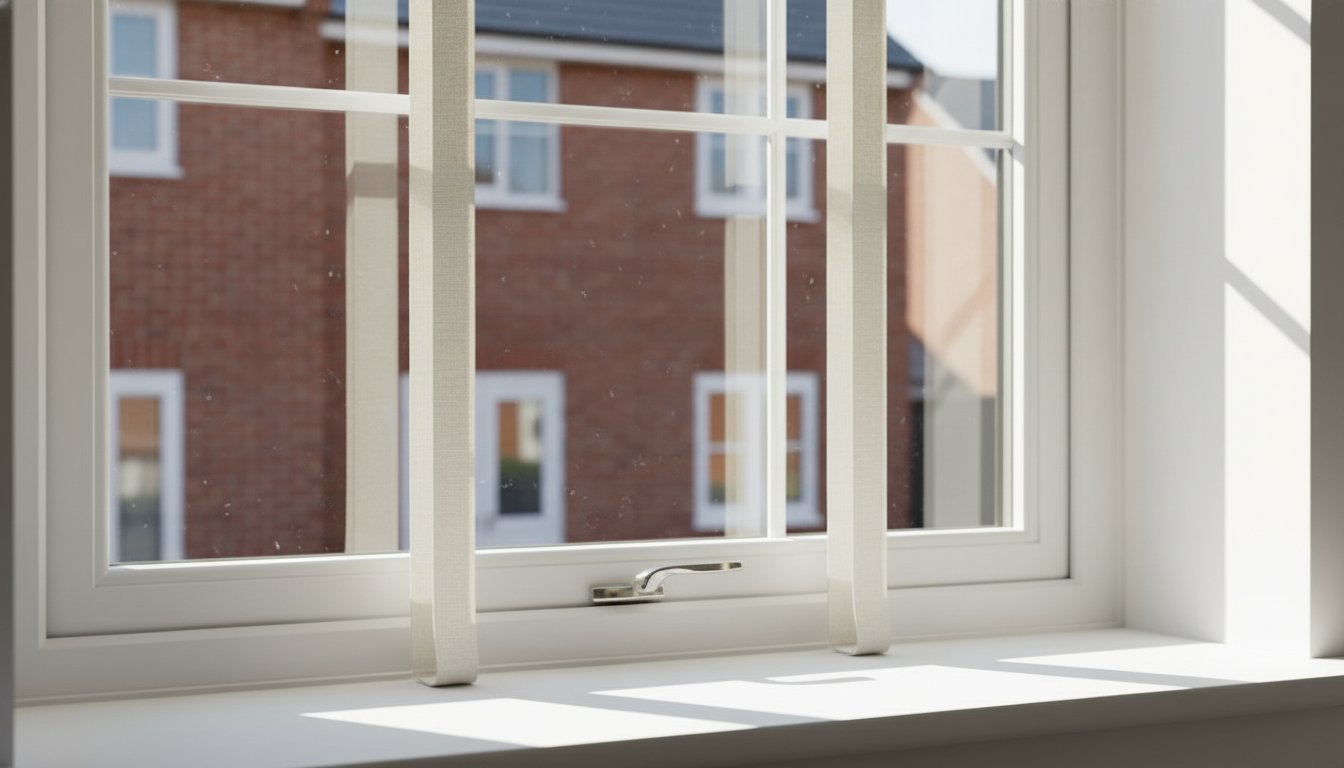
The secret to dressing your home’s most beautiful feature isn’t actually the style of the fabric; it is the precise alignment of the blind’s vertical elements with your window’s bars. If you get this wrong, you risk a cluttered look that ruins your property’s kerb appeal. We understand that finding the right blinds for georgian bar windows is a delicate balancing act between modern privacy and period charm. You want to enhance those lovely large panes without hiding the architectural heritage that makes your home so special.
It is a common worry that a new installation might look messy from the street or clash with the existing structure. We agree that your window’s geometry should always be the star of the show. This guide will help you navigate the “tape trap” and explain how the January 2026 Warm Homes Plan makes energy-efficient, made to measure blinds more accessible than ever. You will discover how to achieve a professional, bespoke finish that aligns perfectly with every bar, ensuring your home stays elegant, private, and thermally efficient.
Key Takeaways
- Understand the unique architectural symmetry of Georgian panes to ensure your window’s heritage remains the focal point of the room.
- Discover why Roman blinds and specific slat-width wooden Venetians are the most elegant choices for maintaining a traditional period look.
- Master the secret to avoiding the “tape trap” by ensuring your blinds for georgian bar windows align perfectly with the vertical bars for a clean exterior finish.
- Learn how to identify protruding bars and original sash hardware that could snag your blinds if not accounted for during a professional measurement.
- Find out how a bespoke, in-home consultation provides a tailor-made solution that respects the specific character of West Midlands housing stock.
What are Georgian Bar Windows and Why are They Tricky to Dress?
Georgian windows are a defining feature of British architectural history, known for their elegant “grid” of smaller glass panes. These windows use horizontal and vertical bars, traditionally called muntins, to divide a single large opening into multiple “lights”. This design was originally a necessity in the 18th and 19th centuries because glass manufacturing technology couldn’t yet produce large, single sheets of high quality glass. Over time, this functional requirement evolved into a symbol of prestige and perfect proportion, often seen in the classic Sash window found in heritage homes across the UK.
To better understand how different styles interact with your window frames, watch this helpful video:
In 2026, you’ll likely encounter two main variations of this style. Authentic period properties feature surface-mounted timber bars that physically protrude from the glass. Conversely, many modern homes use integral bars, which are sealed inside the double-glazed unit for easier cleaning. The core challenge when choosing blinds for georgian bar windows is that any window dressing introduces its own set of vertical or horizontal lines. If these new lines “fight” against the existing bars rather than complementing them, the result is a cluttered look that detracts from your home’s character.
The Problem of Visual Symmetry
Your eyes naturally seek out patterns and symmetry. When a blind’s ladder strings or fabric folds sit just a few centimetres away from a window bar, it creates a visual “stutter” that makes the entire window look off-centre. This isn’t just an internal design issue; it affects how your home looks from the street. Maintaining the “grid” look from both sides is essential for kerb appeal. Large Georgian windows, which can often exceed 1.5 metres in width, require bespoke support. Without professional measuring, the weight of the blind can cause the headrail to sag over time, ruining those crisp horizontal lines you’ve worked so hard to preserve.
Modern Georgian-Style New Builds
If you live in a newer development in the West Midlands, you might have uPVC windows with internal Georgian bars. While these are durable, they often have slightly different proportions than 19th-century originals. This means “off-the-shelf” blinds rarely fit the specific glass-to-bar ratio of your home. Choosing fitted blinds ensures that every component is tailored to your specific window dimensions. A professional installer can position the blind so that its structural elements align perfectly with the uPVC bars, preventing the “busy” and messy appearance that often plagues DIY installations.
Best Blind Styles for Georgian Bar Windows
Selecting the right blinds for georgian bar windows requires a thoughtful approach that respects the historical “six-over-six” or “eight-over-eight” pane structure. Because these windows are defined by their symmetry, the style you choose must either align with that grid or disappear entirely when not in use. A poorly chosen blind can make a beautiful period room feel cluttered and claustrophobic. We’ve found that specific made to measure styles work significantly better than others at preserving that sought after heritage look.
Roman Blinds: Elegance and Insulation
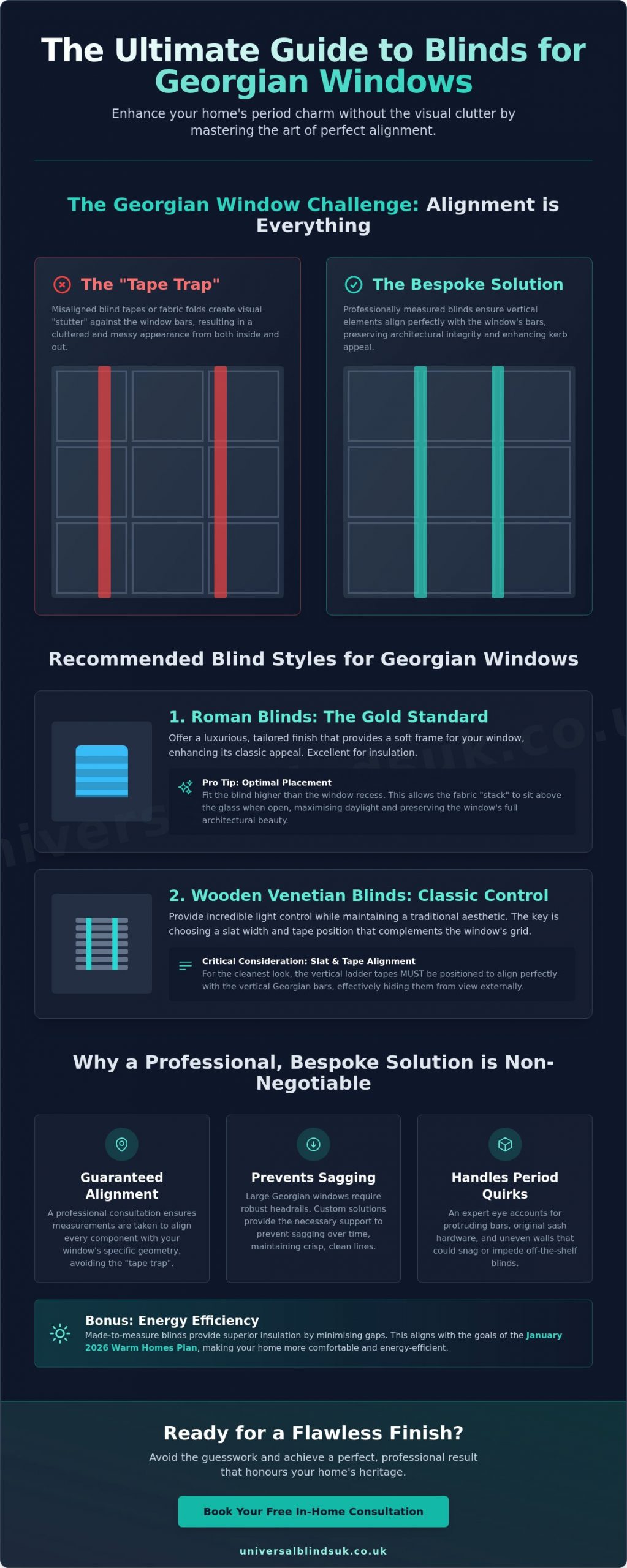
Roman blinds are widely considered the gold standard for period homes. They offer a luxurious, tailored finish that provides a soft frame for your window. One professional tip is to ensure the “stack” of the blind sits above the top horizontal bar whenever possible. By fitting the blind slightly higher, you avoid obscuring the beautiful top row of glass panes during the day. For a truly authentic feel, we recommend choosing fabrics in traditional palettes such as sage green, soft cream, or deep navy. If you’re dressing a bedroom, using a blackout lining is a smart choice. This allows you to block out 100% of external light without compromising the elegant external appearance of your sash windows.
Venetian Blinds: Finding the Right Slat Width
Wooden Venetians provide incredible light control, but the slat size is a critical decision. In our experience, 50mm slats are usually superior to 35mm options for Georgian windows. The wider slats create fewer horizontal lines, which means there’s less visual “noise” competing with your window bars. We also suggest opting for thin ladder strings rather than wide fabric tapes. While tapes are a lovely decorative touch, they often sit just off-centre from the vertical bars, creating a busy look that ruins the window’s clean geometry. Choosing high quality wooden blinds over metal versions ensures a warmth and texture that perfectly matches original timber frames.
For modern uPVC Georgian windows, Perfect Fit blinds are an excellent alternative. These clip directly onto the window bead, meaning the blind moves with the window and stays flush against the glass. This is particularly useful for smaller panes where traditional blinds might feel too bulky. Alternatively, if you want to show off your window bars to their full extent, a simple roller blind is the ultimate minimalist choice. When raised, it rolls into a slim, discreet cassette, leaving the architectural detail completely unobstructed. If you’re unsure which style best suits your property, it’s often helpful to book a free home consultation to see how different samples look against your specific window bars.
The “Tape Trap”: Avoiding Visual Clutter
One of the most frequent mistakes we see when homeowners choose blinds for georgian bar windows is falling into the “Tape Trap”. This happens when you opt for Venetian blinds with decorative fabric tapes, only to find that the vertical tapes sit just a few centimetres away from your window’s bars. Instead of a clean, coordinated look, you end up with a busy, cluttered window that “stutters” visually. This clash is particularly noticeable on West Midlands period terraces, where the architectural uniformity of the street depends on crisp, clean window lines. If your blinds look messy from the pavement, it can significantly diminish the kerb appeal of your property.
The technical reality is that tape positions are not adjustable. They are fixed by the blind’s internal ladder mechanism, which usually spaces them at set intervals such as 300mm or 450mm to provide structural support. You cannot simply “shift” a tape to match a bar that is 20mm to the left. For this reason, our professional recommendation for most Georgian windows is to choose thin ladder strings instead of wide fabric tapes. Ladder strings are nearly invisible from a distance, allowing the architectural grid of your window to remain the primary focus without any distracting vertical competition.
When to Use Tapes (And When to Avoid Them)
If you have your heart set on the luxury look of fabric tapes, you must follow a strict checklist before ordering. First, count your vertical bars and compare them to the number of tapes required for the width of your blind. On wider windows, the risk of a clash increases because more support tapes are needed. If the numbers don’t match perfectly, it’s better to avoid tapes altogether. To achieve a premium feel without the clutter, consider using a decorative wooden pelmet or valance. These features hide the headrail and add a sense of luxury to the top of the window while keeping the glass area clear and perfectly aligned with the original bars.
Shutters as the Ultimate Alignment Solution
For many heritage property owners, the only way to achieve total architectural harmony is to move beyond traditional blinds. Custom-built shutters are often the best long-term investment because the shutter’s frame and slats can be designed to match the exact grid of your Georgian bars. By choosing elegant window shutters, you ensure that the horizontal and vertical lines of the window dressing become an extension of the window itself. This bespoke approach eliminates the “Tape Trap” entirely and provides a professional finish that respects the 18th-century proportions of your home. While this is a more significant investment, the result is a seamless look that adds genuine value to your property.
Measuring and Fitting Considerations for Period Windows
Measuring for blinds for georgian bar windows requires a high level of precision because you aren’t just measuring the space; you’re measuring around obstacles. Traditional sash windows are rarely perfectly square. A millimetre’s difference at the top of the frame can lead to a noticeable gap at the bottom, which is why a methodical approach is essential. Before you decide on a style, you must conduct a thorough survey of the window’s physical structure to avoid costly mistakes.
The first step is to identify if your bars are surface-mounted or integral. Authentic timber bars protrude from the glass, often by 10mm to 15mm. If you’re fitting a blind inside the recess, you must account for this protrusion so the blind doesn’t rub against the wood when lowered. Next, check for original sash hardware. Many homes in the West Midlands still feature beautiful brass pulleys, fasteners, and handles. These can easily snag the fabric of a Roman blind or the slats of a Venetian if they aren’t factored into the depth calculations. You should also measure the “recess depth” carefully. You need enough clearance for Venetian slats to tilt fully without hitting the bars. Finally, calculate the “stack height”. This is the amount of space the blind takes up when it’s fully open. In a Georgian window, you don’t want the stack to block that iconic top row of panes, as this reduces natural light and hides the window’s best features.
The Challenges of Large Sash Windows
Tall Georgian openings often present a weight problem. A large, made to measure wooden blind can be surprisingly heavy, making it difficult to operate daily. In these cases, we often recommend “split controls”, where the tilt mechanism is on one side and the lift cord is on the other to balance the load. Because of the sheer size and weight of these installations, professional blind fitting is highly recommended. An expert installer ensures the headrail is securely anchored into the masonry or timber lintel, preventing the blind from pulling away from the wall over time.
Inside vs. Outside Recess Fitting
Deciding where to mount your blind depends heavily on your window’s character. Fitting inside the recess offers a sleek, integrated look that keeps the window “box” tidy. However, if your recess is shallow or if you have particularly decorative architraves and mouldings, an outside-recess fit might be better. This allows the blind to sit in front of the window frame, showing off the full architectural detail of the timber. This is a popular choice for heritage homes where the internal woodwork is just as important as the glass itself. To ensure your blinds are a perfect match for your home’s unique geometry, it’s best to book a professional measuring service with a trade expert who understands period property nuances.
Bespoke Solutions for West Midlands Heritage Homes
As a family run business, we’ve spent years working with the unique housing stock found across Walsall, Birmingham, and the wider West Midlands. We understand that a Georgian terrace in Edgbaston or a period property in Walsall requires a different touch than a modern apartment. Your home’s architectural heritage is a source of pride, and we believe your window dressings should reflect that. Scott and our team of trade experts believe that every home deserves a bespoke touch, ensuring that your new installation doesn’t just “fit” but truly belongs.
Our approach is built on transparency and trust. We know that choosing blinds for georgian bar windows can feel overwhelming given the technical alignment issues we’ve discussed. That’s why we offer a “No Pressure” sales promise. You are under no obligation to order during our visit. Our goal is to provide the expert advice you need to make a secure, confident decision for your property. When you’re in the professional hands of a trade expert, the process becomes a lovely experience rather than a stressful chore.
Expert Consultations in Your Own Home
Finding the perfect blinds for georgian bar windows is much easier when you can see the samples in the actual light of your own room. During your appointment, we bring the showroom to you. This allows us to hold fabric swatches and slat samples directly against your window bars to check for a perfect colour match and alignment. We take precise, professional measurements that account for the “Tape Trap” and any protruding timber bars. You can book your free home consultation in the West Midlands today to start your journey toward a more elegant home.
The Quality of Made-to-Measure
Mass-market, ready-made blinds often fail to meet the exacting standards required for period properties. They lack the structural integrity to handle the height of large sash windows and rarely offer the precise width needed to align with a Georgian grid. Choosing a bespoke, made-to-measure service ensures your blinds are tailor made for your specific dimensions. This level of quality is essential for preserving the symmetry of your home as seen from the street. Once our professional fitting service is complete, we perform a final check to ensure every slat and string is perfectly level. This attention to detail provides a luxury finish that off-the-shelf kits simply can’t replicate, giving you total peace of mind and a home that looks amazing from every angle.
Transform Your Heritage Windows with Confidence
Dressing your period home shouldn’t involve compromises that clutter your view or hide your property’s history. We’ve explored how a precise alignment between your blinds and window bars is the difference between a messy exterior and a sophisticated, architectural finish. Whether you choose the soft folds of a Roman blind or the clean lines of a wooden Venetian, the key is a tailored approach that respects your home’s original 18th-century proportions. Choosing the right blinds for georgian bar windows is about more than just privacy; it’s about enhancing the symmetry that makes your architecture so special.
As a family run business, we take pride in delivering a luxury, made to measure service that national retailers often miss. We provide expert fitting across Walsall and the West Midlands, ensuring every installation is level and secure. You don’t have to guess which slat width will work or worry about the “Tape Trap” ruining your kerb appeal. Book your free home consultation with Scott today to see our elegant samples in your own light. It’s a completely no obligation service designed to give you total peace of mind. We look forward to helping you create a lovely, private space that celebrates your home’s unique character.
Frequently Asked Questions
Can you put blinds on Georgian windows with surface-mounted bars?
Yes, you can certainly install blinds on these windows, but you must account for the depth of the timber bars. Authentic bars often protrude 10mm to 15mm from the glass surface. Choosing made to measure blinds ensures the slats or fabric won’t rub against the woodwork. A trade expert like Scott can measure the exact clearance needed to prevent any damage to your original frames.
What are the best blinds for large Georgian sash windows?
Roman blinds are widely considered the best choice for their elegant “stack” and excellent insulation. Because large sash windows in the West Midlands often exceed 1.5 metres in height, the weight of the blind is a factor. We recommend split controls to make operation easier. Professional fitting is vital here to ensure the heavy headrail is anchored safely into the masonry or timber lintel.
Do Georgian bars make windows harder to keep clean with blinds?
They don’t have to make cleaning difficult if you choose the right style. Roller blinds are a great solution because they roll away completely, leaving the bars easy to wipe down. If you prefer Venetians, 50mm slats provide larger gaps for dusting compared to narrow 25mm versions. This makes regular maintenance much simpler while keeping your window’s heritage look crisp and clean.
Should I choose shutters or blinds for my Georgian bar windows?
It depends on your budget and the level of architectural integration you want. Shutters offer the ultimate harmony by matching the bar grid exactly, though they represent a larger investment. Made to measure blinds for georgian bar windows are more versatile and cost effective for many homeowners. Both options from our bespoke range provide excellent privacy and light control while respecting your home’s 18th century proportions.
If you are looking to replace the windows themselves to better suit these proportions, windowsincheshire.co.uk offers specialist aluminium and heritage-style glazing solutions that perfectly replicate the traditional Georgian look.
How do I avoid my blinds looking “busy” against the window bars?
The most effective method is using thin ladder strings instead of wide fabric tapes. Tapes often sit off centre from the vertical bars, which creates distracting visual clutter. By opting for minimalist strings and ensuring your blind is fitted by a professional, you maintain the clean lines and symmetry of the original design. This approach ensures your windows look elegant from both the inside and the street.
Can Perfect Fit blinds be used on Georgian bar windows?
Perfect Fit blinds are ideal for modern uPVC Georgian windows, especially those with integral bars inside the glass. These blinds clip directly into the window bead, meaning they stay flush against the pane. This is a popular choice for 2026 new builds in Birmingham because it leaves your window sills clear and doesn’t interfere with the window’s opening mechanism, providing a very tidy finish.
What is the best colour for blinds on traditional Georgian windows?
Traditional earthy tones like sage, cream, and taupe are the leading trends for May 2026. These muted shades complement the white or off white frames typically found in Georgian architecture. We suggest avoiding stark, high contrast colours that might distract from the intricate woodwork. Soft neutrals help the window’s structure remain the focal point while adding a sense of luxury to your room.
How much does it cost to have blinds professionally fitted for Georgian windows?
Verified 2026 industry data shows that professional fitting costs in the UK typically range between £20 and £30 per blind. For complex Georgian windows, this is a small price for the security of a level, secure installation. Our family run business includes a free measuring service with every bespoke order to ensure your blinds fit perfectly the first time without any DIY errors.