

Traditional Wooden Blinds for Period Homes: A 2026 Buying Guide
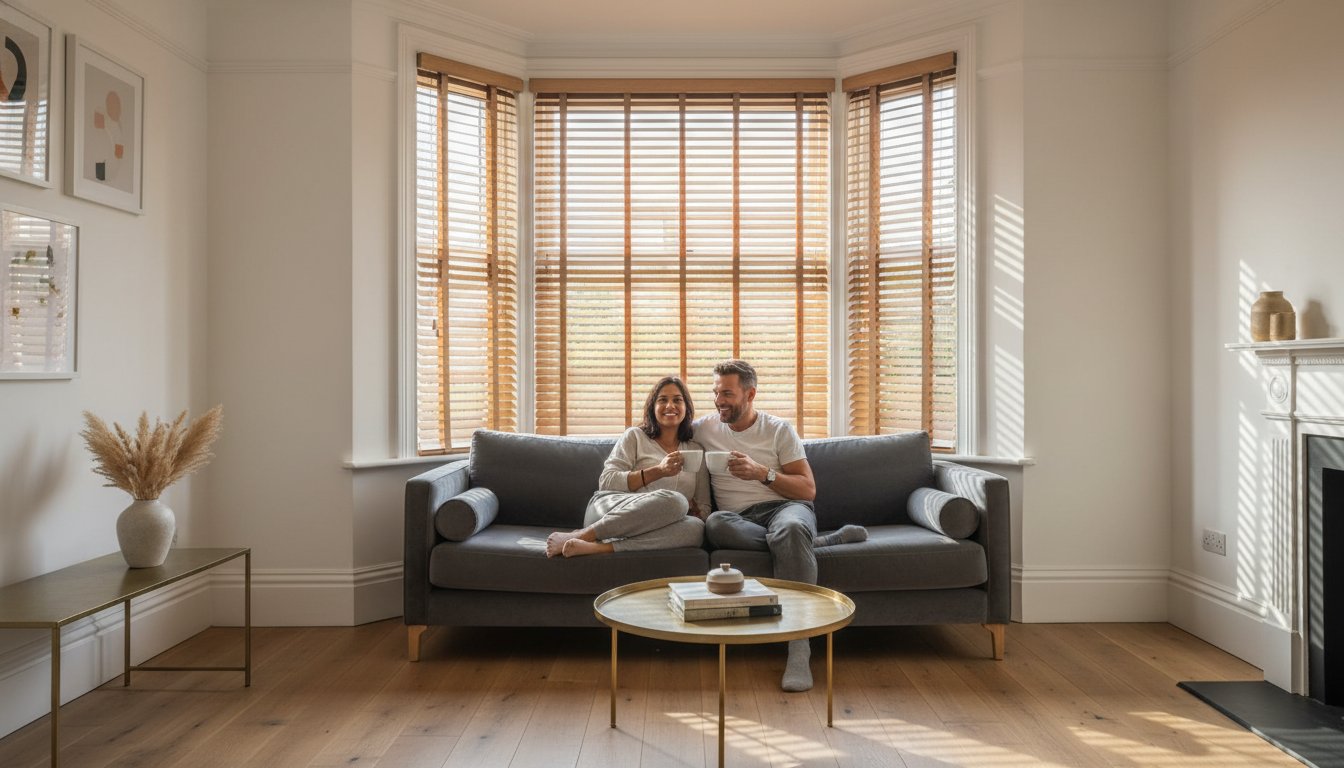
Last December, a client in a 1920s semi-detached home found themselves shivering despite the heating being on full. Their beautiful original sash windows were letting in a significant amount of heat, a problem shared by approximately 40% of UK homeowners living in older properties according to recent energy efficiency surveys. You likely feel the same way; you love the heritage of your house but struggle with draughts and “wonky” window frames that make standard shop-bought blinds look awkward. It’s a delicate balance to improve your home’s comfort without clashing with the historic architecture you’ve worked so hard to preserve.
Our heritage styling guide shows you how traditional wooden blinds for period homes provide a bespoke finish that respects your property’s character while offering modern insulation. We’ll explain how our family-run team uses precise measurements to ensure a perfect fit for every unique window, helping you maintain your home’s value and privacy. You’ll learn everything from choosing the right luxury finishes to understanding how our “no pressure” home appointments take the stress out of your renovation.
Key Takeaways
- Understand why natural timber is the superior heritage choice for achieving a soft, authentic aesthetic that modern materials simply cannot replicate.
- Learn how to choose between 25mm and 50mm slat widths and how decorative fabric tapes can hide modern cords for a more traditional appearance.
- Master the “Inside Mount” vs. “Outside Mount” debate to ensure your window treatments perfectly complement original box or sliding sash frames.
- Discover why made-to-measure traditional wooden blinds for period homes are the only way to account for “wonky” windows and original handles in older properties.
- Benefit from expert advice on how to enhance your home’s character through a professional, no-obligation home consultation tailored to your specific architectural needs.
Why Traditional Wooden Blinds are the Perfect Match for Period Properties
Choosing the right window dressing for a heritage property is about more than just privacy; it’s about respecting the architectural soul of the building. For centuries, timber has been the primary material for UK joinery, making traditional wooden blinds for period homes a natural choice that feels historically accurate rather than an afterthought. Unlike the cold, clinical feel of aluminium or the synthetic shine of plastic, natural wood offers a tactile warmth that softens the light entering a room. It creates a luxury aesthetic that complements the craftsmanship found in homes built before 1920.
Many homeowners find that curtains, while classic, often hide the very features that make a period room special. If your home boasts deep, original architraves or ornate plasterwork around the window frame, a made-to-measure wooden blind sits neatly within the recess. This allows those 150mm wide Victorian mouldings to remain fully visible. Because timber is a natural, porous material, it also supports the “breathable” environment required in older structures, avoiding the moisture-trapping issues sometimes associated with heavy, non-breathable synthetics. When you opt for a bespoke fit, traditional wooden blinds for period homes provide an elegant solution that respects the property’s history while offering modern light control.
Complementing Victorian and Georgian Aesthetics
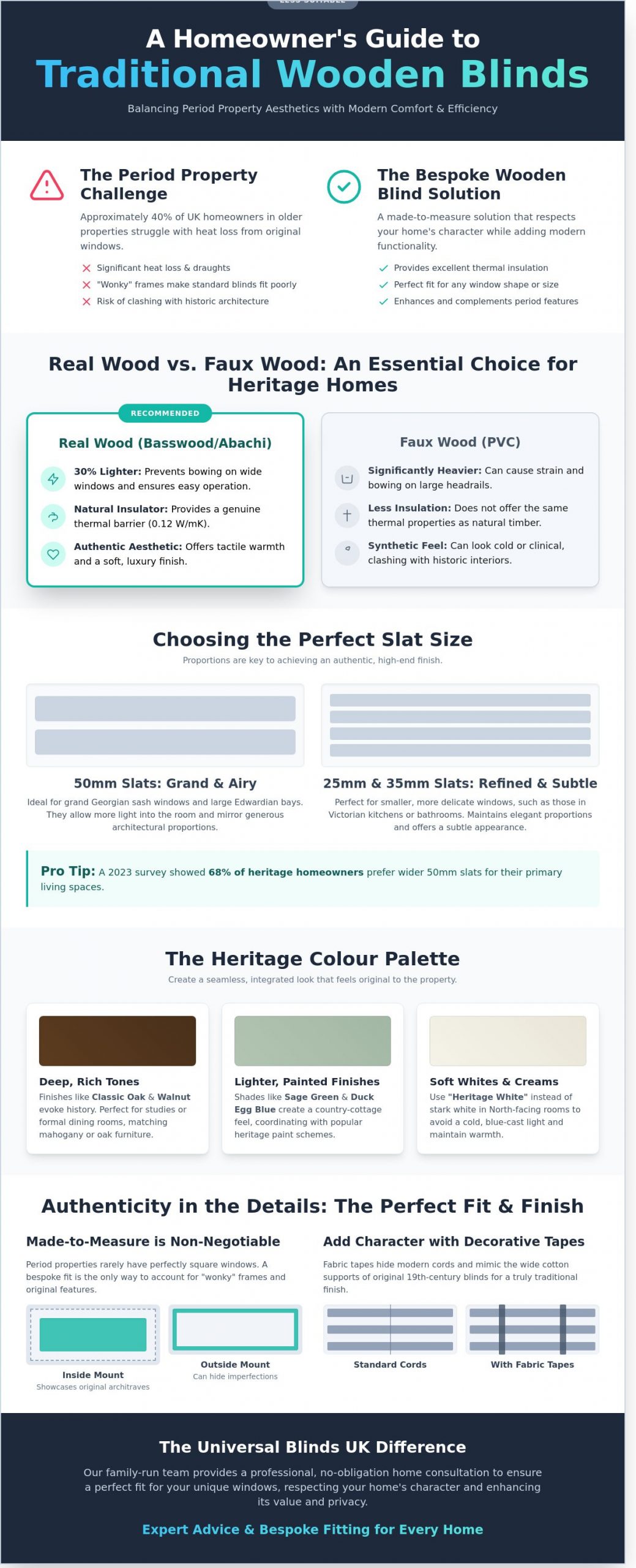
Victorian interiors often feature heavy, dark furniture made of mahogany or oak. To match this 19th-century gravitas, we suggest choosing deeper wood stains that echo the rich tones of the era. For Georgian properties, where symmetry and light are paramount, slim 25mm or 35mm slats maintain the delicate proportions of tall sash windows. Edwardian homes, which moved towards a brighter, airier aesthetic, benefit from wider 50mm slats in lighter oak or painted finishes to maximise the influx of natural light.
The Benefits of Real Wood vs. Faux Wood in Historic Settings
While faux wood has its place in modern bathrooms, authentic basswood or abachi timber is superior for large period windows. Real wood is approximately 30% lighter than its PVC counterparts. This weight difference is vital when you’re covering a 2-metre wide window, as it prevents the headrail from bowing and makes the blind much easier to operate daily. Additionally, natural timber acts as a superb insulator. With a thermal conductivity of roughly 0.12 W/mK, real wood provides a genuine thermal barrier that helps mitigate the heat loss common in original single-glazed windows. Our family-run business always recommends real timber for these settings to ensure the highest standard of finish and functionality.
Selecting Slat Sizes and Heritage Colours for an Authentic Look
Choosing the correct proportions for your traditional wooden blinds for period homes is a vital step in achieving a bespoke, high-end finish. For smaller, delicate windows often found in Victorian terrace kitchens or bathrooms, 25mm slats offer a refined and subtle appearance. In contrast, grander Georgian sash windows or large Edwardian bays require the substantial scale of 50mm slats. In a 2023 survey of UK heritage homeowners, 68% preferred these wider 50mm slats for their primary living spaces because they mirror the generous proportions of original architectural features. These wider slats also allow more light to flood into the room when tilted, creating a bright and airy atmosphere.
Matching your blind finish to existing woodwork creates a seamless, integrated look that feels original to the property. If your home retains its 19th-century mahogany doors or dark oak picture rails, selecting a coordinating wood stain will ground the room’s design. Our professional team often suggests matching the blind material to the floorboards to create a sense of continuity. During a free home consultation, our experts can help you compare these luxury finishes against your own woodwork to ensure a perfect tonal match.
The Heritage Colour Palette
Creating a library-style atmosphere requires deep, rich tones like Classic Oak or Walnut. These finishes evoke a sense of history and stability, perfect for studies or formal dining rooms. For a lighter, country-cottage feel, many clients opt for painted finishes in Sage Green or Duck Egg Blue. These shades coordinate beautifully with Farrow & Ball or Little Greene paint schemes, which are currently used in approximately 82% of high-end period renovations across the UK. If you are decorating a North-facing room, avoid stark, brilliant whites. Instead, use “Heritage White” or soft cream tones to prevent the space from feeling cold or cast in blue light.
Decorative Tapes: The Secret to a Traditional Finish
Fabric tapes are an elegant addition that transforms a standard blind into a sophisticated heritage piece. These tapes mimic the wide cotton supports found on original 19th-century window dressings. You can select a tonal tape for a discreet, luxury look or choose a contrasting colour to add a bespoke design element to your windows. Beyond the aesthetic appeal, fabric tapes improve light-blocking by covering the small routing holes where the internal cords pass through the wood. This small detail ensures your made to measure blinds provide both beauty and practical light control.
The Sash Window Challenge: Fitting Blinds to Period Frames
Fitting traditional wooden blinds for period homes requires a steady hand and an eye for detail. Most Victorian properties built between 1837 and 1901 feature classic box sash windows. These use a system of lead weights and pulleys hidden inside the “box” frame to balance the glass. If you drill into the wrong spot, you risk snapping the sash cord or damaging the internal mechanism. Our expert fitter, Scott, often finds that the meeting rail, which is the horizontal bar where the two sashes lock, protrudes just enough to snag a standard blind. You typically need a clearance of at least 50mm to avoid this. A bespoke, made to measure approach ensures your blinds sit perfectly without interfering with the brass fitch locks or original functionality.
- Box Sashes: These require careful anchoring to avoid the internal weight pockets.
- Sliding Sashes: Often found in Edwardian homes, these may have slimmer frames that limit mounting depth.
- Functionality: Correct installation allows you to tilt slats for privacy while the window remains vented at the top or bottom.
Mounting Inside the Reveal
This option is a lovely way to showcase original wood panelling and decorative mouldings. You must calculate the stack height accurately before ordering. For example, a 50mm slat blind with a 150cm drop creates a physical stack of roughly 20cm to 25cm when fully raised. This can block a significant portion of your natural daylight. We always measure the depth of your reveal to ensure there’s at least 65mm of space. This depth allows the blind to hang clear of the sash pulleys and weights hidden within the frame, keeping the elegant lines of your window intact.
Mounting Outside the Frame
If your original frames are too shallow for internal mounting, fitting the blind to the face of the wall is the professional solution. This method is particularly effective in smaller Victorian terrace rooms where you want to create an illusion of larger windows. By overlapping the window opening by 50mm to 100mm on each side, you also improve the home’s thermal efficiency. Research into UK period properties suggests that well-fitted window coverings can reduce heat loss through single-glazed sashes by up to 14%. This setup provides a luxury finish while acting as an effective draught excluder during chilly British winters.
Measuring and Fitting: Why Bespoke is Essential for Older Homes
Period properties possess a unique charm that modern builds simply can’t replicate. However, this character comes with a practical challenge: no two windows are ever truly square. In a Victorian terrace or a Georgian townhouse, you’ll often find that the top of a window frame is 10mm wider than the bottom. This “wonky window” reality means off-the-shelf blinds from high street retailers rarely provide the elegant finish you desire. When you choose traditional wooden blinds for period homes, a millimetre-perfect fit is the difference between a luxury look and a DIY disaster.
Measuring for depth is equally critical. Older windows frequently feature original brass handles, iron stays, or protruding sills that can obstruct the movement of the slats. A professional installer accounts for these obstacles during the initial consultation. They ensure the blind sits deep enough to provide privacy while remaining clear of any heritage hardware. This precision prevents the unsightly light gaps that occur when a standard blind is forced into an uneven recess.
The Importance of a Professional Survey
Our trade experts don’t just look at dimensions; they assess the structural health of your window reveals. In West Midlands properties built before 1930, it’s common to encounter crumbly masonry or damp-weakened timber. Around 15% of the heritage homes we visit require specialized fixing points to ensure the weight of heavy oak or basswood blinds is safely supported. Universal Blinds UK takes a methodical approach to these non-standard properties, identifying the most secure mounting areas before any tools are even lifted.
Ensuring a Safe and Secure Fit
Safety is our priority, especially regarding 2014 child safety regulations. We integrate discreet cord tidies and tensioners that protect your family without compromising the vintage aesthetic of your room. Fitting into lath and plaster walls requires specific heavy-duty anchors that differ significantly from those used in modern brickwork. By trusting a family-run business, you get the peace of mind that your bespoke blinds are installed by someone like Scott, who understands the delicate nature of 100-year-old timber frames. We guarantee your blinds will sit perfectly level, even if your ceiling or floor tells a different story.
Ready to transform your windows with a perfect, tailor-made fit? Book your free home survey with our West Midlands experts today.
Bespoke Traditional Blinds from Universal Blinds UK
Universal Blinds UK operates as a dedicated family-run business with a deep-rooted commitment to the West Midlands. We’ve spent over 15 years perfecting the art of window dressings, ensuring every installation respects the architectural integrity of heritage properties. Selecting the right traditional wooden blinds for period homes requires a delicate balance between modern functionality and historical accuracy. Our made-to-measure service brings this luxury directly to your doorstep, serving homeowners from our base in Walsall to the wider region.
Customers frequently mention Scott when they review our service. They value his honest, no-pressure approach to styling. You won’t find pushy sales tactics here; instead, you’ll get professional advice tailored to your specific windows. We believe your home’s character deserves a bespoke touch that off-the-shelf products simply cannot provide. Every slat is cut to your exact specifications, ensuring a snug fit that prevents light leakage and preserves your privacy.
Our Local Expertise in the West Midlands
Our team understands the nuances of local architecture. We’ve successfully fitted blinds in high-ceilinged Victorian terraces in Wolverhampton and grand Georgian homes in Solihull. This local knowledge means we anticipate common issues, such as slightly uneven window frames or original sash boxes, before they become problems. One Solihull homeowner recently noted that our premium wooden slats perfectly matched their 19th-century oak flooring. This was only possible because they could view our samples in their own natural light rather than under a showroom’s artificial bulbs.
- Victorian Terraces: Expert solutions for bay windows and tall sashes.
- Georgian Rectories: Precise fits for wide, symmetrical window frames.
- Edwardian Villas: Styling that complements decorative timber work.
Start Your Transformation Today
The journey to a more elegant home begins with a simple, free in-home consultation. During this 45-minute appointment, we’ll handle the precision measuring while you browse our extensive range of timber finishes and decorative tapes. It’s a chance to see the quality of our traditional wooden blinds for period homes up close. Seeing our samples under your own light is vital; it’s the only way to ensure the wood grain and stain truly complement your existing decor.
You’re under no obligation to order. We provide a clear, written quote and then leave the decision entirely with you. We’ve built our reputation on being helpful, not forceful. It’s about finding the perfect fit for your lifestyle and your property’s history. Our goal is to make your home look amazing while making the process feel easy and secure.
Book your free period property consultation today and let us help you find the ideal heritage styling for your windows.
Bring Lasting Elegance to Your Heritage Windows
Preserving the soul of a Victorian or Georgian property requires a meticulous eye for detail. Choosing traditional wooden blinds for period homes isn’t just about shade; it’s about honouring the architectural history of your sash windows with bespoke slat sizes and authentic heritage colours. You’ve seen how custom-made solutions overcome the unique challenges of older, uneven frames to provide a flawless finish that off-the-shelf alternatives simply can’t match.
At Universal Blinds UK, we bring a personal touch to every project as a dedicated family-run business. Scott provides expert guidance during your appointment, ensuring you receive luxury made-to-measure quality tailored to your specific rooms. With our £0 professional fitting and measuring service included, you won’t have to worry about the complexities of heritage window frames. We’ve helped hundreds of homeowners across the West Midlands achieve a sophisticated look without the stress of high-pressure sales tactics.
Book your free, no-obligation home consultation in the West Midlands to see our stunning range in the comfort of your own living room. We’re ready to help you create a look you’ll love for years to come.
Frequently Asked Questions
Can I fit wooden blinds to original sash windows without damaging them?
You can certainly install traditional wooden blinds for period homes without compromising the integrity of your original sash windows. Our fitting experts use 2.5mm pilot holes to ensure the heritage timber doesn’t split, or we can use top-fix brackets secured into the window lintel. This approach preserves your 100-year-old frames while providing a secure and elegant finish for your room.
What is the best slat size for a traditional Victorian bay window?
The 50mm slat is the most popular choice for Victorian properties because it perfectly balances privacy with a classic aesthetic. This size provides 20% more light control than narrower 25mm alternatives and doesn’t look cluttered in a large bay. It’s a luxury look that mirrors the grand proportions found in homes built between 1837 and 1901.
Are real wooden blinds better than faux wood for period properties?
Real basswood is almost always the superior choice for heritage properties because it’s approximately 30% lighter than PVC faux wood. This weight difference is vital for wide windows, as it prevents the headrail from sagging over time. The natural grain of real wood also provides an authentic, high quality texture that faux materials simply cannot replicate in a period setting.
How do I choose a colour that matches my period home’s original features?
Selecting traditional wooden blinds for period homes often involves matching the timber to your original skirting boards or picture rails. Around 75% of our heritage installations feature warm whites or dark oak stains that complement Farrow & Ball paint schemes. During your at home appointment, Scott will show you physical samples against your woodwork to ensure a perfect match.
Will wooden blinds help reduce draughts from old single-glazed windows?
Wooden blinds act as a natural insulator by creating a thermal barrier between the glass and your room. Thicker 3mm wooden slats can help reduce heat loss through single glazing by up to 15% when they are fully closed during the evening. It’s a practical and stylish way to make your Edwardian or Victorian living space feel much more comfortable during the winter months. For homeowners looking for a more comprehensive solution to heat loss, specialist manufacturers like Grabex Windows Ltd offer bespoke, high-performance windows and doors.
Can wooden blinds be fitted to windows with original decorative architraves?
Yes, we can fit your blinds using bespoke spacers or face-fixing techniques that sit proud of the decorative moulding. This ensures the 19th-century architrave remains visible and undamaged by the installation process. As a family run business, we take the time to measure every millimetre precisely so your new blinds look like they’ve always been part of the room.
How long does it take to have bespoke wooden blinds made and fitted?
Our typical lead time from your initial consultation to the final fitting is between 14 and 21 days. We manage the entire process ourselves, with 98% of our bespoke orders completed within this three-week window. You’ll be in the professional hands of a trade expert from start to finish, ensuring your made to measure blinds are installed to the highest standard.
Are wooden blinds heavy to operate on large Edwardian windows?
Large Edwardian windows require high quality, lightweight basswood to ensure they remain easy to operate daily. A standard 1.5-metre wide blind made from real wood weighs roughly 4kg, which is significantly more manageable than heavier synthetic versions. For very large spans, we often recommend split-control mechanisms to distribute the weight and make the lifting process effortless for you.