

Blinds vs Shutters Pros and Cons: Which is Right for Your Home?
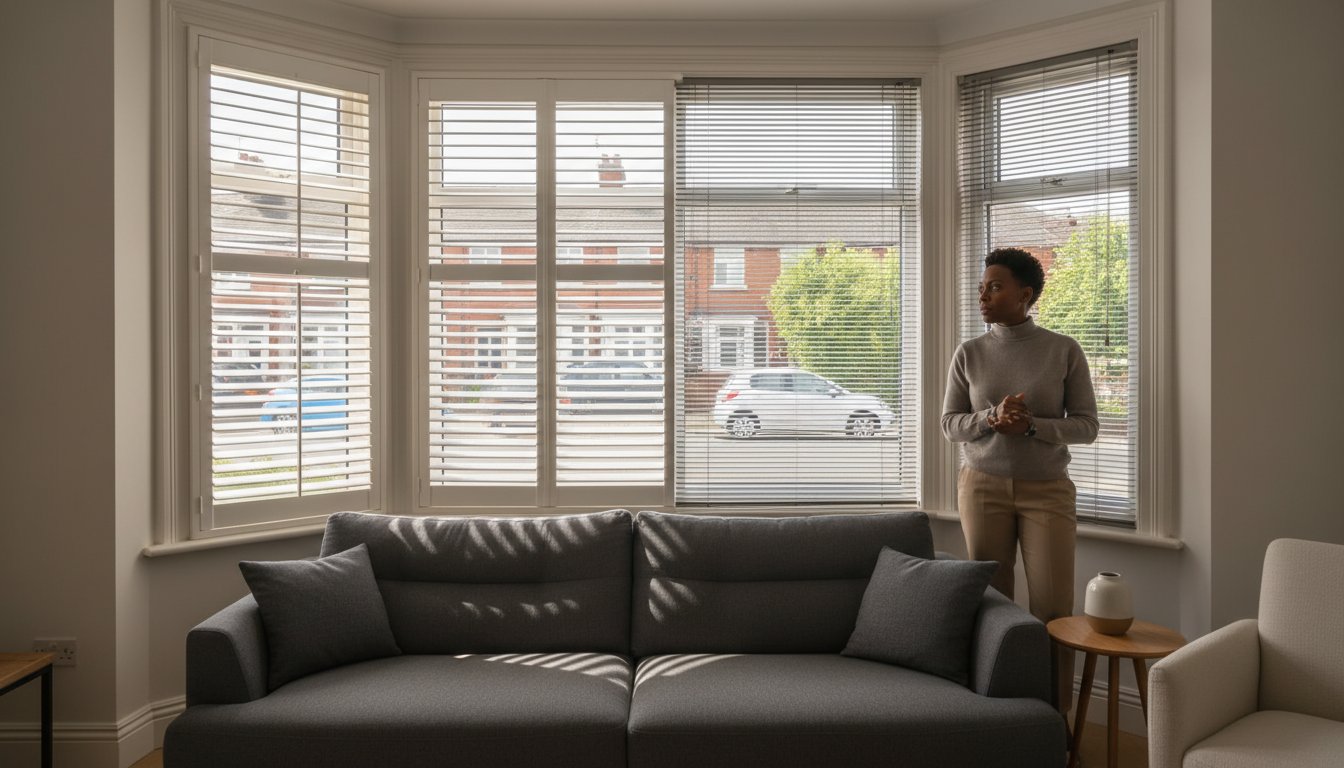
The most expensive window dressing option for your home might actually be the one that saves you the most money over a 25 year period. While the initial investment for premium shutters is higher, their longevity significantly outlasts the typical 7 year lifespan of many standard window coverings. Choosing between these options involves more than just aesthetics. You need to weigh up the blinds vs shutters pros and cons to decide which investment truly suits your lifestyle and your property’s unique architecture.
It’s understandable if you feel overwhelmed by the choices available for your British bay windows. You want a solution that offers total privacy without the hassle of tangled cords or hours of difficult cleaning. As a family run business, we know that child safety and durability are your top priorities. This guide delivers a clear comparison of bespoke, made to measure blinds and shutters to help you achieve a luxury look. You’ll discover how to balance light control, insulation, and ease of maintenance to transform your living space with confidence and expert support.
Key Takeaways
- Understand the fundamental structural differences between fixed-frame shutters and flexible hanging blinds to determine which installation method best suits your window’s architecture.
- Explore how bespoke shutters can significantly enhance your home’s kerb appeal and provide unrivalled privacy control for overlooked West Midlands properties.
- Weigh up the blinds vs shutters pros and cons to discover how versatile, made-to-measure blinds can achieve a luxury, elegant look while remaining cost-effective.
- Get a room-by-room breakdown to find the ideal balance of moisture resistance for kitchens, total darkness for bedrooms, and sophisticated style for living areas.
- Learn why an at-home appointment with a family-run expert ensures you can view samples in your own light with absolutely no pressure to buy.
Understanding the Core Differences: Shutters vs Blinds
Choosing the right way to dress your windows is a significant decision for any homeowner. The blinds vs shutters pros and cons often start with how each product interacts with your window’s architecture. At Universal Blinds UK, we see this as a choice between a permanent fixture and a versatile furnishing. Shutters are essentially solid frames with louvres, while blinds consist of flexible materials like fabric, wood, or aluminium that can be raised, lowered, or tilted.
The installation process highlights their fundamental differences. Shutters are typically fixed directly to the window frame or a bespoke sub-frame, creating a seamless, integrated look. Blinds offer more placement variety, often fitted into the window recess or onto the face of the wall. Understanding these window treatment options helps you decide which style suits your room’s specific needs and your long-term goals for the property.
The Structural Debate: Fixed vs Flexible
Shutters function as a part of the home’s structure. Because they’re fixed in place, they offer a sense of security and permanence that other options lack. This structural nature is why many UK estate agents list shutters as a specific selling point. Blinds provide a flexible alternative. They’re perfect if you love changing your interior design every few years. You can swap a roller blind in minutes to match a new colour scheme. For any home in the UK, made-to-measure service is non-negotiable. Our team ensures every slat and frame fits perfectly; even a 5mm gap can ruin the elegant look you’re aiming for.
Material Matters: From Wood to Fabric
The materials you choose dictate both the durability and the “feel” of your space. Natural basswood shutters provide a luxury finish and incredible insulation. If you’re looking for something for a high-moisture area like a bathroom, high-grade PVC is a practical, hard-wearing choice. Blinds offer a broader palette, from soft, elegant Roman fabrics to sleek aluminium slats.
- Basswood: Premium, lightweight, and perfect for large windows.
- Faux-wood: Ideal for kitchens; won’t warp or peel in 100% humidity.
- Bespoke Fabrics: Thousands of patterns to create a unique focal point.
- Aluminium: Durable and modern, often used in home offices.
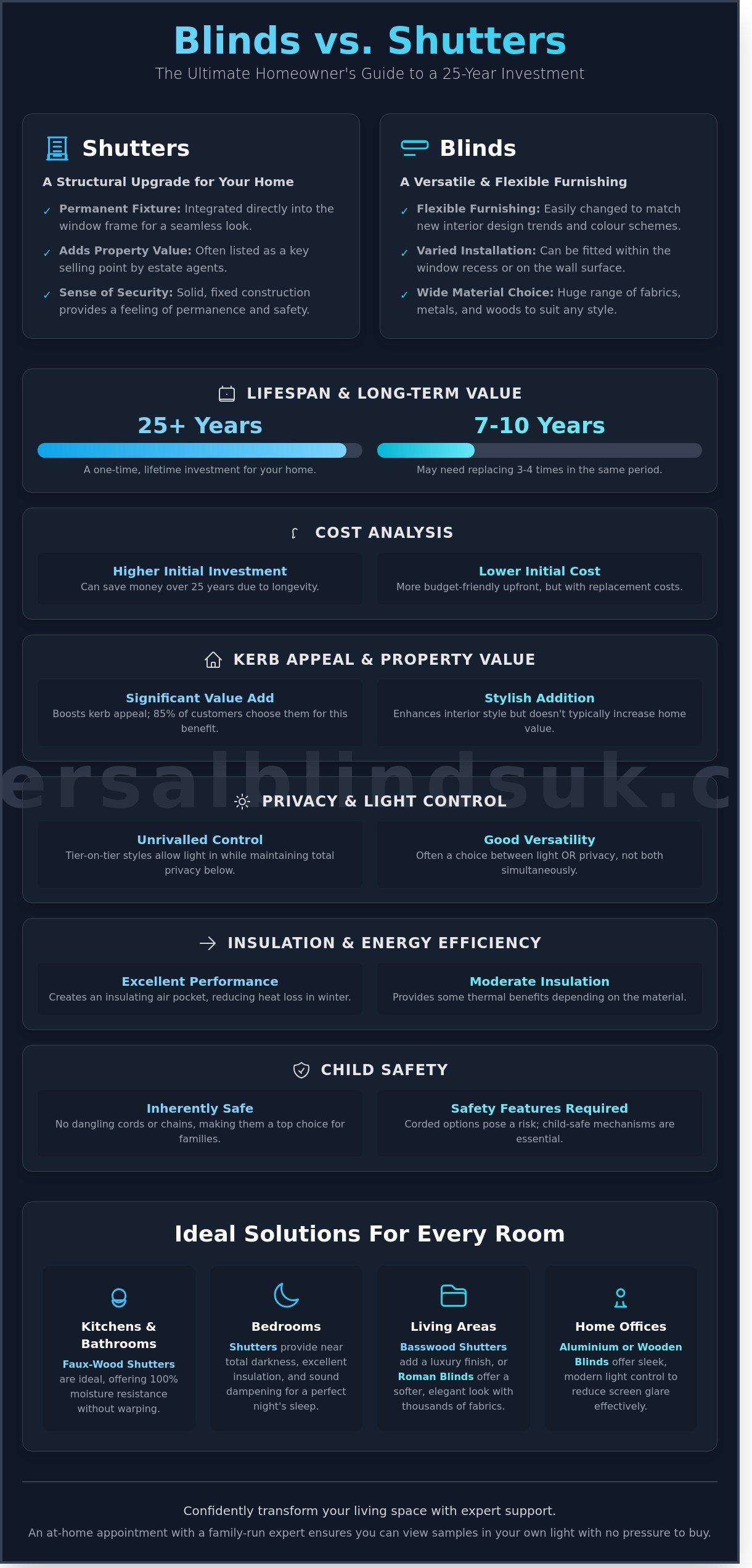
While a quality blind might last 7 to 10 years, shutters are often a lifetime investment. Our family run business has found that over 85% of customers choosing shutters do so for the added kerb appeal and perceived property value. This distinction is a core part of the blinds vs shutters pros and cons debate. We always help you weigh these material choices against your daily life, ensuring you get a result that looks amazing and stays functional for years.
The Case for Shutters: Pros, Cons, and Long-Term Value
Choosing shutters is often seen as a permanent investment in your home’s structure rather than a simple decorative choice. The aesthetic “wow factor” they provide is undeniable. From the street, they offer a uniform, luxury appearance that significantly boosts kerb appeal. This architectural upgrade can even add tangible value to your property, as many buyers view high-quality shutters as a premium fixture. When weighing up blinds vs shutters pros and cons, longevity is a major factor. While some window dressings might need replacing every five years, bespoke shutters often last 20 to 30 years with minimal care.
Beyond looks, shutters are a practical powerhouse for the British climate. They provide excellent thermal performance by creating an insulating air pocket between the glass and the room. Citing research on energy-efficient window treatments shows that solid barriers are highly effective at reducing heat loss. This helps keep your living spaces lovely and warm during damp UK winters, while reflecting the sun’s glare to keep rooms cool during summer heatwaves.
The Benefits of Plantation Shutters
One of the most amazing features of plantation shutters is the level of privacy they offer. Unlike traditional blinds, you don’t have to choose between light and a view of the street. With tier-on-tier or cafe-style options, you can keep the bottom panels closed for total privacy while leaving the top open to flood the room with natural light. For more detailed styling tips, you can read A Homeowner’s Guide to Elegant Window Shutters.
- Hypoallergenic properties: Shutters are a superior choice for dust-sensitive households. Their hard surfaces don’t trap pollen or dust mites like fabric alternatives do.
- Light Control: Tilting the louvres allows you to direct light away from TV screens or delicate furniture to prevent fading.
- Durability: They don’t rattle in the breeze and are sturdy enough to withstand the knocks of a busy family home.
Potential Drawbacks of Shutters
While the benefits are extensive, there are a few blinds vs shutters pros and cons to consider before you commit. The initial investment is higher than standard blinds. However, our customers often find the cost-to-value ratio balances out because shutters don’t need frequent replacing. You also need to plan ahead; because each set is a bespoke order tailored to your specific window dimensions, lead times for manufacturing and professional fitting can take several weeks.
Suitability is another factor. On very small windows, the thick frames of a shutter might block a larger percentage of the glass, potentially making a dark room feel slightly smaller. In these cases, a thin-slat blind might be more appropriate. If you aren’t sure which style fits your space, our family run business offers a no-pressure at home appointment to help you see the samples in your own light.
The Versatility of Blinds: Pros, Cons, and Style Flexibility
Blinds offer an incredible level of flexibility that caters to almost any interior design vision. Whether you’re looking for the sleek, minimalist lines of a roller blind or the soft, luxurious folds of a Roman blind, there’s a style to suit every window in your home. For larger openings like patio doors, vertical blinds remain a practical and elegant choice. One of the biggest advantages when weighing up blinds vs shutters pros and cons is the sheer range of textures and patterns available. Fabric blinds don’t just look lovely; they also help soften a room’s acoustics and create a warmer visual feel by dampening echoes in larger spaces.
From a financial perspective, blinds are often the go-to option for achieving a high-end look on a more modest budget. You can enjoy the benefits of energy-efficient window treatments without the higher upfront investment typically associated with solid wood shutters. Modern technology has also made operation incredibly simple. Our motorised options allow you to control light with the touch of a button, while “Perfect Fit” systems clip directly into your uPVC frames. This removes the need for drilling and keeps your window sills completely clear.
Why Homeowners Choose Made-to-Measure Blinds
Many people choose made-to-measure blinds because they offer a much faster transformation than shutters. While bespoke shutters might take 8 to 12 weeks to manufacture and install, high-quality bespoke blinds are often ready in a fraction of that time. If you’re looking for total darkness, blackout blinds are often superior to shutters for bedroom use as they leave fewer gaps for light to seep through. For more advice on finding the right fit for your space, read our A Complete Guide to Choosing the Perfect Blinds for Your Home.
The Cons of Choosing Blinds
There are some drawbacks to consider when looking at blinds vs shutters pros and cons. Blinds generally have a shorter lifespan than shutters. Cords, chains, and delicate fabrics can wear out or fade after years of exposure to direct sunlight. Cleaning can also be a bit of a chore; dusting individual slats on Venetian blinds takes time, and some fabrics require specific care to stay looking their best. Most importantly, you must consider child safety. Since 2014, UK regulations (BS EN 13120) require all blinds to meet strict safety standards. As a family-run business, we ensure every installation is professional and secure to protect your little ones.
Direct Comparison: Which Wins for Your Specific Needs?
Choosing the right window dressing involves more than just picking a colour. When you weigh up the blinds vs shutters pros and cons, your decision often comes down to the specific demands of your UK home. In the busy kitchens of the West Midlands, moisture and grease are constant factors. PVC shutters or faux-wood blinds are essential here because they won’t warp or absorb smells. For bedrooms, the priority shifts to light control. Shutters provide a more substantial barrier against streetlights, while blackout blinds offer a cost-effective way to ensure a restful night.
Privacy is a major concern for residents in traditional West Midlands terraces. These homes are often overlooked by neighbours or pedestrians. Shutters offer a unique advantage because you can tilt the lower slats for privacy while leaving the top slats open to let light flood the room. Energy efficiency is another area where the two differ significantly. According to research by Historic England, well-fitted shutters can reduce heat loss through windows by up to 51%. This significantly improves your home’s U-value, keeping you warmer in winter and potentially lowering those rising energy bills. While blinds offer some insulation, they don’t create the same airtight seal as a bespoke shutter frame.
From a financial perspective, shutters are often viewed as a permanent “fixture and fitting” rather than a temporary window dressing. This means they can actually add to your property’s market value. Estate agents frequently highlight shutters in listings to attract buyers looking for a premium finish.
The Best Choice for Every Room
Bathrooms require specialised materials. High-quality PVC shutters or waterproof blinds are the only options that can withstand constant steam without moulding. Bay windows present a different challenge. These architectural features are often the focal point of a British living room but are notoriously difficult to fit. While shutters look more “integrated” because they follow the exact angles of the bay, specialists like A1 Window provide additional design ideas and installation guides for these complex features. If you want a softer look, you can always layer your window treatments. Take a look at our guide on Blinds vs Curtains to see how layering adds luxury to your space.
Safety and Practicality Considerations
Your family’s safety is our priority. Shutters are inherently cordless, making them the safest possible choice for homes with young children or curious pets. While all our blinds are fitted with safety clips, the “set and forget” nature of shutters provides extra peace of mind. For elderly residents or those with limited mobility, shutters are often easier to operate than heavy roller or Roman blinds. This is where the “Scott” factor comes in. During your home visit, Scott uses his years of trade expertise to spot issues like awkward handles or uneven frames that DIYers often miss. This ensures your bespoke installation is both beautiful and perfectly functional.
Ready to see how these options look in your own home? Book your free, no-pressure home consultation with Scott today.
The Universal Blinds UK Approach: Making the Decision Easy
Choosing the right window dressing is a big decision for any homeowner. At Universal Blinds UK, we’ve built our reputation on making that choice stress-free. As a family-run business with deep roots in the West Midlands, we serve Walsall, Birmingham, and the wider region with a sense of local pride. We don’t use high-pressure sales tactics because we want you to feel completely confident in your investment. Our goal is to provide the expert guidance you need to navigate the blinds vs shutters pros and cons without any rush or obligation.
Our Bespoke Consultation Process
The most effective way to choose between different styles is to see them in the context of your own home. During a free home visit, we bring the showroom to you. You can hold samples up against your walls, see how fabrics look in natural light, and get an honest assessment of what works for your specific window shapes. This side-by-side comparison is vital for understanding the blinds vs shutters pros and cons in a real-world setting. Our expert, Scott, ensures every measurement is millimetre-perfect, so your bespoke order fits exactly as it should.
Professional Fitting vs DIY
It’s tempting to try the DIY route, but the risks often outweigh the initial savings. A small error in measuring can result in unsightly gaps or a product that doesn’t operate smoothly. When you choose our professional service, you eliminate the risk of “the gap” that often plagues off-the-shelf or self-fitted orders. We handle everything from the initial survey to the final installation with trade-level precision. This ensures your luxury window dressings look amazing and function perfectly for years to come.
- No risk of measuring errors or wasted materials.
- Expert installation that protects your window frames and walls.
- A flawless finish that enhances your home’s aesthetic and value.
You can learn more about why The Benefits of Professional Blind Fitting are so significant for long-term satisfaction. By trusting our team, you’re ensuring that your tailor-made products are installed to the highest standard. You are in the hands of trade experts from start to finish, backed by the personal touch that only a local, family-run business can provide. We take the stress out of the process, leaving you with elegant, perfectly fitted blinds or shutters that transform your living space.
Finding the Perfect Fit for Your Home
Deciding between the timeless elegance of shutters and the versatile style of blinds is a significant step in your home renovation journey. While shutters offer amazing long-term value and a luxury finish, blinds provide bespoke flexibility that fits any room’s aesthetic. We’ve explored the blinds vs shutters pros and cons to help you determine which option best suits your specific needs. Both choices deliver a high-quality transformation, but the right one depends on your priorities for light control, privacy, and budget.
At Universal Blinds UK, we operate as a dedicated family-run business with a strict no-pressure sales promise. You’ll receive free professional measuring and expert fitting included as standard, ensuring your bespoke order is perfect. With hundreds of 5-star reviews from homeowners across the West Midlands, you can feel secure knowing you’re in the hands of a trusted trade expert. We’re here to make the process easy and enjoyable from start to finish.
Book your free no-obligation home consultation with Scott today to see our stunning range in person. We can’t wait to help you achieve that elegant look you’ve been dreaming of.
Frequently Asked Questions
Are shutters more expensive than blinds in the UK?
Yes, plantation shutters typically require a higher initial investment than most standard window blinds. While a basic roller blind might cost under £100 for a medium window, bespoke shutters often start from £150 to £300 per square metre according to 2024 industry pricing. Our customers usually view shutters as a permanent home improvement that lasts decades, whereas blinds are often replaced every 5 to 7 years.
Which is easier to clean: shutters or blinds?
Shutters are significantly easier to clean because they feature solid, wide slats that don’t bend or tangle during maintenance. You can simply wipe them down with a dry or slightly damp microfibre cloth to remove dust in seconds. Venetian blinds have much thinner, flexible slats that require more delicate handling, and fabric blinds can trap allergens within the weave, sometimes needing professional steam cleaning to stay fresh.
Can I have shutters and blinds on the same window?
You can certainly install both, though it’s more common to pair shutters with curtains for a luxury layered look. Some homeowners choose to fit a discreet honeycomb blind directly behind a shutter frame to improve thermal performance. This specific combination can reduce heat loss through the glass by up to 40%, which is a brilliant way to keep your home warm while enjoying the elegant aesthetic of shutters.
Do shutters provide better blackout than blinds for bedrooms?
Blackout blinds generally provide a more complete light seal than standard shutters. While shutters are amazing for privacy, small amounts of light can still peek through the louvre gaps or the edges of the frame. For the best sleep environment, we recommend shutter-integrated blackout blinds. These combine a bespoke shutter with a built-in cellular blind that blocks 99% of external light for total darkness.
How long does it take to fit made-to-measure shutters compared to blinds?
Made-to-measure blinds are typically ready for installation within 2 to 3 weeks of your home appointment. Shutters are a more intricate, bespoke order and usually take between 8 and 14 weeks to manufacture and fit. This timeline ensures the precision engineering required for the panels to align perfectly with your window frame, putting your installation in the professional hands of a trade expert.
Are shutters or blinds better for bay windows?
Shutters are widely considered the superior choice for bay windows because they highlight the unique architectural shape of the glass. They’re tailor-made to follow the exact angles of the bay, which saves space compared to bulky curtain poles or multiple blind headrails. When weighing up blinds vs shutters pros and cons, shutters offer a cleaner, more integrated look that maximises the natural light in your room.
Do shutters actually add value to a UK property?
Yes, shutters can increase the kerb appeal and resale value of a UK property. Estate agents often categorise them as a permanent fixture, much like a high-quality kitchen or bathroom upgrade. Because they’re durable and timeless, they make a home more attractive to buyers. A 2023 survey of UK homebuyers suggested that energy-efficient window treatments like shutters are a key selling point for 65% of participants.
Are all blinds and shutters child-safe?
All products we supply meet the strict BS EN 13120 safety standards to ensure they’re completely child-safe for your peace of mind. Shutters are inherently safe by design as they don’t use operating cords or chains. For our bespoke blinds, we fit safety cleats or use cordless “wand” systems to remove any risk of entanglement. You’ll always be safe with our family-run business, as we prioritise the security of your little ones.