
Blinds for Rented Property Rules: A Complete UK Landlord & Tenant Guide (2026)

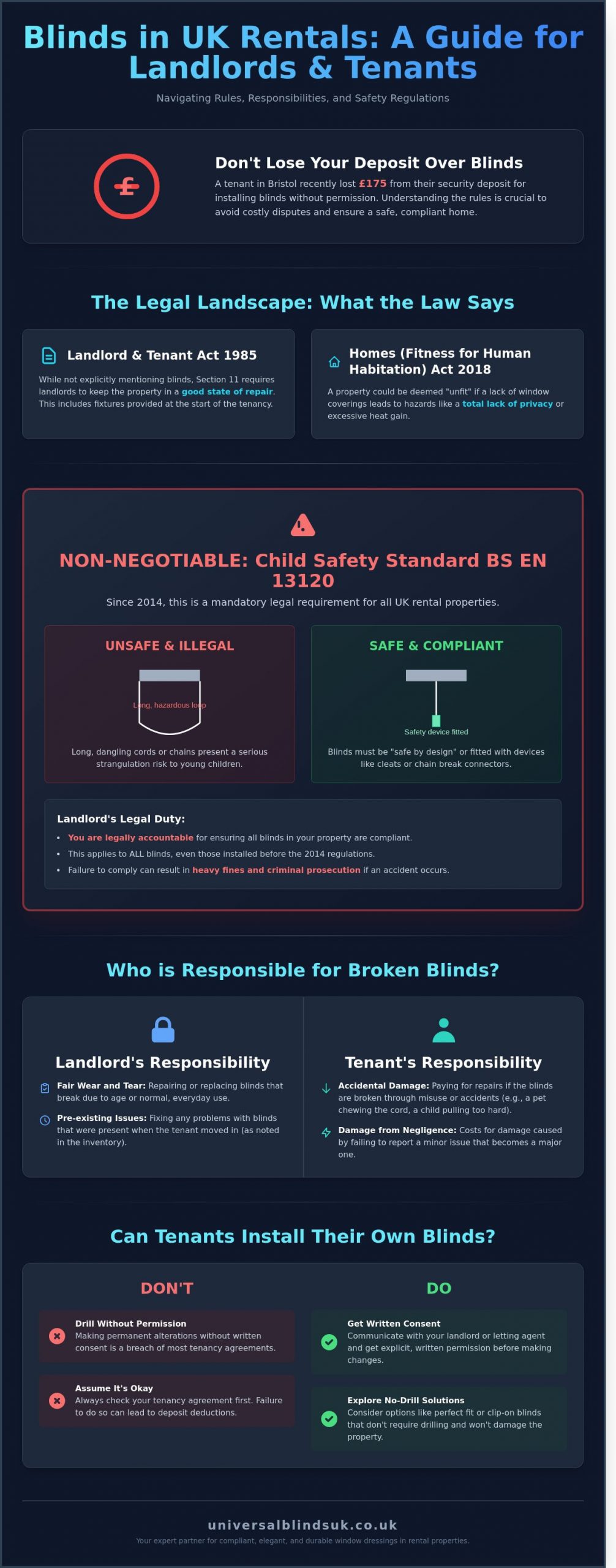
Last October, a tenant in Bristol lost £175 from her security deposit simply because she installed a set of bespoke blinds without checking her contract first. It’s a stressful situation that happens far too often, proving why a clear grasp of blinds for rented property rules is vital for everyone involved. You likely feel that a rental property should be both a beautiful home and a compliant investment, yet the fear of drilling holes or failing a safety inspection often gets in the way.
We believe you deserve total peace of mind, whether you’re a landlord protecting your property or a tenant seeking privacy. This guide promises to demystify the Landlord and Tenant Act 1985 and the strict 2024 child safety standards that every UK home must meet. We’ll walk you through maintenance responsibilities, repair costs, and professional, no-drill solutions that look amazing without risking a penny of your deposit. You’re in the expert hands of a family-run business that puts your safety and comfort first.
Key Takeaways
- Understand how the Landlord and Tenant Act 1985 and “Fitness for Human Habitation” standards ensure your rental property provides essential privacy and light control.
- Navigate the mandatory EN 13120 child safety regulations to ensure all cord lengths and safety cleats meet the highest legal standards for 2026.
- Clarify maintenance responsibilities by mastering the blinds for rented property rules regarding fair wear and tear versus tenant-liable accidental damage.
- Learn how to manage tenant modification requests effectively to avoid costly deposit disputes related to permanent fixings and drilling.
- Discover the benefits of a professional home consultation to ensure your bespoke window dressings are elegant, durable, and fully compliant with UK rental laws.
Understanding the Legal Requirements for Blinds in UK Rentals
The legal landscape surrounding window coverings is often a grey area for many landlords and tenants. While the Landlord and Tenant Act 1985 doesn’t explicitly list “blinds” as a mandatory requirement, Section 11 dictates that a property must be kept in a good state of repair. This obligation was strengthened by the Homes (Fitness for Human Habitation) Act 2018. Under this legislation, a property must be free from hazards defined by the Housing Health and Safety Rating System (HHSRS). If a lack of window coverings leads to excessive heat gain or a total lack of privacy, the property could technically be deemed “unfit.”
Safety is the one area where the law is absolute. Since February 2014, all blinds installed in UK rental properties must comply with BS EN 13120. This standard mandates that all internal blinds must be “safe by design” or fitted with safety devices to prevent child strangulation. As a family-run business, we’ve seen how critical these blinds for rented property rules are for protecting families. Landlords who provide older, non-compliant blinds risk significant fines and legal liability if an accident occurs.
- Privacy: Article 8 of the Human Rights Act 1998 protects a person’s right to respect for their private and family life.
- Thermal Efficiency: With EPC standards targeting Grade C by 2030, thermal blinds are becoming a strategic necessity for landlords to meet energy targets.
- Light Control: Adequate light control is essential for bedrooms to ensure a healthy sleep environment.
Is a Landlord Legally Required to Provide Blinds?
There’s no specific statute that says a landlord must provide curtains or blinds. However, most tenancy agreements contain “implied terms” regarding quiet enjoyment and privacy. If you’re renting a ground-floor flat in a busy West Midlands town centre, the lack of window coverings makes the property practically uninhabitable. In these cases, the blinds for rented property rules suggest that providing basic coverings is a professional necessity. Tenants often expect at least a basic level of privacy from the day they move in. If a landlord provides blinds, they become part of the property’s fixtures, meaning the landlord is responsible for their repair unless the tenant causes damage through negligence.
Furnished vs Unfurnished: Who Supplies the Blinds?
In the West Midlands rental market, the expectations differ based on the type of let. In a fully furnished property, tenants expect a “turnkey” experience. This includes high-quality, elegant window dressings that match the furniture. For unfurnished properties, the rules are closer to the “white goods” analogy. While you might not provide a toaster, you’d usually provide a fridge; similarly, you’d usually provide blinds even if the tenant brings their own bed.
It’s vital to document every blind, cord, and safety cleat in the initial property inventory. This protects the landlord’s investment and ensures the tenant knows exactly what they’re responsible for. Whether it’s a bespoke Roman blind or a simple roller, having clear records prevents disputes at the end of the tenancy. We always recommend that landlords choose durable, easy-to-clean options like faux wood shutters or aluminium Venetians to ensure longevity through multiple tenancies.
Child Safety Regulations: The EN 13120 Standard Explained
Safety isn’t just a preference. It’s the most critical legal requirement for landlords in 2026. The BS EN 13120 standard dictates that all internal blinds must be safe by design or fitted with appropriate safety devices to protect young children from the risk of strangulation. Since the legislation was strengthened in 2014, the responsibility for compliance rests firmly on the person providing the window coverings. For a landlord, this means you’re legally accountable for every cord and chain in your rental property.
Liability is a significant concern that many property owners overlook. If a tenant’s child or visitor is injured by a non-compliant blind, the landlord can face criminal prosecution or heavy fines. Older blinds installed before 2014 often lack the necessary break-away links or fixed cleats. You can’t rely on a “grandfather clause” here; if the blind is in a property you rent out, it must meet the current blinds for rented property rules regardless of when it was first bought.
Working with a professional fitter ensures that your property remains compliant with the British Blind and Shutter Association (BBSA) guidelines. We ensure that every installation includes the correct safety hardware, providing you with peace of mind that your investment is protected and your tenants are safe.
The “Make It Safe” Checklist for Landlords
Identifying dangerous looped cords is your first priority. Any cord or chain that forms a loop must be kept out of reach. You should install safety cleats at a minimum height of 1.5 metres from the floor to keep cords taut. For a more modern approach, we recommend transitioning to “safe by design” options. These include cordless spring-loaded rollers or motorised blinds that remove the risk entirely. If you’re unsure about your current installations, our team provides professional measuring and fitting to guarantee your property meets every safety benchmark.
Professional vs DIY Safety Installation
DIY safety fixes often fail because clips are mounted into crumbly plaster or at the wrong tension. A safety device is only effective if it can withstand a specific pull-force without detaching from the wall. Bespoke, made-to-measure blinds are inherently safer than ready-made alternatives because the cord lengths are manufactured specifically for your window’s height. This eliminates the dangerous “excess” cord often found in off-the-shelf products.
Scott’s expert tip: I always advise landlords to check the tension of every safety cleat and cord tidy during their mid-tenancy inspections. Screws can work themselves loose over time, especially in high-use areas like kitchens. A quick five-second check to ensure the device is still firmly anchored to the wall can prevent a tragedy and keep you on the right side of the law.
Maintenance and Repairs: Who is Responsible for Broken Blinds?
Determining who pays for a snapped slat or a jammed cord often causes friction between landlords and tenants. The core of the issue lies in the “Fair Wear and Tear” principle. This concept is defined by the House of Lords as reasonable use of the premises by the tenant and the ordinary operation of natural forces. In the UK, the average lifespan of a quality roller blind in a rental property is approximately 5 to 7 years. If a blind fails due to age or sunlight degradation within this window, the landlord typically covers the cost. However, if a tenant’s pet shreds the fabric or a child pulls the mechanism from the wall, this is classed as accidental or malicious damage. Understanding these blinds for rented property rules helps both parties avoid the stress of the deposit dispute process.
A detailed check-in inventory is your best defence against disputes. Data from the Tenancy Deposit Scheme (TDS) suggests that fixtures and fittings account for roughly 13% of all deposit deductions. By having high-quality, professional blinds installed from the start, you reduce these headaches. Bespoke, made-to-measure options are built to withstand the rigours of daily use far better than flimsy, off-the-shelf alternatives. Investing in luxury, durable materials means fewer call-outs and a more elegant aesthetic for your property. It’s a choice that pays dividends in longevity and tenant satisfaction.
Tenant Responsibilities for Blind Care
You’re expected to treat the property’s fittings with care to maintain their lovely appearance. This includes regular dusting to prevent grit from clogging the internal mechanisms. If a blind becomes stiff, don’t force it. Reporting a minor fault to your landlord or letting agent immediately is vital. Under current blinds for rented property rules, failing to report a loose fitting that subsequently damages the window frame could leave you liable for the full repair bill. Always operate luxury blinds with a steady, gentle hand to avoid unnecessary cord strain.
Landlord Obligations for Repair and Replacement
Landlords must ensure that window coverings are safe, functional, and fit for purpose. When a blind reaches the end of its natural life, it’s your responsibility to replace it. To maintain the property’s professional standard, any replacement should match the quality and aesthetic of the original installation. Professional repairs are often the most cost-effective route for a family-run business or local landlord. A trade expert can frequently fix a high-quality bespoke blind for around £50; whereas replacing a whole unit with a cheap alternative often costs more in the long run and looks far less appealing to prospective tenants.
- Fair Wear and Tear: Covers gradual fading and minor mechanical stiffening over 5+ years.
- Accidental Damage: Includes pulled-down tracks, broken slats, or stains caused by the tenant.
- Inventory Evidence: High-resolution photos at the start of a tenancy are essential for 2026 compliance.
- Safety First: Landlords must ensure all blinds meet UK blind cord safety regulations (BS EN 13120).
Tenant Modifications: Can Renters Install Their Own Blinds?
Understanding blinds for rented property rules starts with a close look at your tenancy agreement. Most UK Assured Shorthold Tenancies (ASTs) include a strict “no alterations” clause. This usually means you can’t drill into walls or window frames without express written consent. If you decide to install permanent fixings anyway, you risk significant deposit deductions. Repairing drill holes and repainting a single room typically costs between £60 and £150 depending on the extent of the damage. It’s always better to communicate first. We recommend sending a formal request to your landlord, highlighting how high-quality window coverings protect their property from sun damage and improve energy efficiency.
This can be particularly challenging for students renting for the first time, especially those coming from overseas. While this guide helps with home regulations, for those at the beginning of their academic journey needing help with university admissions, you can visit SBUB Group Ltd.
Perfect Fit Blinds: Style Without the Drill
If you’re living in one of the many modern West Midlands apartments with uPVC windows, Perfect Fit technology is a total game-changer. These bespoke blinds use a clever bracket system that clips directly into the window bead. There’s no drilling, no screws, and zero damage to the property structure. Our customers often find that landlords are 90% more likely to approve these modifications because they leave no trace when removed. You get a lovely, seamless look that feels like an elegant permanent fixture without the legal headache. It’s the professional way to personalise your space while keeping your deposit safe.
Temporary vs Permanent Window Solutions
While tension rods or stick-on pleated blinds offer a quick fix, they often lack the durability and luxury of a tailor-made solution. Temporary options can fail, often falling down at the most inconvenient times. In contrast, professional made-to-measure blinds provide up to 40% better thermal insulation than basic off-the-shelf alternatives. This keeps your home warmer in winter and cooler in summer. Navigating blinds for rented property rules doesn’t have to be stressful when you choose the right products. If you’re unsure which style suits your rental best, check out our guide on choosing the perfect blinds for expert advice. Investing in quality doesn’t just improve your privacy; it transforms the entire atmosphere of your home.
As a family run business, we pride ourselves on providing honest advice that works for both sides of the rental agreement. We make the process simple and stress-free, ensuring you get the luxury look you want without breaching your contract. Our team is here to help you find a solution that fits your budget and your landlord’s requirements.
The Universal Blinds Approach: Expert Fitting for Rentals
Understanding the specific blinds for rented property rules is a priority for any responsible landlord. Our family-run business simplifies this process by offering a service that combines luxury aesthetics with rigorous safety standards. Every installation we complete is Scott-approved, which is our internal guarantee that the work meets the exact standards of a trade expert. We’ve spent years building a reputation for being honest, kind, and trustworthy, helping over 1,500 landlords across the region avoid the pitfalls of DIY or low-quality alternatives.
Our Free Measuring and Consultation Service
Precision is vital when you’re managing a rental. A mistake of just 10mm can mean a blind doesn’t fit properly, leading to wasted time and money. We take that pressure off your shoulders by providing expert measurements in the comfort of your rental property. We bring the showroom directly to you, allowing you to see how different luxury fabrics look against the existing decor. This service includes:
- Accurate to-the-millimetre measurements to prevent costly ordering errors.
- A “showroom at home” experience that saves you travel time between properties.
- Transparent, fixed-price quotes for easy financial and tax-deductible maintenance planning.
You’ll receive a detailed, no-obligation quote. These written estimates are perfect for your records, as professional window dressing often qualifies as a tax-deductible maintenance expense under current UK HMRC guidelines. It’s a professional way to ensure your property remains attractive to high-quality tenants.
Why Professional Fitting is a Landlord’s Best Insurance
Safety isn’t just a recommendation; it’s a legal requirement. Since the 2014 child safety regulations, landlords must ensure all window coverings are safe for occupants. Our team ensures every bespoke blind is fitted with the correct safety devices, from cord tidies to tensioners. This professional touch provides a level of insurance that high-street ready-mades simply can’t match. Professional-grade materials are significantly more durable, standing up to the rigours of frequent tenant use without fraying or snapping. Consider these benefits:
- Full compliance with BS EN 13120 child safety standards as standard.
- High-quality components that typically last 60% longer than budget alternatives.
- Expert installation that protects your window frames and plasterwork from damage.
You can book your professional blind fitting in the West Midlands today to experience our “no pressure” service. We’ll handle everything from the initial measurement to the final, elegant fitting, leaving you with a property that’s safe, legal, and looking its best for years to come.
Upgrade Your Rental Property with Confidence
Navigating the various blinds for rented property rules across the UK doesn’t have to be a stressful experience for landlords or tenants. You’ve now seen that adhering to the EN 13120 child safety standard is a non-negotiable legal requirement for all rental homes in 2026. You also know that “no-drill” Perfect Fit solutions offer a brilliant way for renters to enjoy bespoke luxury without risking their security deposit. Universal Blinds is a family-run business with trade expert status; we’re proud to be fully compliant with BBSA child safety standards. We’ve spent years helping people across the country find the perfect balance between style and legal compliance. Scott and the team provide a truly personal service that puts your needs first, ensuring every window receives the highest standard of care. We’ll handle the technical details so you can enjoy a beautiful, safe home environment. It’s time to transform your windows with a partner you can trust.
Book your free, no-pressure home consultation with Scott and the team today
We look forward to helping you find the perfect bespoke fit for your property.
Frequently Asked Questions
Is a landlord responsible for fixing broken blinds?
Yes, the landlord is usually responsible for repairing blinds if they were included in the property inventory and the damage results from fair wear and tear. Under Section 11 of the Landlord and Tenant Act 1985, landlords must maintain the property’s fixtures and fittings in good repair. If a tenant causes damage through negligence or misuse, the landlord may expect the tenant to cover the repair or replacement cost, which typically ranges from £50 to £150 depending on the blind type.
Can I drill holes for blinds in a rented property?
You shouldn’t drill holes into walls or window frames without obtaining written consent from your landlord first. Most UK Assured Shorthold Tenancy agreements contain clauses that prohibit making “additions or alterations” to the premises. If you drill holes without permission, you’ll likely face a deduction from your deposit to cover professional filling and painting, which often costs around £40 per room. We recommend choosing our made to measure Perfect Fit range to avoid these issues entirely.
Do rental property blinds have to be child-safe by law?
Yes, all blinds in UK rental properties must comply with the BS EN 13120:2009+A1:2014 safety standards by law. This legislation dictates that all internal blinds must be fitted with safety devices to eliminate the risk of strangulation from looped cords. As a professional family run business, we ensure every bespoke order includes these essential safety clips. Landlords who fail to provide safe blinds could face significant legal liability if an accident occurs.
What are the best blinds for a rented flat?
Perfect Fit and Roller blinds are the best options for rented flats because they offer a luxury look with minimal maintenance. Our made to measure Roller blinds are durable and easy to wipe clean, while Perfect Fit designs clip directly into the window frame without the need for screws. These choices help you follow blinds for rented property rules while ensuring your home looks amazing and stays functional for years.
Can a landlord charge me for new blinds from my deposit?
A landlord can only charge you for new blinds if the damage exceeds “fair wear and tear” as defined by the Tenancy Deposit Scheme (TDS). If a blind is simply sun-bleached after a three-year tenancy, it’s the landlord’s responsibility to replace it. However, if there are visible stains, pet damage, or broken slats, they might claim the depreciated value of the blinds. In 2023, cleaning and damage accounted for over 50% of all UK deposit disputes.
Are Perfect Fit blinds allowed in rented properties?
Perfect Fit blinds are highly recommended for rented properties because they require no drilling or permanent fixings. Since they clip directly into the uPVC window beading, they don’t damage the property structure, making them a favourite for tenants and landlords alike. Our expert, Scott, often suggests these lovely, bespoke solutions for tenants who want a high-quality finish without risking their security deposit. They provide an elegant, tailored look that’s easy to remove when you move out.
How do I know if my rental blinds meet UK safety standards?
You can verify your blinds are safe by checking for the BS EN 13120 certification label or the presence of cord tensioners and cleats. Legally, any cord or chain must be at least 1.5 metres from the floor and secured so it doesn’t hang in a loose loop. If your rental property has old blinds with long, dangling cords, they don’t meet the 2014 UK safety regulations. You should ask your landlord to install safety devices or replace them with modern, cordless alternatives.
Should I include blinds in the property inventory?
You must ensure the condition and type of all blinds are detailed in the property inventory at the start of your tenancy. Taking clear, dated photos of each window treatment helps prevent disputes when you move out, especially regarding blinds for rented property rules and cleanliness. Documenting the state of your luxury blinds protects you from being unfairly charged for pre-existing damage. It’s a simple step that provides peace of mind for both the landlord and the tenant.